

By Rob Alway
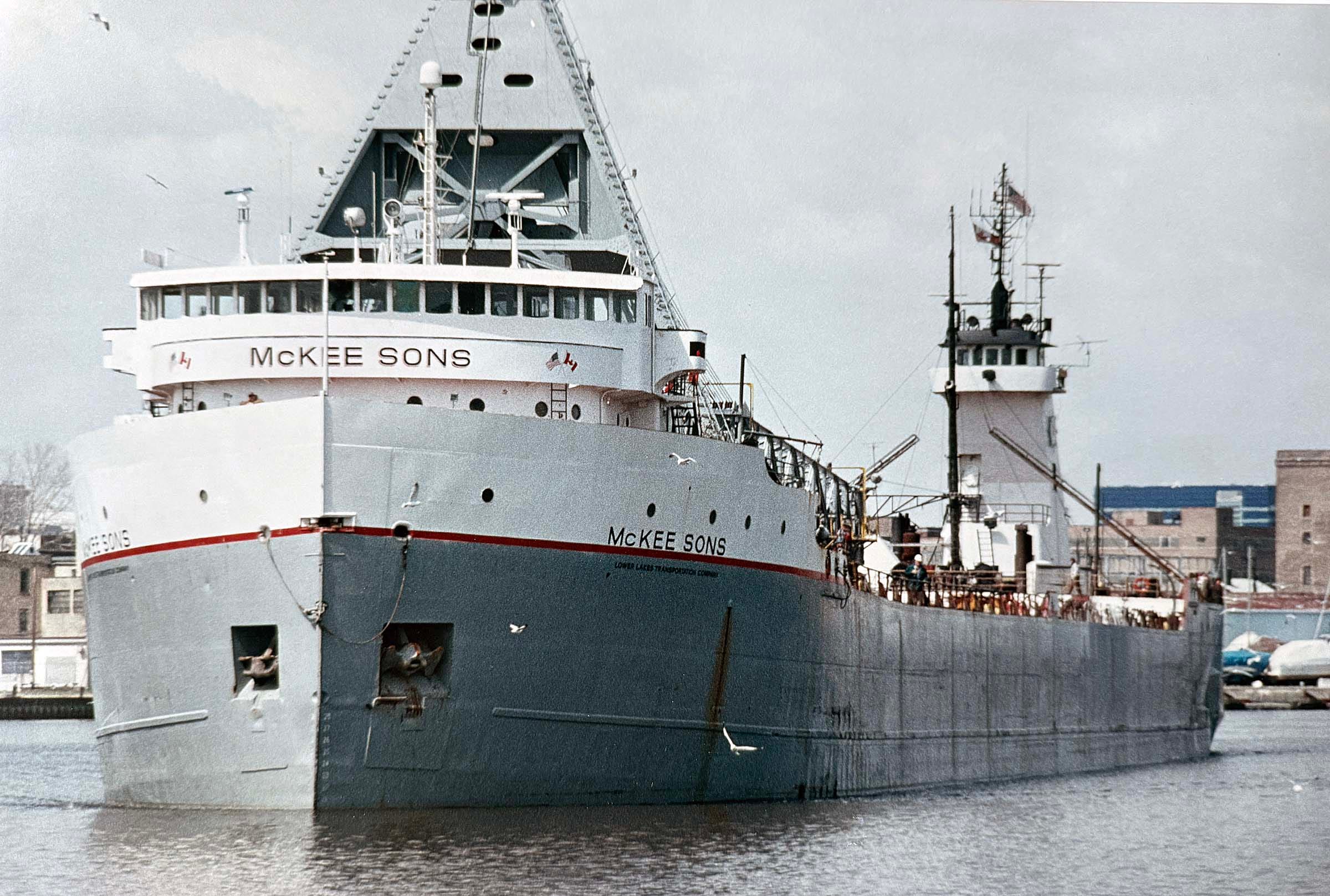
The McKee Sons operated as a conventional steam-powered Great Lakes freighter until December 1979, when she was laid up in Toledo, Ohio.
It remained inactive throughout the 1980s, a period that brought significant changes to the Great Lakes shipping industry.
In 1990, she was acquired for conversion into a self-unloading barge. The work was undertaken by Upper Lakes Towing Co. of Escanaba, Michigan.
Upper Lakes Towing was established around 1980 as a venture associated with Clyde VanEnkevort, whose family had been involved in marine transportation and aggregate operations in Michigan’s Upper Peninsula since the 1960s.
The company was among the Great Lakes operators developing tug/barge combinations as an alternative to traditional self-propelled freighters. By removing the propulsion machinery from older vessels and converting them into barges pushed by powerful tugboats, operators could extend the useful lives of existing hulls while potentially reducing operating costs.
One of Upper Lakes Towing’s early operations involved the former steam-powered crane ship Buckeye, which was converted into a barge and paired with the tug Olive L. Moore. The combination transported bulk commodities on the Great Lakes during the 1980s.
As the Buckeye approached the end of its useful life, the company turned to other vessels for conversion.
Upper Lakes Towing’s operations were closely associated with the VanEnkevort family maritime businesses, which later consolidated their tug/barge operations under VanEnkevort Tug & Barge. That company continues to operate large articulated tug/barge combinations on the Great Lakes.
The McKee Sons conversion was substantial.
In January 1991, she was towed from Toledo to Menominee, Michigan, where her steam propulsion machinery and aft accommodations were removed. Approximately 54 feet of her hull was cut away, and a notch was constructed in the stern to accommodate a tugboat.
Additional work was completed at Escanaba.
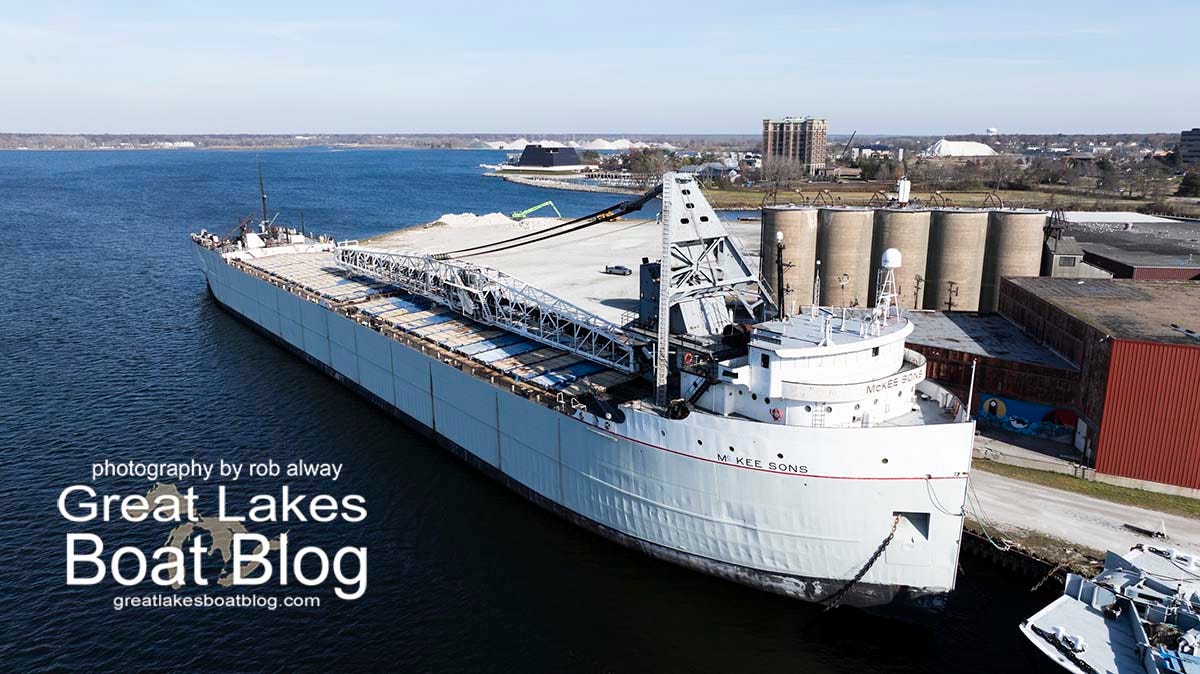
The resulting barge measured approximately 579 feet long and retained her forward pilothouse and self-unloading equipment.
She was paired with the tug Olive L. Moore, a 1928-built vessel that herself had enjoyed a long career on the Great Lakes. The tug was modified for articulated tug/barge service, using a Hydraconn coupling system that connected her to the barge while allowing the two vessels to move independently in response to wave action.
The McKee Sons and Olive L. Moore began operating together in 1992.
In 2000, the McKee Sons entered another chapter when she was chartered to Grand River Navigation, an affiliate of Lower Lakes Towing. She was paired with the tug Invincible, which pushed the barge until the combination was laid up in 2012.
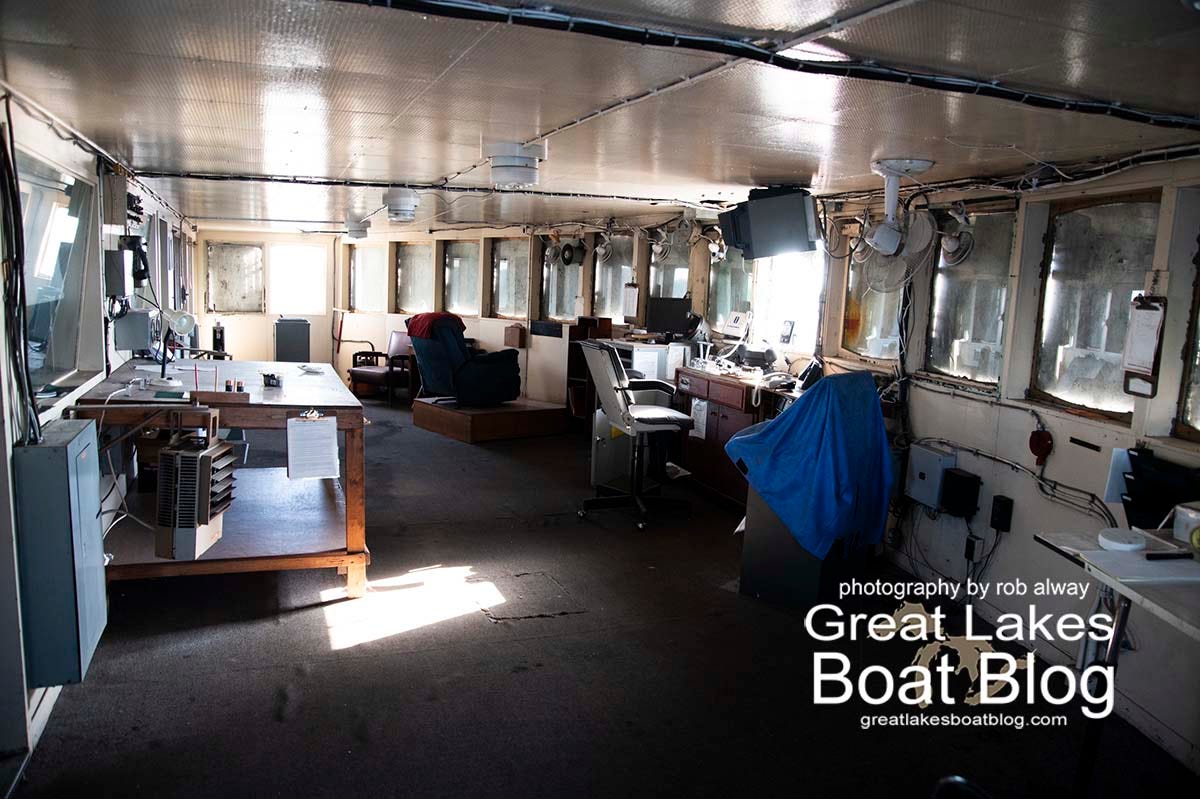
One of the most interesting features of the McKee Sons is the arrangement of her operating controls.
On most modern articulated tug/barge combinations, commonly called ATBs, navigation is conducted from the pilothouse of the tug, which pushes the barge from a notch in its stern.
The McKee Sons was different.
Her original forward pilothouse remained in use after she was converted into a barge. As Patrick explained, the vessel was operated from the barge’s pilothouse, with controls connected to the tugboat through a tethered system.
Essentially, while the tug provided the propulsion, the crew could continue navigating from the forward pilothouse of what had once been a self-propelled Great Lakes freighter.
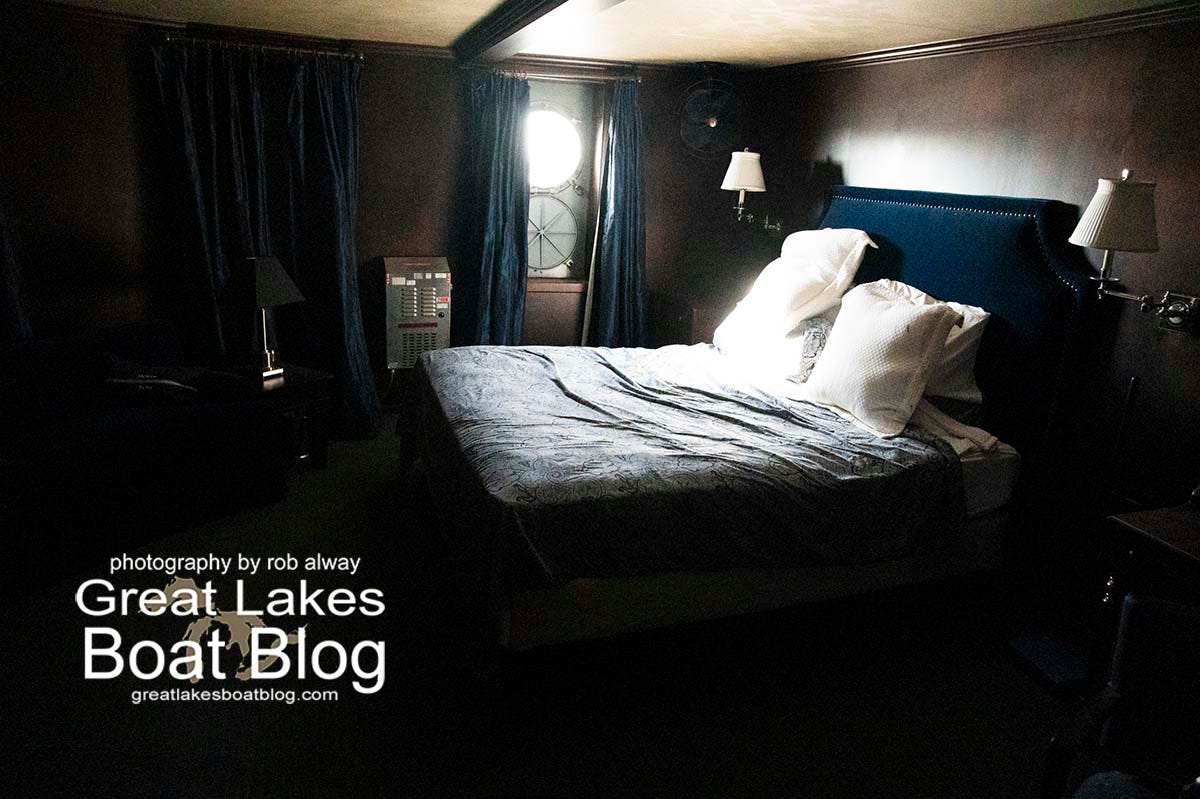
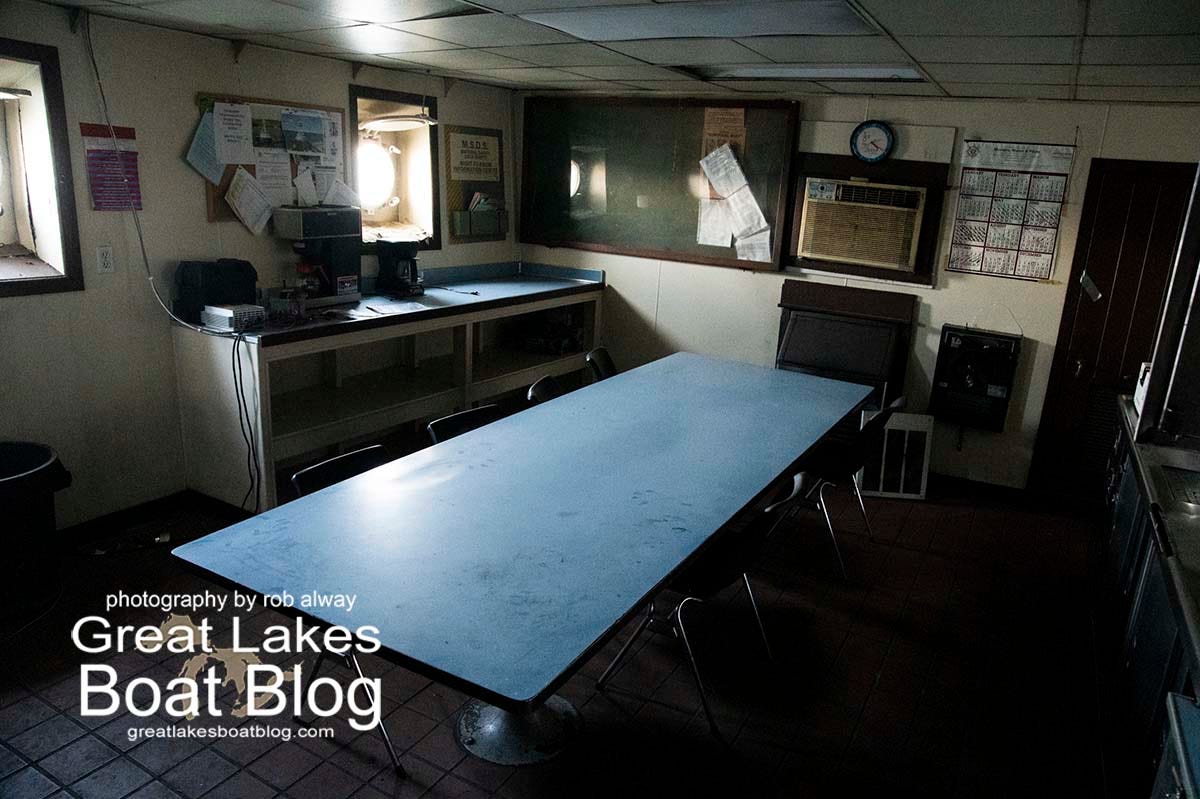
That arrangement set the McKee Sons apart from most tug/barge combinations operating on the Great Lakes. Another distinctive feature was her crew accommodations. Because the barge had originally been a self-propelled ship, she retained living quarters for most of the crew. Only the engineering personnel were housed aboard the tug, where the propulsion machinery was located.
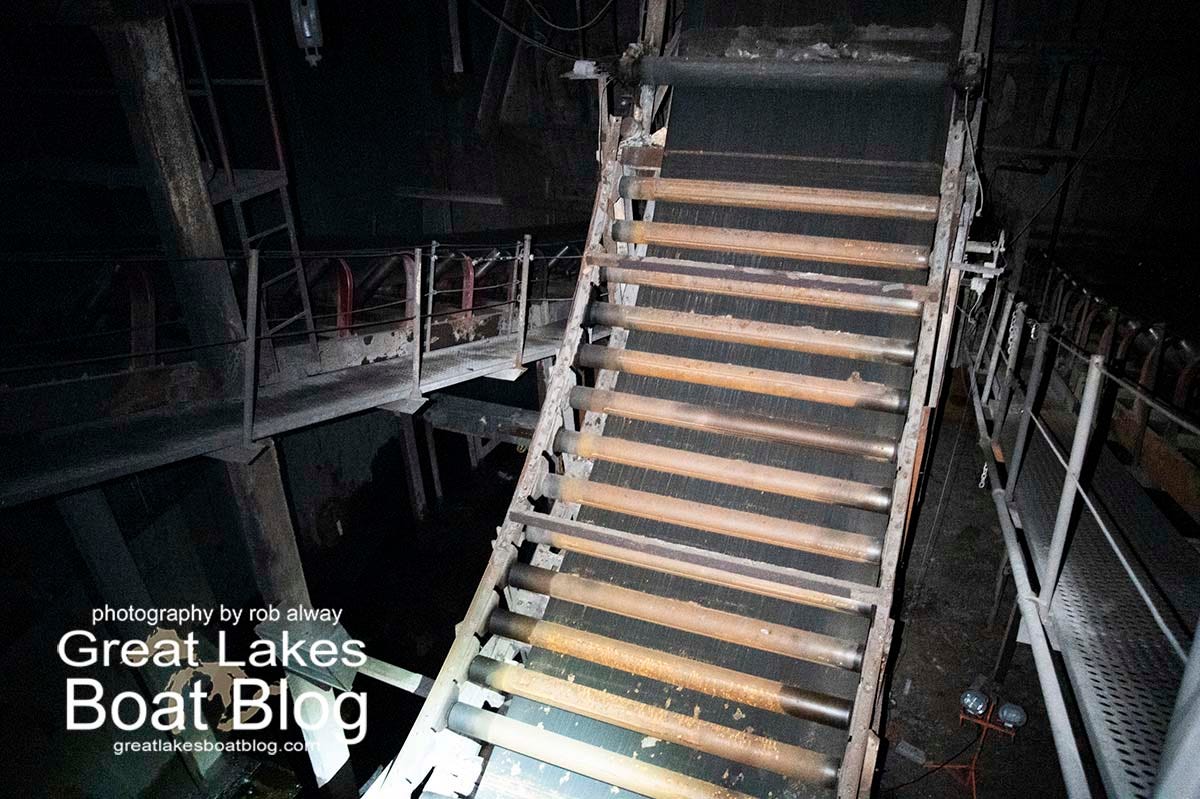
The barge retained her self-unloading system, including a 250-foot unloading boom. Her cargo capacity was approximately 19,000 tons.
In 2012, the McKee Sons and Invincible were laid up in Erie, Pennsylvania. The barge required considerable steel work associated with her inspection, and the necessary repairs were not completed.
The charter eventually ended.
On Dec. 20, 2014, the McKee Sons arrived at Muskegon, Michigan, where she has remained ever since.
The Invincible subsequently departed for layup elsewhere.
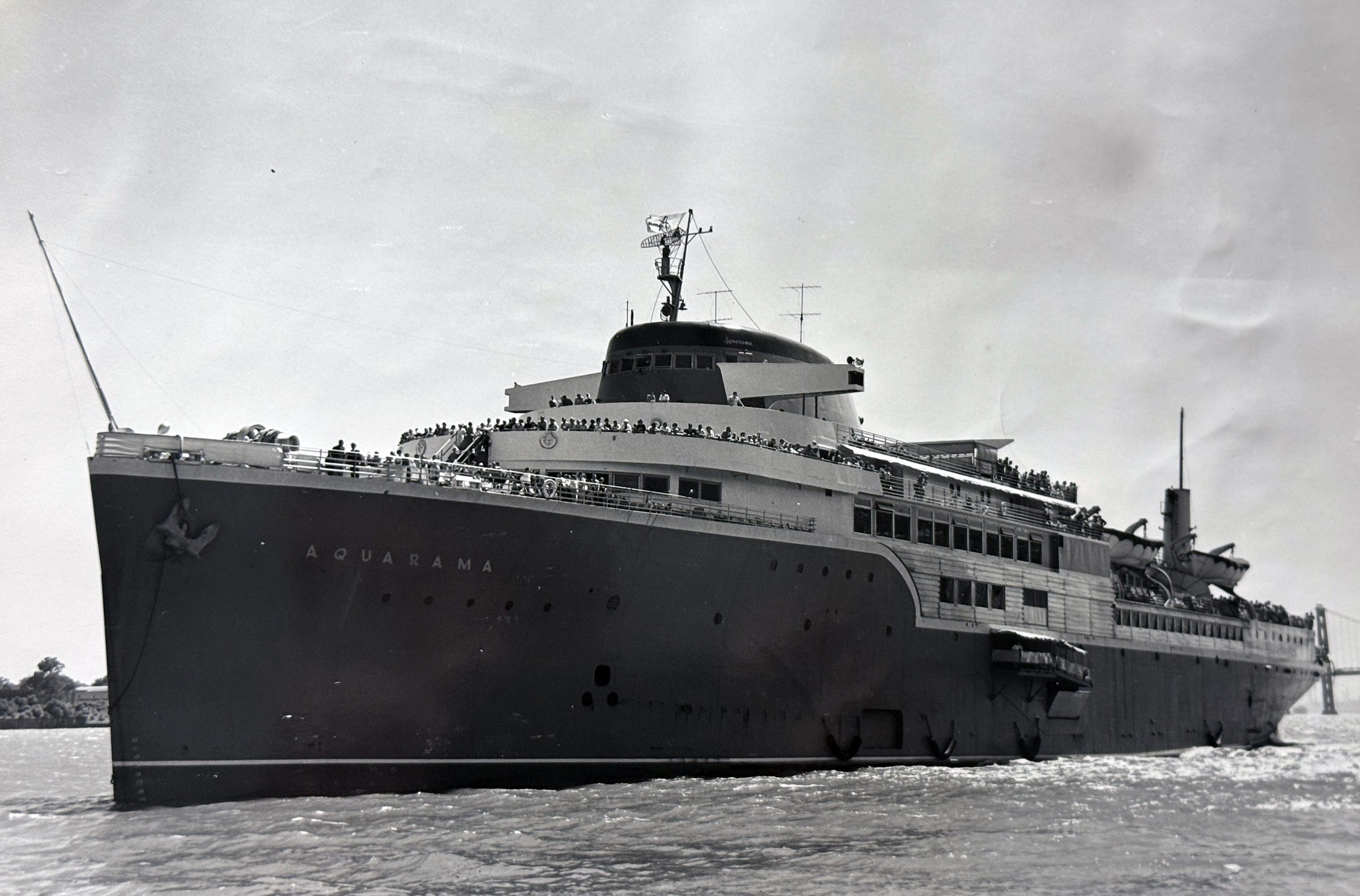
Three wartime C-4 ships with Great Lakes connections
The McKee Sons is particularly significant because she was one of three former World War II C-4 vessels that became well-known ships on the Great Lakes.
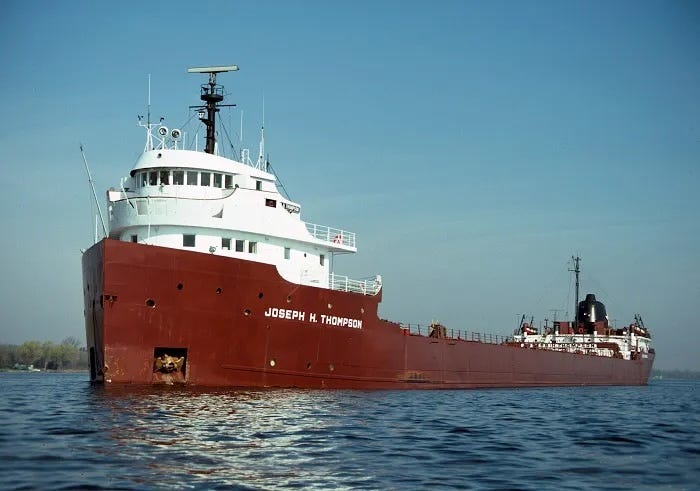
The other two were the Joseph H. Thompson and the Aquarama.
The Joseph H. Thompson was originally the Marine Robin, a C4-S-B2 vessel constructed at Sun Shipbuilding in 1944.
Unlike the Marine Angel, the Marine Robin was completed early enough to participate in the Allied invasion of Normandy on June 6, 1944.
After the war, the vessel was acquired for conversion into a Great Lakes bulk carrier through Hansand Steamship Corp., a venture involving Sand Products Corp. and Hanna Coal & Ore Corp.
It entered Great Lakes service in 1952 as the Joseph H. Thompson.
At approximately 714 feet long, the Thompson became the longest freighter on the Great Lakes at the time.
Like the McKee Sons, the Thompson eventually was converted into a self-unloading barge. She continued operating for decades before being retired and delivered for scrapping at Port Colborne, Ontario, in September 2023.
The third vessel had a very different career.
The Marine Star was constructed at the same Chester, Pennsylvania, shipyard in 1945 as a C4-S-B5 cargo vessel.
Sand Products acquired the former wartime ship and brought her to Muskegon for conversion into an excursion and passenger vessel.
The resulting ship, renamed Aquarama, became one of the most remarkable passenger vessels ever to operate on the Great Lakes.
The approximately 520-foot-long Aquarama was designed to accommodate as many as 2,500 passengers and 160 automobiles.
Its amenities included restaurants, lounges, bars, dance floors, a movie theater and other entertainment facilities.
The company invested approximately $8 million in the conversion, an enormous sum during the 1950s.
The Aquarama began excursion operations in 1956 and regular service between Detroit, Michigan, and Cleveland, Ohio, in 1957.
Despite its popularity and luxurious accommodations, the vessel proved expensive to operate.
Her final voyage took place Sept. 4, 1962.
Afterward, the Aquarama was laid up at the Mart Dock in Muskegon, where it remained for nearly 25 years.
The Aquarama was sold in 1987 and later moved to Canada. Subsequent plans to return her to service were unsuccessful. She eventually ended up at Buffalo, New York, before being sold for scrap in 2007.
Of the three former C-4 vessels that became part of Great Lakes maritime history, the McKee Sons is the one that remains intact.
That alone makes its presence in Muskegon noteworthy.
(To be continued…)
Milwaukee raised. Learned to swim in 1944 off my grandfathers 40’ ketch out of Milwaukee Yacht Club. Could drink the water we swam in. Back then a 7-UP and hamburger and fries was $1.65.