
By Rob Alway
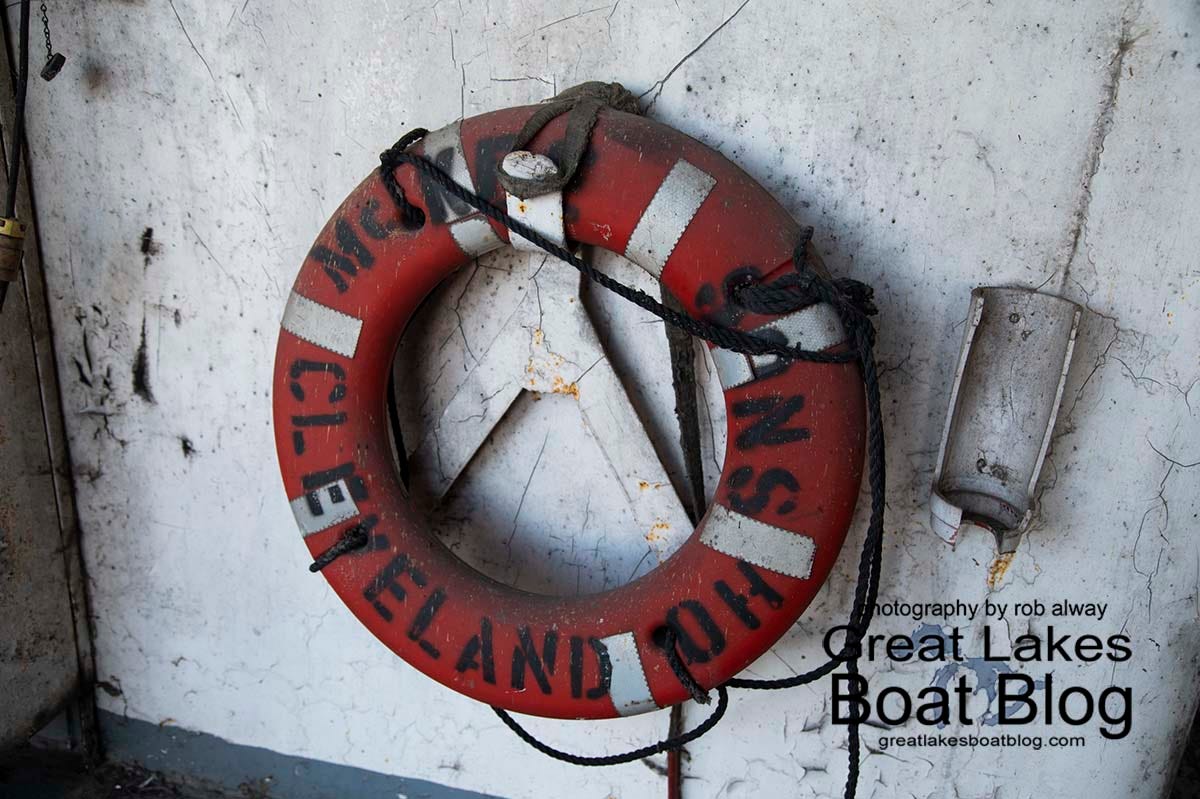
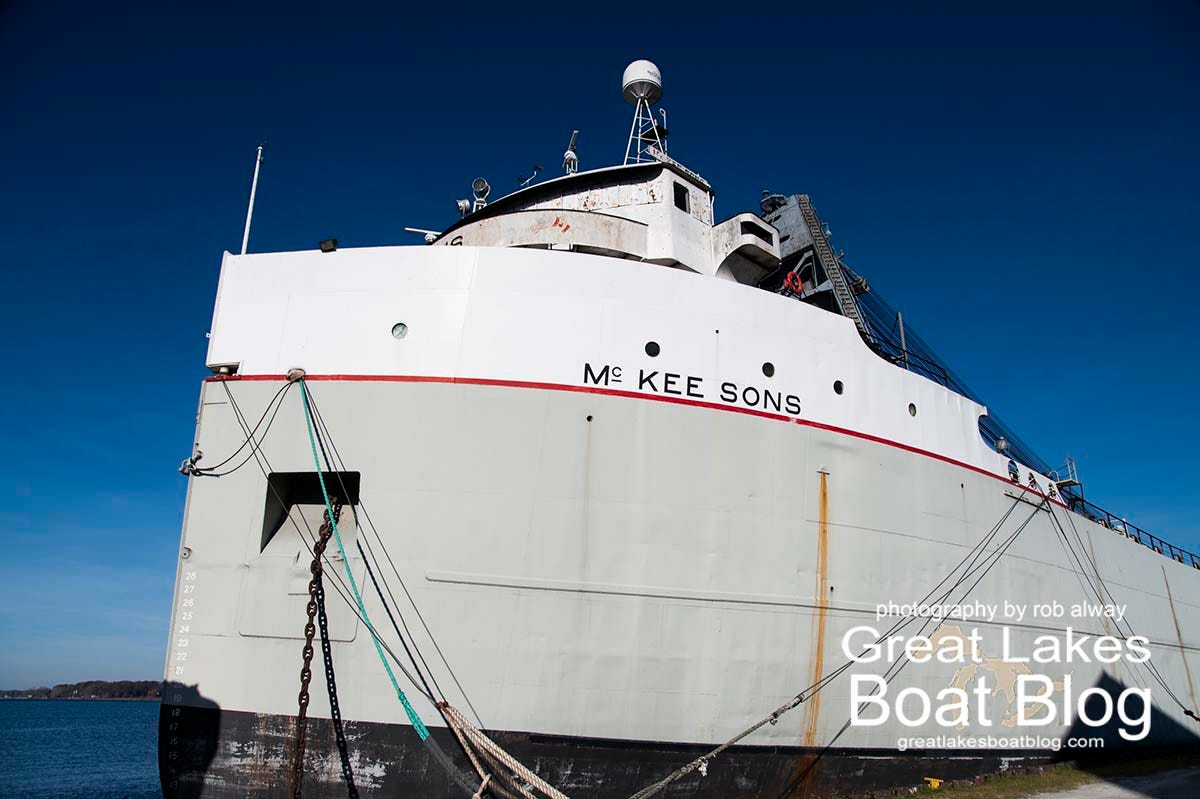
On a recent visit to Muskegon, Michigan, I had the opportunity to tour one of the most interesting vessels remaining on the Great Lakes, a ship that began her life serving the United States during World War II, was transformed into a Great Lakes bulk carrier, and later became a self-unloading barge.
The McKee Sons has been docked at Muskegon’s historic Mart Dock for nearly 12 years. Although she has not carried cargo since 2012, the vessel remains a remarkable example of American shipbuilding and the ingenuity of the Great Lakes maritime industry.
The ship also represents nearly a century of the McKee family’s involvement in Great Lakes shipping and the ingenuity of its members.
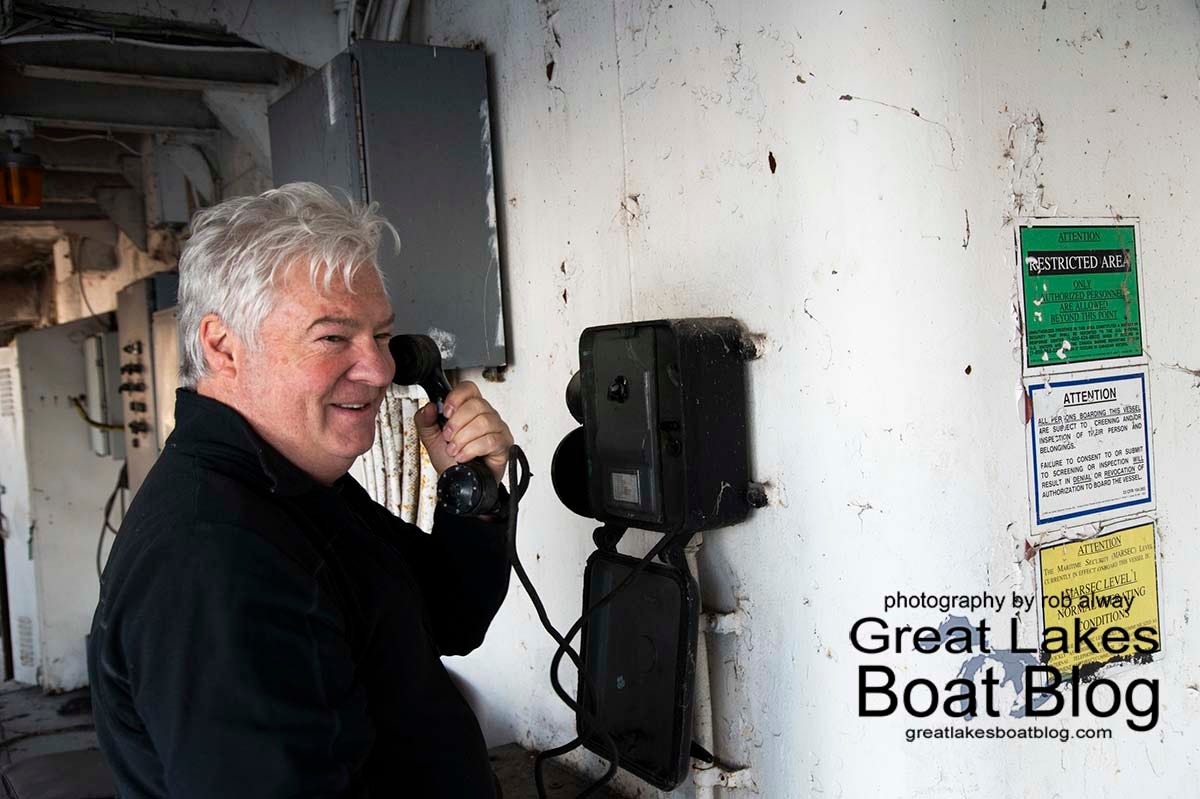
My guide for the visit was Patrick McKee, vice president of Sand Products Corp., the family-owned Muskegon company that owns the vessel through its Lake Service Shipping division. Lake Service Shipping’s only vessel is the McKee Sons.
Patrick and his brother, Max, are the third generation of their family to be involved in the company since its founding in 1924.
The McKee Sons is docked at the West Michigan Dock & Market Corp., commonly known as the Mart Dock, at 560 Mart St. The facility, also owned by Sand Products, is itself an important part of Muskegon’s maritime heritage.
Patrick met me at the dock’s historic office building, which dates back to the days when passenger steamships regularly called at Muskegon.
The building continues to serve as the ticket office for the Aquastar, the excursion boat operated by another Sand Products business, Aquastar Lake Cruises. It was also used as the ticket office for the Milwaukee Clipper, the passenger and automobile ferry that operated between Muskegon and Milwaukee, Wisconsin.
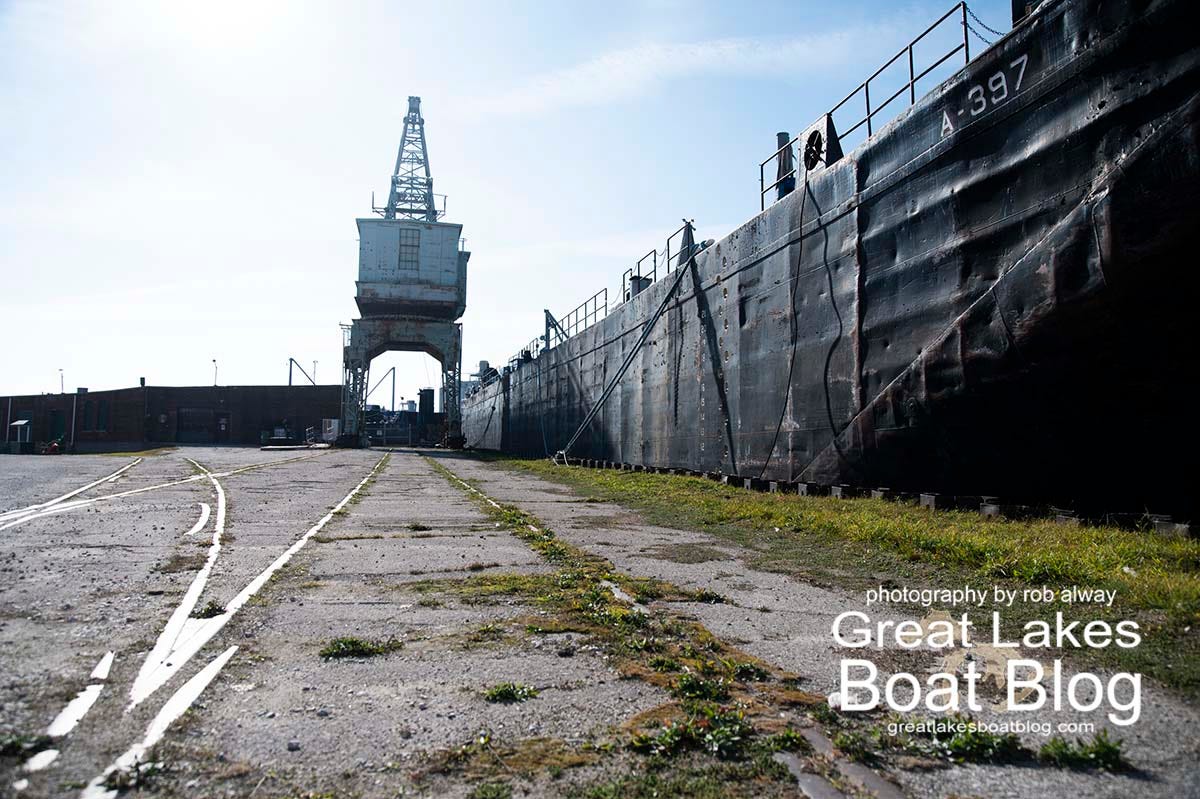
Walking through the Mart Dock is like stepping back in time.
Patrick took me through one of the historic warehouse buildings, pointing out the former ice-making facility and the marine shop. Much of the infrastructure remains from the days when ships, railroads and warehouses were interconnected components of a bustling waterfront.
Sections of railroad tracks are still visible, and pieces of the old cargo-handling equipment remain throughout the property.
The dock was once a major transportation hub, where passengers could transfer between trains and Great Lakes steamships. The warehouses handled everything from agricultural products requiring refrigeration to coal, sand, iron, and other commodities. Over the decades, vessels calling at the property included the Nevada, Aquastar, Highway 16, and Milwaukee Clipper, among many others.
While the business continues to operate as a commercial dock and warehouse facility, its historical character remains remarkably intact.
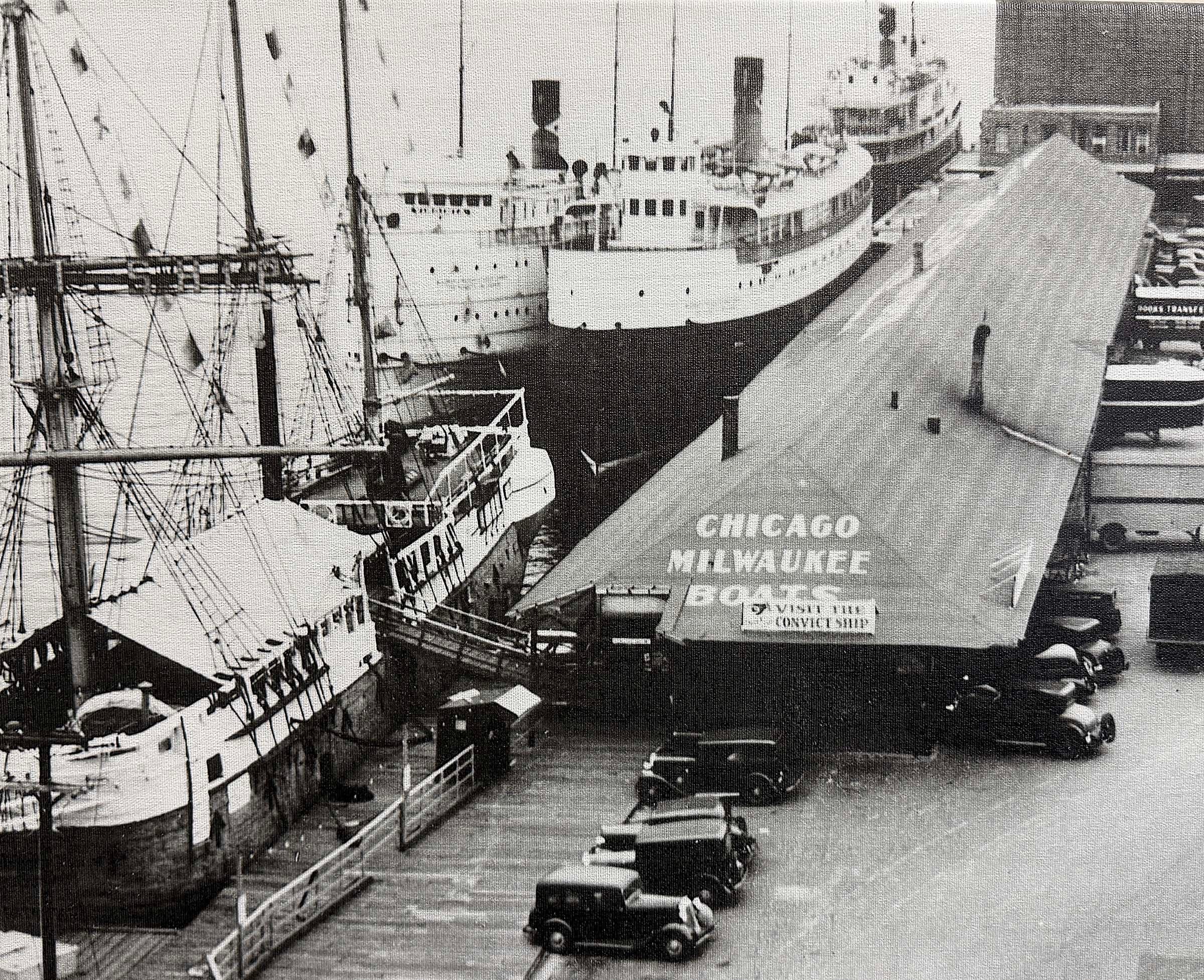
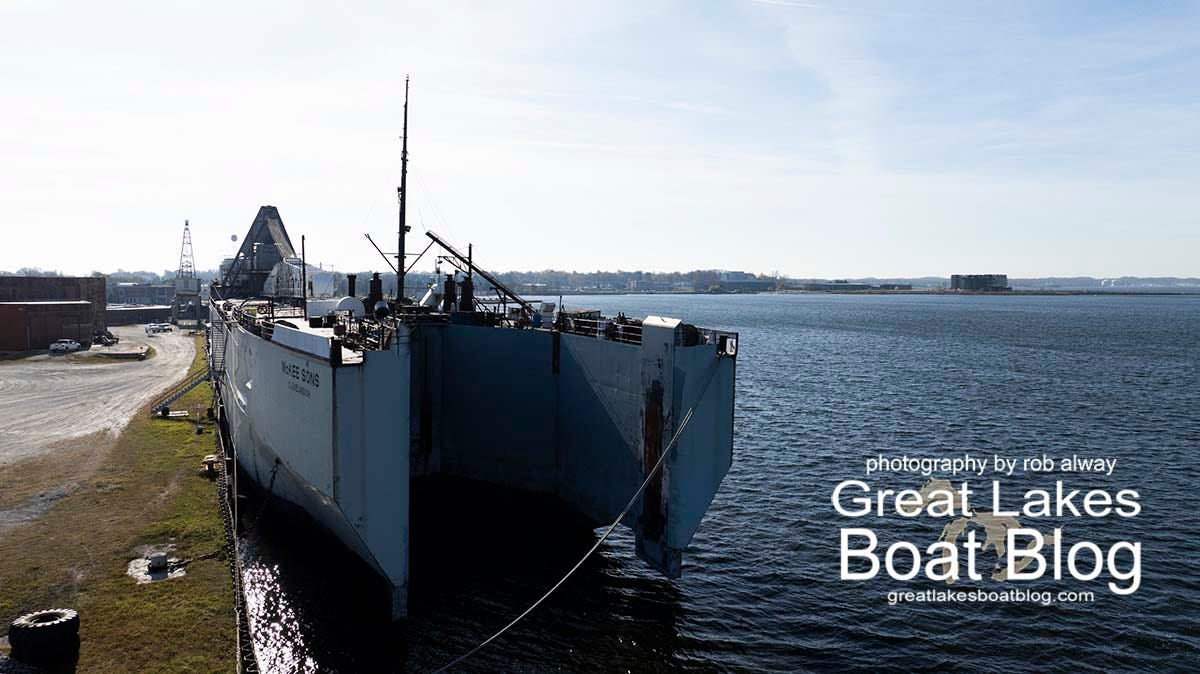
Eventually, we reached the McKee Sons.
Jeff Whalen, Mart Dock operations manager, and Greg Cooke, facilities manager, were kind enough to turn on the vessel’s lights and unlock the gate and doors, allowing us to explore the historic ship.
For a vessel that has been sitting idle in the same location for nearly 12 years, I found the McKee Sons to be in remarkably good condition.
Her appearance makes it easy to imagine the days when she sailed the Great Lakes carrying thousands of tons of cargo.
But the story of the McKee Sons began far from the freshwater ports of the Great Lakes.
Built for World War II
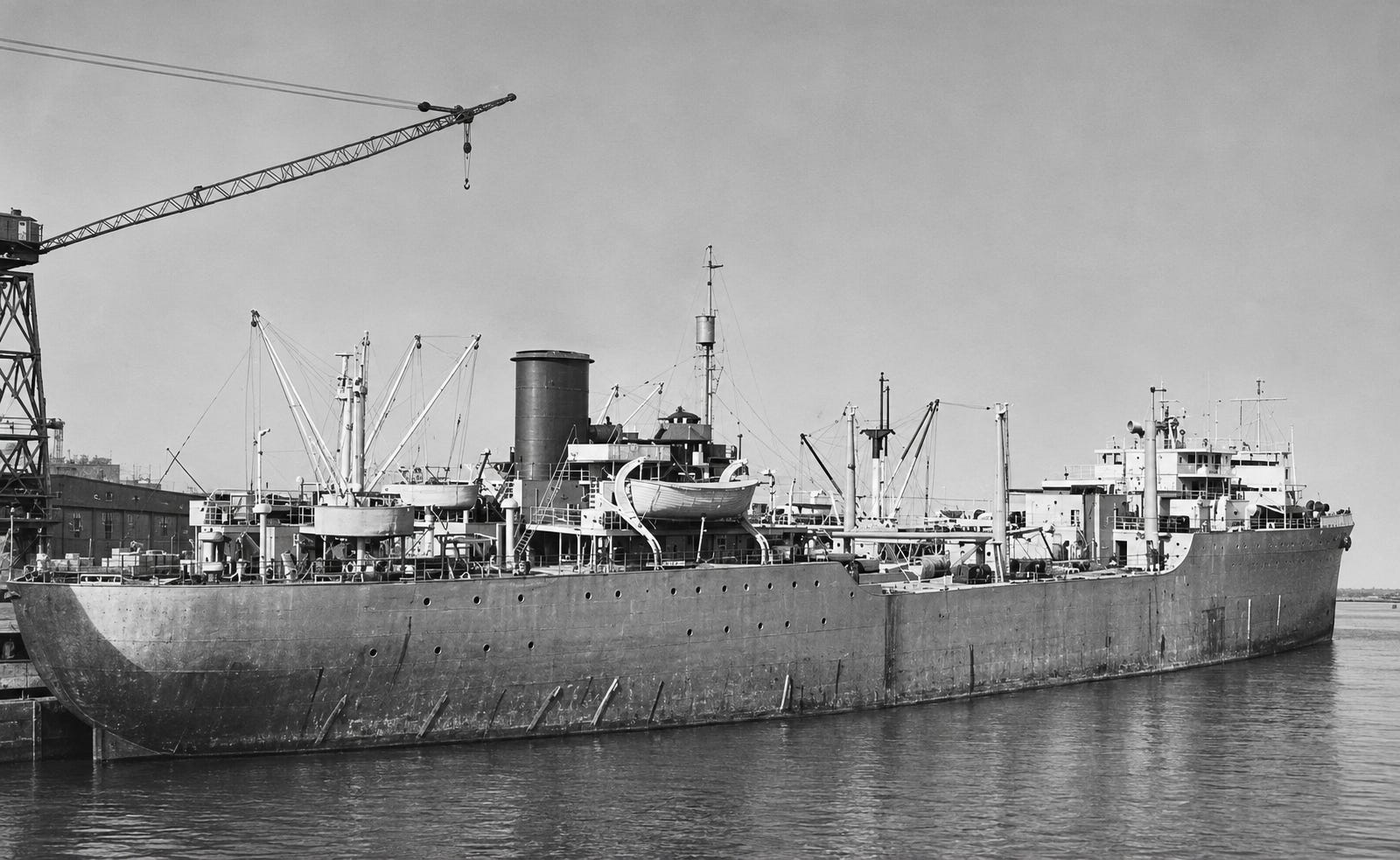
The McKee Sons was constructed at Sun Shipbuilding and Drydock Co. in Chester, Pennsylvania, originally as the Marine Angel, a C4-S-B2 troop transport built for the U.S. Maritime Commission.
The ship was launched Nov. 15, 1944, and completed April 7, 1945, during the final months of World War II.
The Marine Angel was part of the C-4 class of vessels, a series of large, fast, oceangoing ships designed by the U.S. Maritime Commission to transport military personnel and cargo over long distances.
The C-4s were among the largest cargo vessels constructed under the commission’s World War II shipbuilding program. They represented a different approach from the better-known Liberty ships, which were designed primarily for economical construction and mass production.
The C-4 vessels were larger and faster, generally capable of speeds of about 16 to 17 knots, making them valuable for transporting troops and military supplies across the Atlantic and Pacific oceans.
The Marine Angel was approximately 520 feet long when constructed and was powered by a steam turbine.
Her wartime service began too late for the major Allied landings in Europe, but she participated in transporting military personnel during the final stages of the war and the subsequent movement of troops home.
She was part of Operation Magic Carpet, the massive undertaking to return American military personnel from overseas following the war.
Following her military service, the Marine Angel was placed in the reserve fleet on the James River in Virginia.
Like many wartime vessels, her future was uncertain.
The enormous American shipbuilding program of World War II had produced hundreds of ships that were no longer needed for military purposes. Some were scrapped, others were sold into commercial service, and a select number found second careers on the Great Lakes.
The Marine Angel was among the latter.
Becoming the McKee Sons
In the early 1950s, the Great Lakes steel industry was experiencing tremendous demand for iron ore and other raw materials. Shipping companies needed additional capacity, and several operators looked toward surplus World War II vessels as a possible solution.
The Marine Angel was acquired through a venture involving Sand Products Corp. and interests associated with Boland & Cornelius, operators of American Steamship Co.
American Steamship operated the converted vessel in its Great Lakes fleet.
The conversion was an extensive undertaking.
At Maryland Drydock Co. in Baltimore, Maryland, the former troop transport was transformed into a Great Lakes bulk carrier.
A new forward section was constructed by Ingalls Shipbuilding Co. in Pascagoula, Mississippi. The ship was lengthened by approximately 123 feet, and her original midship pilothouse was replaced with a forward pilothouse, giving her the more familiar appearance of a traditional Great Lakes freighter.
The conversion was not finished in Baltimore. The ship still had to reach the Great Lakes, where Manitowoc Shipbuilding Co. in Manitowoc, Wisconsin, would install its self-unloading equipment.
Getting the massive vessel there was an engineering achievement of its own.
In 1953, six years before the opening of the modern St. Lawrence Seaway, the former Marine Angel was towed down the Atlantic coast, through the Gulf of Mexico, up the Mississippi River, and through the Illinois waterway toward Lake Michigan.
The vessel’s size presented considerable challenges when navigating the narrow Chicago River, in Chicago, Illinois, and its bridges.
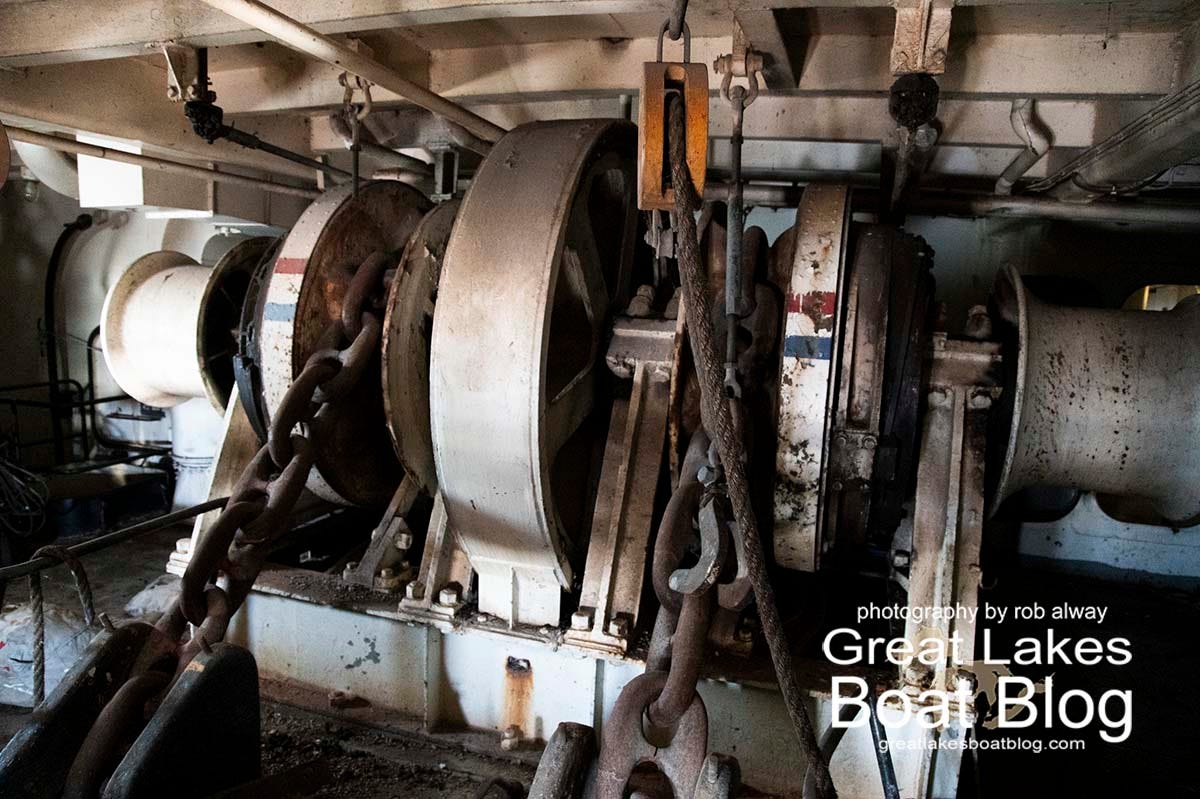
One of the greatest obstacles was the Chicago Harbor Lock, which was shorter than the converted ship. The towing crew had to maneuver her carefully through the lock, using lines and winches to advance her between the gates.
After reaching Lake Michigan, the vessel proceeded to Manitowoc, where the installation of self-unloading machinery was completed.
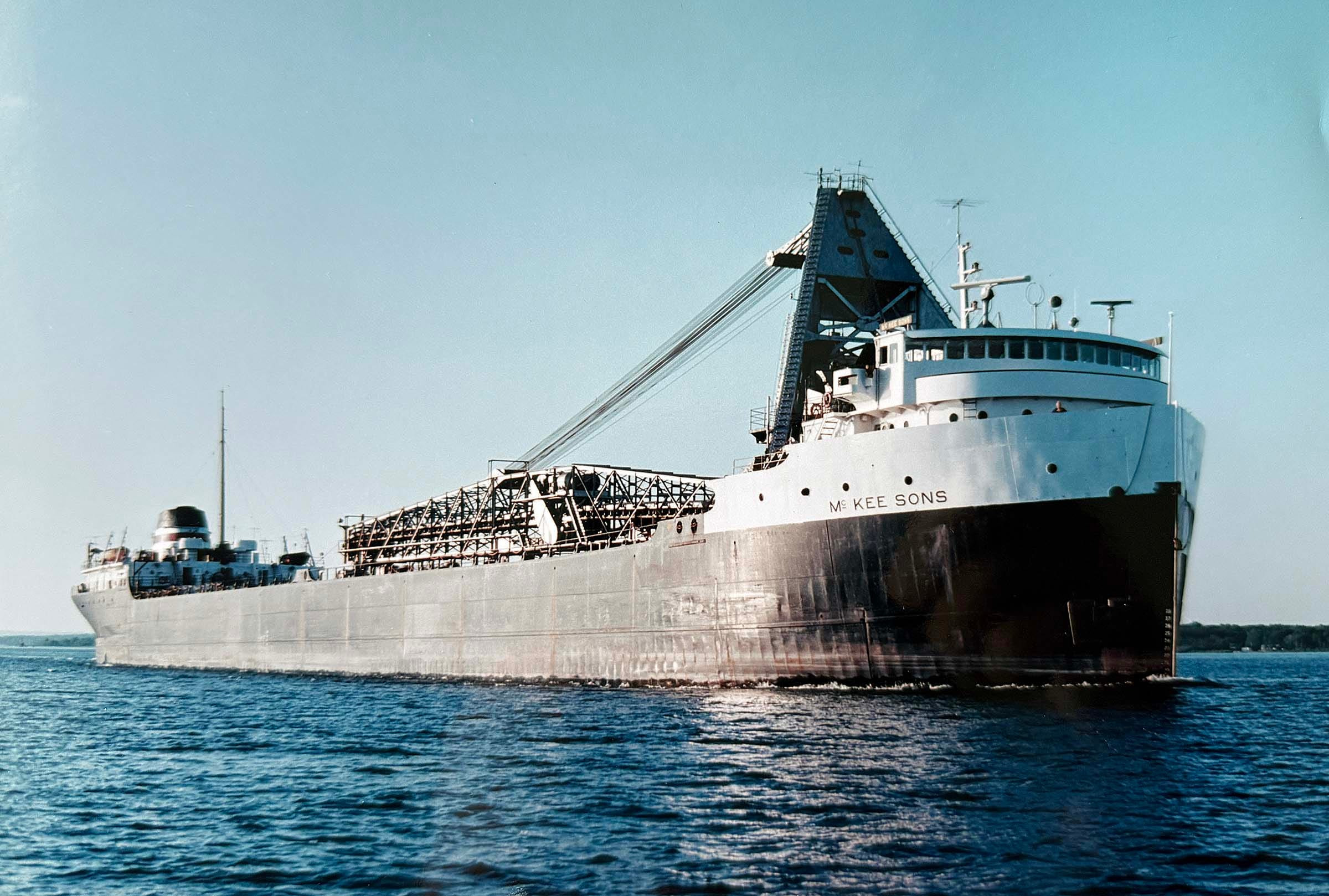
In October 1953, the former troop transport entered Great Lakes service as the McKee Sons.
According to maritime historian George Wharton’s vessel history published by Boatnerd, she became the first former saltwater vessel converted into a self-unloading bulk carrier on the Great Lakes.
It was an important achievement at a time when the industry was expanding its use of conveyor systems and unloading booms to improve efficiency.
The converted ship measured approximately 633 feet in overall length.
The name McKee Sons honored the family’s next generation. She was named for the 11 sons of three McKee brothers associated with Sand Products Corp.
For the McKee family, it was a particularly fitting name for a ship representing the company’s expanding involvement in Great Lakes transportation.
(To be continued…)