

By Rob Alway
For someone looking to begin a career in the Great Lakes maritime industry, the opportunity may start this winter without ever leaving the docks in Ludington, Michigan.
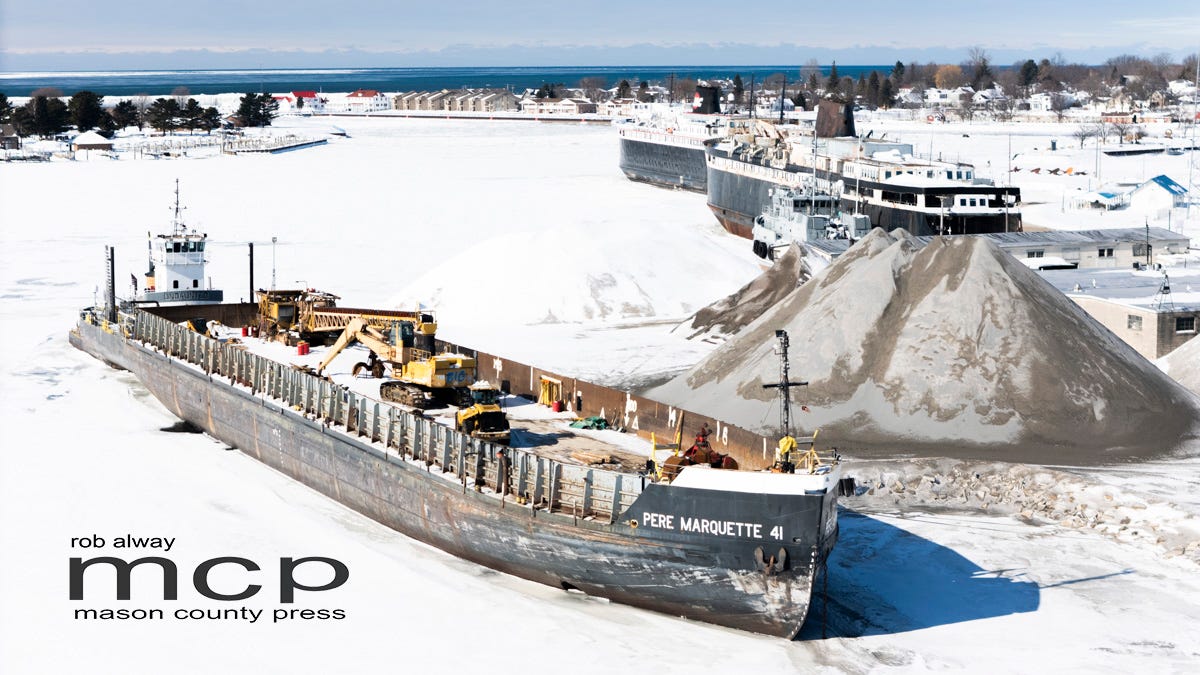
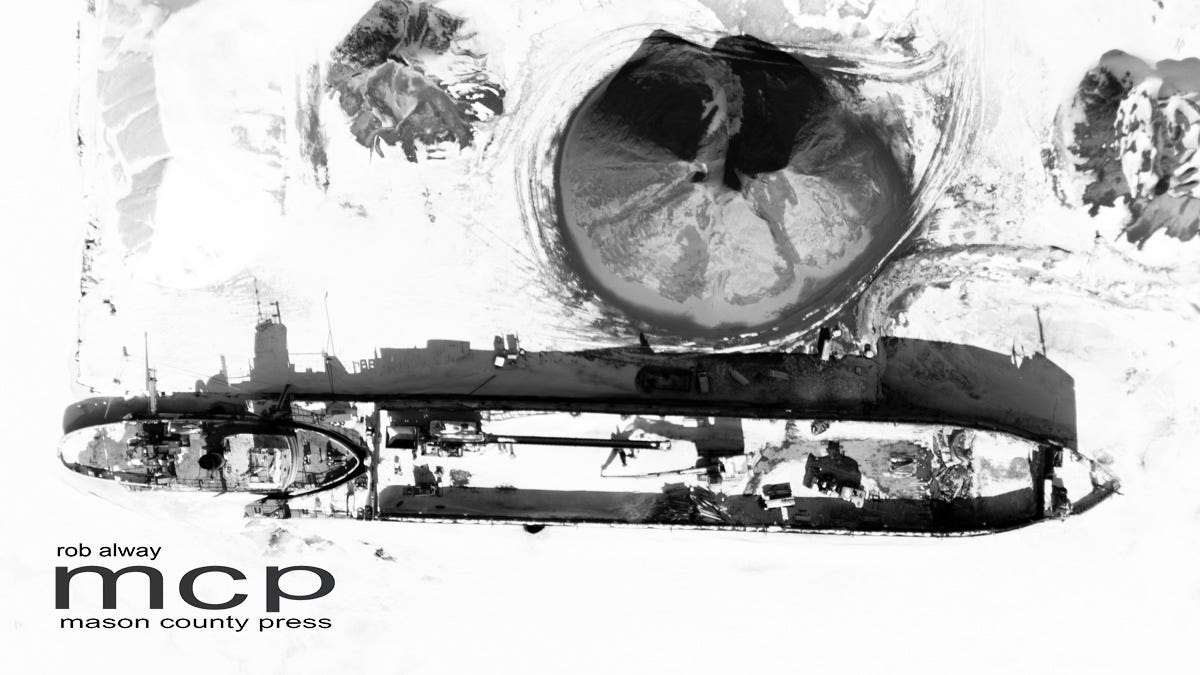
Interlake Logistics Solutions, a division of Interlake Maritime Services, is seeking individuals to perform winter maintenance aboard its articulated tug/barge Undaunted/Pere Marquette 41. While the positions are seasonal, employees who demonstrate a strong work ethic, reliability, and an ability to work safely may have opportunities to join the vessel’s crew when she returns to service.
Winter layup is an essential part of the Great Lakes shipping industry. While commercial vessels spend much of the year transporting the raw materials that sustain American manufacturing and construction, the winter months provide an opportunity to complete maintenance projects and prepare equipment for another shipping season.
The winter positions in Ludington will primarily involve preparing and installing heavy timber decking. Employees will begin by preparing materials on shore before moving aboard the vessel to complete installation while she remains docked.
The work is physically demanding and will require employees to work outdoors in winter weather conditions. Responsibilities include measuring and cutting lumber, drilling holes, fitting decking, handling heavy materials, and operating various power tools.
Experience in carpentry, construction, woodworking, rigging, or maritime operations is preferred but not required.
Applicants must possess a Transportation Worker Identification Credential (TWIC) before beginning employment and must successfully complete a pre-employment physical examination and drug screening.
Those who eventually advance to sailing positions will also need to obtain a U.S. Coast Guard Merchant Mariner Credential (MMC) and medical certificate.
Understanding Maritime Credentials
For individuals who have never worked in the maritime industry, the process of obtaining the necessary federal credentials may be unfamiliar.
A Transportation Worker Identification Credential, commonly referred to as a TWIC card, is a federal identification card issued by the Transportation Security Administration (TSA), an agency of the U.S. Department of Homeland Security.
The program was established under federal maritime security legislation following the September 11, 2001, terrorist attacks. Its purpose is to ensure that individuals who require unescorted access to secure areas of commercial vessels, shipping terminals, ports, and other regulated maritime facilities have undergone a federal security screening.
Obtaining a TWIC involves completing an application, providing proof of identity, submitting fingerprints, undergoing a security background check, and paying an application fee. A TWIC is generally valid for five years.
A person does not need previous maritime experience to obtain a TWIC. The credential is also used by many truck drivers, dockworkers, contractors, airport personnel, and other individuals whose occupations require access to regulated maritime facilities.
Information about applying for a TWIC is available at www.tsa.gov/twic.
A Merchant Mariner Credential, commonly referred to as an MMC, is issued by the U.S. Coast Guard through its National Maritime Center. It serves as a mariner’s professional credential and identifies the capacities in which an individual is qualified to serve aboard a commercial vessel.
Unlike a TWIC, which is primarily a security credential, an MMC establishes a mariner’s professional qualifications.
An individual entering the maritime industry can apply for entry-level endorsements in the deck, engineering, or steward’s departments without previous sailing experience. As mariners accumulate documented sea service, complete training, and pass required examinations, they may qualify for additional endorsements and positions of greater responsibility.
In the deck department, an entry-level mariner is traditionally known as an ordinary seaman (OS). In January 2025, the Coast Guard officially changed the title to ordinary seafarer, although the traditional terminology remains widely used throughout the maritime industry.
An OS generally assists with the daily operation and maintenance of a vessel. Responsibilities may include handling mooring lines, cleaning and painting the vessel, assisting with cargo operations, maintaining deck equipment, and performing other duties under the supervision of experienced crew members and officers.
No previous sea service is required to obtain an OS endorsement, making it a common starting point for someone entering the maritime industry.
As an OS gains experience, the mariner may qualify for an endorsement as an able seaman (AB), now officially known as an able seafarer.
Chuck Leonard, general manager of Interlake Logistics Solutions and Lake Michigan Carferry, said the company prefers its deckhands to earn AB endorsements.
An AB is an experienced, qualified member of the deck department who is entrusted with greater responsibilities. Depending on the vessel and her operation, those responsibilities may include steering the vessel under the direction of an officer, standing a navigational watch, operating deck machinery, handling lines, assisting with anchoring, and performing emergency and lifesaving duties.
Aboard the Undaunted, steering is generally performed by the captain and mates. Aboard larger vessels such as the SS Badger, ABs serve as wheelsmen.
To earn an AB endorsement, a mariner must meet applicable sea service or approved training requirements, demonstrate proficiency in seamanship, pass a Coast Guard-approved examination, and obtain the appropriate lifeboat operator endorsement. There are several classifications of AB endorsements, based in part on a mariner’s experience and the types of vessels on which the individual is qualified to serve.
An AB who continues to accumulate the necessary experience, training, and credentials may eventually advance to mate and ultimately captain.
For those interested in machinery, mechanics, and electrical systems, the engineering department offers a similar career path.
An entry-level member of the engineering department is known as a wiper. The position is essentially the engineering department’s equivalent of an OS. A wiper assists with cleaning and maintaining machinery spaces, maintaining equipment, and performing basic mechanical work under the supervision of more experienced engineering personnel.
As a wiper gains experience, the mariner may qualify to become a qualified member of the engine department (QMED).
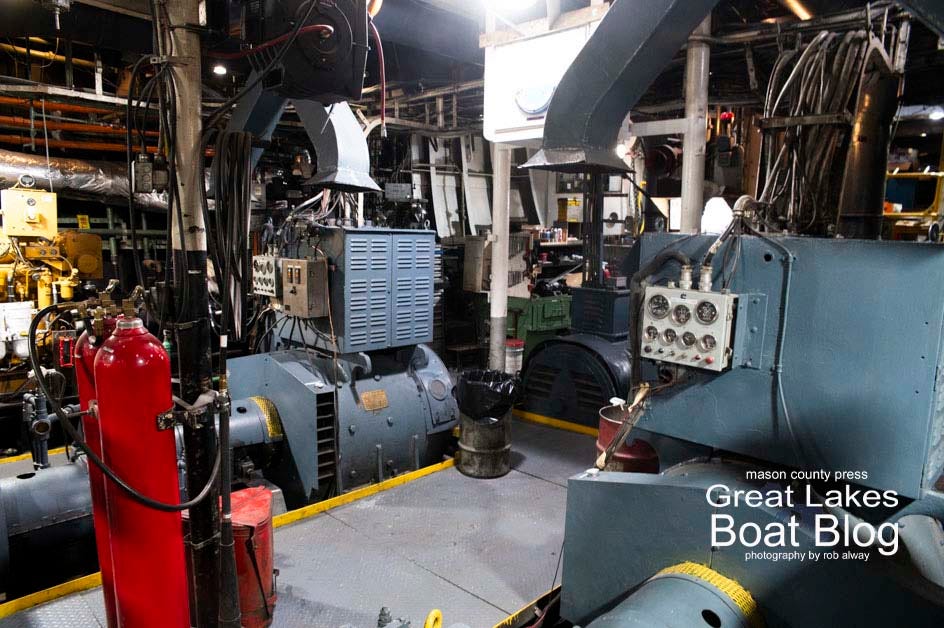
A QMED is an experienced, credentialed member of the engineering department who assists engineering officers with the operation, maintenance, and repair of a vessel’s machinery and mechanical systems.
The Coast Guard issues several specialized QMED endorsements, including oiler, junior engineer, boiler technician/watertender, electrician/refrigerating engineer, and pump technician/machinist.
Depending on the vessel and the mariner’s qualifications, a QMED may assist with maintaining propulsion engines, generators, pumps, hydraulic systems, electrical equipment, and other machinery essential to the safe operation of a vessel.
Obtaining a QMED endorsement requires meeting applicable sea service or approved training requirements and passing the appropriate examination. A QMED may eventually advance to a licensed engineering officer and ultimately chief engineer.
The OS, AB, wiper, and QMED positions are commonly referred to in the maritime industry as unlicensed positions. While the mariners hold federal credentials authorizing them to serve in their respective capacities, they do not hold officer endorsements. Captains, mates, chief engineers, and assistant engineers are commonly referred to as licensed officers.
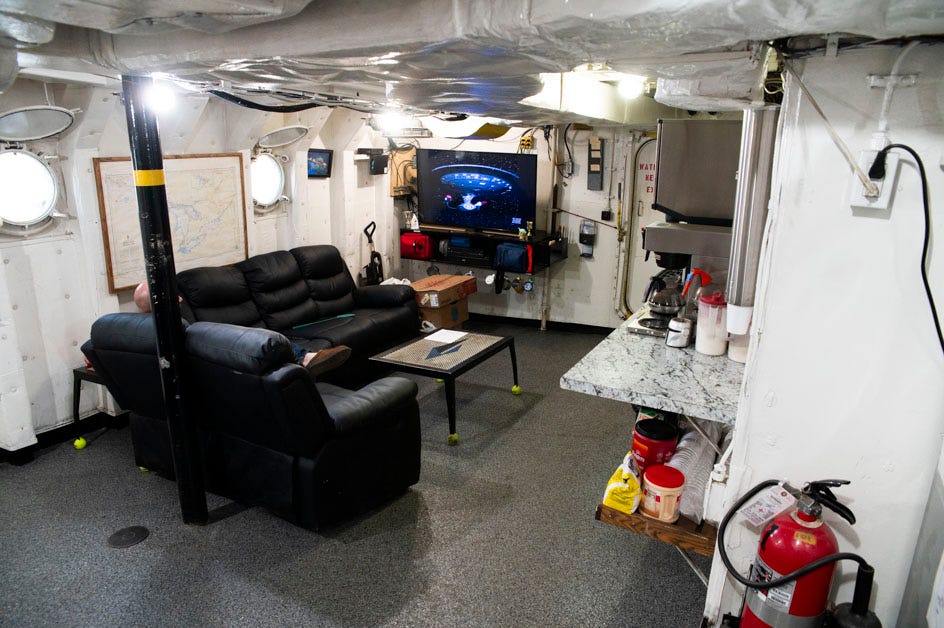
The Undaunted operates with a two-person engineering department consisting of a licensed chief engineer and a QMED who work alternating shifts. Larger vessels, such as the Badger, employ several QMEDs and licensed engineering officers.
Obtaining an initial MMC generally requires an application, security screening, proof of compliance with drug testing requirements, and payment of applicable fees. Mariners serving aboard the Undaunted/Pere Marquette 41 must also possess a Coast Guard medical certificate, which establishes that they meet the applicable medical and physical standards.
Information about obtaining an MMC is available through the Coast Guard’s National Maritime Center at www.dco.uscg.mil/nmc.
For those applying for winter employment with Interlake Logistics Solutions, an MMC is not initially required. The TWIC, however, is required before beginning work. Anyone wishing to transition from winter maintenance to sailing aboard the vessel must obtain an MMC.
A Career That Began with Entry-Level Work
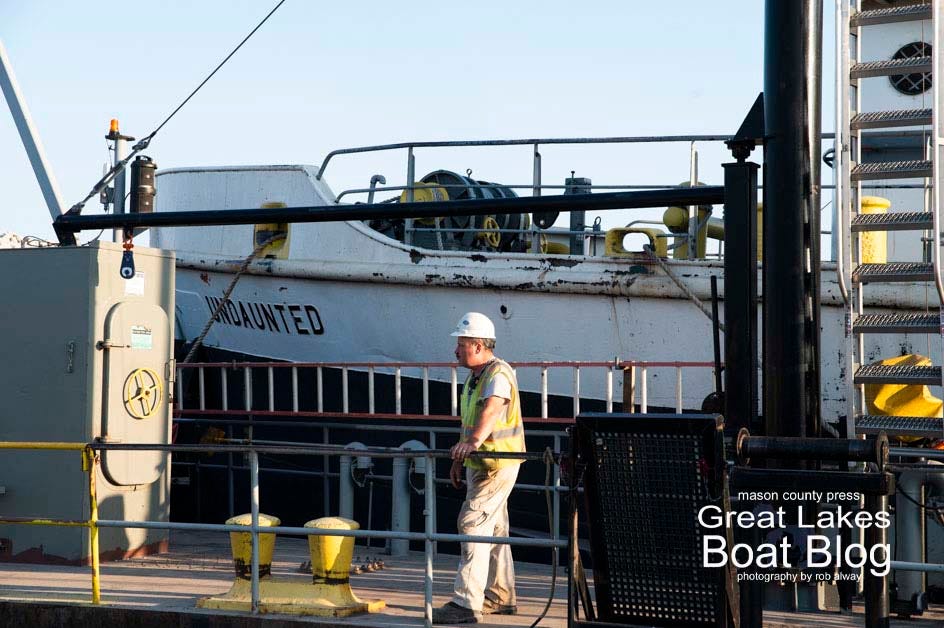
One of the best examples of where entry-level maritime work can lead is Captain Brian Jankowski of Ludington, one of the two captains of the Undaunted/Pere Marquette 41.
Jankowski, a 1991 graduate of Mason County Central High School in Scottville, Michigan, is completing his 26th shipping season aboard the Undaunted.
As he described in a recent Great Lakes Boat Blog and Mason County Press article, he was in his twenties and working various jobs when an acquaintance encouraged him to try working aboard the tug.
Among his early assignments was reporting to the vessel in February to clean her bilges, using a small shovel and carrying buckets of rust and debris out of the boat.
He learned to operate machinery and advanced through the ranks, becoming a mate and ultimately captain, a position he has held for nearly 15 years.
In the maritime industry, that career progression is commonly referred to as coming up through the hawsepipe, earning the experience, training, and professional credentials necessary to advance without attending a maritime academy.
What began as temporary employment became a career.
“I absolutely love it,” Jankowski said during his recent interview. “I wouldn’t do it if I didn’t, because you do give up a lot.”
Another mariner working aboard the Undaunted is Kevin Watkins of Pere Marquette Township, Michigan, a U.S. Marine Corps veteran who serves as an engine utility worker/assistant engineer. Watkins began his maritime career as a deckhand in the marine construction and dredging industry before joining Interlake in 2021.
His responsibilities include maintaining the vessel’s mechanical systems. He holds a Coast Guard endorsement as a qualified member of the engine department, or QMED.
The two mariners represent different career paths within an industry that offers opportunities in navigation, engineering, vessel maintenance, and cargo operations. Both spoke highly of their experiences working for Interlake.
Working on the Great Lakes
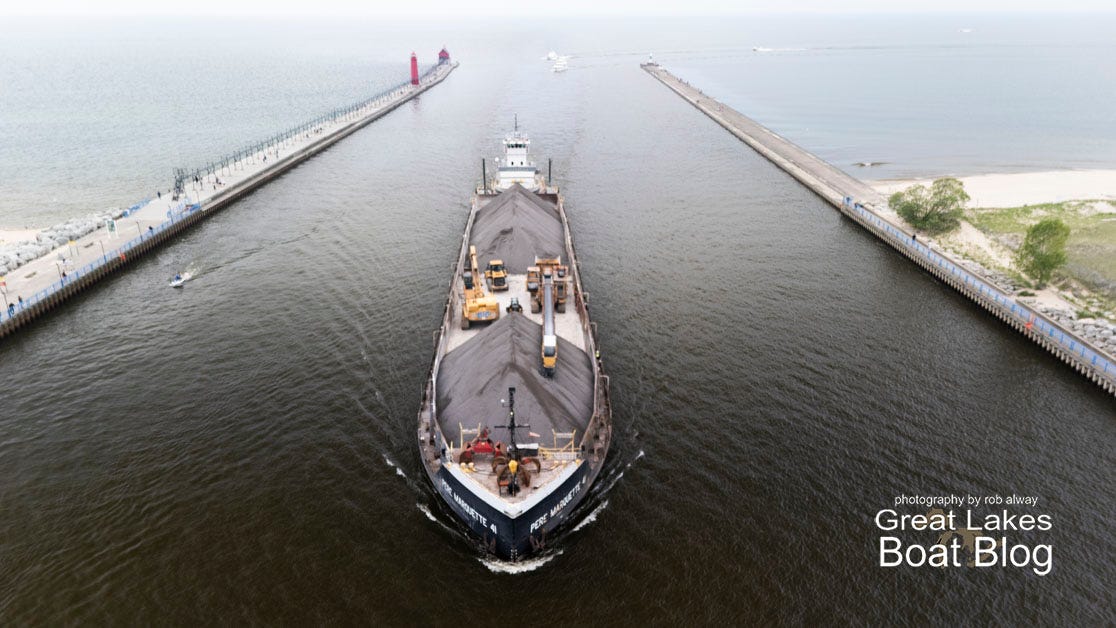
The Undaunted/Pere Marquette 41 typically operates with a crew of 10 to 12 people, including a captain, first mate, second mate, chief engineer, engine utility worker, mechanic, cook, and deckhands.
Once the shipping season begins, crew members live and work aboard the vessel for extended periods. Jankowski currently works a rotation of three weeks aboard the tug followed by three weeks at home. Watkins works a rotation of 28 days aboard the vessel followed by 28 days at home.
While a maritime career requires extended periods away from family, those rotations also allow mariners to spend substantial periods at home without having to report to work each day.
The Undaunted/Pere Marquette 41 serves ports throughout the Great Lakes in both the United States and Canada.
Her relatively small size and specialized cargo-handling equipment allow her to transport materials that may be difficult for larger Great Lakes freighters to accommodate.
Among her cargoes are limestone, sand, construction aggregate, scrap steel, and large stone used in the construction of breakwaters.
The barge is equipped with an excavator that can be fitted with different attachments depending on the type of cargo being handled. She also has a specialized conveyor system for unloading bulk materials.
The nature of the operation often means relatively short trips between ports, sometimes requiring the vessel to make several port calls in a single day.
Maintaining the equipment is essential to keeping the operation running efficiently. In October 2025, both the Undaunted and Pere Marquette 41 underwent scheduled five-year Coast Guard inspections at Fincantieri Bay Shipbuilding in Sturgeon Bay, Wisconsin. Both vessels were placed in dry dock for inspection.
Winter maintenance at the Ludington docks provides another opportunity to complete projects that would be difficult to undertake during the shipping season.
Continuing Ludington’s Maritime Legacy
Those who work aboard the Undaunted/Pere Marquette 41 are also contributing to a maritime tradition that dates back more than 150 years in Ludington.
Cross-lake commercial freight service began in Ludington in 1875, a year after the arrival of the Flint & Pere Marquette Railway. Railroad carferry service was established in 1897 and eventually developed into the largest railroad carferry fleet on the Great Lakes.
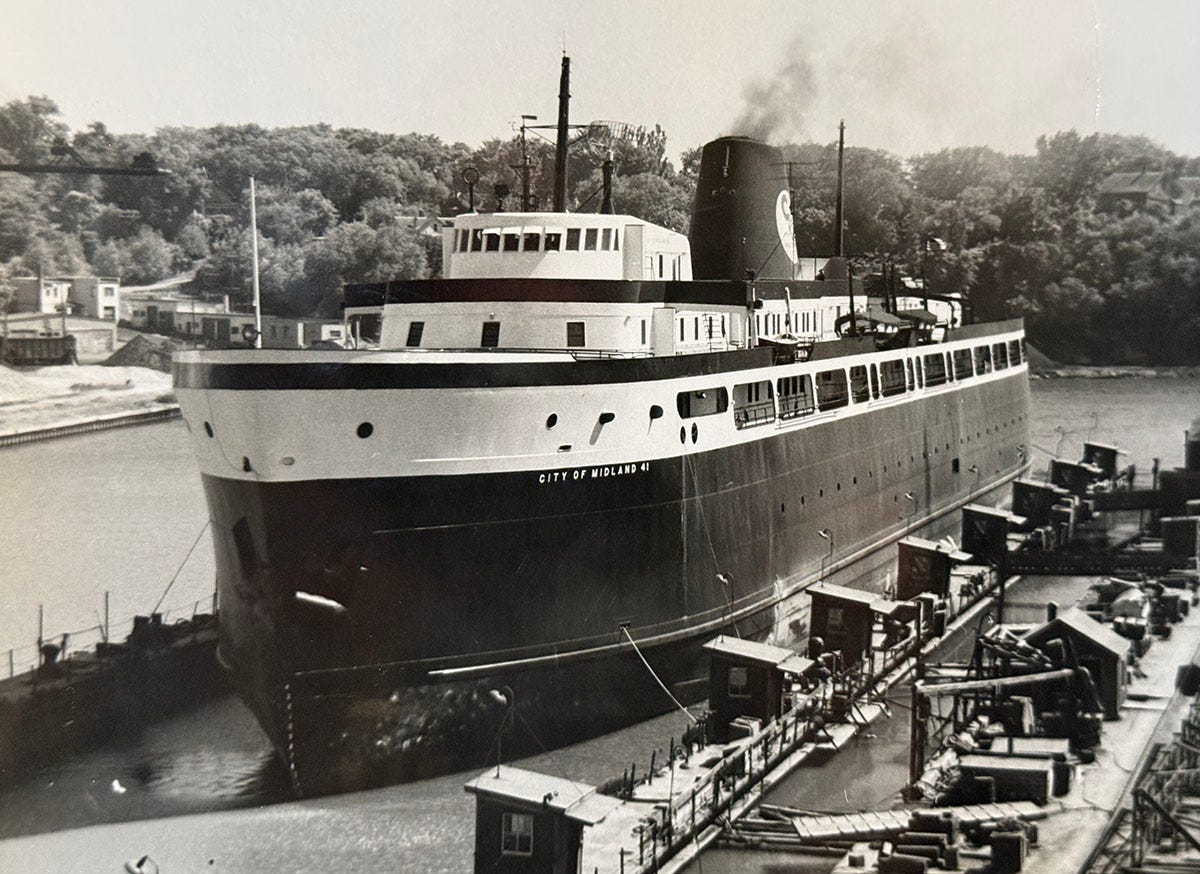
The 403-foot Pere Marquette 41 was originally the railroad carferry SS City of Midland 41, built in 1941 by Manitowoc Shipbuilding Company in Manitowoc, Wisconsin. She was the last carferry built for the Pere Marquette Railway and was considered one of the finest vessels of her kind.
The City of Midland 41 operated out of Ludington for 47 years, serving the Pere Marquette Railway, Chesapeake & Ohio Railway, and Michigan-Wisconsin Transportation Company before being retired from carferry service in 1988.
In 1991, Ludington native and retired businessman Charles Conrad purchased the City of Midland 41, along with the Badger and Spartan, establishing Lake Michigan Carferry.
In 1996, under the leadership of Robert Manglitz, Conrad’s son-in-law, Lake Michigan Carferry began exploring ways to return the former City of Midland 41 to commercial service. Ed Wiltse, then a mate aboard the Badger and now one of her captains, developed plans to convert the former carferry into a bulk cargo barge and establish Pere Marquette Shipping Company.
Assisting Wiltse was Chuck Leonard, who had begun working for the Ludington carferry operation in 1986 and today oversees Interlake Maritime Services’ Ludington operations.
The conversion began in 1997, and the new tug/barge operation entered service in 1998. The venture provided an additional source of revenue for the company operating the Badger while preserving commercial shipping jobs in Ludington.
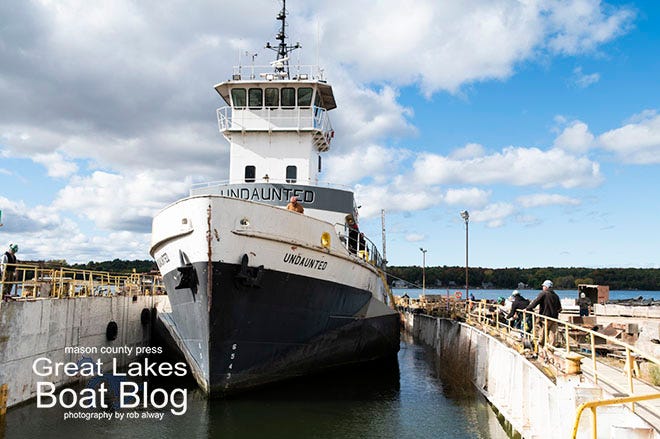
The 143-foot tug Undaunted also has a significant history.
Construction of the tug began in November 1943 in Port Arthur, Texas. She was commissioned by the U.S. Navy in October 1944 as USS ATA-199 and served in the Pacific theater during World War II, towing naval vessels and equipment.
Following her military service, the tug eventually became a training vessel for the U.S. Merchant Marine Academy under the name Kings Pointer.
In 1993, she was purchased by Basic Towing of Escanaba, Michigan, and renamed Krystal K.
Pere Marquette Shipping acquired the tug in 1998, restored her name to Undaunted, and had her rebuilt in Escanaba for her new role pushing the Pere Marquette 41.
The tug fits into a notch at the stern of the barge, where the two vessels are mechanically connected, creating an articulated tug/barge, or ATB, with an overall length of approximately 494 feet.
In December 2020, Interlake Maritime Services acquired both Pere Marquette Shipping and Lake Michigan Carferry. The tug/barge operation was renamed Interlake Logistics Solutions and continues to be based in Ludington.
Interlake Maritime Services, headquartered in Middleburg Heights, Ohio, also manages the Interlake Steamship Company, one of the largest commercial shipping operations on the Great Lakes. Its fleet includes the 1,013-foot Paul R. Tregurtha, the longest vessel on the Great Lakes.
For prospective employees, this winter offers an opportunity to become part of Ludington’s continuing commercial shipping industry, learn about working aboard a Great Lakes vessel, and potentially establish a career as a merchant mariner.
How to Apply
Those interested in winter employment with Interlake Logistics Solutions may apply at www.interlakelogistics.com by selecting “Apply Now.”
For questions about employment opportunities, contact Chuck Leonard at 231-590-8695.