


By Rob Alway
The final four months of 1929 were especially deadly for shipping on Lake Michigan. At least four shipwrecks resulted in the deaths of more than 100 people. This series examines those disasters and compares the circumstances that contributed to the complete loss of some crews while others survived.
The vessels lost included the SS Andaste (Sept. 9), SS Milwaukee (Oct. 22), SS Wisconsin (Oct. 29) and SS Senator (Oct. 31). Two of those wrecks claimed everyone aboard. Neither the Andaste nor the Milwaukee, the two vessels lost with all hands, carried wireless radio equipment.
Of those four wrecks, two resulted in the loss of everyone aboard. Neither of those ships, the Andaste and the Milwaukee, was equipped with wireless radio.
This is the fourth and final installment in the series. Part 1 told the story of the sinking of the SS Milwaukee carferry. Part 2 examined the loss of the SS Andaste and Part 3 looked at the sinking of the SS Wisconsin.
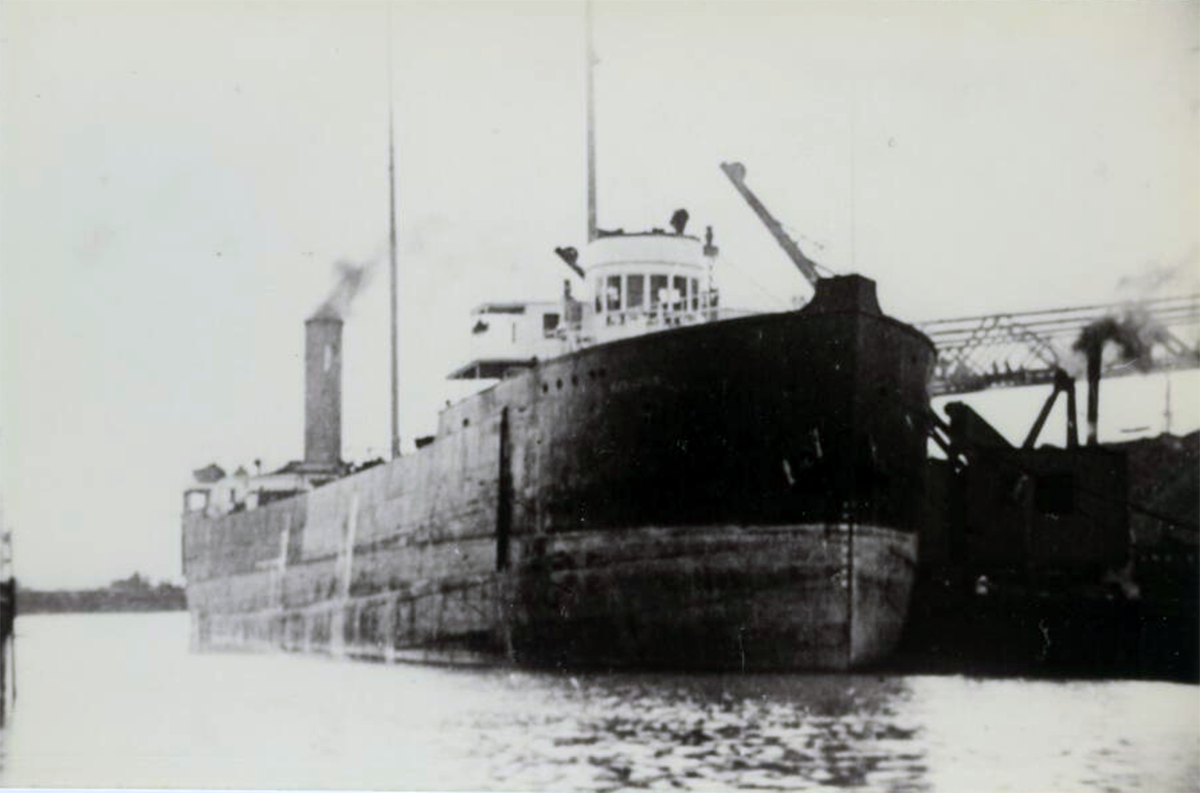
The previous shipwrecks discussed in this series were most likely caused by rough seas on Lake Michigan and involved individual vessels. The sinking of the steamship Senator, though also weather-related, was different. She went down after being rammed by another ship in dense fog on Halloween morning, Oct. 31, 1929.
Both the Milwaukee and Wisconsin had sailed out of Ludington, Michigan, at one time. Records are unclear whether the Andaste or Senator ever visited Ludington, but the Senator had an interesting connection to the city. Her name honored a former Ludington lumberman who had served as an Ohio state senator.
The history of the Senator
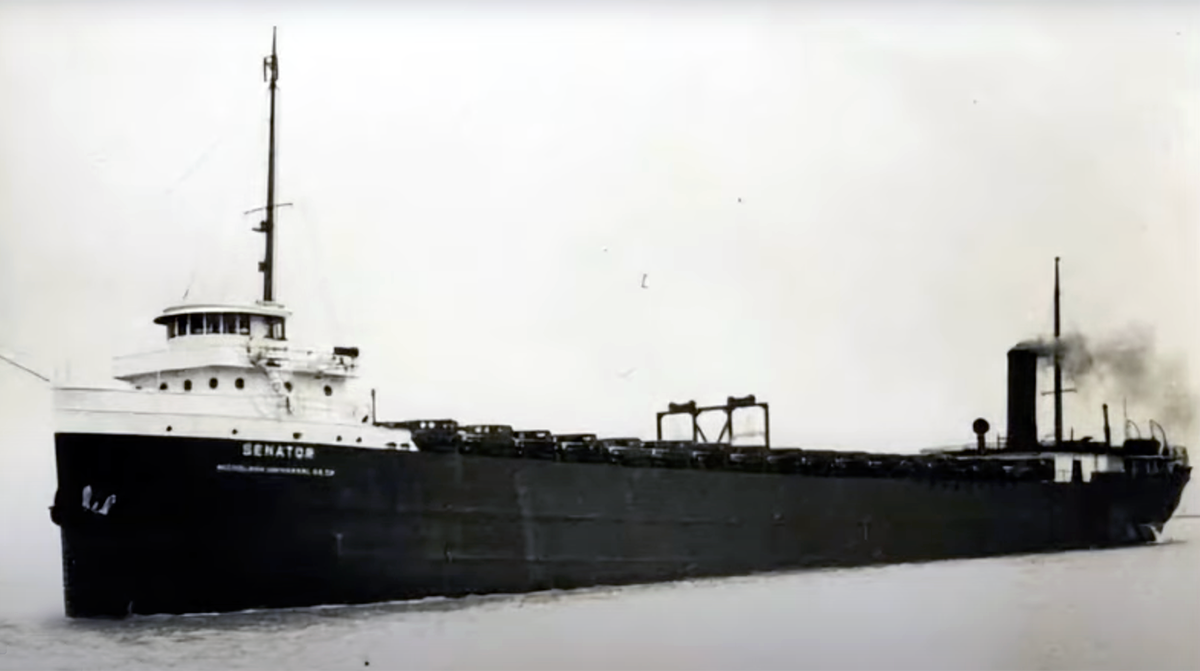
The Senator was built by Detroit Dry Dock Company in Wyandotte, Michigan, in 1896. She was 410 feet long, 45.5 feet wide and had a depth of 28 feet, with a gross register tonnage of 4,048.75 tons and a net tonnage of 3,178.66 tons.
She was powered by a 1,450-horsepower triple-expansion steam engine supplied by two coal-burning Scotch marine boilers and was capable of traveling up to 13 mph. Her original captain was H.B. McQueen.
Originally owned by Wolverine Steamship Co. of Detroit, Michigan, she entered service on July 25, 1896, as one of two ships built for the company.
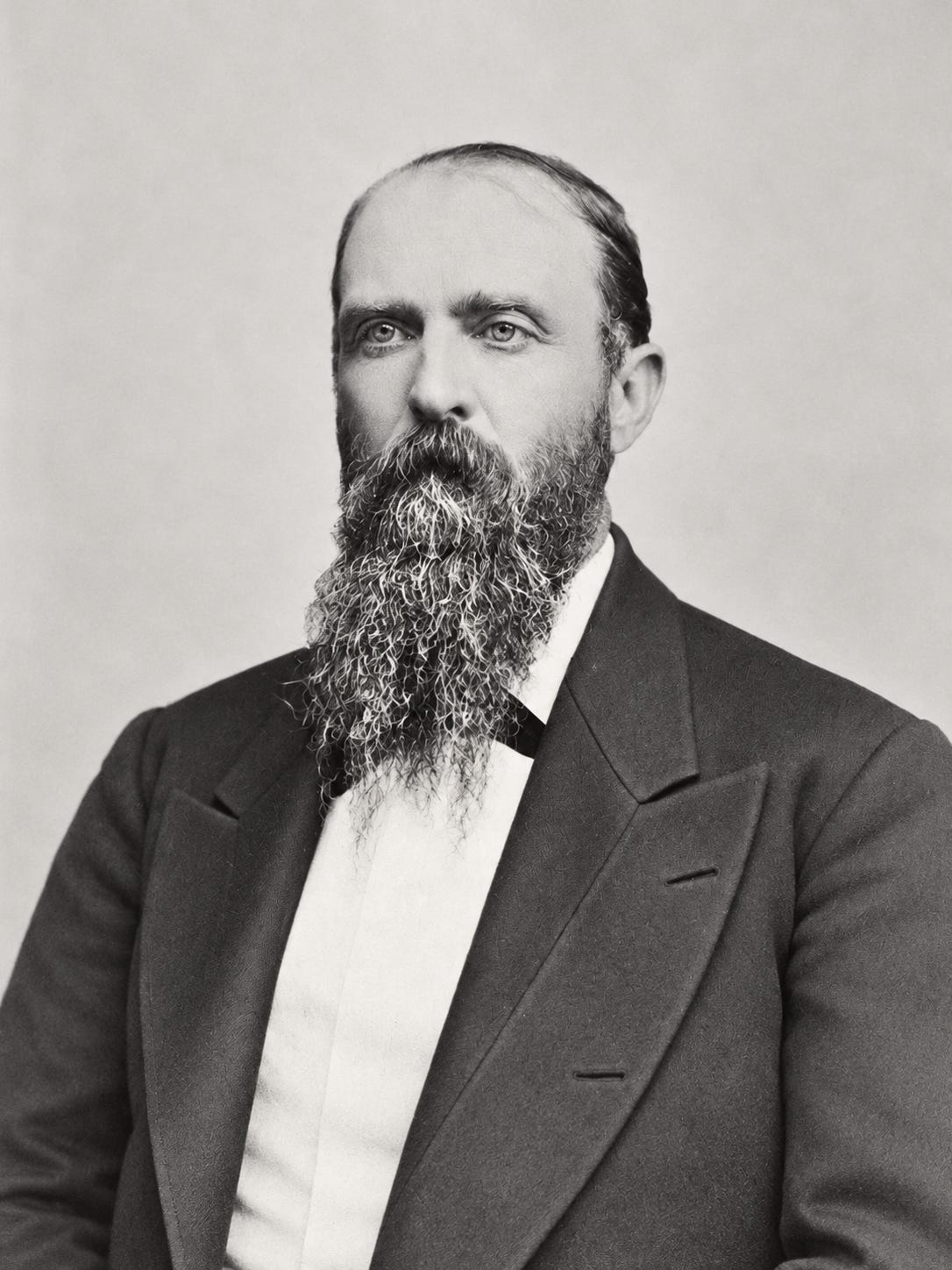
The ship was named in honor of Dr. George W. Roby (1823-1900), a former Ohio state senator and Ludington, Michigan lumberman. Roby was the father of John B. Roby, president of Wolverine Steamship.
George W. Roby was born in Ohio and served as an Ohio state senator. In 1845, he began practicing medicine in Pike County, Ohio, continuing until 1863. He then became a pharmacist in Columbus, Ohio, until 1871.
That year, Roby moved to Ludington, where he changed careers and founded the lumber firm George W. Roby & Co. The company began operating a mill on Pere Marquette Lake in 1872. At its inception, the company reportedly owned approximately 140 million feet of standing pine.
The mill was sold in 1886 to Pardee, Cook & Co. It was destroyed by fire in 1890 and never rebuilt.
George W. Roby and his son-in-law, Lewis C. Waldo, moved to Detroit in 1890, where they owned the Roby Transportation Company and Northwestern Transportation Company.
The name Senator recognized Roby’s former political position rather than using his name directly. Another ship operated by the Roby Transportation Company had already been named in his honor, the George W. Roby.
Built in 1889, the George W. Roby was, at the time, the largest steamer on the Great Lakes. She operated for seven years before being sold when the company built a new vessel, the L.C. Waldo, in 1896.
Earlier accidents
The Oct. 31, 1929, collision was not the Senator‘s first accident.
In June 1898, she became stranded on Ballard’s Reef near Detroit.
On Aug. 21, 1909, the steamship Norman B. Ream struck the Senator and sank her off Pipe Island in the St. Marys River, tearing a large hole in her starboard side.
The crew barely managed to run the vessel onto the middle ground before her hull filled with water.
She was raised on Sept. 12, 1909, and later towed to Cleveland, Ohio, where she underwent repairs costing $90,000.
The Senator returned to service and continued sailing the Great Lakes for another 20 years.
The Halloween collision
On the morning of Oct. 31, 1929, the Senator was under the command of Capt. George Kinch and was transporting 268 Nash automobiles, valued at $251,000, from Kenosha, Wisconsin, where the cars were manufactured, toward Detroit, Michigan.
The steamship Marquette, under the command of Capt. Walter F. Amesbury, was traveling from Escanaba, Michigan, to Indiana Harbor, Indiana, with approximately 7,000 tons of iron ore destined for the steel mills.
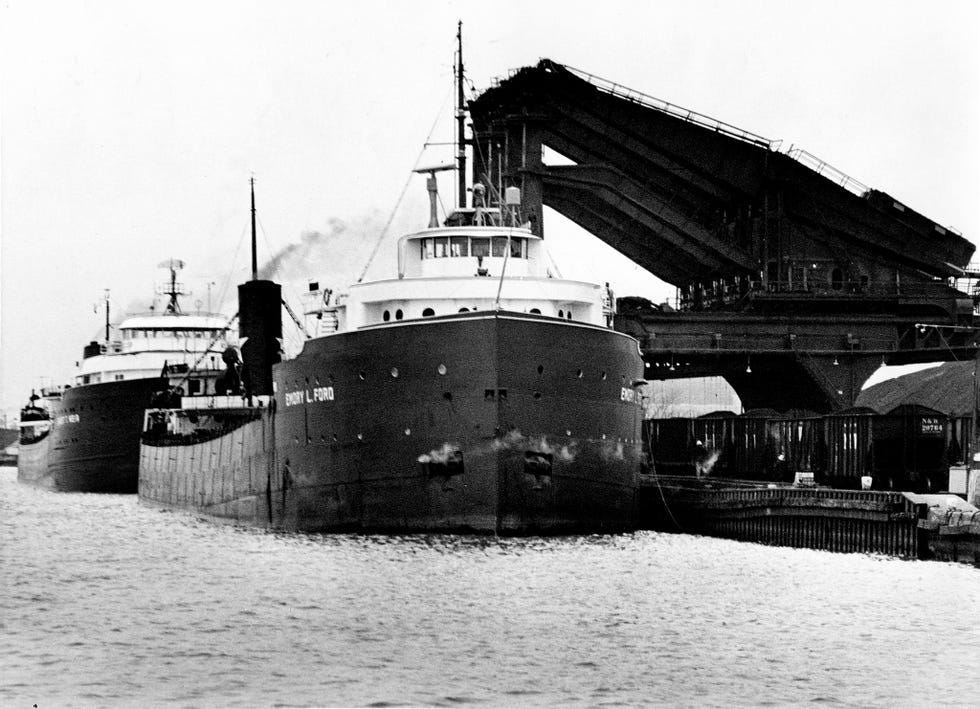
The Marquette was a steel-hulled bulk freighter built in 1906 by Great Lakes Engineering Works at Ecorse, Michigan. Originally named the E.L. Wallace, she was launched Sept. 8, 1906, as hull No. 24 and entered service the following month.
The vessel measured 440 feet in overall length, with a registered length of 420 feet, a beam of approximately 52 feet and a depth of 28 feet. Her gross registered tonnage was 4,956 tons.
Like many Great Lakes freighters of her era, the Marquette was powered by a coal-fired steam plant. Her triple-expansion steam engine developed approximately 1,600 indicated horsepower, driving a single propeller. She featured a single cargo deck with internal arch construction and cargo hatches spaced approximately 24 feet apart.
The ship was originally operated by the Dearborn Transit Company of Dearborn, Michigan. On Nov. 26, 1915, she was sold to the Grand Island Steamship Company of Cleveland, Ohio, under the management of the Cleveland-Cliffs Iron Company. She was renamed Marquette in 1916.
In 1921, the vessel became part of the Cleveland-Cliffs Steamship Company fleet, which carried iron ore and other bulk commodities supporting the Great Lakes industrial economy.
The Marquette‘s voyage on Halloween 1929 was typical of the iron ore trade that had become the foundation of Great Lakes commercial shipping. Ore mined in Michigan’s Upper Peninsula was transported by rail to waterfront loading docks, where it was transferred into the cargo holds of lake freighters.
The ore carriers then transported their cargoes to receiving docks serving steel mills in Michigan, Indiana, Ohio and other industrial centers. At Indiana Harbor, iron ore was an essential raw material for steel production in the rapidly developing industrial region at the southern end of Lake Michigan.
Unlike the Senator, which had been converted to transport automobiles, the Marquette remained a traditional bulk freighter. Her large cargo holds were designed to carry thousands of tons of loose material, with loading accomplished through the deck hatches. Unloading was generally performed using equipment at the receiving docks.
On Oct. 31, the two ships were approaching one another while engaged in very different trades. The Senator was carrying newly manufactured automobiles toward Detroit, while the Marquette was carrying the raw material needed to manufacture steel.
Visibility on Lake Michigan was limited to approximately 100 feet by dense fog. Despite those conditions, Capt. Kinch continued sailing the Senator at full speed.
Newspaper accounts stated that the Senator sounded a passing signal of one short blast, indicating a port-to-port passage. The Marquette reportedly acknowledged the signal by returning one short blast of her own.
The Marquette collided with the Senator approximately 16 miles northeast of Port Washington, Wisconsin.
The impact tore open the Senator‘s port side. She sank within eight minutes, leaving her crew struggling to survive in the cold waters of Lake Michigan.
The Marquette continued away from the scene, and her captain would later face criticism for failing to assist the sinking vessel’s crew.
“Capt. Amesbury took criticism for not stopping to help the crew of the Senator after the ship turned on its port side and sank,” a Port Huron Daily Tribune newspaper article stated. “The freighter went down in about five minutes. It sank so quickly that crew members didn’t have time to launch lifeboats.”
Deckhand William Driscoll of Detroit, who was making his first trip on a lake boat, was asleep in his bunk when the Marquette drove her bow into the port side of the Senator.
Driscoll said he managed to put on a shirt, trousers and a life preserver before reaching the deck. By that time, the Senator was listing heavily to port.
“There was no time to get off the boat because the Senator was going right under our feet,” Driscoll recalled. “We walked right out on the side and into the water. Seven or eight of us swam to a piece of wreckage and hung to it.”
Of the Senator‘s 28 crew members, seven died, including Capt. Kinch.
Wheelsman Herbert Petting was in the pilothouse with the captain when the collision occurred.
“The captain came to me after the collision and said: ‘Can you swim? You’d better get out of here,’” Petting recalled.
Petting left the wheel and ran to the deck to save himself.
Driscoll said he later saw Kinch walk into the water with the other men. The captain was wearing a life preserver, but Driscoll believed he had been pulled underwater as the ship sank.
In addition to Capt. Kinch, those who died included assistant steward Mrs. Matthew Gromley, First Mate John Neilson, Second Engineer T.A. Ammon and Porter Tony Moreno, all of Detroit; H.J. Grious of Toronto, Ontario; and Emil Passenger.
Newspapers of the era commonly identified married women by their husbands’ names rather than their own first names, which explains the identification of Mrs. Gromley.
The collision resulted in a federal investigation of the conduct of both captains. Federal steamship inspectors found that both vessels had been traveling at excessive speed in dense fog, contrary to navigation regulations.
Amesbury also faced scrutiny for the Marquette‘s failure to assist the sailors struggling in the water. According to the U.S. Steamboat Inspection Service’s 1930 annual report, charges against Amesbury were sustained and his master’s license was suspended for six months. Following an appeal, the suspension was reduced to three months.
The Marquette survived the collision and continued operating on the Great Lakes for more than three decades.
In 1963, the aging freighter was sold to Auxiliary Power Corporation and renamed Poweraux Roger. Plans called for converting her into a floating power station to provide temporary electricity to communities along the St. Lawrence River while permanent facilities were being constructed. The project was never implemented.
She was eventually sold for scrap in 1964 and arrived under tow at Hamburg, Germany, on March 4, 1965, ending a nearly 59-year career on the Great Lakes.
The rescue and investigation
Radio operator Ralph Ellis said he and two other sailors jumped from the Senator to the deck of the Marquette before the vessels separated.
Another 15 survivors spent approximately an hour in the water before being rescued by the fishing tug Delos H. Smith, which was working nearby and whose crew had heard the collision.
Petting and Second Mate Harvey Nicholson charged that the Marquette disappeared into the fog without launching lifeboats. They blamed Amesbury for the deaths of several crew members.
Amesbury offered a different account to investigators.
He said he had ordered two lifeboats lowered and had left the bow of the Marquette lodged in the Senator‘s side for approximately 10 minutes. He maintained that the Senator‘s crew had time to climb aboard his vessel.
The Marquette‘s second mate disputed Amesbury’s account.
According to the mate, Amesbury initially ordered the lifeboats manned because he believed his own ship might be sinking. Once it became apparent that the Marquette was not in danger, the lifeboats were never lowered.
An investigation later determined that both captains were equally at fault for operating their vessels at high speed in dense fog.
The Senator‘s owner, Nicholson Universal Steamship Company of Delaware, later honored Capt. Earl Godersky of the fishing tug Delos H. Smith and his three-man crew for their rescue efforts in the fog.
Their actions had saved 15 members of the Senator‘s crew.
Discovery of the wreck
The wreck of the Senator was located by shipwreck hunters Paul Ehorn and Rob Polich on June 10, 2005, using side-scan sonar. She rests in approximately 430 feet of water on the bottom of Lake Michigan.
Subsequent exploration using remotely operated vehicles (ROVs) revealed that the ship’s pilothouse and bow cabins remained in remarkably good condition.
The automobiles that had been carried on deck were found in a crumpled pile off the starboard stern.
Inside the ship, an ROV revealed Nash automobiles still lined up in neat rows of three in one of the cargo holds.
The vehicles, which had been manufactured just before the onset of the Great Depression, remain part of one of Lake Michigan’s most unusual underwater historical collections.
On April 12, 2016, the wreck of the Senator was added to the National Register of Historic Places.
Nearly a century after her sinking, the Senator and her cargo of automobiles remain on the bottom of Lake Michigan, a reminder of the dangers that Great Lakes mariners faced during one of the deadliest shipping periods in the lake’s history.
Help support this Substack page and check out our merchandise store.
This story is copyrighted 2026 by Sable Points Media.