


By Rob Alway
The final four months of 1929 were especially deadly for shipping on Lake Michigan. At least four shipwrecks resulted in the deaths of more than 100 people. This series examines those disasters and compares the circumstances that contributed to the complete loss of some crews while others survived.
The vessels lost included the SS Andaste (Sept. 9), SS Milwaukee (Oct. 22), SS Wisconsin (Oct. 29) and SS Senator (Oct. 31). Two of those wrecks claimed everyone aboard. Neither the Andaste nor the Milwaukee, the two vessels lost with all hands, carried wireless radio equipment.
Of those four wrecks, two resulted in the loss of everyone aboard. Neither of those ships, the Andaste and the Milwaukee, was equipped with wireless radio.
This is the third of a four part series. Part 1 focused on the sinking of the SS Milwaukee, the deadliest railroad car ferry disaster on the Great Lakes. Part 2 examined the sinking of the Andaste. Part 4 will examine the sinking of the SS Senator.
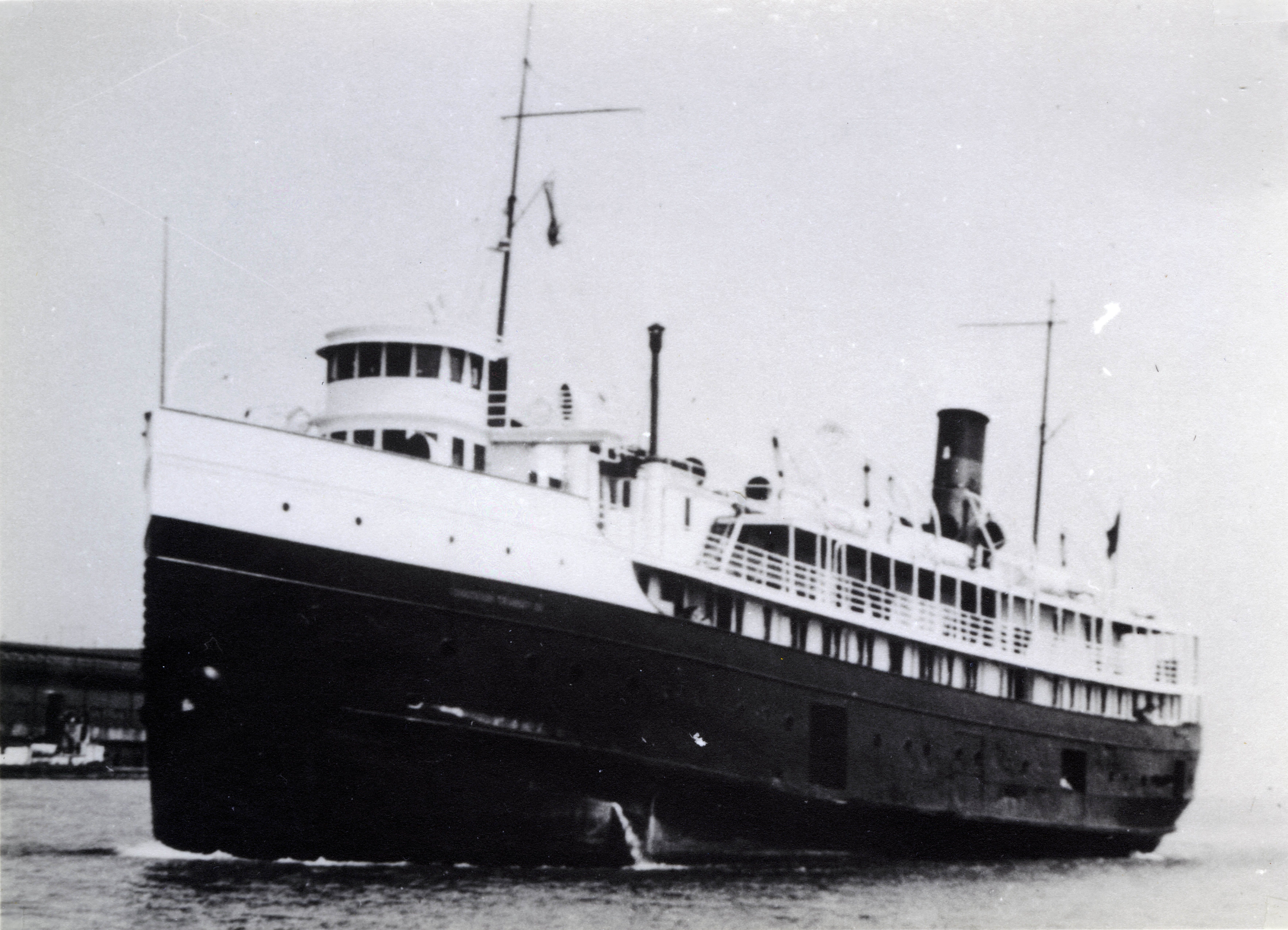
On the morning of Oct. 29, 1929, as the United States entered one of the darkest economic periods in its history, the SS Wisconsin sank in Lake Michigan near Kenosha, Wisconsin. Nine men lost their lives, including her captain.
Unlike the Andaste and the Milwaukee, which had disappeared with everyone aboard, the Wisconsin was equipped with wireless radio. Her crew was able to transmit distress calls, allowing rescue vessels to reach her before she sank.
The sinking brought an end to a nearly 48-year career for a passenger and freight steamer that had served several shipping companies, carried multiple names and survived other disasters.
The Goodrich years
In 1875, a year after the Flint & Pere Marquette Railway reached Ludington, Michigan, the railroad began cross-lake break-bulk freight service between Ludington and Wisconsin.
Break-bulk service involved removing freight from railroad cars at the docks, loading it aboard steamships and transporting it across Lake Michigan.
By 1876, the railroad had contracted with the Goodrich Transportation Company of Chicago, Illinois, to transport its freight. The arrangement became a lucrative contract for Goodrich, which developed into one of the largest passenger and freight transportation companies on Lake Michigan.
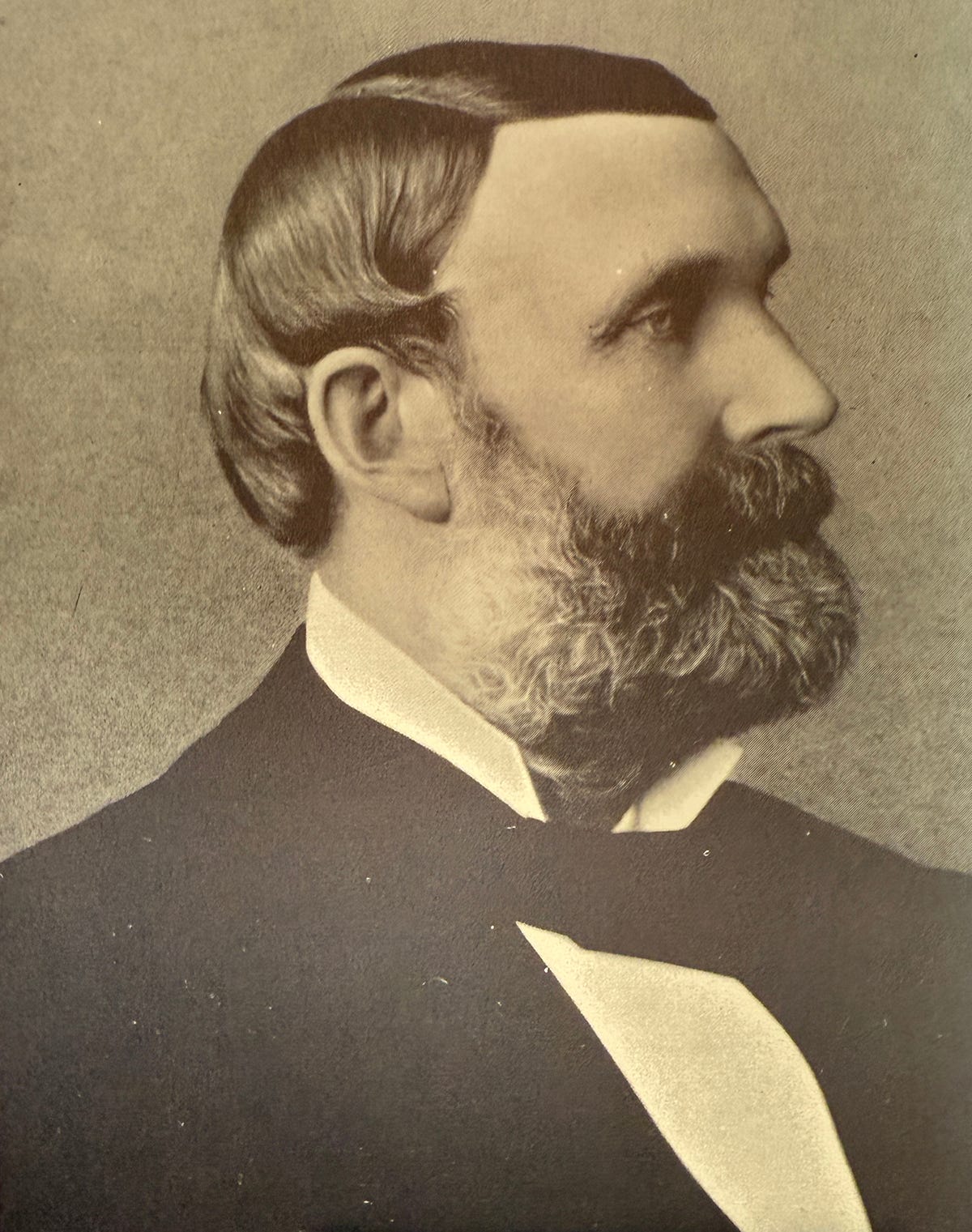
Goodrich Transportation Co., later known as Goodrich Transit Co., was founded by Capt. Albert Goodrich in 1855, when he was 30 years old. That year, he took possession of his first steamship, the 165-foot side-wheeler Huron, built in 1852.
In 1881, Goodrich hired naval architect Frank Kirby to design three new steamships for the Ludington-to-Milwaukee, Wisconsin, route.
The three vessels were built by the Detroit Dry Dock Company at Wyandotte, Michigan.
The first completed was the side-wheeler SS City of Milwaukee, launched Feb. 11, 1881, at a cost of $179,000. She should not be confused with the railroad car ferry City of Milwaukee built for the Grand Trunk Western Railroad following the 1929 sinking of the Milwaukee.
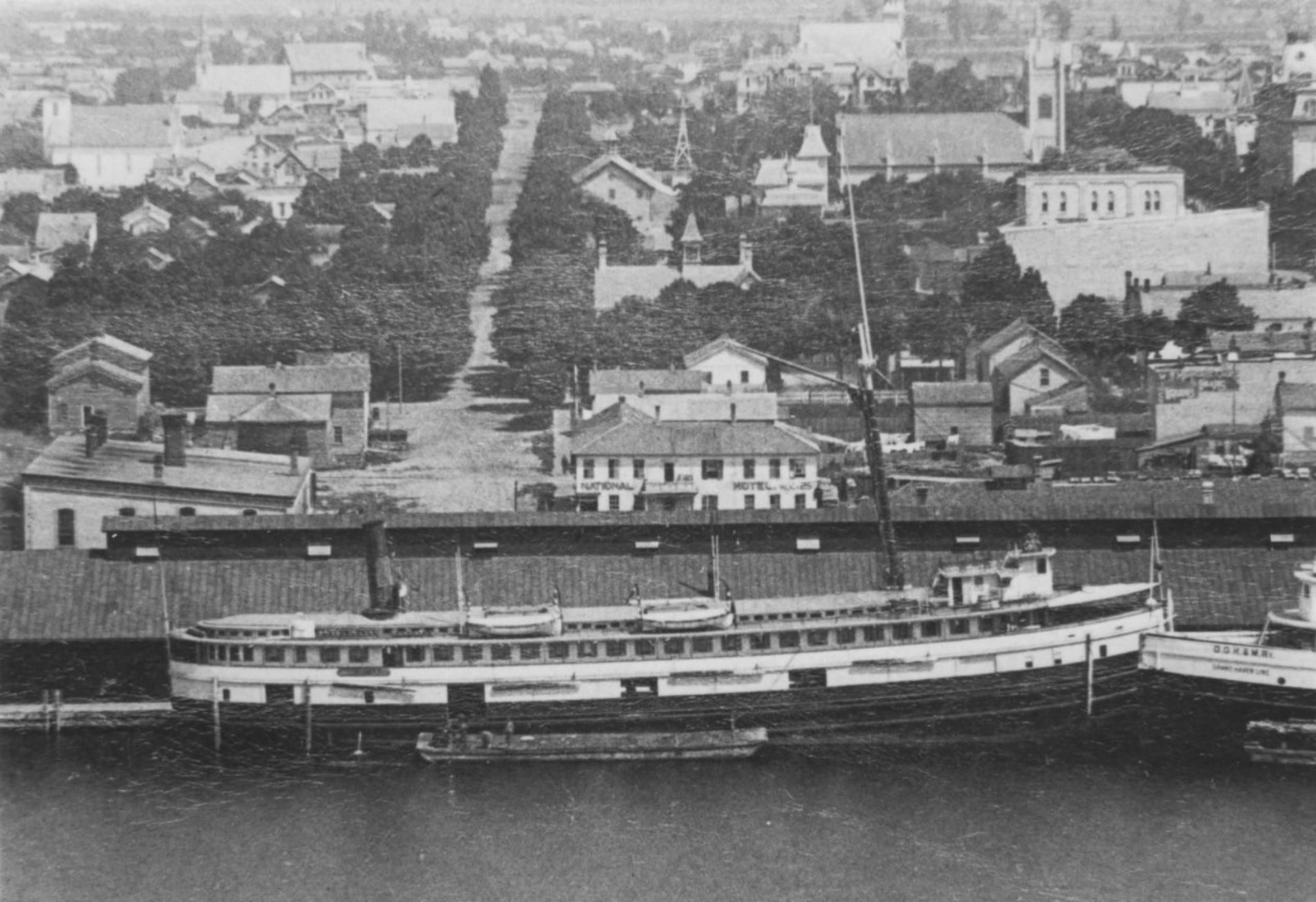
The other two steamships were propeller-driven vessels. The SS Michigan was launched Aug. 20, 1881, followed by the SS Wisconsin on Oct. 11, 1881.
Both steamers were taken to Milwaukee for fitting out and completion. They entered regular service before the end of the year.
The Michigan and Wisconsin were rated at 1,183 tons and were approximately 215 feet long, with beams of 34 feet and depths of 14 feet. Each cost $159,212.
Both ships were designed for winter service on Lake Michigan, incorporating heavy icebreaking features into their construction.
Their rounded forefeet and full entrances allowed the vessels to ride up on the ice and crush it with their weight, a feature later associated with railroad car ferries.
The ships also had double iron bottoms and iron main decks.
The three new Goodrich vessels operated on the Ludington route for only about two years.
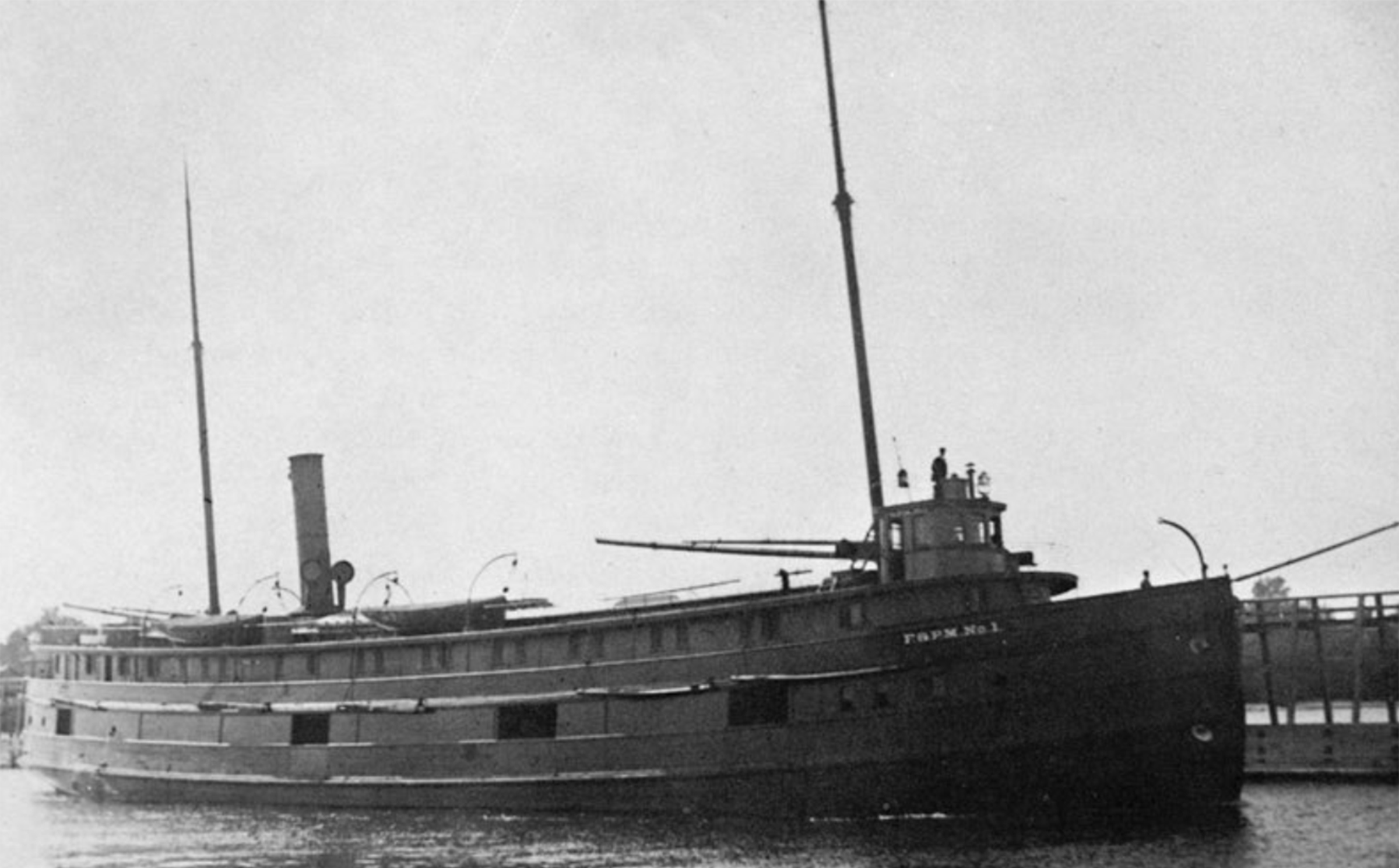
In 1882, the Flint & Pere Marquette Railway brought its first two company-owned steamships, F&PM No. 1 and F&PM No. 2, to Ludington. Their arrival demonstrated the railroad’s intention to enter the lake transportation business independently.
Freight business gradually shifted away from Goodrich.
On April 1, 1883, the Flint & Pere Marquette canceled its contract with Goodrich, ending the company’s Ludington-to-Milwaukee service.
The cancellation created a serious financial problem for Goodrich. Much of the company’s capital, along with money borrowed from banks, had been invested in the three new steamships and the development of the route.
With less than two years of earnings from the investment, Capt. Goodrich decided to sell the vessels to meet the company’s financial obligations.
On May 1, 1883, all three ships were sold to the Detroit, Grand Haven & Milwaukee Railway Co. The railroad paid $180,000 for the City of Milwaukee and $160,000 each for the Michigan and Wisconsin.
The Detroit, Grand Haven & Milwaukee operation became a predecessor of the Grand Trunk cross-lake service operated by the Grand Trunk Western Railway.
The loss of the Michigan
The Michigan became the first of the two sister ships to be lost, less than two years after the railroad purchased her.
During the winter of 1885, severe ice conditions disrupted Lake Michigan shipping. Although commercial navigation traditionally slowed or stopped during winter, an early February thaw had encouraged vessels to resume operations.
Soon after ships began leaving port, a powerful storm swept across the region, depositing approximately three feet of snow in two days.
Several vessels became trapped in lake ice, including the Michigan and Wisconsin.
Concerned that the trapped vessels and their cargoes could be lost, railroad officials decided to use the Michigan, with her reinforced hull, to break through the ice and free the ships.
On the morning of Feb. 9, 1885, the Michigan and her crew of 29 men set out on the rescue mission.
A gale drove her off course and into an expanding ice field. By the morning of Feb. 11, she was trapped and drifting south.
By Feb. 17, conditions had not improved and the crew’s supplies were running low.
Her captain ordered rationing and organized a party of 17 men to make their way across the frozen lake to shore.
Armed with ice picks, axes and ropes, the men traveled approximately 12 miles across the ice before reaching shore in Allegan County, Michigan.
On Feb. 21, a supply vessel reached the trapped Michigan and replenished her provisions.
Four weeks passed before the ice began to break up.
On March 19, the pressure of the surrounding ice caused the vessel’s double iron hull to buckle. The crew could hear the strain on the ship throughout the night.
The tug Arctic arrived the following day in a final attempt to free the Michigan, but the tug also became trapped.
Late that night, the Michigan began filling with water and her captain ordered the crew to abandon ship.
All aboard escaped and watched as the Michigan disappeared beneath the ice. The survivors waited aboard the trapped Arctic until conditions improved and the tug was freed.
No lives were lost.
The Wisconsin had also been trapped in the ice for more than two weeks but survived. She was sent to a shipyard for extensive hull repairs before returning to cross-lake service.
The Crosby Line and the Naomi
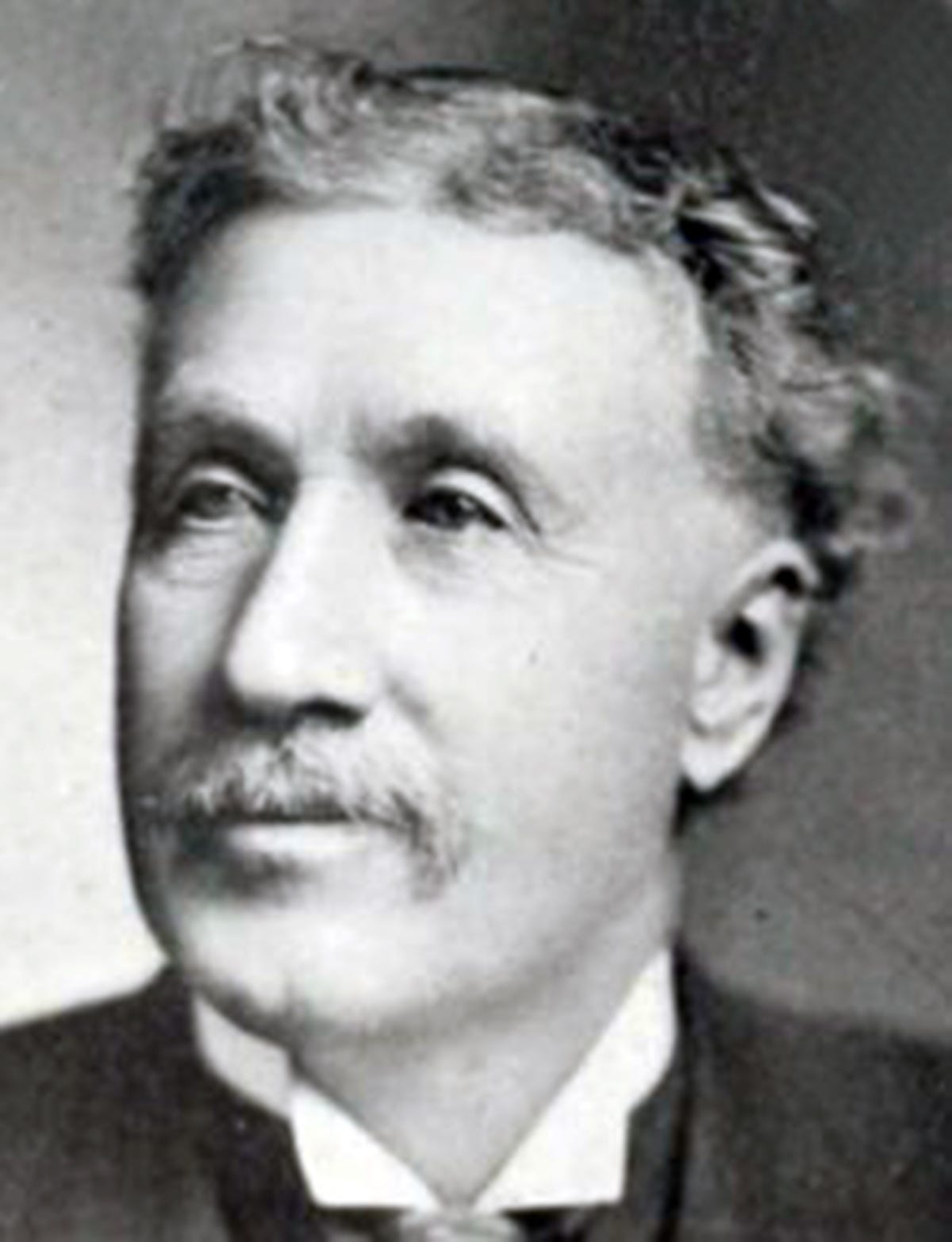
In 1896, the Wisconsin was sold to Edward Gifford Crosby and his business associates of Muskegon, Michigan.
Their new steamship company, the Crosby Transportation Company, operated passenger and freight service across Lake Michigan, including routes between Muskegon, Grand Haven, Michigan, and Milwaukee.
Crosby had begun his maritime career operating tugs on Muskegon Lake. His vessels towed schooners and barges serving the lumber mills lining the lake.
Some of the towing work involved railroad car floats that permitted lumber to be loaded directly into railcars at the mills.
In 1893, Crosby took over the existing McElroy operation, intending to carry freight for the Grand Rapids & Indiana Railway and the Chicago & West Michigan Railway.
Crosby used the McElroy dock at Milwaukee as he expanded into cross-lake transportation.
On Dec. 7, 1895, he negotiated a contract to transport Grand Rapids & Indiana freight to Milwaukee. His company also assumed operations of the Detroit, Grand Haven & Milwaukee’s cross-lake service from Grand Haven.
The following year, Crosby acquired the Wisconsin.
In 1898, she was renamed Naomi in honor of Crosby’s daughter.
The Naomi continued carrying passengers and freight across Lake Michigan for several years, but another disaster nearly ended her career.
The 1907 fire
During the early morning hours of May 14, 1907, the Naomi caught fire while crossing Lake Michigan.
The vessel was approximately 28 miles west of Grand Haven, bound for Milwaukee, when flames broke out in her freight hold.
The passing steamer Kansas observed the fire and alerted those aboard the Naomi.
Other vessels responded, including the bulk freighter W.H. Kerr, which maneuvered her bow against the stern of the burning steamship, allowing passengers and crew to escape.
The fire spread rapidly through the vessel, making the use of some lifeboats and escape routes impossible.
Four crewmen working below decks were trapped by the flames and died. A passenger also died from injuries suffered during the fire. Additional remains were discovered during the subsequent cleanup of the burned vessel.
Among the Naomi‘s officers was First Mate Robert McKay Jr., who would later command the ill-fated railroad car ferry Milwaukee.
After the fire burned itself out, the Naomi was towed to Grand Haven by the Kansas.
Her cabins and public rooms had been destroyed, leaving a twisted mass of steel railings and structural supports.
The burned vessel eventually was taken to Manitowoc, Wisconsin, where she underwent a complete rebuilding.
Her main deck was widened by approximately six feet through the addition of a bustle along the hull. The new plating began above her fully loaded waterline.
A steel superstructure replaced the damaged upper works.
When the reconstruction was completed, the vessel had 100 passenger cabins arranged on two decks, along with elegant parlors and public rooms. Wood paneling was used extensively throughout her interior.
The reconstruction cost approximately $200,000.
From the Titanic to wartime service
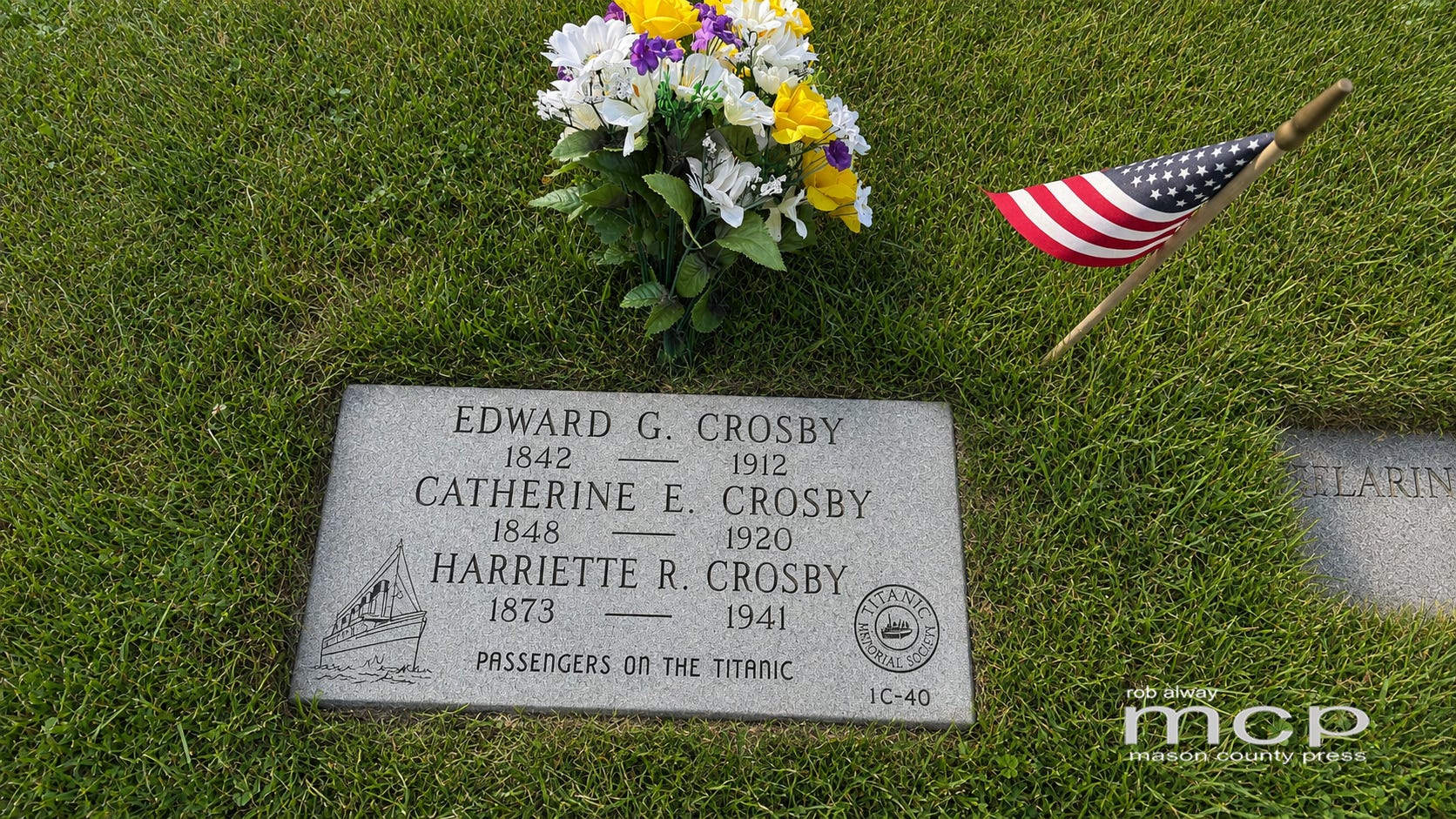
In 1912, Edward G. Crosby lost his life aboard the RMS Titanic during her maiden voyage.
The steamship was subsequently renamed E.G. Crosby in his honor.
She continued carrying passengers and railroad freight across Lake Michigan until July 1918, when the United States Shipping Board took control of her for wartime service.
The vessel was taken to New York Harbor and renamed General Robert M. O’Reilly. She served as a convalescent hospital ship during World War I.
Following the war, the government declared her surplus and offered her for sale.
The Seymour Line purchased the vessel, renamed her Pilgrim and returned her to Lake Michigan.
The Pilgrim operated between Milwaukee, Racine, Wisconsin, and Chicago.
When the Seymour Line failed, the operation passed to the Chicago, Milwaukee & Racine Steamship Co.
On March 22, 1922, Harry Thorp, president of the reorganized Goodrich Transit Co. and a native of Manistee, Michigan, completed the purchase of the company’s assets and properties.
The acquisition included two steamships, the Illinois and the Pilgrim, which had competed directly with Goodrich vessels on the same routes.
Two days after the purchase, Goodrich sent the Pilgrim to the Manitowoc shipyard for another extensive overhaul.
Her overnight passenger accommodations were improved before she returned to service between Chicago and Milwaukee, operating as the night boat opposite the Illinois.
In 1924, Goodrich restored her original name, Wisconsin.
After more than four decades and several changes in ownership, the steamship was once again sailing under the name she had received at her launch in 1881.
The Illinois and the warning of 1923
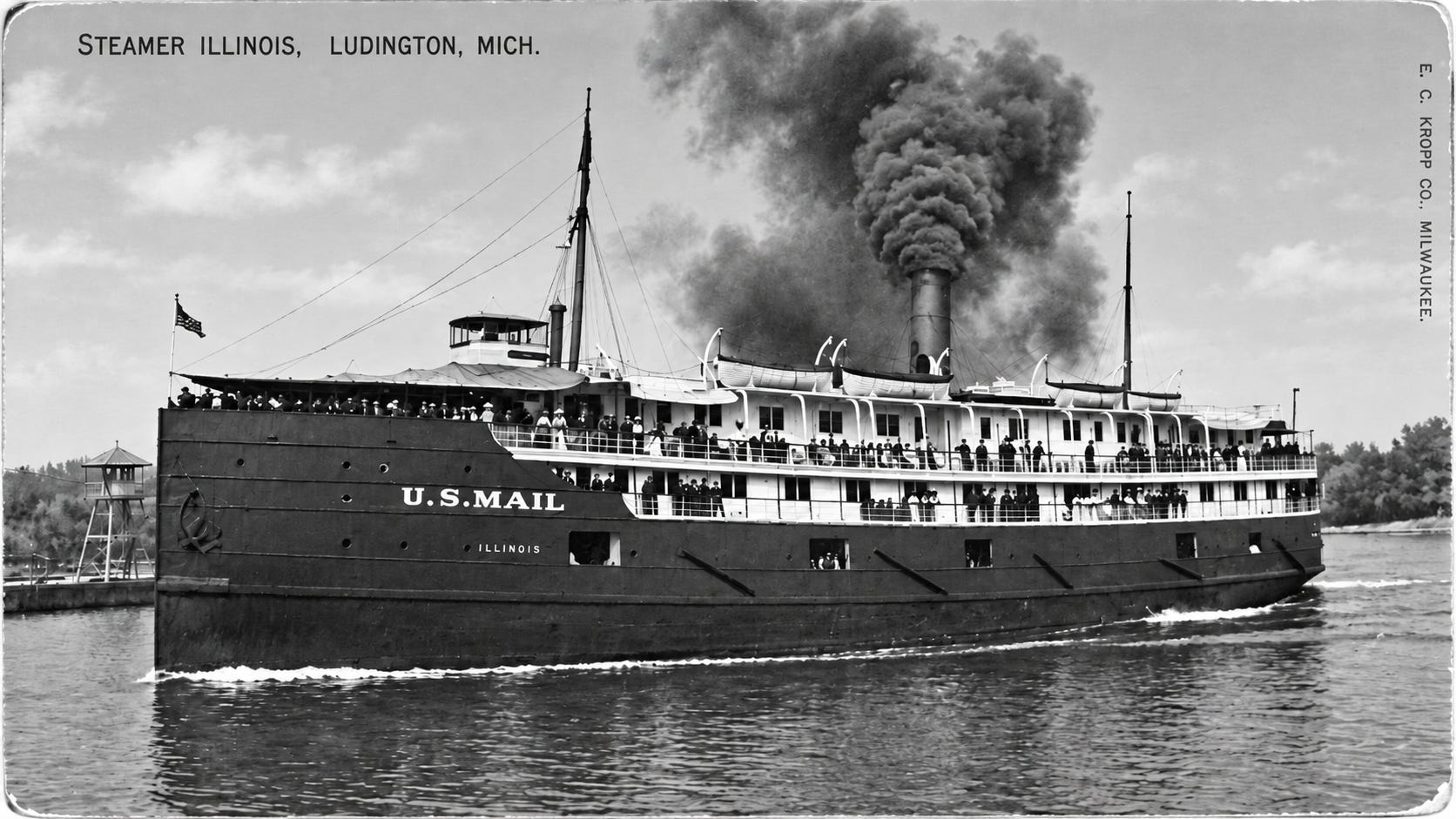
The Illinois, which operated opposite the Wisconsin, was a steel passenger and freight steamer built in 1899 by the Chicago Shipbuilding Co. for the Northern Michigan Transportation Co.
She measured 240 feet long, with a 40-foot beam and a depth of 26 feet.
The coal-fired vessel was powered by a single screw and a triple-expansion steam engine capable of producing approximately 1,250 horsepower at 114 revolutions per minute.
She initially operated between Chicago and Mackinac Island, Michigan, stopping at Ludington, Manistee, Frankfort, Michigan, Traverse City, Michigan, and Charlevoix, Michigan.
In 1923, while the Pilgrim was under the command of Capt. D.J. McGarity, she encountered a powerful northeasterly storm while sailing between Chicago and Milwaukee.
The seas were so heavy that McGarity decided to bypass Racine and continue directly to Milwaukee.
Before morning, water had entered the engine room, boiler room and coal bunkers. The ship developed a heavy list to port.
Despite the list, McGarity brought her through Milwaukee’s drawbridges without assistance and safely docked at her regular berth.
An inspection determined that water had entered through the forward section of the bustle on the starboard side.
Because the vessel naturally trimmed down by the stern, water entering through the bustle traveled aft toward the machinery spaces.
Extensive welding was completed where the bustle plating joined the hull. The repairs were believed to have corrected the problem.
The vessel eventually resumed service under her original name, Wisconsin.
The storms of October 1929
On Oct. 22, 1929, a powerful storm swept across Lake Michigan.
Conditions were severe enough that the Pere Marquette Railway kept its Ludington-based railroad car ferry fleet in port.
Other companies continued operating, including Goodrich Transit and the Grand Trunk Milwaukee Car Ferry Co., a subsidiary of the Grand Trunk Western Railway operating from Grand Haven.
Most vessels caught in the storm eventually reached safety, although many sustained damage.
The 338-foot railroad car ferry Milwaukee was not among them.
She sank in the storm with the loss of everyone aboard.
The Wisconsin also encountered the gale while making her scheduled trip from Chicago to Milwaukee.
She bypassed her usual Racine stop and eventually reached Milwaukee with her cargo shifted and a pronounced list to port.
It was a warning of what Lake Michigan could do to even a heavily built passenger steamer.
One week later, the Wisconsin would face another storm.
The final voyage
On the evening of Monday, Oct. 28, 1929, the Wisconsin departed Chicago on her regular voyage to Racine and Milwaukee.
Capt. Dougal H. Morrison was in command.
Aboard were four passengers and 64 crew members.
The ship carried iron castings, automobiles and a substantial quantity of boxed freight.
A northeasterly gale was developing as the Wisconsin passed the Chicago harbor piers and began her northbound crossing.
As the evening progressed, the winds shifted toward the east-northeast and increased to gale force.
Heavy seas pounded her starboard bow as she fought her way north.
By approximately midnight, as the ship approached the waters off Kenosha, conditions had deteriorated further.
The continued pounding caused cargo to shift.
In the engine room, crew members discovered large quantities of water accumulating in the aft portion of the ship.
The information was relayed to Capt. Morrison on the bridge.
Pumps were started, but they could not keep pace with the flooding.
It was apparent that the Wisconsin was in serious trouble.
By approximately 1:30 a.m. Tuesday, Oct. 29, a wireless distress message had been transmitted, indicating that several holds were flooding and the ship needed to reach Racine.
The Illinois, which operated opposite the Wisconsin on the Chicago-to-Milwaukee route, was in Racine Harbor.
But conditions at Racine were difficult. Vessels had crowded into the harbor seeking shelter from the storm.
The crew of the Wisconsin continued fighting the flooding.
Capt. Morrison brought the ship’s bow into the wind and ordered her port anchor dropped, hoping to steady the vessel while directing available steam to the pumps.
Loose coal washed from the bunkers began collecting around the pumps’ screened intakes, further reducing their ability to remove water.
As the pumps struggled, water continued rising in the engine and boiler rooms.
The situation grew increasingly dangerous.
With water threatening the boilers, the crew faced the possibility of losing steam entirely.
At approximately 2:15 a.m., the Coast Guard was alerted that the Wisconsin needed assistance.
The situation became more desperate as the ship’s fires went out and she lost power.
Another wireless message reported:
“Fires out. No Steam. Rush boats for tow before it is too late. We may save her.”
A passenger gangway on the starboard side eventually gave way, permitting additional water to enter the vessel.
With her machinery disabled and flooding continuing, the Wisconsin was fighting for survival.
Her wireless equipment allowed the crew to communicate with shore stations and responding vessels.
That ability was a critical difference between the Wisconsin and the Milwaukee, which had disappeared only a week earlier without a wireless distress call.
The rescue
A Coast Guard motor lifeboat from Kenosha headed toward the distressed steamer.
Another Coast Guard lifeboat departed Racine.
The fishing tug Search, operated by the Chambers brothers of Kenosha, also responded.
Conditions made rescue extremely difficult.
The enormous waves prevented the smaller boats from safely remaining alongside the Wisconsin.
Meanwhile, the Illinois was preparing to assist.
Steam was raised aboard the vessel, and arrangements were made to use the tug Butterfield to help maneuver her in the narrow Root River.
The Butterfield and her tow had taken refuge in Racine Harbor during the storm.
Her captain agreed to assist, although the tug was larger than normally used for maneuvering a steamer in the confined waterway.
Between the strong winds and an apparent misunderstanding of signals, the stern of the Illinois was forced against a bridge abutment and dock.
Her rudder was damaged, leaving her unable to proceed to the rescue.
A potential source of assistance was now unavailable.
Aboard the Wisconsin, the flooding continued.
At approximately 4:30 a.m., Capt. Morrison ordered the ship abandoned.
Crew members, assisted by passengers, began launching the port lifeboats.
Because the vessel had developed a severe list, the starboard lifeboats could not be used effectively.
Launching the remaining boats in the heavy seas was dangerous and time-consuming.
Over the following hours, survivors escaped in lifeboats and life rafts or entered the frigid waters of Lake Michigan.
The Coast Guard crews and other rescuers worked to retrieve them.
At approximately 7 a.m., the rescue operation was still underway.
Around 7:10 a.m., the Wisconsin began her final plunge.
As she sank, her superstructure separated from the hull, scattering wreckage across a wide area of the lake.
The steamship that had survived ice fields, a devastating fire and nearly five decades of Lake Michigan service disappeared beneath the waves.
Fifty-nine people were rescued.
Nine men lost their lives.
Among the dead was Chief Engineer Julius Buschman, 70, of Manitowoc.
Capt. Morrison was pulled from the water but died shortly afterward from shock and exposure.
Most of the fatalities resulted from exposure to the cold water, rather than drowning.
The wreck was another reminder of the dangers of Lake Michigan shipping and the importance of lifesaving equipment, wireless communication and timely rescue.
The victims
The nine fatalities identified in the historical record of the sinking included:
• Capt. Dougal H. Morrison, Chicago
• Chief Engineer Julius Buschman, Manitowoc
• Deckhand Victor Jocius
• Deckhand Stanley Rickus
• Deckhand Joseph Metz
• Cook I.B.H. Decassagas
• Third Cook known as “Old Joe”
• Watchman Walter Rein
• An unidentified deckhand
Historical records contain variations in the spellings and identities of some crew members.
Several bodies recovered after the storm were initially unidentified and buried in Kenosha. Subsequent efforts established the identity of at least one of those victims.
Exploring the Wisconsin
Efforts to explore and salvage the sunken Wisconsin began within a few years of her sinking.
During the 1930s, hardhat diver Frank Hefling attempted to recover material from the wreck.
He located the Wisconsin and gained entry to her hull by blasting open one of the cargo gangway doors.
The effort produced little of value, and legal disputes involving salvage rights eventually complicated the project.
Hefling abandoned his efforts to salvage the vessel.
He later lost his life while conducting a routine underwater inspection of a pipeline in southern Lake Michigan in September 1963.
The vessel from which he was working fouled his diving lines, and its propeller severed his air hose while he was working in approximately 30 feet of water.
Another diver, Richard T. Race of Chicago, became interested in the Wisconsin in 1961.
Race studied newspaper accounts, Coast Guard records and other historical information. He also interviewed individuals who had knowledge of the ship and her operation, including Capt. McGarity, who had previously commanded her.
Race searched approximately three square miles of lake bottom near Kenosha and located the wreck in about 125 feet of water, approximately 6.5 miles east-southeast of the city.
The Wisconsin was resting upright in mud and soft sand, her hull partially embedded in the lake bottom.
Her bow pointed generally north.
The port anchor chain extended from the bow toward the east-northeast, where the anchor remained buried in the lake bottom.
Much of the steel superstructure had been swept away, leaving a tangle of supporting beams.
Her smokestack lay lengthwise on the deck, with portions of its bright red paint still visible.
Among the most remarkable discoveries were automobiles still inside the ship’s cargo holds.
Race observed three cars in a surprising state of preservation: a Hudson, an Essex and a Chevrolet touring car. The Chevrolet’s fabric top remained intact.
Race also reported finding human remains inside the vessel, including two sets in the crew quarters and another in the wheelhouse area.
The remains were left undisturbed.
The Wisconsin remains on the bottom of Lake Michigan, where her hull, machinery and cargo provide a rare look at the development of passenger and freight steamship transportation on the Great Lakes.
Her wreck is listed on the National Register of Historic Places.
The vessel’s long history was remarkable. She had been built for the Goodrich line, sold to a railroad, trapped in heavy ice, nearly destroyed by fire, rebuilt as a modern passenger steamer, operated as a wartime hospital ship and eventually returned to her original name.
Her final voyage also illustrated the importance of wireless radio.
During the four deadly Lake Michigan shipwrecks of 1929, communication and the availability of rescue vessels made a profound difference in the number of lives lost.
For the Wisconsin, that difference meant 59 people survived.
Nine did not.
Part 4 of this series will examine the sinking of the SS Senator, which was lost on Oct. 31, 1929, just two days after the Wisconsin.
Help support this Substack page and check out our merchandise store.
This story is copyrighted 2026 by Sable Points Media.