


By Rob Alway
While the passenger carferries and many other vessels survived the Armistice Day Storm, the fate of two bulk freighters off the Mason and Oceana county shore was far worse. Their losses became some of the deadliest episodes of Nov. 11, 1940.
The loss of life on Lake Michigan
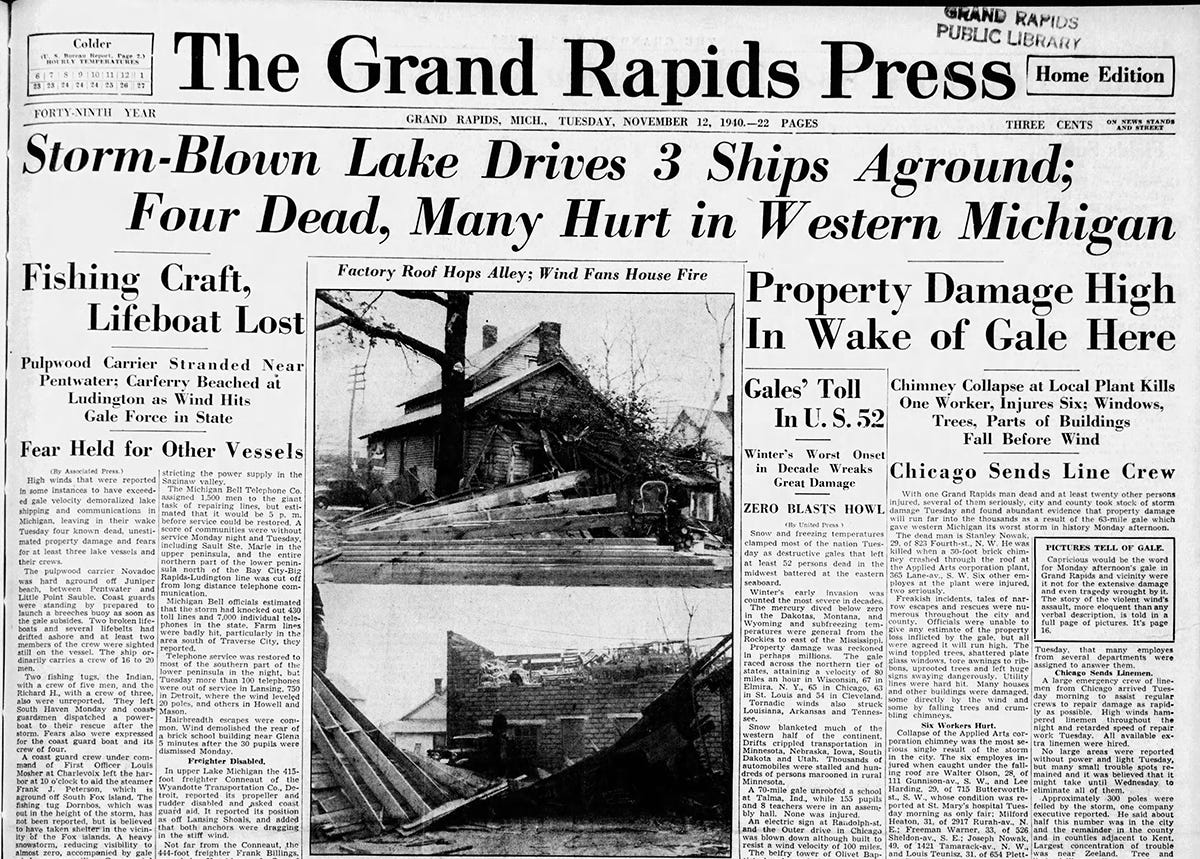
Although City of Flint 32 and many other ships survived damage and grounding, the three freighters lost off the Mason and Oceana county coast accounted for 59 deaths, according to the National Weather Service: 33 from William B. Davock, 24 from Anna C. Minch, and two from Novadoc. At least seven more fishermen died aboard the tugs Richard H. and Indian farther south, while the motor cruiser Nancy Jane was also lost with her occupants. Historical summaries sometimes mix the freighter death toll with the wider Lake Michigan toll, and crew figures vary between individual accounts.
William B. Davock: Thirty-three men lost
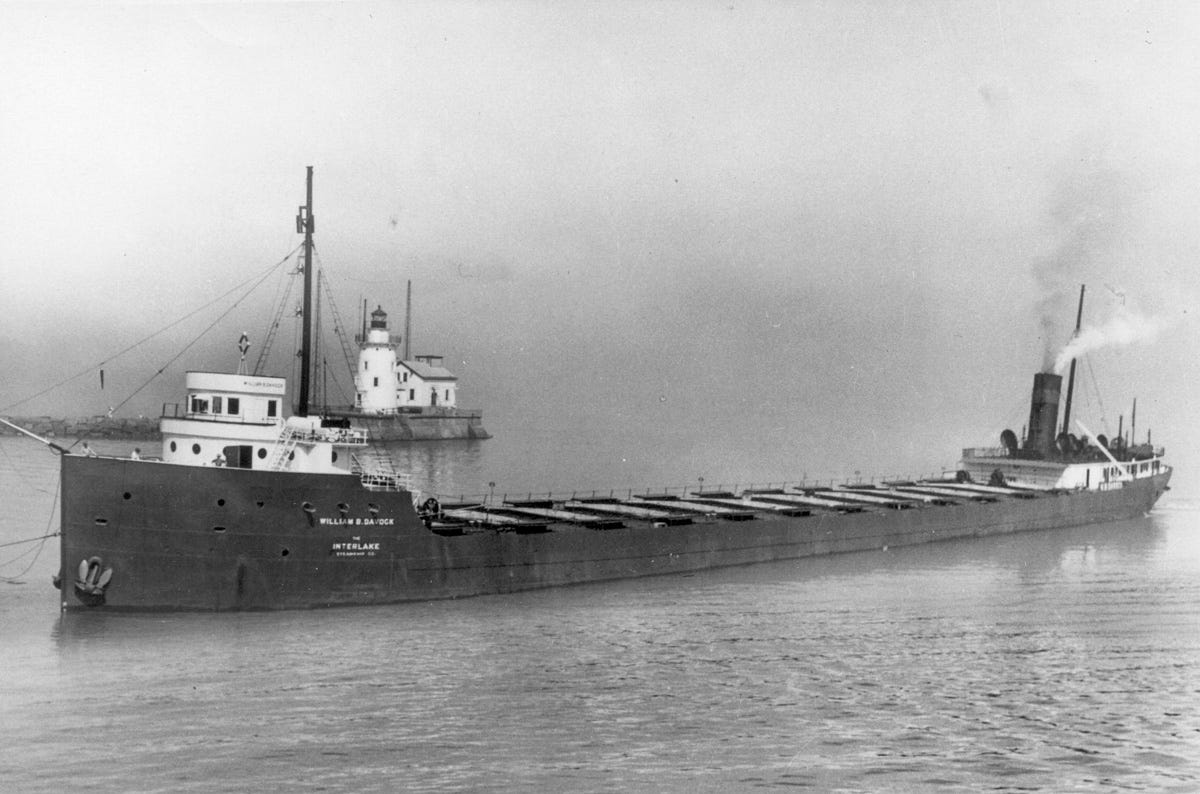
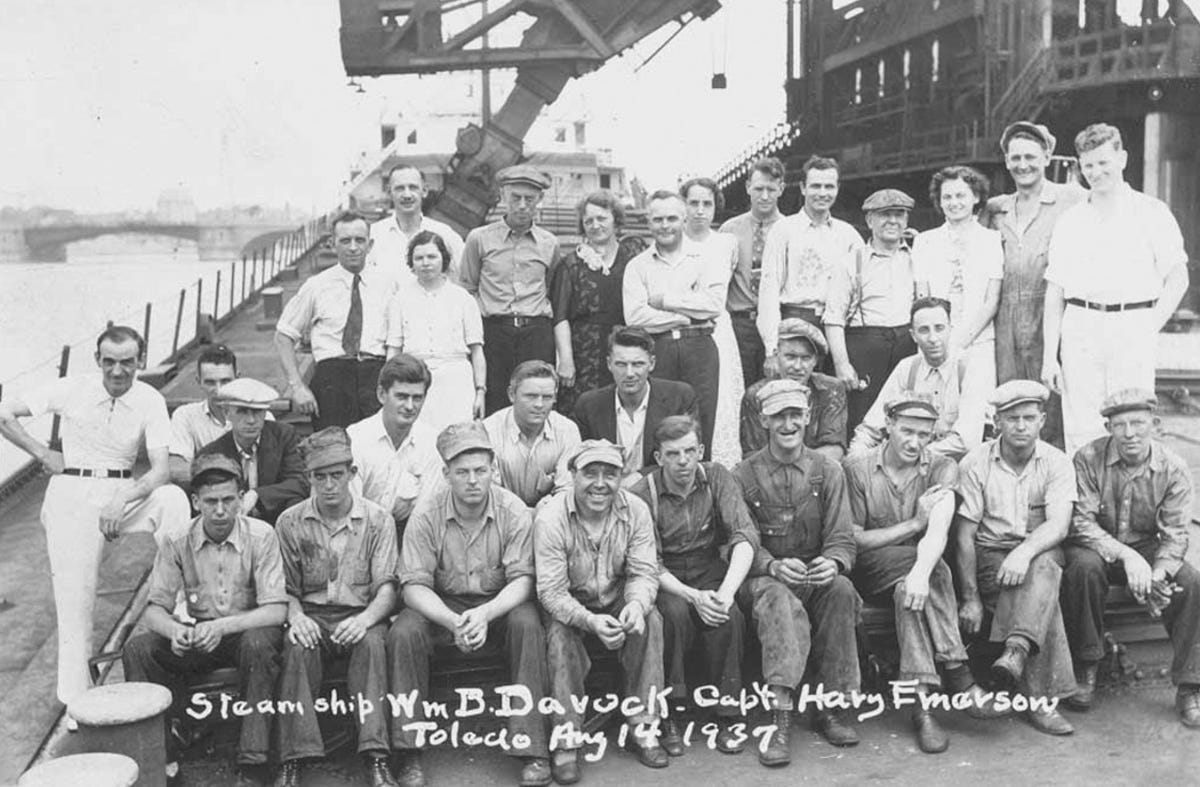
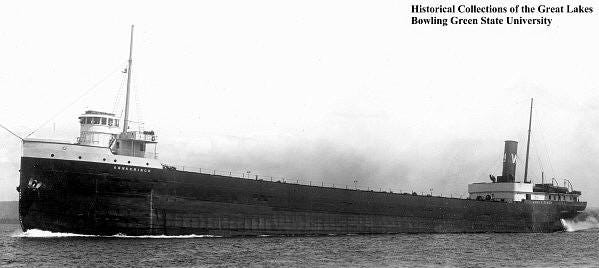
William B. Davock was built in 1907 at Great Lakes Engineering Works in St. Clair, Michigan, for Vulcan Steamship Co. Vulcan operated her through 1915, carrying coal, iron ore, grain and stone. That year she came under the management of the Interlake Steamship Co., founded in 1913. Interlake later became associated with the operations of the carferry Badger and the articulated tug-barge pair Undaunted and Pere Marquette 41. During the winter of 1922–23, Davock was rebuilt and modernized at Fairport, Ohio.
The freighter measured 420 feet in length with a 52-foot beam, continuing to carry coal and iron ore. She was 10 feet longer than Badger, the Lake Michigan carferry built 13 years after the 1940 storm.
On Nov. 11, Davock was southbound on Lake Michigan with a cargo of coal destined for Chicago. She was lost about four miles off Little Point Sable. Capt. A.E. Christoffersen, commanding the Ludington Coast Guard station, told the Ludington Daily News that he returned at 2 p.m. Nov. 12 from a location about five miles south of Pentwater, where wreckage was initially described as Davock broken in two, with both sections in shallow water roughly 300 to 400 feet offshore. That early identification proved mistaken: divers later found Davock largely intact and capsized in deep water off Little Sable Point, while the nearby Anna C. Minch had broken into separate sections.
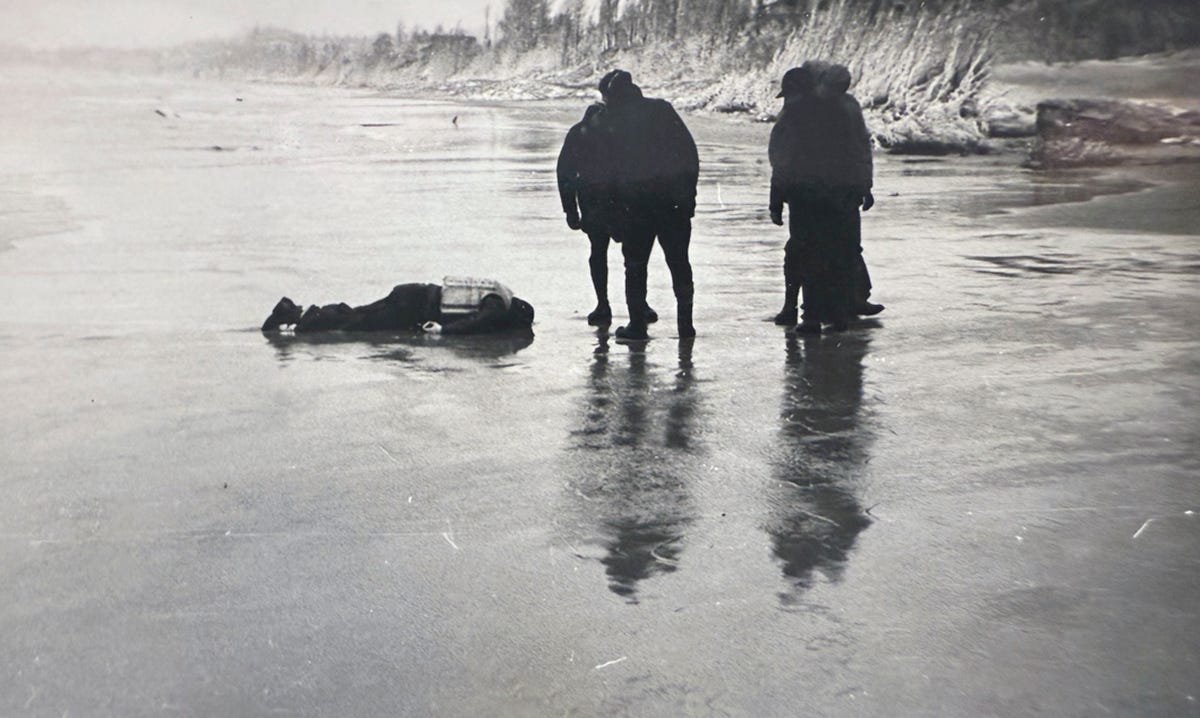
As the storm subsided on Nov. 12, the bodies of sailors began appearing near Ludington. Robert E. Rohn of Ludington found the first on the Buttersville Peninsula around noon. The victim’s life preserver bore no identifying mark, but a second preserver found nearby carried the stenciled name William B. Davock.
Around 1:30 p.m., at least six more bodies were visible offshore north of Ludington’s north breakwater. Another washed ashore at about 2 p.m. at the north end of Stearns Park near the city’s water treatment plant. The newspaper described men in life preservers drifting toward shore through the surf. Twelve bodies eventually came ashore in the Ludington area. All 33 sailors aboard Davock were lost.
Divers John Steele, Kent Bellrichard and Bill Cohrs located the wreck in May 1972. Davock rests inverted in water more than 200 feet deep. The Michigan Shipwreck Research Association (MSRA) gives her position as 43° 40.367′ N, 86° 36.335′ W, approximately 1.9 miles offshore from Little Sable Point Light; older published accounts have given a somewhat different coordinate. MSRA, a Holland, Michigan-based nonprofit, documented the wreck in a 2014 survey and reported its findings in 2015.
Valerie van Heest, an MSRA researcher, diver, historian, museum designer and author, explained that the underwater evidence pointed to a mechanical catastrophe: a failure in the rudder system brought the rudder into contact with the propeller, damaging a blade and leaving the vessel without effective steering or propulsion. The finding supports the theory that Davock turned broadside to the waves and overturned. The sequence remains a reconstruction, since no one aboard survived.
It might seem difficult to believe that the storm carried bodies nearly 30 miles northeast from Little Point Sable to Ludington in less than 18 hours. But the southwest wind was extremely strong, with gusts reported above 100 mph and waves said to reach 60 feet. Van Heest explained that bodies could travel great distances, especially when supported by life jackets, in a storm driving northeastward up Lake Michigan.
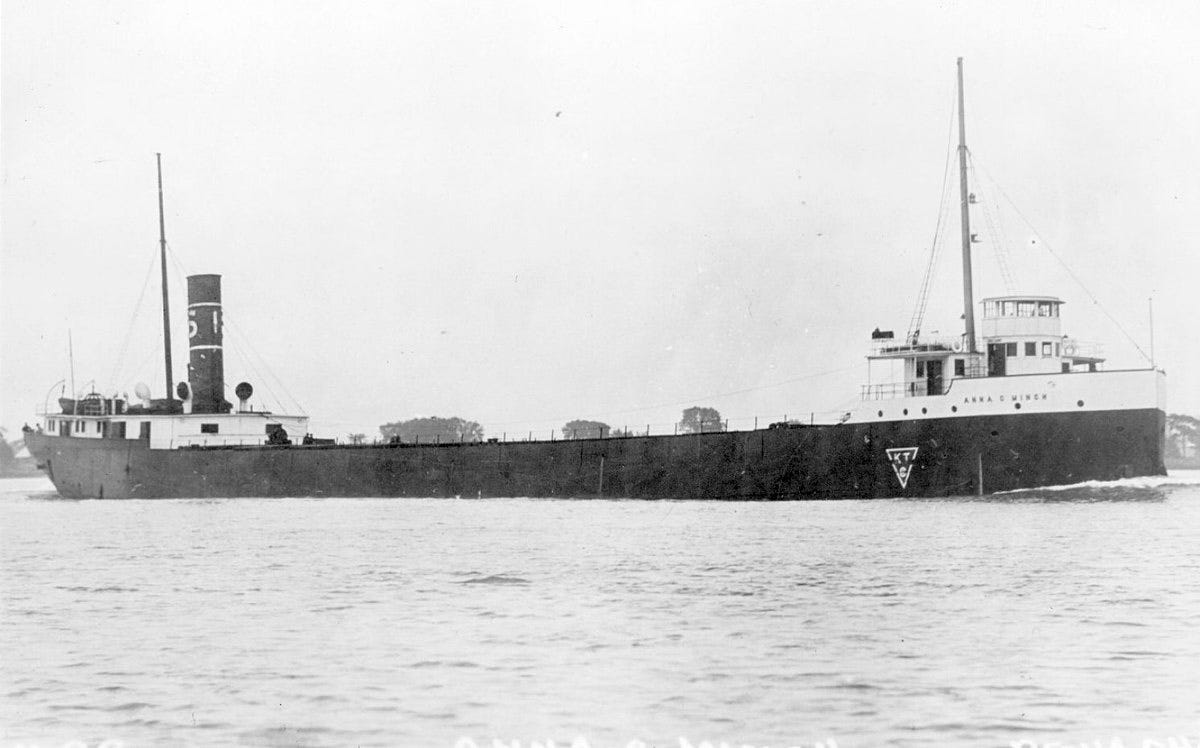
Anna C. Minch: A freighter broken apart
Built in 1903 by American Shipbuilding Co. at Cleveland, Ohio, for Kinsman Transit Co., Anna C. Minch was 380 feet long with a 50-foot beam. Western Navigation Co. of Fort William, Ontario, purchased her in 1926. By 1940 she was being operated by Sarnia Steamships Ltd. of Sarnia, Ontario.
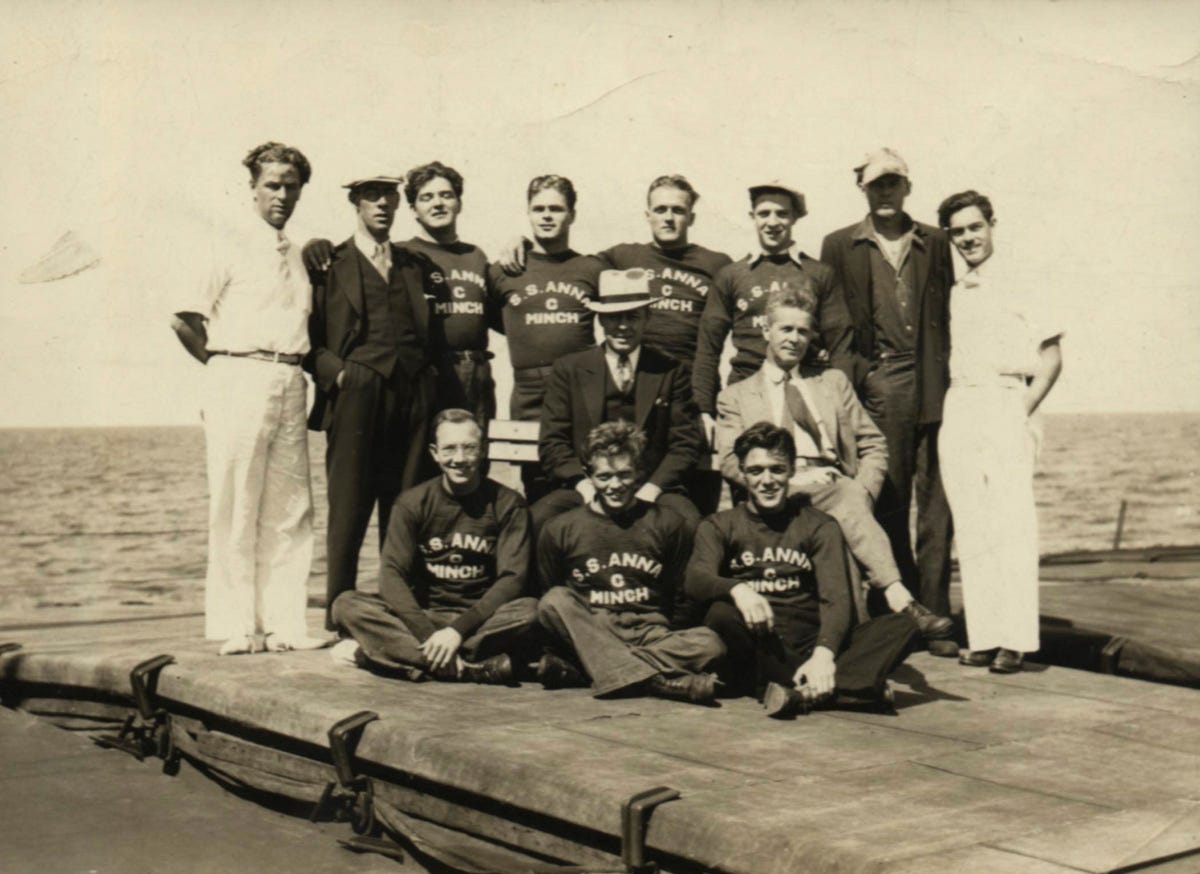
The vessel’s early career was marked by accidents between 1907 and 1925, some involving substantial damage. A relatively trouble-free period of about 15 years ended violently on Nov. 11, 1940. Her final cargo was not hardwood lumber, as some accounts have stated. According to the Canadian government investigation summarized by MSRA, Anna C. Minch loaded refuse screenings from six grain elevators at Fort William, Ontario, on Nov. 7–8 and was bound for Chicago. She broke into two sections and sank off Pentwater. Capt. Donald Kennedy and 23 shipmates died. Bodies from her crew washed ashore after the storm; contrary to earlier accounts, not all remained unrecovered.
On Friday, Nov. 15, Clyde Cross of Pentwater, Michigan, was scouting the lake aboard the fishing tug Three Brothers when he spotted what first appeared to be a seagull resting on the water. As he approached, the shape resolved into the tip of a ship’s mast carrying a small pennant. The pennant identified the submerged vessel as belonging to Sarnia Steamships. Cross and the crew of his fishing tug were credited with rescuing all 17 surviving men aboard Novadoc.
The Ludington Daily News described Cross’s search that morning. He had left at about 8 a.m., first heading northwest, then south, and was on his way back when the mast appeared. He later explained that the men could not determine what they were seeing until they approached closely enough to distinguish a masthead from a bird.
Among Great Lakes wrecks that have been found and studied, Minch belongs to the group of freighters whose hulls separated into major sections. Van Heest discussed this distinction after MSRA examined the wreck; the bow and stern are separated in shallow water south of Pentwater. Another familiar example is Edmund Fitzgerald, lost Nov. 10, 1975—one day short of 35 years after the Armistice Day Storm. The Minch wreck has continued to deteriorate in shallow water, but much of her machinery and hull structure remains identifiable.
The wreck suggested that Capt. Kennedy may have attempted to ride out the storm near Pentwater. The bow pointed southwest, toward Chicago, and the anchors and chains were deployed. The anchors were buried so deeply in sand that divers could not see them. Minch lay in approximately 35 to 45 feet of water, yet contemporary descriptions of the storm included extraordinarily large waves; the greatest reported wave heights remain estimates, not measurements taken beside the sinking vessel.
According to van Heest’s interpretation, the force of a wave or of the stern striking bottom could have broken the vessel in two. The stern lies south of the bow, indicating to her that the engines remained in operation while Kennedy tried to keep the anchors set and prevent the freighter from dragging ashore. Once the stern separated, its momentum could have carried it past the forward section.
Examinations of both Minch and Davock also challenged a theory that had persisted for 75 years: that the two ships collided in the storm. Van Heest found no evidence of collision damage on Davock apart from the consequences of her overturning. The underwater findings therefore did not support a collision between the two freighters.
Next in the series: A Canadian freighter breaks apart close to shore, setting the stage for a desperate rescue, while fishing crews disappear in the same gale.
Sources: Ludington Daily News; National Weather Service; Michigan Shipwreck Research Association, including summaries of the Canadian investigation and federal marine inquiry.