

By Rob Alway
Along the western shore of Lake Huron, Rogers City, Michigan, is a community where Great Lakes maritime history is more than a collection of stories from the past. It remains part of everyday life.
For generations, commercial shipping has shaped this small northern Michigan city. Freighters have carried limestone from its harbor to ports throughout the Great Lakes, while countless local residents have made their livings aboard the vessels that travel the inland seas.
Today, Rogers City offers visitors an opportunity to experience that maritime heritage through a remarkable museum, historical exhibits, memorials, an active commercial harbor and miles of scenic Lake Huron shoreline.
Known as Michigan’s Nautical City, Rogers City is particularly appealing to those interested in Great Lakes history. While commercial shipping remains an important part of its identity, the community has also embraced its waterfront as a place for recreation, reflection and preservation.
A museum dedicated to the sailors
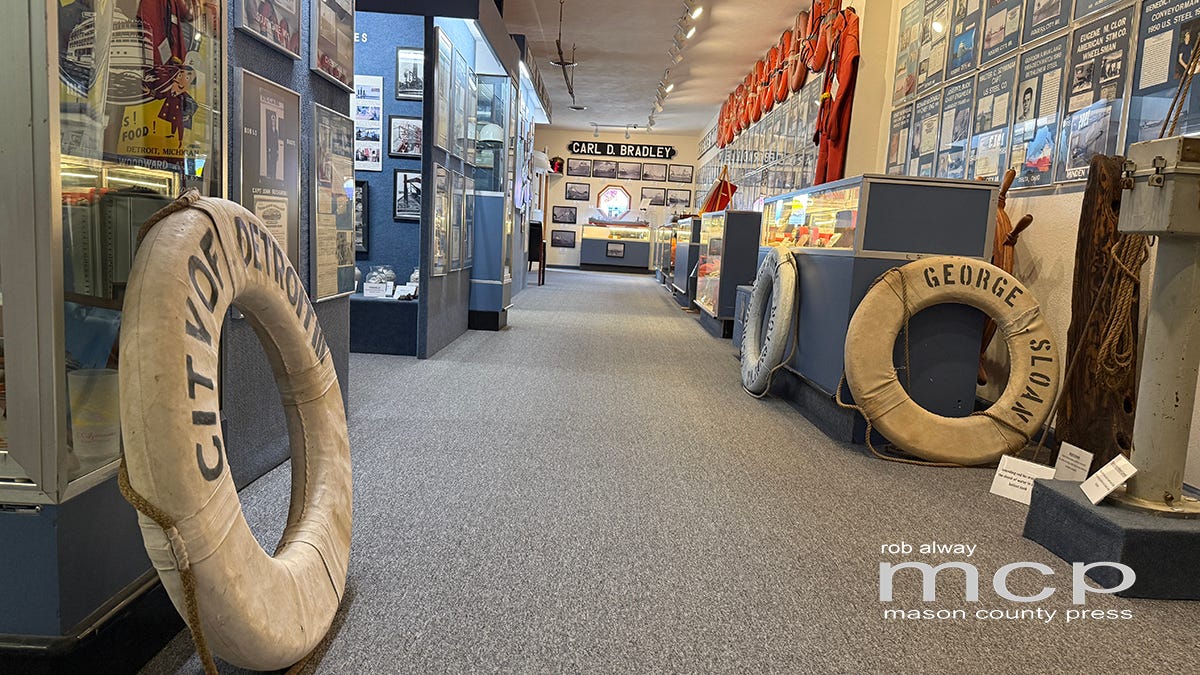
One of Rogers City’s most significant attractions is the Great Lakes Lore Maritime Museum, located at 367 N. Third St., just a short distance from Lake Huron.
Unlike maritime museums that concentrate primarily on vessels and technological developments, the Great Lakes Lore Maritime Museum places particular emphasis on the people who worked aboard the ships.
Its mission is to preserve the memories and experiences of generations of sailors, captains, engineers, lighthouse keepers and others whose livelihoods were connected to the Great Lakes.
The museum’s collection includes uniforms, navigational instruments, photographs, shipboard equipment and personal memorabilia donated by sailors and their families. Together, these artifacts tell a larger story about life aboard Great Lakes vessels, from the working conditions and responsibilities of individual crew members to the relationships formed during long shipping seasons.
The exhibits represent four centuries of Great Lakes maritime history, including the experiences of Native American traders, early European mariners and the crews of modern commercial freighters.
However, some of the museum’s most powerful exhibits are dedicated to vessels that never completed their final voyages.
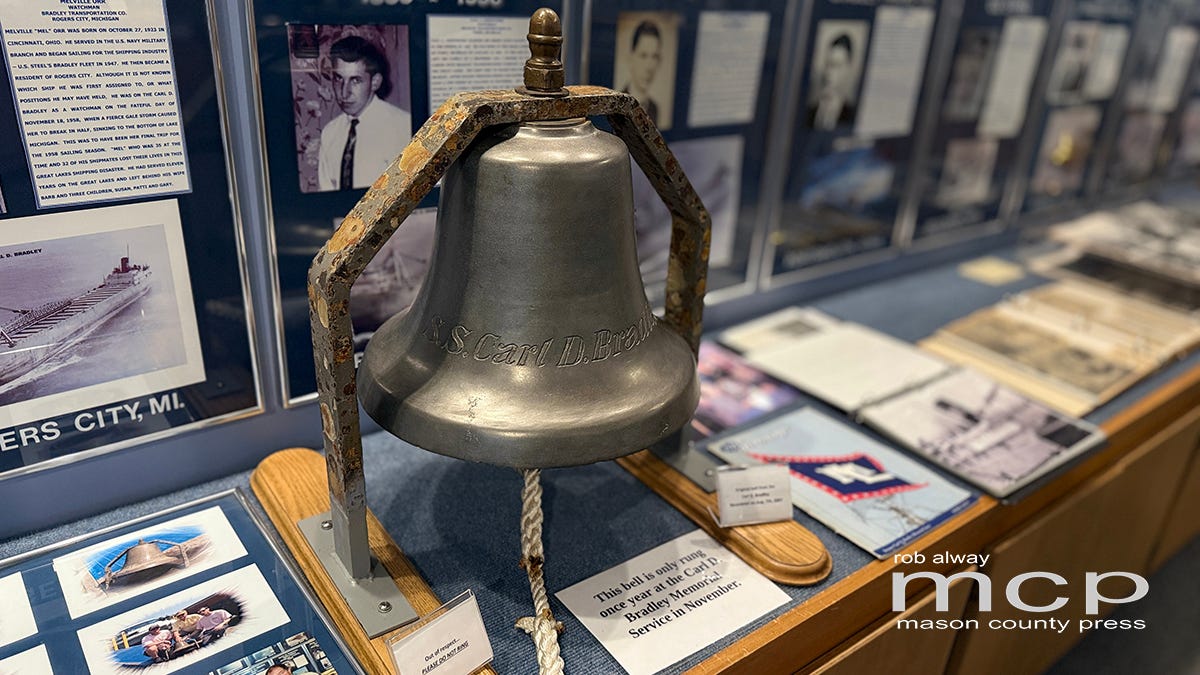
Among the museum’s treasures is the bell from the Carl D. Bradley, the limestone freighter that broke apart during a violent Lake Michigan storm on Nov. 18, 1958.
Of the 35 men aboard, only two survived. The disaster claimed 33 lives, including 23 men from Rogers City.
The sinking devastated the community, where numerous families had relatives working aboard the vessel. For Rogers City, the loss was not simply another Great Lakes maritime tragedy. It was an event that touched neighbors, friends and generations of families.
Another exhibit commemorates the Cedarville, which sank in the Straits of Mackinac on May 7, 1965, following a collision with the Norwegian freighter Topdalsfjord. Ten crew members lost their lives.
Both tragedies remain important parts of the community’s collective memory.
The museum also honors those who survived maritime disasters and the generations of sailors who completed long careers on the lakes. Its recognition of mariners extends beyond those who attained the rank of captain to include the deckhands, engineers, cooks and other crew members whose contributions made Great Lakes commerce possible.
In many ways, the institution serves as both a museum and a gathering place where maritime knowledge can be passed from one generation to another.
Stories from those who sailed
One of the museum’s greatest assets is its volunteers, including retired sailors who can provide firsthand accounts of life aboard Great Lakes freighters.
Among them is retired Capt. Michael J. Merrick, who has volunteered at the museum on Sundays.
During a July 2026 visit, Merrick shared stories about his 41-year maritime career, offering an account of the profession that cannot be fully conveyed through photographs and artifacts alone.
Born in Dearborn, Michigan, on Nov. 21, 1955, Merrick began sailing in 1974 at the age of 18, working as a porter aboard the T.W. Robinson.
He later worked as a deckhand aboard the John G. Munson before advancing through the ranks and earning his third mate’s license in 1987. During that period, he served under Capt. Francis Altman aboard the Philip R. Clarke.
Merrick earned his master’s license in 1997 and became a relief captain aboard the Cason J. Callaway. His first permanent command came in 2007 aboard the Philip R. Clarke, followed by command of the Cason J. Callaway in 2009.
He retired in August 2015.
His experiences are the kind of personal maritime history the museum seeks to preserve. For visitors, the opportunity to speak with a retired mariner can provide a perspective that extends well beyond the objects displayed in exhibit cases.
The museum also maintains a tradition of recognizing mariners through induction ceremonies and commemorative events. Memorial observances honor sailors who died aboard vessels such as the Carl D. Bradley, Cedarville, Daniel J. Morrell and Edmund Fitzgerald.
These events reinforce an important element of the museum’s mission: preserving the identities and experiences of the people behind the vessels.
A waterfront shaped by maritime history
The maritime experience continues just a few blocks from the museum, where Rogers City’s waterfront provides access to Lake Huron.
Lakeside Park is one of the community’s most popular attractions. The 10-acre park borders Lake Huron and includes a swimming beach, playgrounds, picnic areas, volleyball courts, a pavilion and a bandshell where concerts are held during the summer.
The park is also home to the Rogers City Marina, which accommodates recreational boats and provides an attractive setting for walking along the waterfront.
Unlike the busier tourist communities along portions of Lake Michigan’s shoreline, Rogers City offers a comparatively quiet setting where visitors can enjoy the lake without the atmosphere of a major resort destination.
The waterfront also has considerable historical significance.
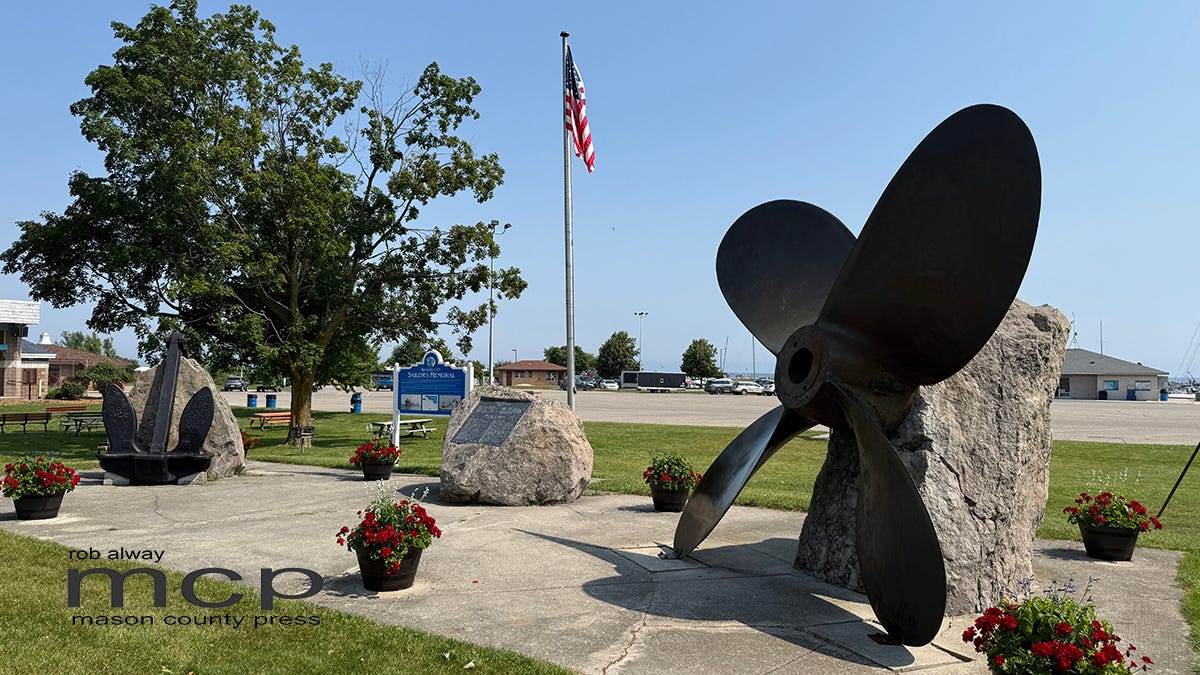
Located near the marina is the Rogers City Sailors’ Memorial, dedicated to sailors from the area who lost their lives while working aboard Great Lakes vessels.
The memorial, dedicated in 1987, prominently honors those lost aboard the Carl D. Bradley and Cedarville. It provides a physical connection between the museum’s exhibits and the community that endured those tragedies.
Visitors who have seen the photographs and artifacts inside the museum can walk to the memorial and reflect on the lives represented there.
The relationship between the museum and the memorial illustrates how Rogers City has made maritime heritage an important part of its identity rather than confining that history to a single building.
Exploring the Lake Huron shoreline
Beyond Lakeside Park, Rogers City offers a series of parks and trails that allow visitors to explore its Lake Huron shoreline.
One of the highlights is the Huron Sunrise Trail, an approximately 11-mile paved route connecting several waterfront parks and recreational areas.
Beginning at South Shore Park, the trail follows the Lake Huron shoreline through the city and northward, eventually reaching 40 Mile Point Lighthouse.
Along the way, the route passes Lakeside Park, the Rogers City Marina, North Shore Park, Trout River Park, the Herman Vogler Conservation Area and Hoeft State Park.
The trail accommodates walkers and bicyclists and provides opportunities to experience the changing character of the shoreline, from the developed waterfront near downtown to wooded stretches and more natural lakefront settings.
Another attraction is Seagull Point Park, a 43-acre natural area with approximately a mile of Lake Huron shoreline. The park includes a 1.5-mile trail system through dunes and vegetation, offering opportunities for wildlife observation and quieter exploration.
For those accustomed to Lake Michigan’s western shoreline, Lake Huron offers a different perspective. With its eastern exposure, Rogers City is particularly well situated for watching the sunrise over open water.
The combination of public access, trails and historical interpretation makes the shoreline a destination in its own right, separate from the city’s commercial shipping operations.
A lighthouse and a shipwreck
Approximately seven miles north of Rogers City, 40 Mile Point Lighthouse adds another dimension to the area’s maritime heritage.
Located at 7323 US 23 North, the lighthouse was established in 1897 to guide vessels traveling along Lake Huron’s northern shoreline.
The station features a brick keeper’s dwelling and a square light tower. Its fourth-order Fresnel lens was first illuminated in May 1897, and the light continues to serve as an active aid to navigation.
The lighthouse was automated in 1969, ending the era when resident keepers maintained the station.
Today, the historic property is preserved through the efforts of the 40 Mile Point Lighthouse Society. Visitors can explore the grounds, view exhibits and learn about the lives of lighthouse keepers and the vessels that depended upon the light.
The site also preserves the pilothouse of the Calcite, a pioneering Great Lakes self-unloading steamer built in 1912.
Another attraction is the wreck of the wooden steamer Joseph S. Fay, which was driven ashore during a Lake Huron storm in 1905. Portions of the vessel remain near the shoreline, offering a tangible reminder of the dangers that confronted Great Lakes mariners.
The lighthouse grounds are open year-round, while tours and museum exhibits operate seasonally.
Commercial shipping remains part of the experience
Although Rogers City offers numerous historical and recreational attractions, commercial shipping remains an essential part of the community.
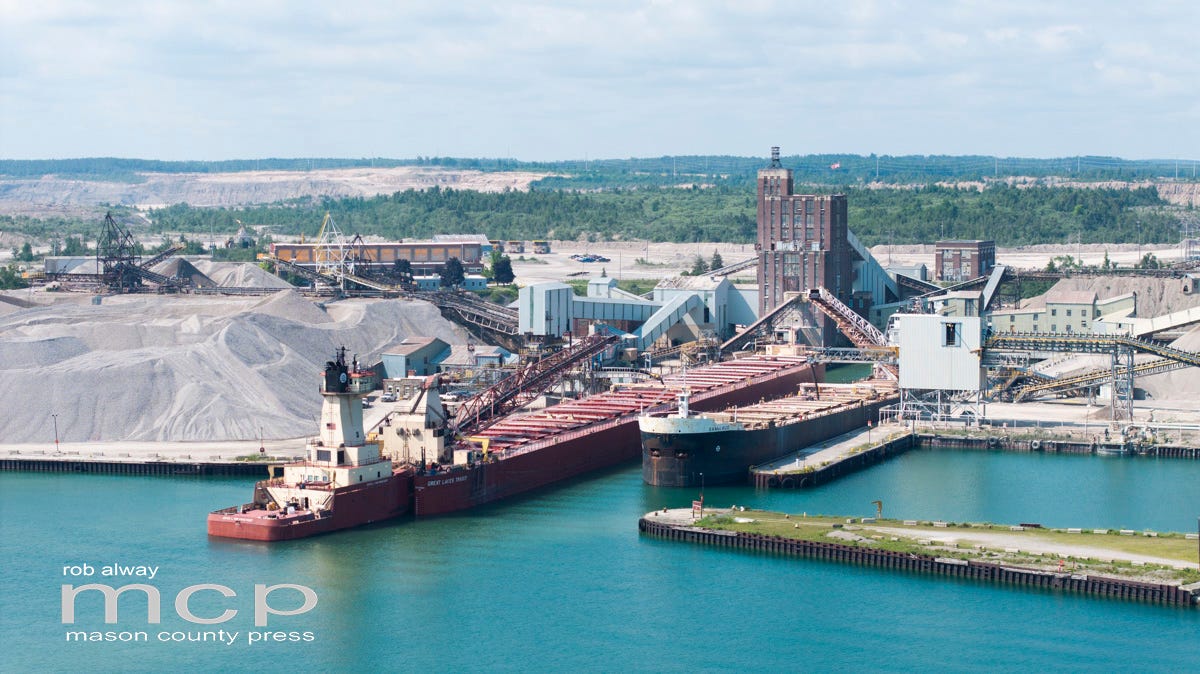
Just outside the downtown area is the massive Calcite limestone operation, now operated by Carmeuse. Since the early 20th century, limestone from the quarry has been transported aboard Great Lakes freighters to industrial ports throughout the region.
The quarry and its shipping operations have played a major role in the city’s development and have provided employment for generations of local residents.
For shipwatchers, Harbor View Park offers an excellent vantage point overlooking the active loading docks.
The park features an elevated observation platform and interpretive signs explaining the history of the port and its shipping operations.
During a July 2026 visit, the 640-foot self-unloading freighter Sam Laud was loading limestone while the articulated tug-barge combination Joyce L. VanEnkevort and Great Lakes Trader was also taking on cargo.
Watching large commercial vessels operating at the docks provides a reminder that the maritime history celebrated throughout Rogers City is still being written.
The history and operations of the Calcite quarry warrant their own exploration, but even a brief stop at Harbor View Park helps visitors understand the relationship between the city and the shipping industry.
A community that remembers
Throughout Rogers City, historical markers and interpretive exhibits help connect the community’s waterfront, downtown and maritime attractions.
Markers describe the development of local businesses, the city’s early history, its commercial shipping fleet and the people who contributed to its growth.
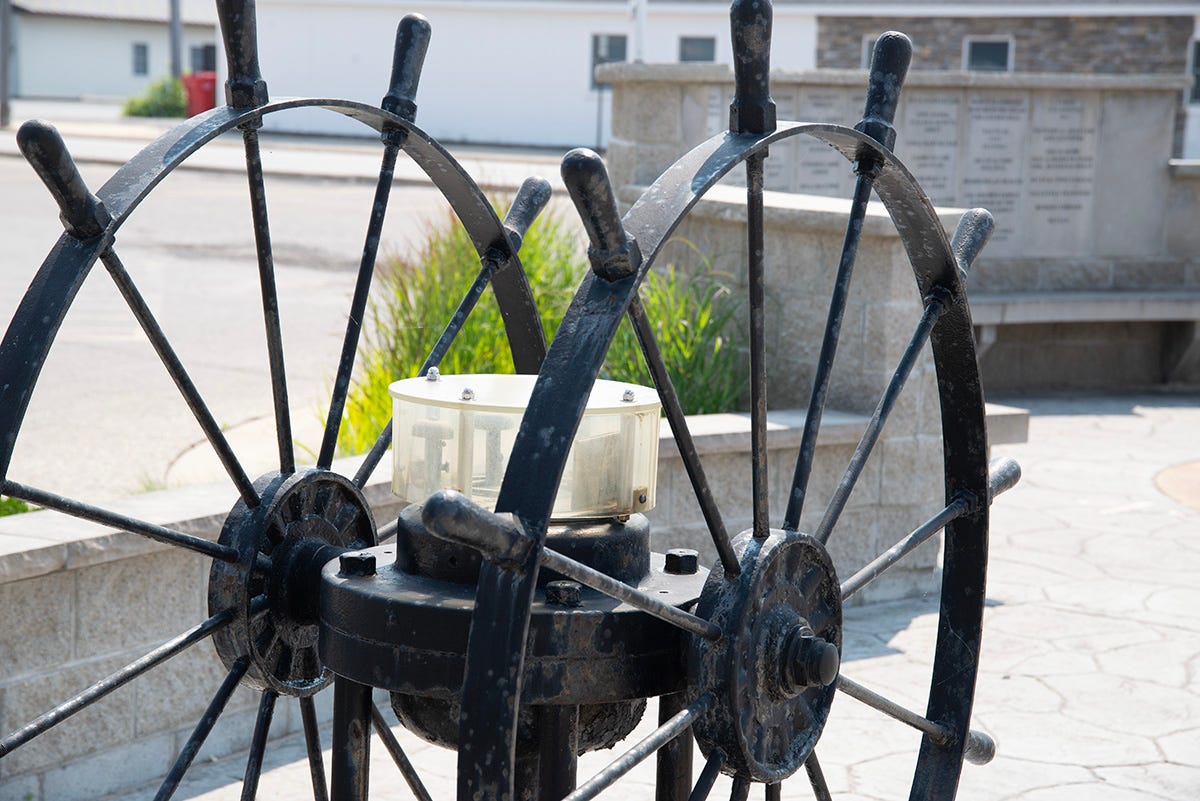
One display includes an emergency steering wheel once used aboard a Bradley Transportation Co. freighter.
Other exhibits explain the history of Calcite shipping and the navigational aids that guided vessels into the port.
Together, these displays create an informal maritime heritage trail that complements a visit to the Great Lakes Lore Maritime Museum.
For visitors interested in Great Lakes shipping, Rogers City offers an unusual combination of experiences. Historic artifacts and personal stories are preserved inside the museum, working freighters continue to load cargo nearby, and the shoreline provides opportunities to explore the same waters that generations of mariners have traveled.
Perhaps the community’s greatest contribution to Great Lakes heritage, however, is its commitment to remembering the people who worked aboard the ships.
The Great Lakes are filled with stories of vessels, shipwrecks and technological achievements. Rogers City helps preserve the equally important stories of the sailors themselves.
And along the Lake Huron shoreline, those stories remain closely connected to the community that generations of mariners called home.
Planning a visit
The Great Lakes Lore Maritime Museum is located at 367 N. Third St., Rogers City, Michigan. Its published seasonal hours are 11 a.m. to 4 p.m. Monday through Saturday and noon to 3 p.m. Sunday, May through November. Visitors should confirm hours before traveling. For additional information, visit gllmm.com or call 989-734-0706.
For information about Rogers City’s parks and shoreline attractions, visit rogerscity.com. Information about 40 Mile Point Lighthouse is available at fortymilepointlighthouse.org.
Sources: Mason County Press, “Northern Michigan research trip begins in Rogers City,” July 28, 2026; Great Lakes Lore Maritime Museum; City of Rogers City Parks and Recreation Department; 40 Mile Point Lighthouse Society; U.S. Coast Guard lighthouse historical records; Michigan tourism and maritime heritage resources.