


By Rob Alway
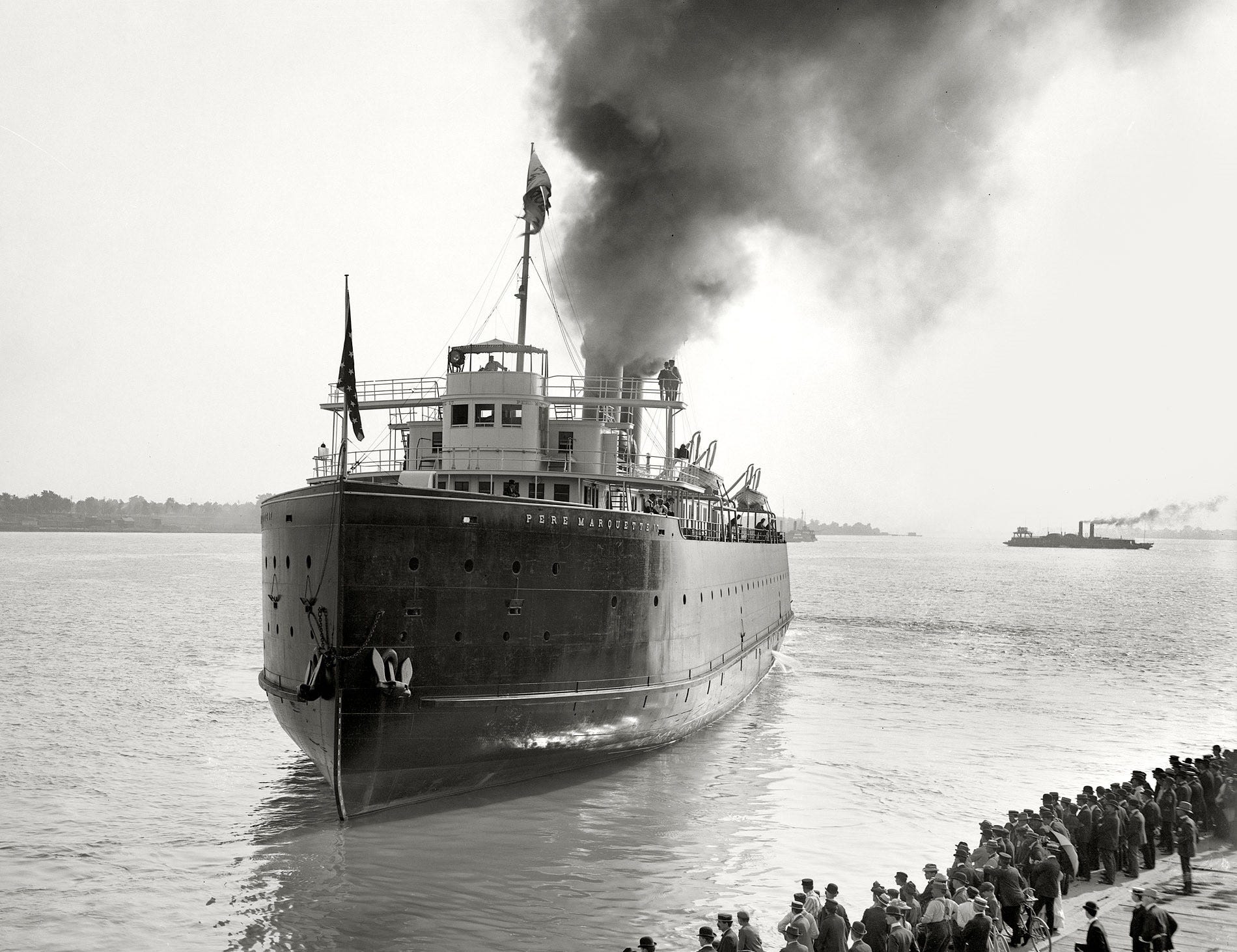
The Pere Marquette Railway began a major expansion of its Ludington carferry fleet in 1901 with Pere Marquette 17. The new vessel was the first steel carferry built for the railroad after the success of the original Pere Marquette demonstrated that the concept could support a large year-round cross-lake operation.
American Shipbuilding Co. constructed No. 17 at Cleveland. Marine superintendent William L. Mercereau was closely associated with the project and supervised details of the vessel’s arrangement and passenger accommodations. The new ship cost approximately $350,000, about $50,000 more than the original carferry.
No. 17 measured about 350 feet long with a 58-foot beam and registered approximately 2,775 gross tons. Her four railroad tracks could accommodate about 30 standard freight cars. Two triple-expansion engines developed roughly 3,500 indicated horsepower, giving the vessel a normal speed of about 13 mph and a higher maximum under favorable conditions.
Passenger accommodations were also improved. A long promenade cabin extended much of the vessel’s length, and contemporary accounts described No. 17 as one of the better passenger ships in the fleet. Her equipment included steam steering, a backup steering system, steam capstans and windlass, fire and bilge pumps, electric lights, a searchlight and 12 lifeboats.
The forward portion of the hull was heavily reinforced for ice. Approximately 60 feet aft from the stem was double-plated, helping the ship maintain the railroad’s commitment to winter operation.
Capt. Peter Kilty brought the new vessel into service, and Capt. Joseph Russell later commanded her. In January 1902, No. 17 made a Manitowoc-to-Ludington crossing in three hours and 58 minutes, a performance that a 1904 newspaper account described as a fleet record at the time.
No. 17 survived decades of Lake Michigan service and several notable incidents. In May 1923 she collided in dense fog outside Milwaukee with the wooden Pere Marquette 4. The steel carferry survived and remained a useful member of the fleet for many more years.
The State of Michigan purchased the vessel in 1940 and rebuilt her for automobile-ferry service at the Straits of Mackinac. Renamed City of Petoskey, the former Ludington carferry carried automobiles between Michigan’s two peninsulas until the Mackinac Bridge made the state ferry system obsolete.
The arrival of No. 17 proved the railroad was no longer experimenting with carferries. It was building a fleet. The next vessel would become the finest passenger carferry yet constructed for Ludington - and would also suffer the greatest tragedy in the fleet’s history.
Coming in Part 10: Pere Marquette 18 - flagship of the fleet and the disaster of 1910.