


By Rob Alway
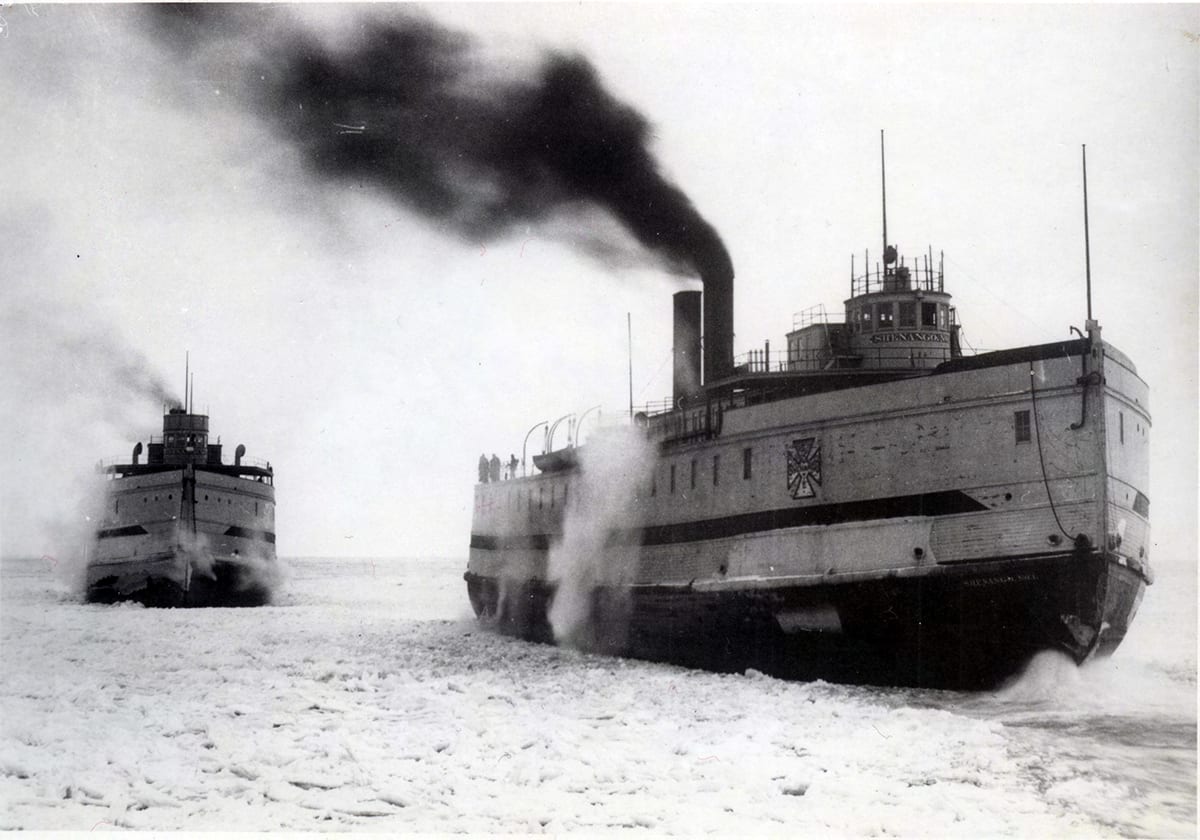
The success of the original steel Pere Marquette convinced the railroad that the future belonged to railroad carferries. A second vessel joined the system through railroad consolidation rather than new construction: the wooden carferry Muskegon, later known as Pere Marquette 16.
The ship had been built at Toledo in 1895 by Craig Shipbuilding Co. as Shenango No. 2. She initially worked on Lake Erie between Conneaut, Ohio, and Port Stanley, Ontario, carrying railroad cars across the lake.
The Detroit, Grand Rapids & Western acquired the vessel in 1898 and renamed her Muskegon. When that railroad became part of the new Pere Marquette Railway in 1900, the ship entered the combined system and was subsequently renamed Pere Marquette 16.
No. 16 measured about 300 feet long with a beam of approximately 54 feet and registered about 1,938 gross tons. Three propellers were driven by three engines - one forward and two aft - producing roughly 2,500 horsepower. Her four-track deck could accommodate about 26 railroad cars.
The new Pere Marquette Railway created a numbering system that linked several different groups of vessels. Surviving package freighters occupied the lower numbers. River carferries were numbered downward from 14. Lake Michigan railroad carferries were numbered upward beginning with the original Pere Marquette, which became No. 15. Muskegon therefore became No. 16.
The wooden hull made No. 16 different from the steel carferries that increasingly dominated the Ludington fleet. Sources later noted that the flexibility of the hull contributed to incidents involving railroad cars shifting or becoming difficult to secure.
A serious grounding occurred near Ludington in December 1901 during high winds and heavy seas. The vessel struck a bar and a steam-pipe failure fatally scalded a member of the engine-room crew. Other crew members were removed by breeches buoy, and the vessel was eventually salvaged and rebuilt after an extensive repair costing tens of thousands of dollars.
No. 16 gradually disappeared from regular Ludington service as newer steel vessels joined the fleet. She was sold in 1917 and renamed Harriet B. the following year. On May 3, 1922, while under tow near Two Harbors, Minn., the former carferry was struck in fog by the steamer Quincy A. Shaw and sank without loss of life.
The wreck was rediscovered decades later in deep water and is now recognized as a significant historic site. The wooden No. 16 had been an evolutionary link between the earliest carferries and the all-steel fleet that soon followed.
Coming in Part 9: Pere Marquette 17 - the first new steel carferry added after the success of No. 15.