


By Rob Alway
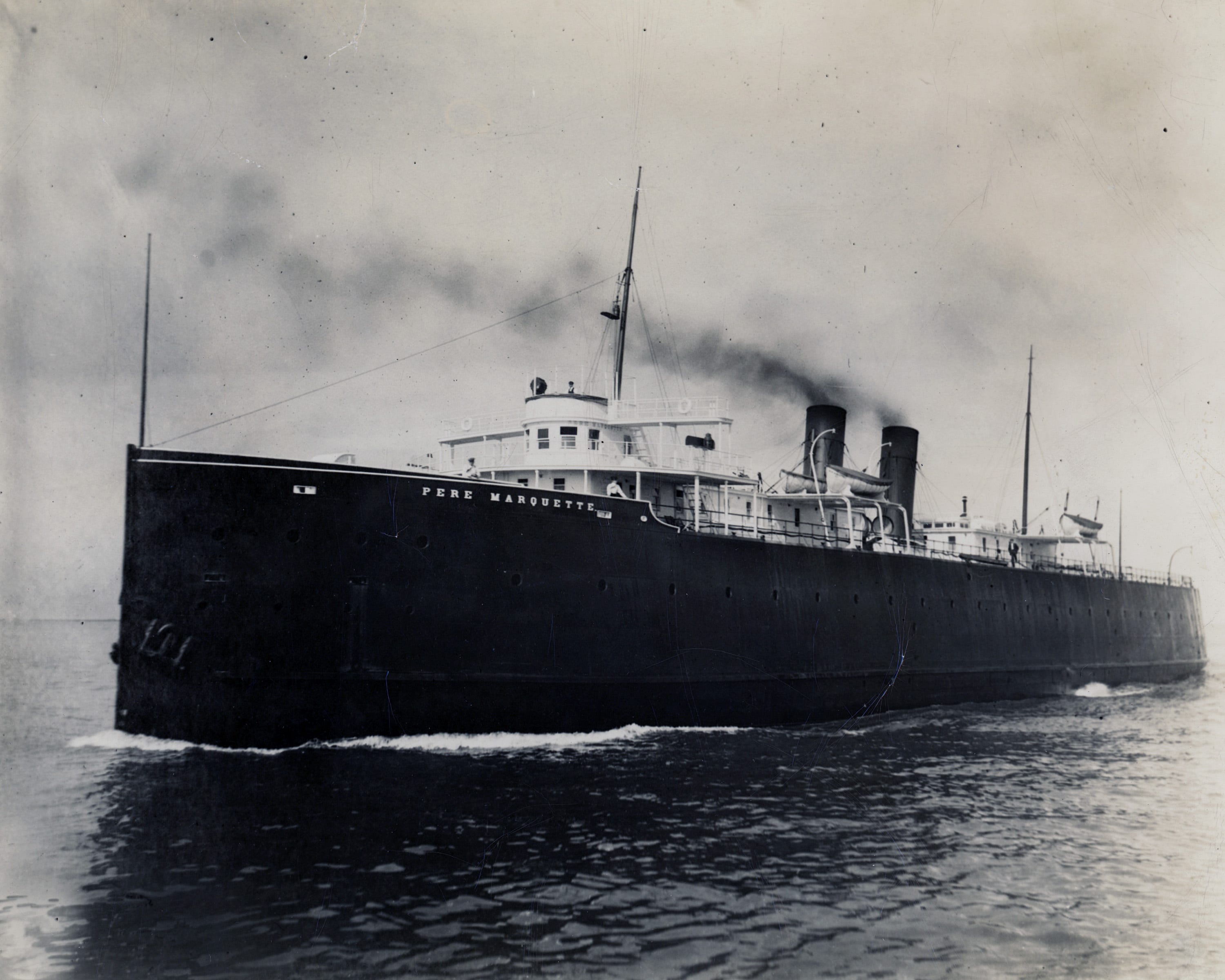
The new steel carferry Pere Marquette entered Ludington’s cross-lake service in February 1897 and immediately changed the way the Flint & Pere Marquette Railway moved freight. The Black Boats had carried cargo taken from railroad cars. The new ship carried the railroad cars themselves.
F.W. Wheeler & Co. built the $300,000 vessel at West Bay City from a design by Robert Logan with substantial input from Capt. James W. Martin. Pere Marquette measured about 350 feet overall, had a beam of approximately 56 feet and could carry about 30 standard freight cars on four parallel tracks.
The vessel was built for the hard conditions of year-round Lake Michigan service. Seven watertight compartments divided the steel hull. Electric lighting, steam steering, steam-operated deck machinery, 12 lifeboats and a powerful twin-screw propulsion system made her one of the most advanced vessels associated with the railroad.
The four railroad tracks initially created an unexpected problem. They had been placed too close together for some of the widest freight cars, forcing a crew of Wheeler shipyard workers to make alterations at Ludington before regular service could begin. Sources give slightly different dates for the first loaded crossings, so the safest description is that regular operations began in mid-February 1897.
Capt. Joseph Russell became the vessel’s first master. A full load could include about 30 railroad cars carrying roughly 900 tons of cargo. Including the weight of the cars themselves, the railroad estimated that approximately 1,500 tons could be carried while the vessel drew only about 13.5 feet of water.
Pere Marquette quickly attracted attention far beyond Ludington. An early visit to Milwaukee reportedly drew tens of thousands of spectators. The ship carried railroad cars directly onto Wisconsin rails, eliminating the laborious transfer that had defined the service since 1875.
A 1904 Ludington Record Appeal history claimed the vessel had traveled more than 150,000 miles without an accident and that the railroad had spent virtually nothing on repairs during an early five-year period. The language reflects the enthusiasm of the era, but it illustrates how strongly railroad officials believed the steel carferry had proved itself.
The vessel’s name eventually became part of the fleet’s numbering tradition. She was assigned No. 15 on paper in the early 1900s and became commonly known as ‘the 15,’ although the number was not added prominently to the bow until much later. She remained in service until the 1930s and was scrapped at Manitowoc in 1935.
The original Pere Marquette did more than replace the Black Boats. She changed the basic concept of the route. The Flint & Pere Marquette had created a railroad that no longer stopped at the water’s edge. It could now carry the railroad itself across the lake.
Coming in Part 8: The wooden Muskegon becomes Pere Marquette 16.