


By Rob Alway
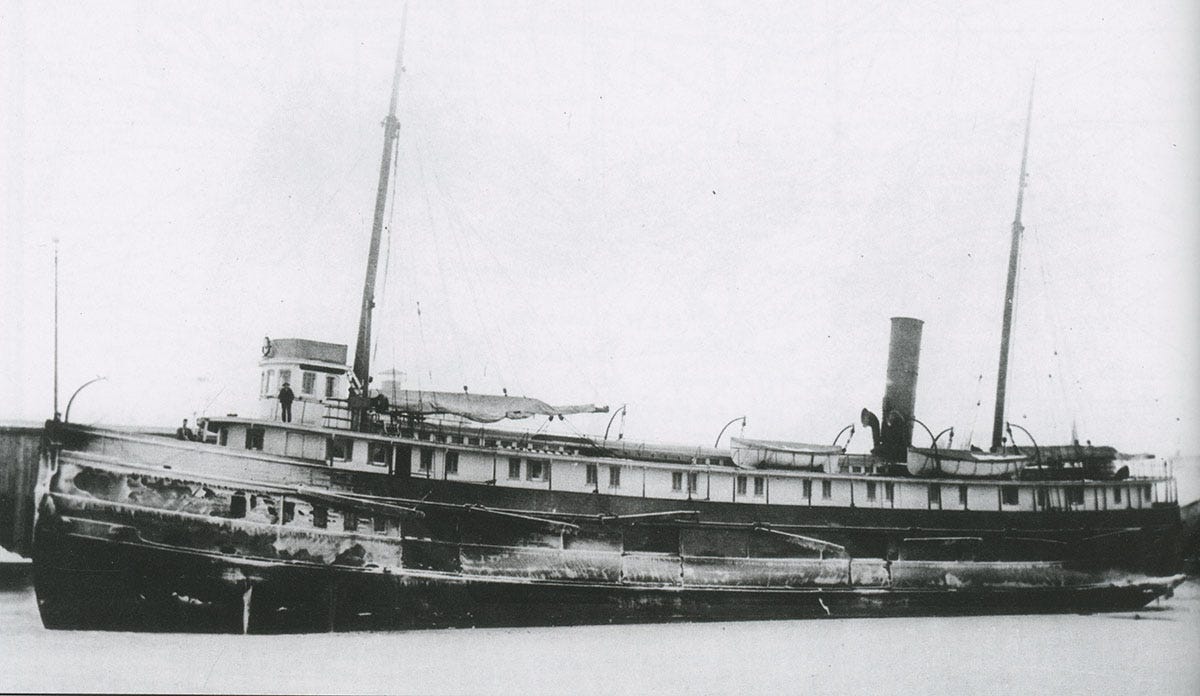
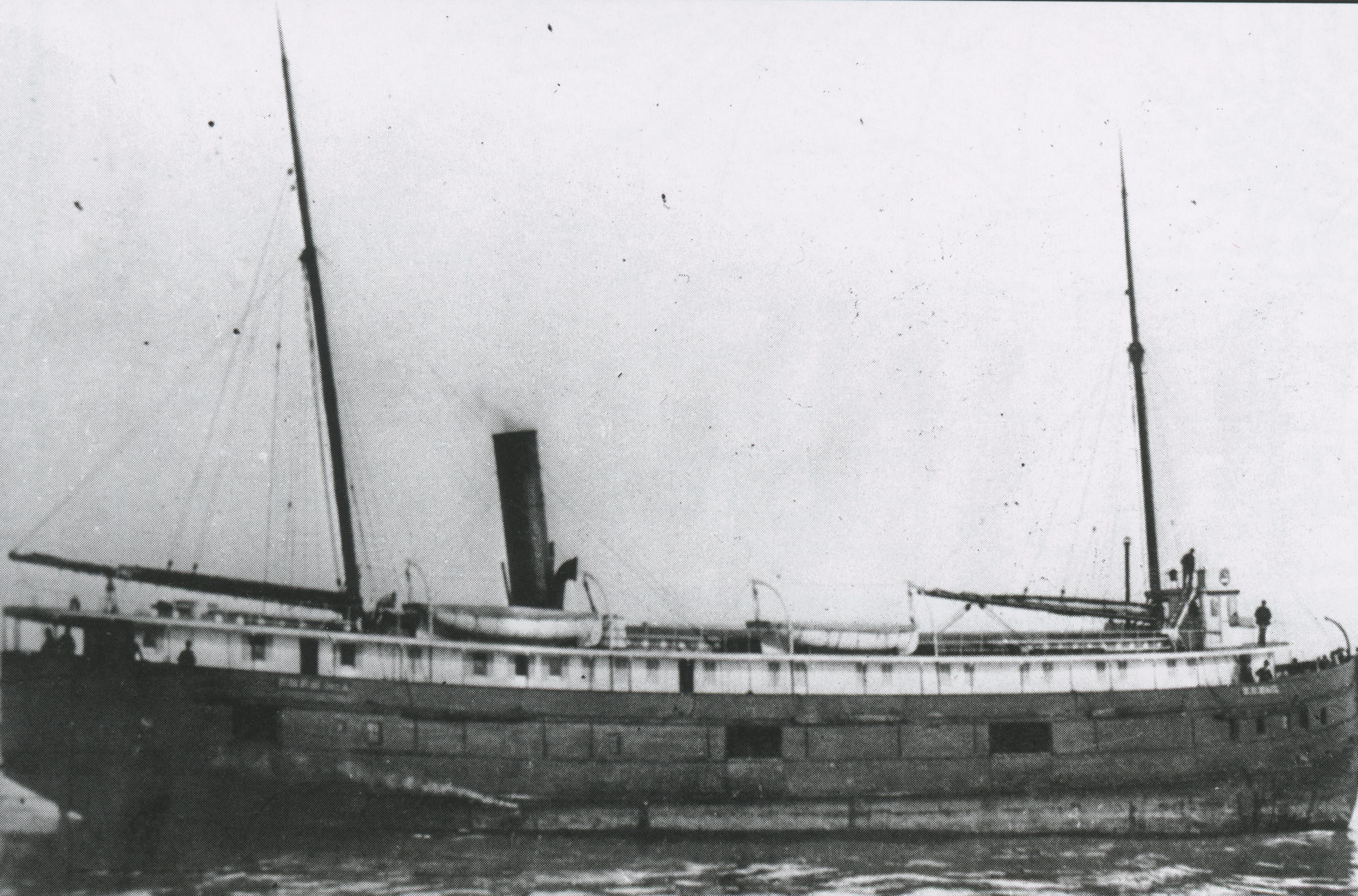
The Flint & Pere Marquette Railway took direct control of its cross-lake steamship service in 1882 with the arrival of F&PM No. 1 and F&PM No. 2. The nearly identical wooden propellers were designed by Frank E. Kirby and built by Detroit Dry Dock Co. as hull Nos. 59 and 60.
The ships were created primarily to move grain and package freight, though they also carried passengers. Their dark-painted wooden hulls helped give the railroad’s growing fleet its familiar nickname: the Black Boats.
Both vessels were originally about 144 feet long with a beam slightly greater than 30 feet. The railroad quickly discovered that more capacity was needed. In 1883, each was returned to the shipyard and lengthened by approximately 36 feet, producing vessels about 180 feet long.
The machinery was located aft. Each steamer used a compound engine and a single firebox boiler, with power reported at roughly 560 to 600 horsepower. Passenger accommodations were modest, generally for about 25 people, because the ships’ principal function remained freight transportation.
Capt. James B. Muir brought F&PM No. 1 to Ludington in September 1882 and remained her master until his death in 1888. Capt. John W. Duddleson commanded F&PM No. 2. Duddleson became one of the important practical marine figures in the railroad’s early steamship operation.
The railroad’s new vessels ended its dependence on Goodrich. The Goodrich contract expired April 1, 1883, and the Flint & Pere Marquette thereafter operated its own principal cross-lake fleet. The change gave the railroad direct control of vessels, crews and schedules, but it did not eliminate the greatest inefficiency in the system: every shipment still had to be transferred between railroad cars and ships by hand.
F&PM No. 1 had a long second life after leaving the railroad. She was sold in 1896, later renamed Wisconsin and passed through several owners. A contemporary Marinette newspaper account reported that her remains were raised from the Menominee River in 1934 after years submerged and that the old hull was burned near Green Island that July.
F&PM No. 2 became Pere Marquette 2 after the formation of the Pere Marquette Railway. She was sold in 1903 with several of the other Black Boats, later went to Canadian owners and was renamed Dundurn. The vessel ended as a barge and sank in Lake Erie near Ashtabula in 1919 while under tow. Two men were lost.
The first Black Boats had given the railroad independence on Lake Michigan. Traffic continued to grow, and the next vessels would be larger, more comfortable and better suited to the overnight trade between Ludington and Wisconsin.
Coming in Part 4: F&PM No. 3 and F&PM No. 4 - larger Black Boats for a growing cross-lake business.