


By Rob Alway
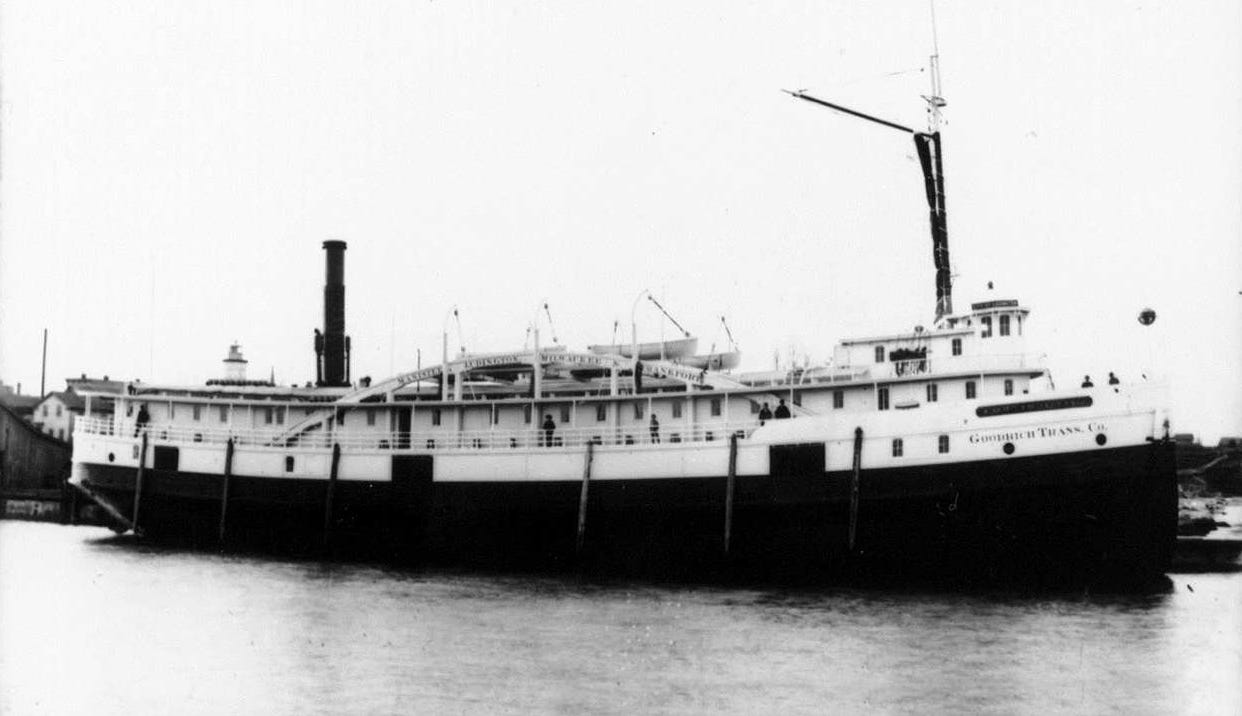
The Flint & Pere Marquette Railway changed its principal Wisconsin connection from Sheboygan to Milwaukee in 1876 and turned to the Goodrich Transportation Co. to operate the cross-lake steamship service. Goodrich was already one of the dominant passenger and package-freight carriers on Lake Michigan, with a network linking ports from Chicago northward.
Goodrich vessels associated with the railroad’s Ludington service over the following years included steamers such as De Pere, Corona, Oconto, Alpena and City of Ludington. Passengers could travel across the lake while freight continued moving through the labor-intensive break-bulk process used since the first John Sherman crossing.
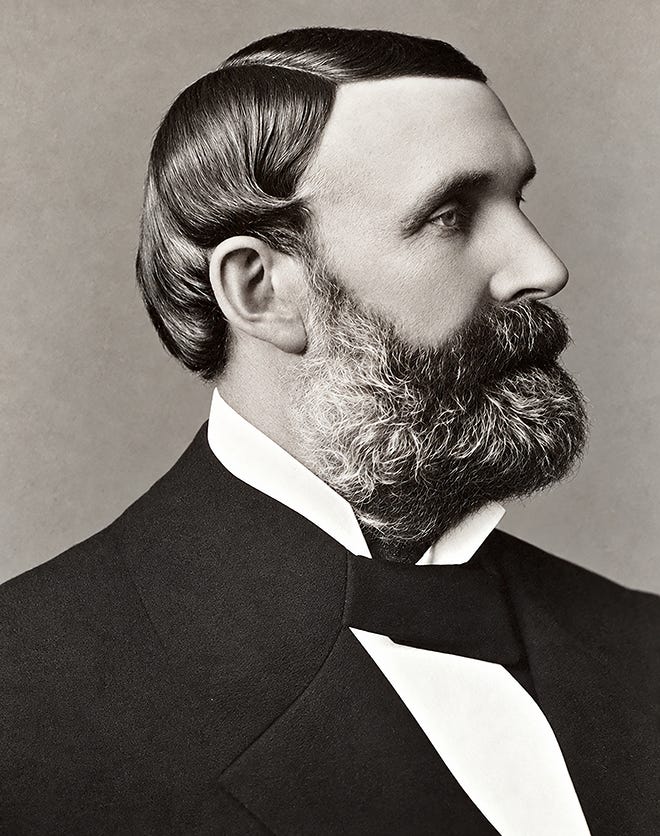
The relationship exposed Ludington to some of the most advanced passenger steamship design on Lake Michigan. Frank E. Kirby, who would later become one of the central figures in Great Lakes railroad carferry development, designed several new iron steamers for Goodrich and the Detroit Dry Dock Co.
The iron sidewheeler City of Milwaukee was launched in February 1881. About 231 feet long, she was equipped with machinery built by W.A. Fletcher Co. and developed roughly 1,500 horsepower. The vessel later passed through several owners, was renamed Holland in 1904 and Muskegon in 1919, and was lost that year after striking the south pier at Muskegon during a gale.
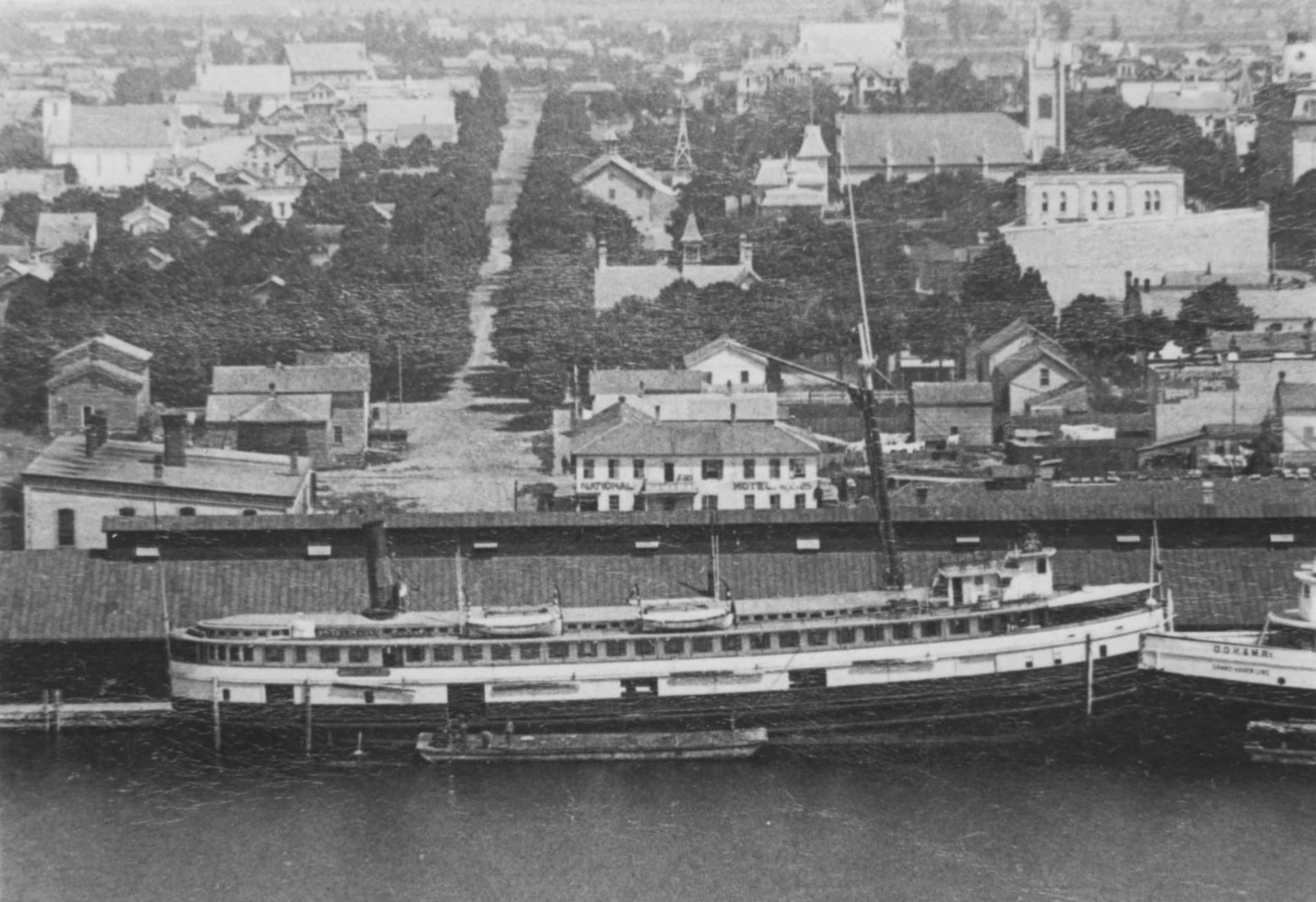
Goodrich also added the near-identical iron screw steamers Michigan and Wisconsin in 1881. Approximately 218 feet overall, both were designed for passenger and package-freight service and included reinforced bows and double iron bottoms with water ballast. Their construction reflected the growing demand for reliable winter navigation on Lake Michigan.
Michigan was trapped in ice in February 1885 and sank March 19 after the crew escaped. Wisconsin survived for nearly another half-century before sinking off Kenosha in 1929. The wreck later became recognized for its historic significance.
The Goodrich arrangement gave the Flint & Pere Marquette a dependable connection to Milwaukee, but the railroad remained dependent on another company for a critical portion of its route. Freight still had to be transferred by hand at both ends of the lake crossing, and railroad management increasingly wanted greater control over schedules, costs and equipment.
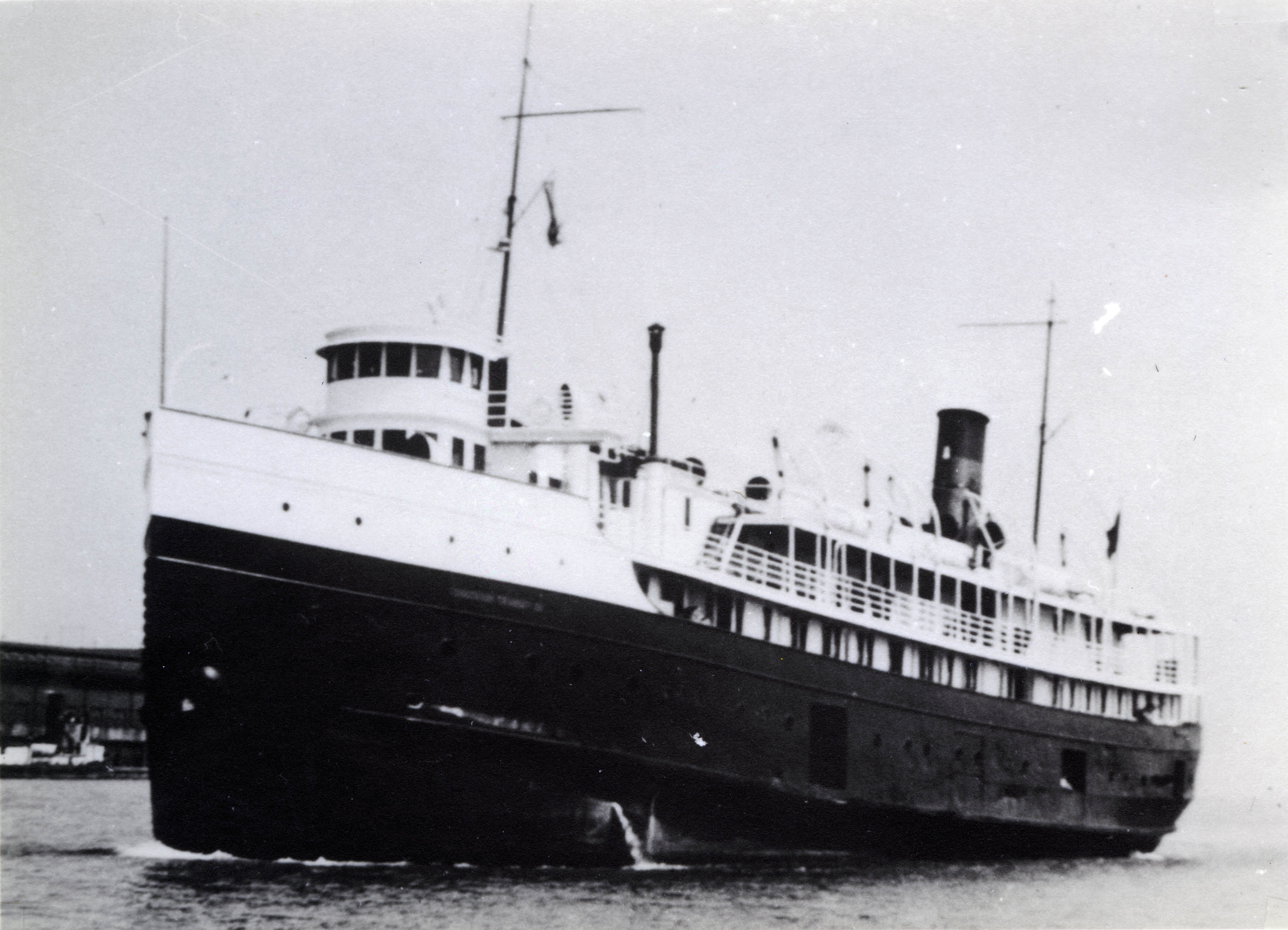
The answer came in 1882. The Flint & Pere Marquette ordered its own steamers from Detroit Dry Dock, again turning to Frank Kirby for the design. The new vessels would begin a company-owned fleet and introduce Ludington to the steamers that became known locally as the Black Boats.
Coming in Part 3: F&PM No. 1 and F&PM No. 2 - the first Black Boats built for the railroad.