


By Rob Alway, Editor-in-Chief
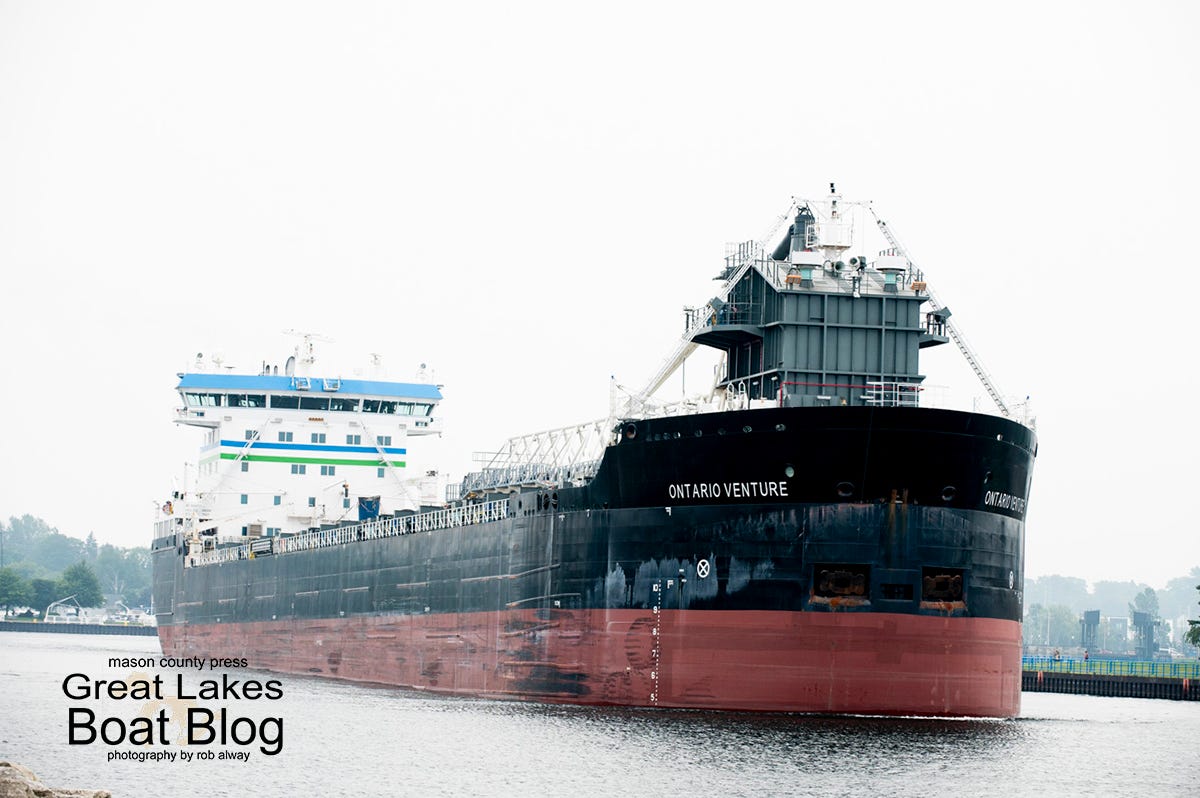
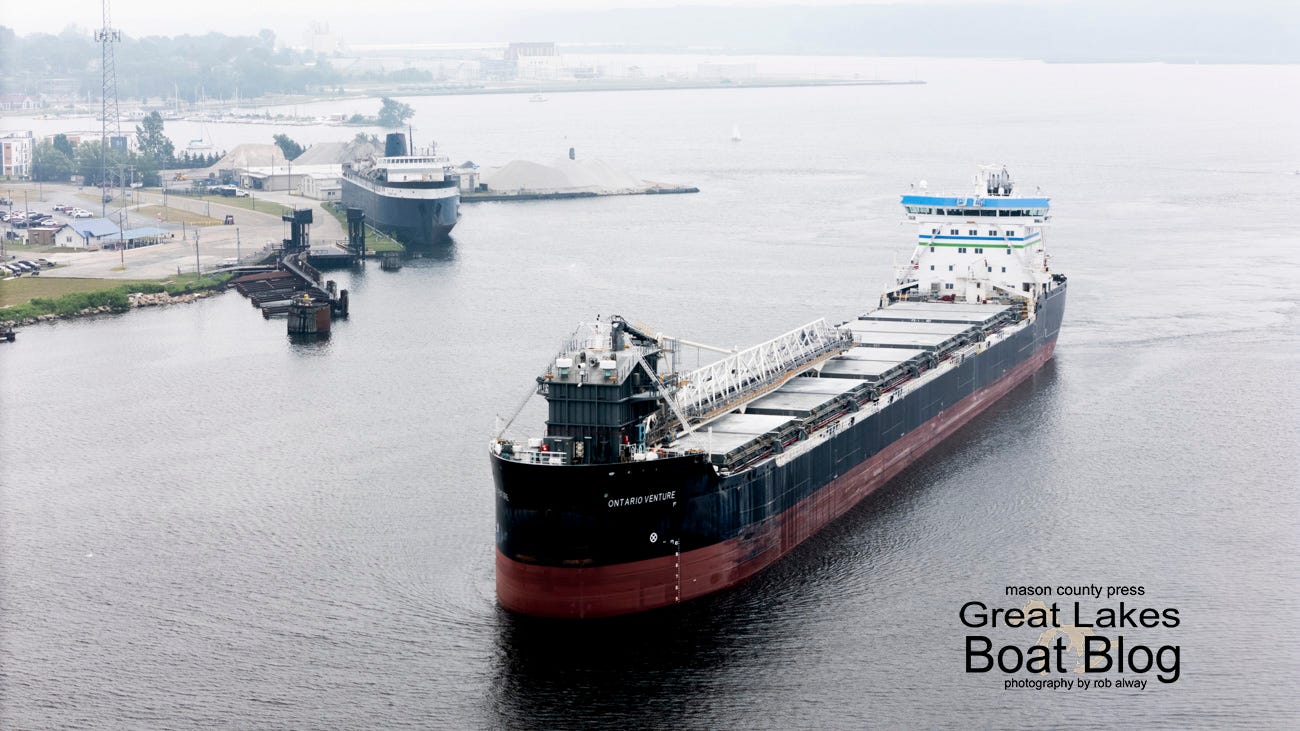
The Canadian-flagged M/V Ontario Venture is one of the newest additions to the Great Lakes bulk carrier fleet, but her history stretches back more than two decades to a very different career on the world’s oceans.
Originally built as a double-hulled petroleum tanker in 2004, the vessel underwent an extensive reconstruction in China in 2025, emerging as a modern self-unloading bulk carrier. She entered Great Lakes service in 2026, joining a growing fleet of vessels that have been given new careers through conversion rather than being replaced entirely by new construction.
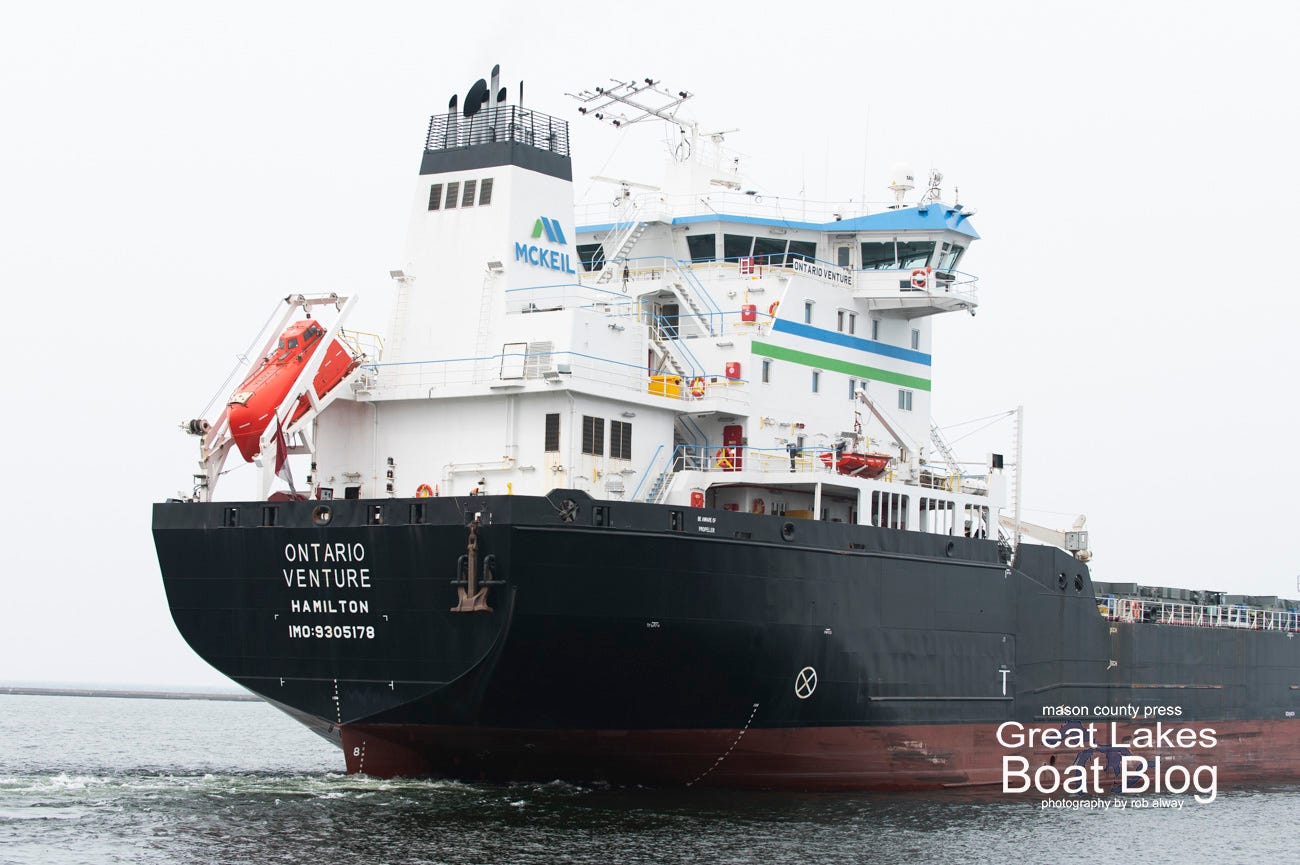
The Ontario Venture is operated by McKeil Marine of Burlington, Ontario, a Canadian marine transportation company with a history dating to the construction of the St. Lawrence Seaway.
A second life on the Great Lakes
The vessel began her career as the Patrona I, built at the Qixin Shipyard in Shanghai, China, part of China State Shipbuilding Corp.
As originally constructed, she measured 472 feet, 7 inches long, with a beam of 75 feet, 6 inches. She was powered by a single MAN-B&W 6L48/60B diesel engine rated at 9,790 brake horsepower, according to “Know Your Ships.”
Unlike a conventional Great Lakes bulk carrier, the Patrona I was designed to transport liquid cargo in enclosed tanks. Her double-hull construction provided an additional protective barrier between the cargo tanks and the surrounding water.
McKeil Marine acquired the vessel in 2025 and arranged for a major reconstruction at the COSCO Shipyard in Nantong, China. The project involved removing the tanker’s original forward cargo section and replacing it with a new bulk cargo section designed for Great Lakes operations.
The rebuilding substantially changed both her appearance and her function. Instead of carrying liquid cargo, she could now transport thousands of tons of dry bulk commodities, using an onboard conveyor system to unload at terminals throughout the Great Lakes and St. Lawrence Seaway.
Renamed Ontario Venture, the ship made the long voyage from China to North America by way of the Pacific Ocean and Panama Canal, arriving in Canadian waters in the spring of 2026.
A modern self-unloader
Following her conversion, the Ontario Venture measures 679 feet, 10 inches long overall, with a beam of 78 feet and a molded depth of 44 feet, 11 inches.
She has a carrying capacity of approximately 24,000 metric tons at maximum St. Lawrence Seaway draft, with a cargo volume of 32,055 cubic meters.
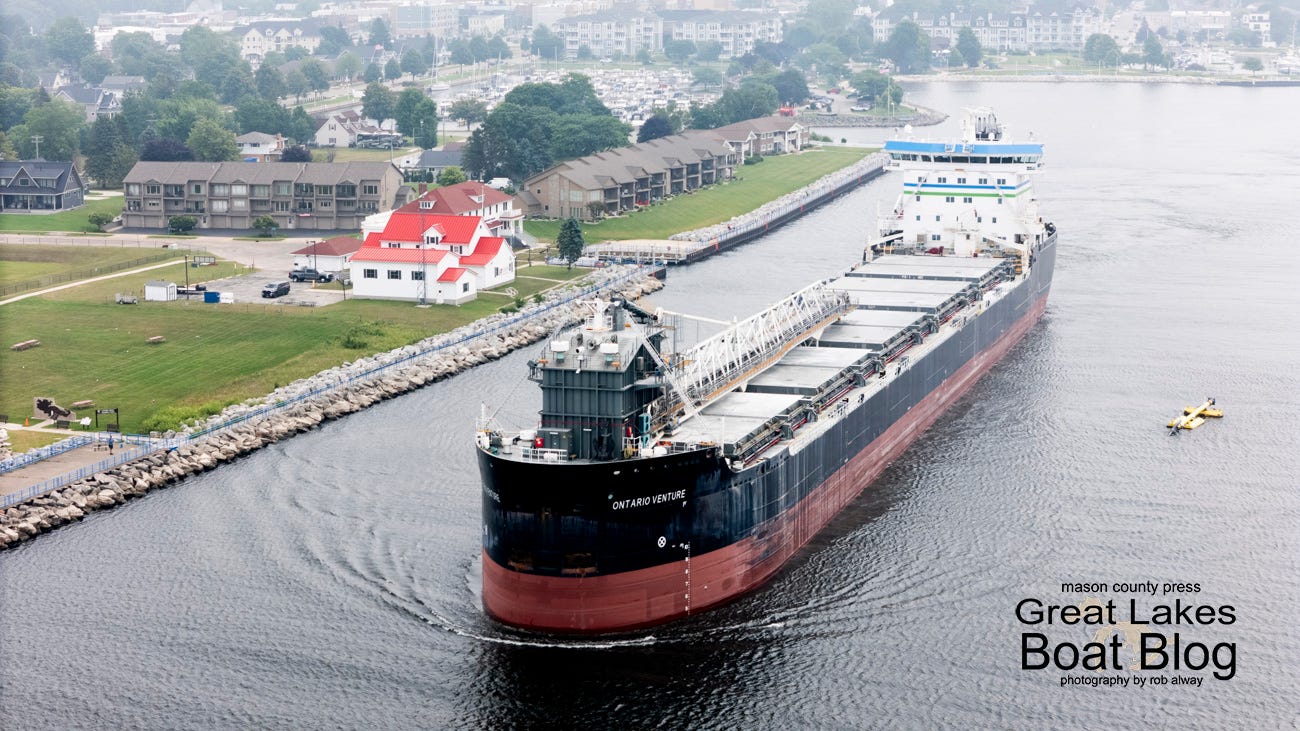
One of her most distinctive features is her 265-foot self-unloading boom.
The vessel is capable of carrying a wide variety of dry bulk commodities, including aggregates, grain, iron ore, coal and soybeans.
Her diesel propulsion system is rated at approximately 8,448 horsepower, according to McKeil Marine’s current vessel specifications.
Supporting Great Lakes commerce
The Ontario Venture serves an important role in transporting the raw materials used throughout the Great Lakes region.
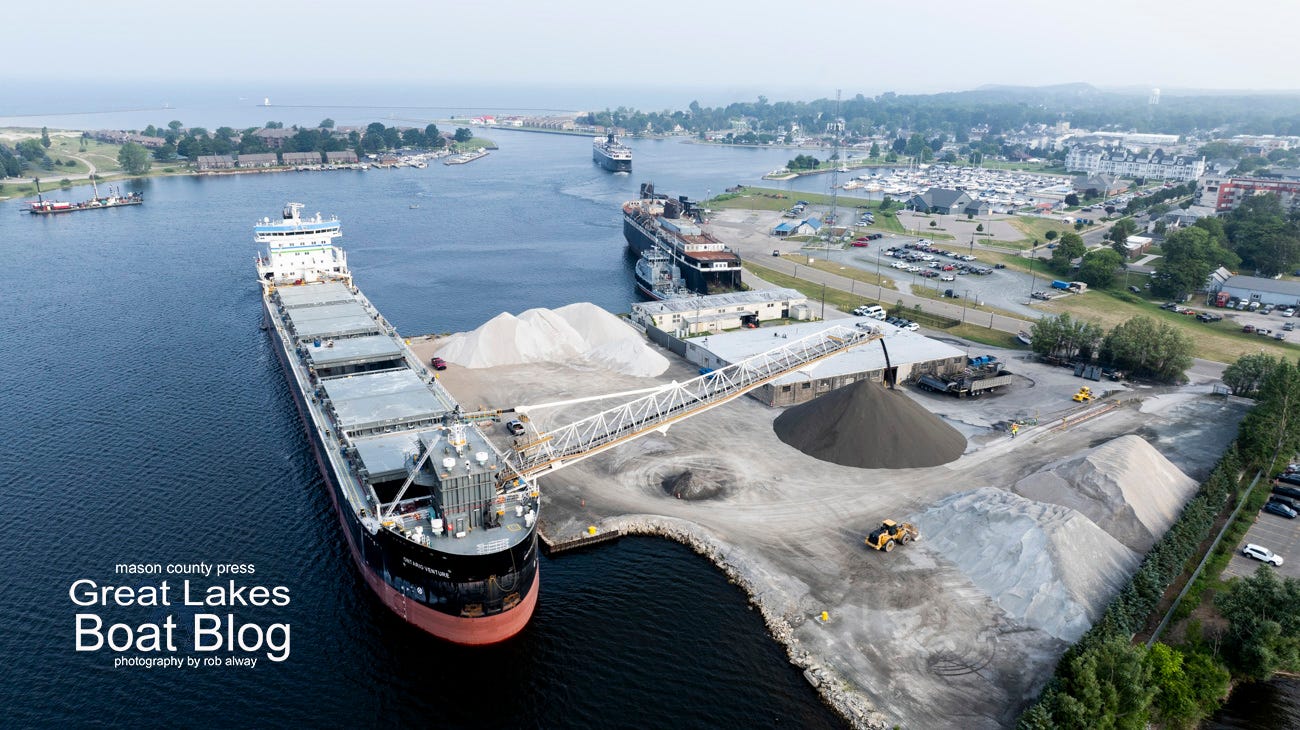
One of those commodities is aggregate, including crushed stone used in highway construction, asphalt production, concrete and railroad ballast.
Aggregate transportation is an important component of Great Lakes commercial shipping because large quantities of stone can be moved efficiently by water between quarries and receiving terminals.
The Ontario Venture also participates in agricultural transportation. In April 2026, she became the first vessel to load grain at Parrish & Heimbecker’s newly developed Picton Terminal on Lake Ontario, carrying wheat and soybeans for shipment through the St. Lawrence system.
The ability to handle different commodities gives the vessel flexibility in a shipping industry where cargo demand and trade patterns change throughout the navigation season.
Part of a changing fleet
The Ontario Venture is not McKeil Marine’s first example of converting an existing oceangoing vessel for Great Lakes service.
Another member of the company’s fleet, the Northern Venture, was originally built in Japan in 1998 as the Asia Cement No. 7. Later known as the Da Shen, she was acquired by McKeil Marine in 2022 and underwent a refit in China before entering Great Lakes service in 2024.
The Northern Venture measures 508 feet, 6 inches long and is equipped with a 260-foot self-unloading boom.
Both vessels illustrate the opportunities available through extensive ship reconstruction. Instead of building an entirely new ship, a marine transportation company can retain usable portions of an existing vessel while replacing or modernizing equipment and structures to suit a different purpose.
Such conversions require substantial engineering and shipyard work, particularly when transforming a liquid-cargo tanker into a dry bulk carrier.
For McKeil Marine, the approach has expanded its capacity to transport bulk commodities while adding vessels specifically configured for Great Lakes trade.
A company with Seaway roots
McKeil Marine traces its beginnings to 1956, when Evans McKeil established a small marine operation using a wooden workboat to support construction of the St. Lawrence Seaway.
Over the following decades, the company expanded into tug and barge operations, marine construction and specialized cargo transportation.
Today, McKeil Marine operates a diversified fleet that includes bulk carriers, tankers, tugboats, barges and workboats. Its vessels serve customers throughout the Great Lakes, St. Lawrence Seaway, Atlantic Canada and the Canadian Arctic.
The Ontario Venture reflects the company’s continued investment in versatile commercial vessels and specialized cargo transportation.
Although her origins are those of an oceangoing tanker, her present role is firmly established in the Great Lakes shipping industry.
Sources: McKeil Marine vessel specifications and company history; “Know Your Ships”; Freighters, Winter 2026, Shipwatcher News; World Grain reporting on the Picton Terminal; and original reporting by Rob Alway for Mason County Press.