

By Rob Alway
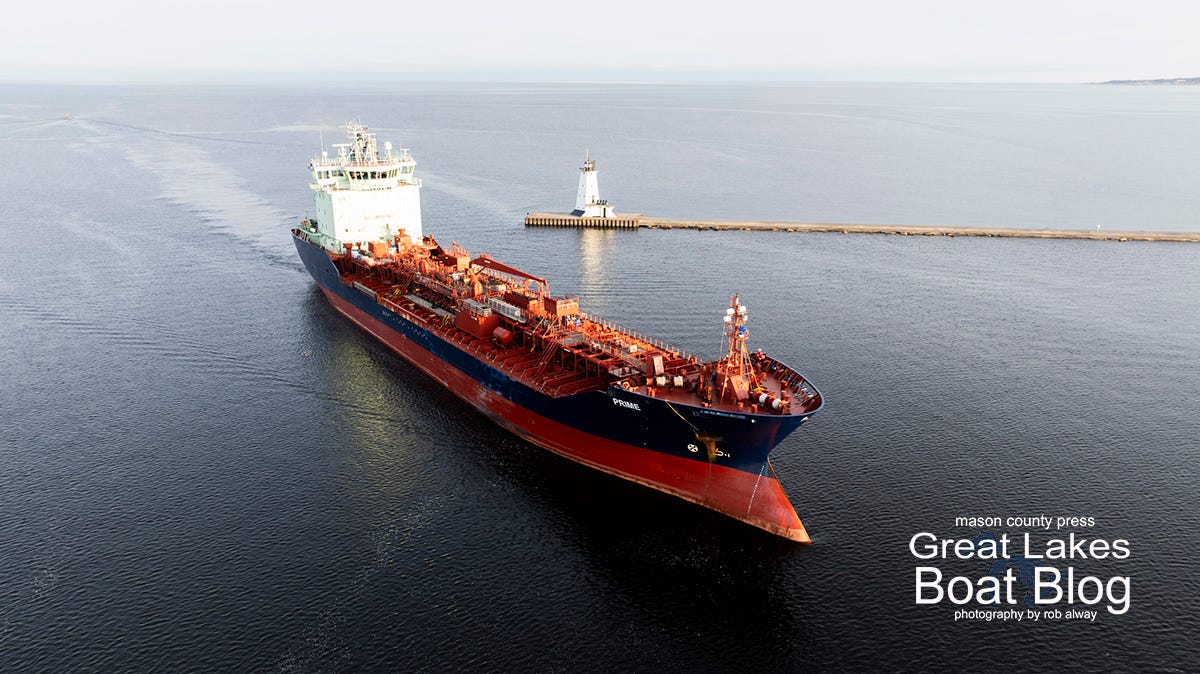
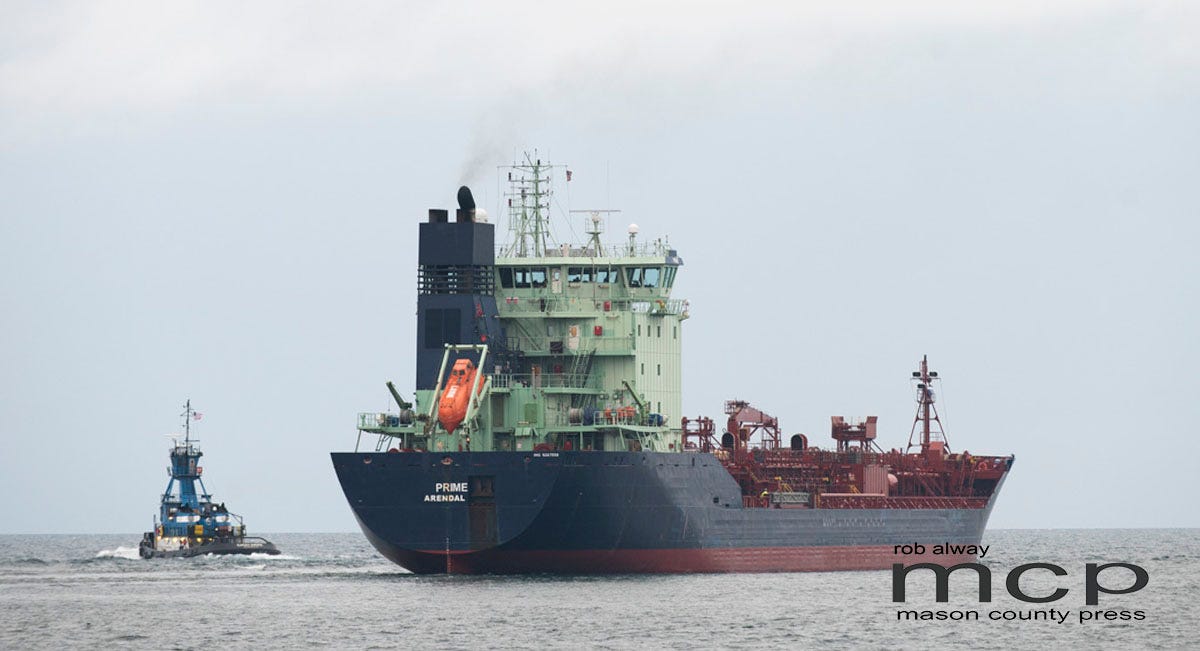
LUDINGTON, Mich. — The Norwegian-flagged chemical tanker Prime became a familiar sight in Ludington harbor during the 2026 shipping season, marking a significant change in how OxyChem transported calcium chloride from its Ludington plant to customers in Canada.
The 459-foot tanker arrived in Ludington for the first time on April 26 and made regular voyages throughout the spring and summer. She concluded her Ludington service in early September but continued operating in the St. Lawrence Seaway system into October.
As of Oct. 10, Automatic Identification System (AIS) tracking showed Prime at anchor near Montreal, Quebec, following an Oct. 9 arrival.
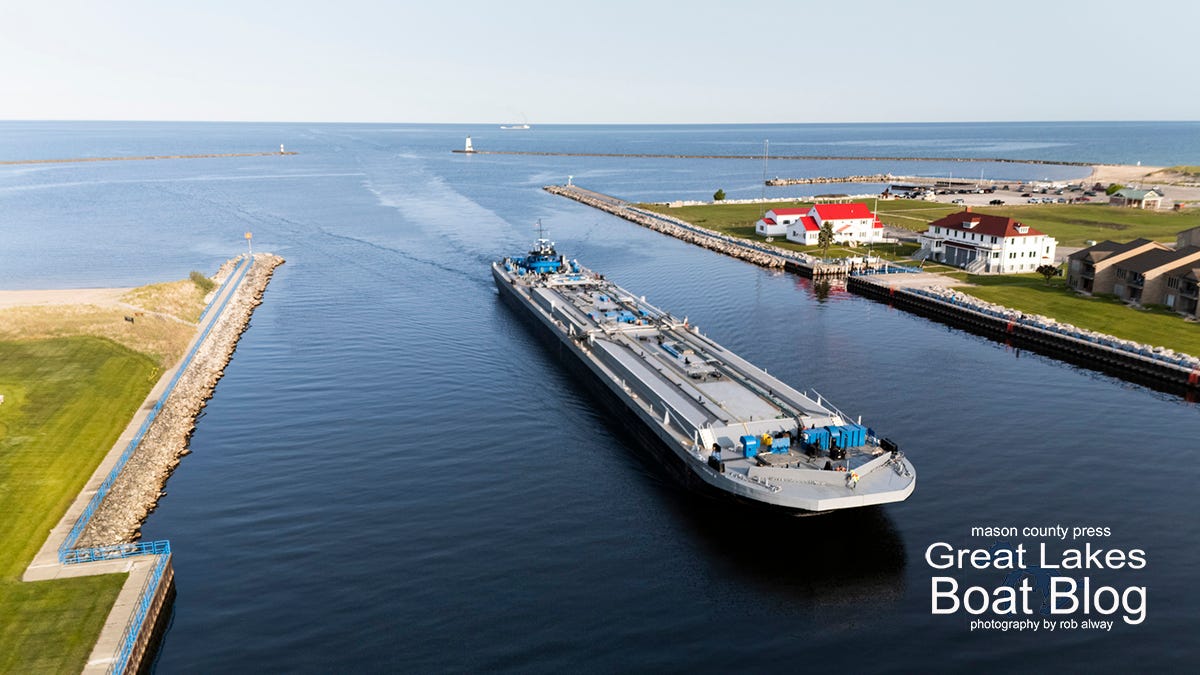
Prime replaced the longtime American tug-barge combination Spartan and Spartan II, which had transported calcium chloride from Ludington for decades. The transition brought a foreign-flagged, foreign-crewed tanker into a trade traditionally served by American vessels and mariners.
The change also coincided with a new chapter for OxyChem, which became part of Berkshire Hathaway in January 2026.
Berkshire Hathaway completed its $9.7 billion acquisition of OxyChem from Occidental Petroleum on Jan. 2, bringing the Ludington facility under the ownership of the investment conglomerate. The transaction marked one of the most significant ownership changes in the history of the plant.
The Ludington facility traces its roots to World War II-era magnesium production and has operated under several owners through the years. OxyChem acquired the plant from Dow Chemical in 2009 and continues to produce calcium chloride using naturally occurring brine resources beneath Mason and Manistee counties in Michigan. The facility supplies customers throughout the United States and Canada and remains one of the region’s largest industrial employers.
At the same time, OxyChem had to adapt to the retirement of vessels that historically carried much of that product across the Great Lakes.
Retirement of Spartan and Spartan II
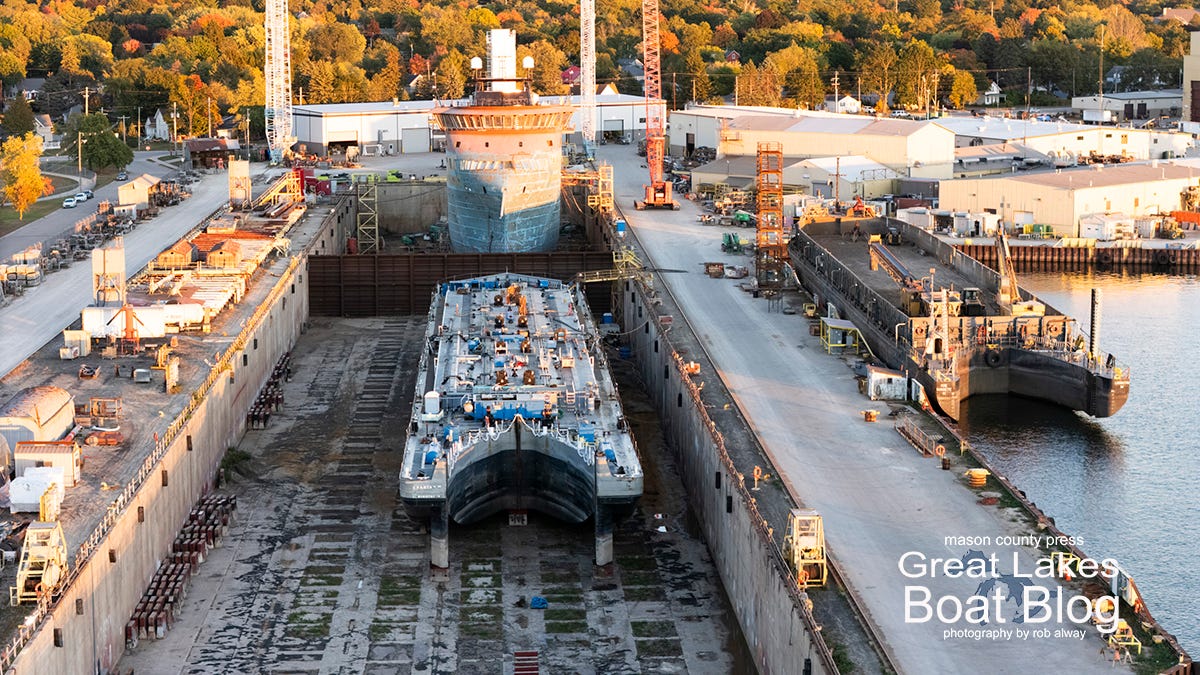
According to OxyChem, Spartan II was permanently retired from service in 2026. The company was evaluating options for her final disposition. Her companion tug, Spartan, was also retired and undergoing decommissioning.
The retirement followed significant structural deficiencies identified while Spartan II was undergoing inspection and repairs at Fincantieri Bay Shipbuilding in Sturgeon Bay, Wisconsin, during the fall of 2025.
According to American Bureau of Shipping inspection records, surveyors documented widespread corrosion and structural deterioration throughout the barge. Excessive steel wastage was identified on exposed portions of the main deck and trunk deck, along with corrosion on both the port and starboard sides of the hull.
More serious findings emerged during a special survey. Inspectors reported a fracture in the starboard side shell at frame 52 in the turn of the bilge, a critical structural area where the bottom plating transitions into the vessel’s side shell.
Additional damage included multiple gouged hull plates between frames 2 and 5 on the port side, damage near frame 14 in an area that had previously undergone repairs, and a dent in the starboard turn of the bilge at frame 32.
The deficiencies remained listed as outstanding following the inspection, with recommended repairs due by Dec. 29, 2025. Publicly available records did not indicate whether those repairs were completed.
The retirement ended the careers of two vessels that had been familiar participants in Great Lakes commerce for decades.
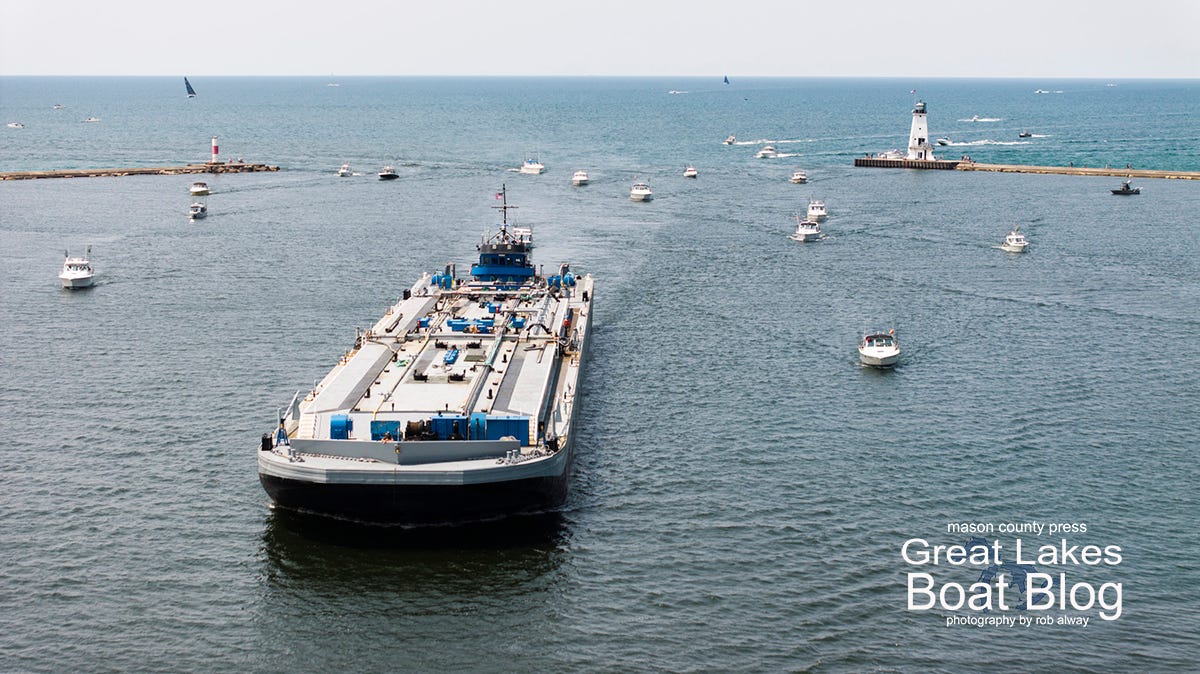
Spartan II was built in 1980 by Bay Shipbuilding in Sturgeon Bay. Originally named Hannah 6301, the double-hulled liquid barge measured 407 feet long, 60 feet wide and 21 feet deep. Designed for bulk liquid cargoes, she carried up to 10,000 short tons and was equipped with three diesel-powered cargo pumps used to discharge calcium chloride and other liquid products.
Her companion tug, Spartan, was built in 1969 by Burton Shipyard in Port Arthur, Texas. During her career, the tug sailed under several names, including Lead Horse, Gulf Challenger, Challenger and Mark Hannah, before receiving her final name in 2010.
The tug measured 121 feet long with a beam of 31 feet and a depth of 10 feet. Her twin-screw propulsion system generated approximately 3,200 horsepower.
Both vessels were acquired by OxyChem in 2009 and renamed the following year. For more than a decade, the tug-barge combination routinely transported calcium chloride produced in Ludington to customers throughout the Great Lakes region while supporting American maritime jobs through Andrie Inc. of Muskegon, Michigan, which operated the vessels.
Their retirement raised questions about the future of the American maritime jobs that historically supported the route, though OxyChem had not announced any workforce impacts related to the change.
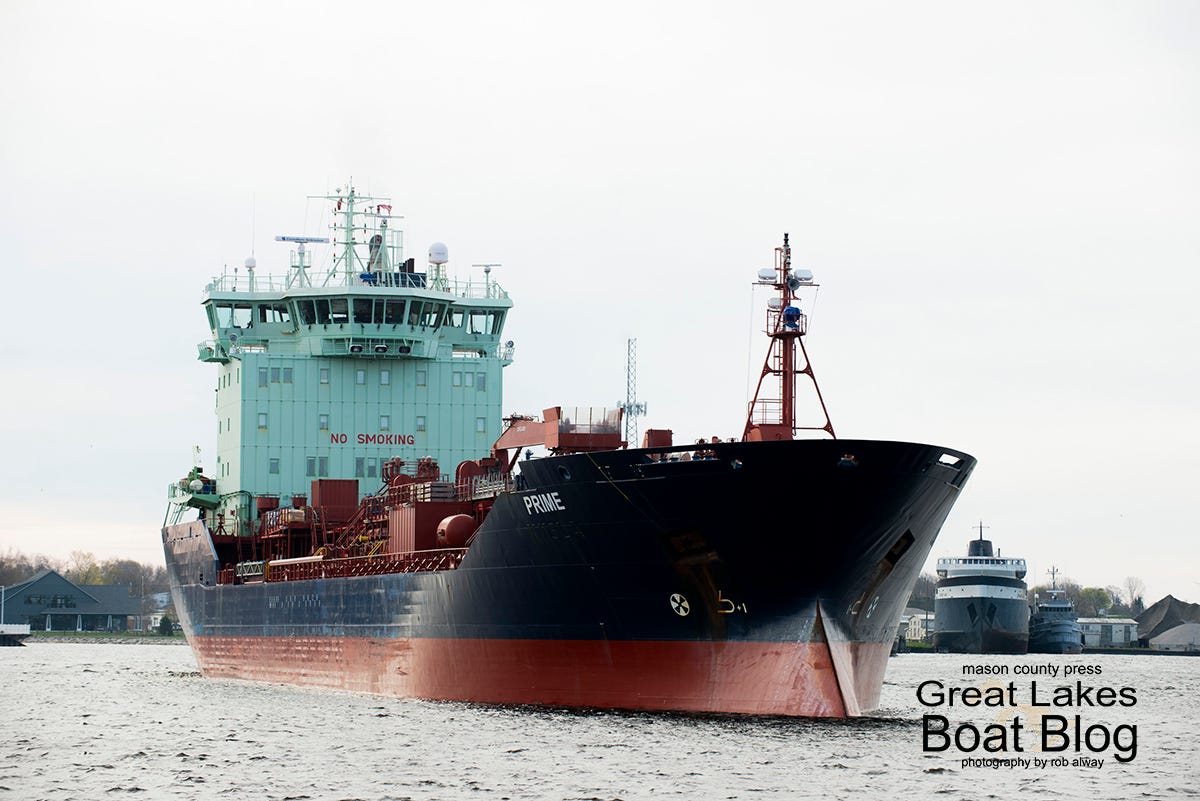
Prime’s history and specifications
Prime represented a significantly different transportation platform from the tug-barge combination she replaced.
The vessel was built in 2004 at the Estaleiros Navais de Viana do Castelo shipyard in Viana do Castelo, Portugal, for Finnish operator Neste Shipping Oy. She entered service as Kiisla and later sailed under the name CM Prime before assuming her present identity.
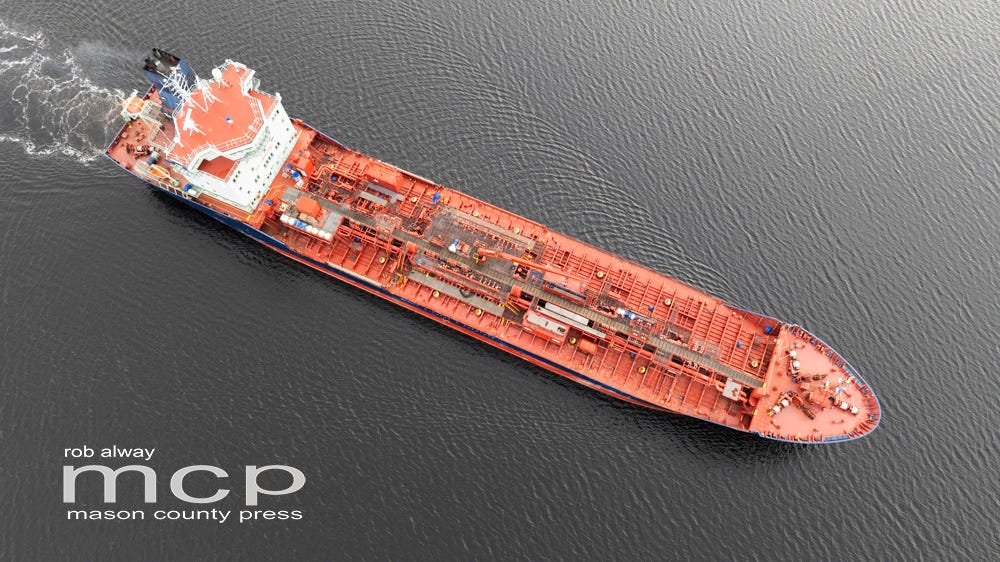
The tanker measures approximately 459 feet long with a beam of 69 feet. She has a gross tonnage of 9,910 and a deadweight capacity of approximately 14,750 metric tons, or 16,260 short tons.
She is powered by a main engine producing approximately 11,330 horsepower and was designed to transport refined petroleum products and liquid chemicals.
Ownership is listed under MES Trade Invest AG, while vessel management is handled by OSM Ship Management AS. She sails under the Norwegian International Ship Register.
Before coming to the Great Lakes, Prime operated primarily in Northern European waters, serving ports in the Baltic and North Sea regions, including Rotterdam and Amsterdam. Her appearance on the Great Lakes represented a notable shift from her traditional trading pattern.
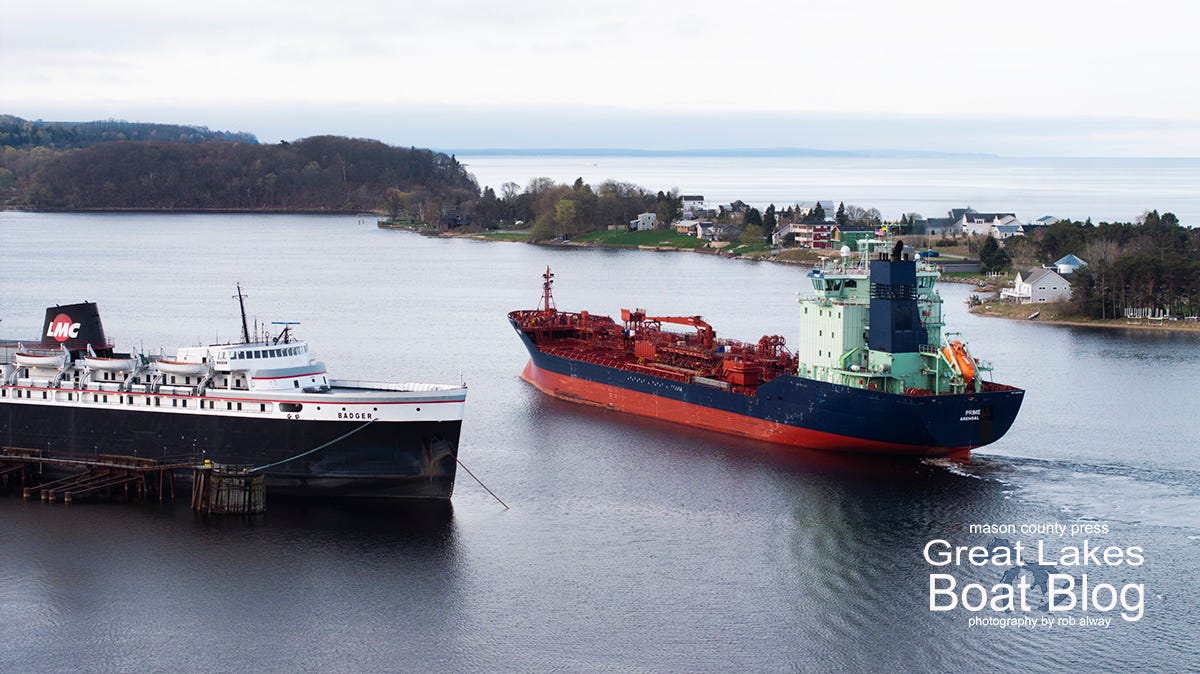
In April 2026, Prime crossed the Atlantic Ocean from Rotterdam, Netherlands, and entered the Great Lakes through the St. Lawrence Seaway after stopping in Montreal. Before her first Ludington arrival, she called at Port Colborne, Ontario.
Her first visit to Ludington on April 26 also marked the opening of the port’s 2026 commercial shipping season.
Throughout the spring and summer, Prime transported calcium chloride from the OxyChem terminal on Pere Marquette Lake to Canadian customers, visiting ports including Port Colborne and Loyalist Cove, Ontario.
The tanker made repeated voyages to Ludington during the season. Her final months included an extended August stay that concluded Aug. 29. She returned to Ludington on Sept. 2 and departed Sept. 4, completing her season serving the OxyChem facility.
Although her Ludington assignments had ended, Prime remained in Canadian waters through September and into October. AIS records showed that she continued operating in the Great Lakes and St. Lawrence Seaway system, with her latest reported arrival near Montreal on Oct. 9.
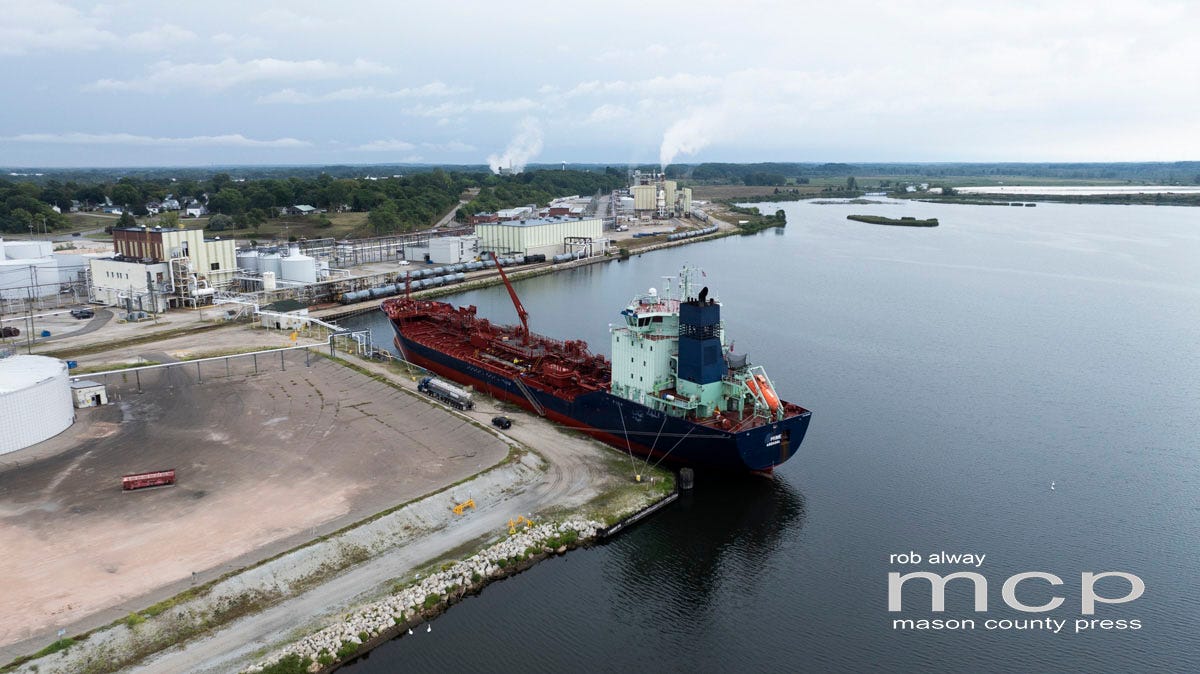
OxyChem had confirmed in June that Prime was being used during the 2026 shipping season while the company evaluated long-term transportation options.
Wilma Rivera, OxyChem manager of communications, said the vessel was being used to transport calcium chloride across the Great Lakes for the company’s Canadian customers.
“Long-term plans have not been finalized,” Rivera said at the time.
Whether Prime will return to Ludington in 2027 remains uncertain.
Foreign-flagged vessels and the Jones Act
The use of a foreign-flagged vessel generated questions about potential impacts on American maritime employment and the applicability of the Jones Act, the federal law that generally requires cargo transported between two U.S. ports to move aboard vessels that are American-built, American-owned and American-crewed.
However, Prime‘s operations did not appear to fall under a traditional Jones Act scenario.
Based on publicly available vessel tracking information and statements from OxyChem, she transported calcium chloride from Ludington to customers in Canada. Because those voyages constituted international commerce rather than transportation between two U.S. ports, the Jones Act did not appear to apply to her Canadian cargo movements.
While Prime was foreign-flagged and foreign-crewed, OxyChem’s Ludington facility continued to utilize American maritime operators as part of its transportation network.
In addition to Prime, the plant was served by the tug Candace Elise and barge Robert F. Deegan. Candace Elise is owned and operated by Ashton Marine Co. of North Muskegon, Michigan. Originally built as Patricia Hoey, the tug underwent extensive rebuilding before entering service under Ashton Marine ownership. She routinely operates throughout the Great Lakes towing liquid cargo barges.
Her companion, Robert F. Deegan, is a double-hulled tank barge owned by USS Great Lakes LLC and designed for the transportation of liquid chemicals and petroleum products.
Together, the vessels continued to provide a U.S.-flagged tug-barge operation serving Ludington with American crews aboard American vessels.
Their continued service demonstrated that domestic maritime transportation remained an important component of OxyChem’s logistics operations even as the company used Prime to serve Canadian customers during the 2026 season.
Additionally, the Andrie-owned tug Sarah Andrie assisted Prime in Ludington harbor. The American tug accompanied the tanker through the harbor channel and assisted with docking and departure maneuvers throughout the season.
The distinction between domestic and international cargo movements is important because much of the national debate surrounding Jones Act waivers has focused on domestic cargo movements that would otherwise be reserved for American vessels and crews.
Jim Weakley, president of the Lake Carriers’ Association, has been among the most outspoken critics of expanded Jones Act waivers. He has argued that increased reliance on foreign vessels in domestic trades threatens American jobs, shipyard investment and the long-term viability of the nation’s maritime industry.
In comments made earlier in 2026 concerning Jones Act waivers, Weakley said the practice put American maritime employment and shipbuilding investment at risk.
“Waivers create uncertainty in the industry,” he said.
Weakley argued that allowing foreign interests to compete in domestic cargo transportation could undermine American operators and affect the reliability of the domestic supply chain.
For Great Lakes operators, the Jones Act remains particularly important because American carriers already compete with Canadian operators in international Great Lakes commerce. Weakley has argued that weakening domestic protections would further challenge American fleets, mariners and shipyards.
Although the broader Jones Act debate remained significant for the maritime industry, Prime‘s transportation of Ludington-produced calcium chloride to Canadian destinations involved a different set of circumstances.
A changing maritime industry
The discussion surrounding Prime attracted particular attention in Ludington because of the community’s longstanding connection to Great Lakes shipping.
The city is home port to the SS Badger, the nation’s last coal-fired passenger and vehicle ferry operating on the Great Lakes, as well as the articulated tug-barge Undaunted/Pere Marquette 41. Both operations are part of Interlake Maritime Services of Middleburg Heights, Ohio.
Together with commercial operations serving the OxyChem plant and other harbor facilities, those vessels continue Ludington’s maritime traditions.
For ship enthusiasts, Prime‘s visits provided opportunities to observe and photograph a vessel that had spent most of her career in European waters.
But her appearance on Lake Michigan also illustrated the changes taking place within the maritime industry.
Within the first nine months of 2026, ownership of the OxyChem facility changed hands, the longtime Spartan and Spartan II were retired, and a Norwegian-flagged tanker assumed a prominent role in transporting Ludington-produced calcium chloride across the Great Lakes.
By September, Prime had completed her Ludington service and continued working elsewhere in the Great Lakes and St. Lawrence Seaway system.
OxyChem’s long-term replacement strategy for Spartan and Spartan II remains undetermined publicly, and it is not yet known whether Prime will return to the Ludington trade.
Her 2026 season offered an example of how vessel retirements, corporate ownership changes and international commerce continue to influence the Great Lakes shipping industry.

Help support this Substack page and check out our merchandise store.
This story is copyrighted 2026 by Sable Points Media.