


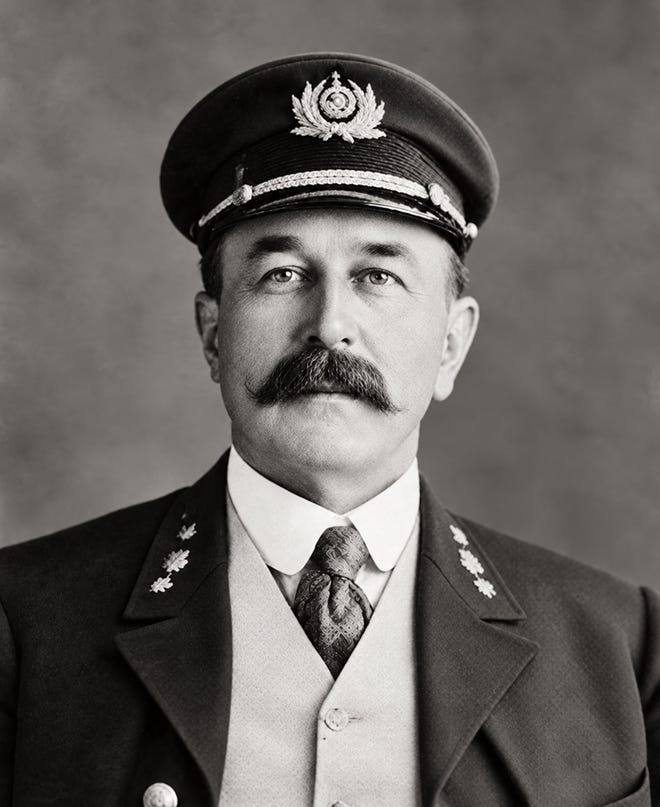
The Captains, Engineers and Others Who Powered a Great Lakes Tradition
By Rob Alway
Editor’s Note: Masters of the Ludington Steamers: The Captains, Engineers and Others Who Powered a Great Lakes Tradition is an ongoing historical research project exploring the lives and careers of the men who helped establish Ludington, Michigan, as one of the Great Lakes’ most important maritime ports. Through biographical accounts of captains, chief engineers and other mariners, the series examines the people behind the vessels that connected Michigan and Wisconsin, transported passengers and freight, and helped shape the region’s maritime heritage. Drawing from historic newspapers, archival records, photographs and other primary sources, these stories seek to preserve the personal histories of individuals whose contributions to Great Lakes shipping have often been overshadowed by the ships they served.
The stories posted in this series are abridged versions of what will eventually be a book documenting the mariners who helped build and sustain Ludington’s cross-lake shipping tradition.
Capt. John W. Stewart
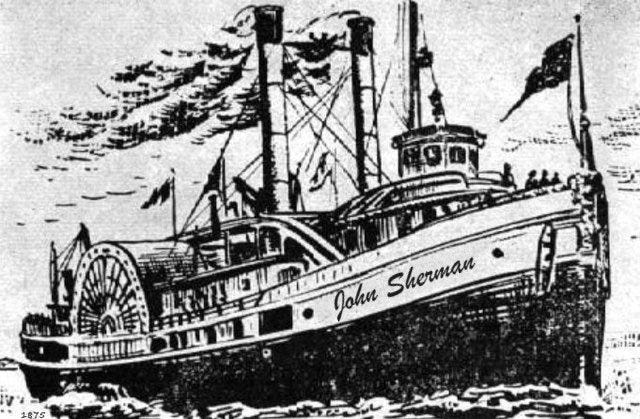
On May 31, 1875, Capt. John W. Stewart took the sidewheel steamer John Sherman out of Ludington harbor bound for Sheboygan, Wisconsin. The voyage marked the beginning of scheduled cross-lake steamship service under contract with the Flint & Pere Marquette Railroad and established a maritime connection that would shape Ludington for nearly a century.
Stewart was not commanding a railroad car ferry. Those vessels were still more than two decades in the future. His ship carried passengers, express shipments and break-bulk freight — merchandise unloaded from railroad cars and transferred aboard the steamer for its passage across Lake Michigan.
Yet the system that later made Ludington the home port of the Great Lakes’ largest railroad car ferry fleet began with that crossing. Stewart, a young but experienced Canadian-born captain, was its first master.
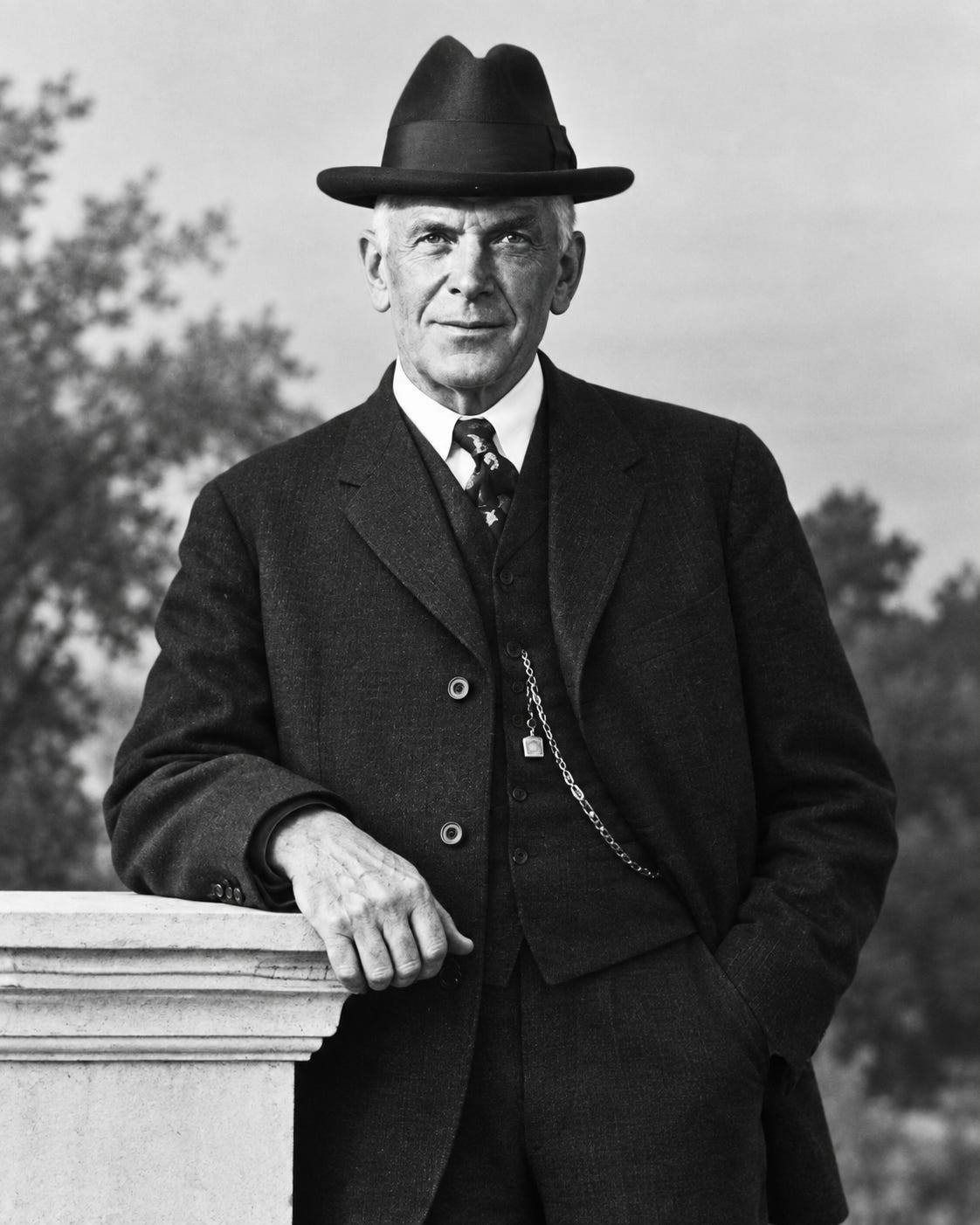
From deckhand to captain
John W. Stewart was born in Quebec City in 1847, the son of Samuel and Ann (Gleeson) Stewart. His family later moved to Amherstburg, Ontario, on the Detroit River, where commercial steamers and tugboats were part of everyday life.
According to the biographical collection History of the Great Lakes, published by J.H. Beers & Co. in 1899, Stewart left home in 1863 and joined the Olive Branch, which ran between Detroit and Gibraltar, Michigan. He started as a deckhand and learned to work as a wheelsman. He later tended the fires aboard the steamers Clara and Pearl and worked on tugboats on Lakes Huron and Erie.
The experience gave him a broad education in ship handling. During the following years he worked as a lookout, wheelsman and mate aboard vessels including Huron, Evergreen City, Illinois and City of Toledo. By 1871, he had advanced to master of Huron, becoming a captain in his early 20s.
Stewart subsequently commanded Metropolis on Lake Michigan, City of Sandusky on Lake Huron and the steamers George L. Dunlap and John Sherman. His familiarity with both passenger transportation and freight operations made him well suited for the railroad’s new venture.
The first Ludington crossing
The Flint & Pere Marquette Railroad had reached Ludington in December 1874. Its westward expansion depended in part on developing a connection across Lake Michigan, where freight could be transferred to railroads serving Wisconsin and markets farther west.
Rather than immediately build its own steamers, the company chartered John Sherman, a vessel that had originally been constructed for the U.S. Revenue Cutter Service in 1865. Stewart was already her captain when she was assigned to the Ludington-Sheboygan route.
The May 31, 1875, departure was a significant event for both the railroad and the port. A June 4 account in the Sheboygan Herald, reprinted from the Bay City Daily Tribune, praised the choice of Stewart, calling him “a thorough sailor and true gentleman.” The newspaper also described him as “courageous and accommodating,” suggesting that the young captain had already made a favorable impression along the route.
The service lasted only one navigation season. In 1876 the railroad made a new agreement with the Goodrich Transportation Company, which operated between Ludington and Milwaukee. The railroad subsequently developed its own fleet of conventional steamers and, beginning in the late 1890s, railroad car ferries.
Maritime historian George W. Hilton, in The Great Lakes Car Ferries, traced the development of this railroad-steamship connection. Although Stewart’s first assignment in Ludington was brief, it placed him at the beginning of a transportation system that would become central to the city’s economy and identity.
The Pacific Coast and a return to Ludington
After the 1875 season, Stewart went west. He worked in the California lumber industry before joining the Pacific Mail Steamship Company in 1877. His duties as quartermaster included piloting large seagoing steamships into and out of difficult harbors. He later served with the Pacific Coast Steamship Company, gaining experience far beyond the waters of the Great Lakes.
While in California, he married Ida Steller in 1881. They had four children: Ida, Louis Charles and twins John Blanchard and James.
That same year Stewart returned to Michigan and took command of the excursion steamer Dove at Bay City. From 1882 through 1884 he commanded Arundell, operating on the Saginaw-Bay City-Alpena route. In 1885 he rejoined the Flint & Pere Marquette marine operation as a mate.
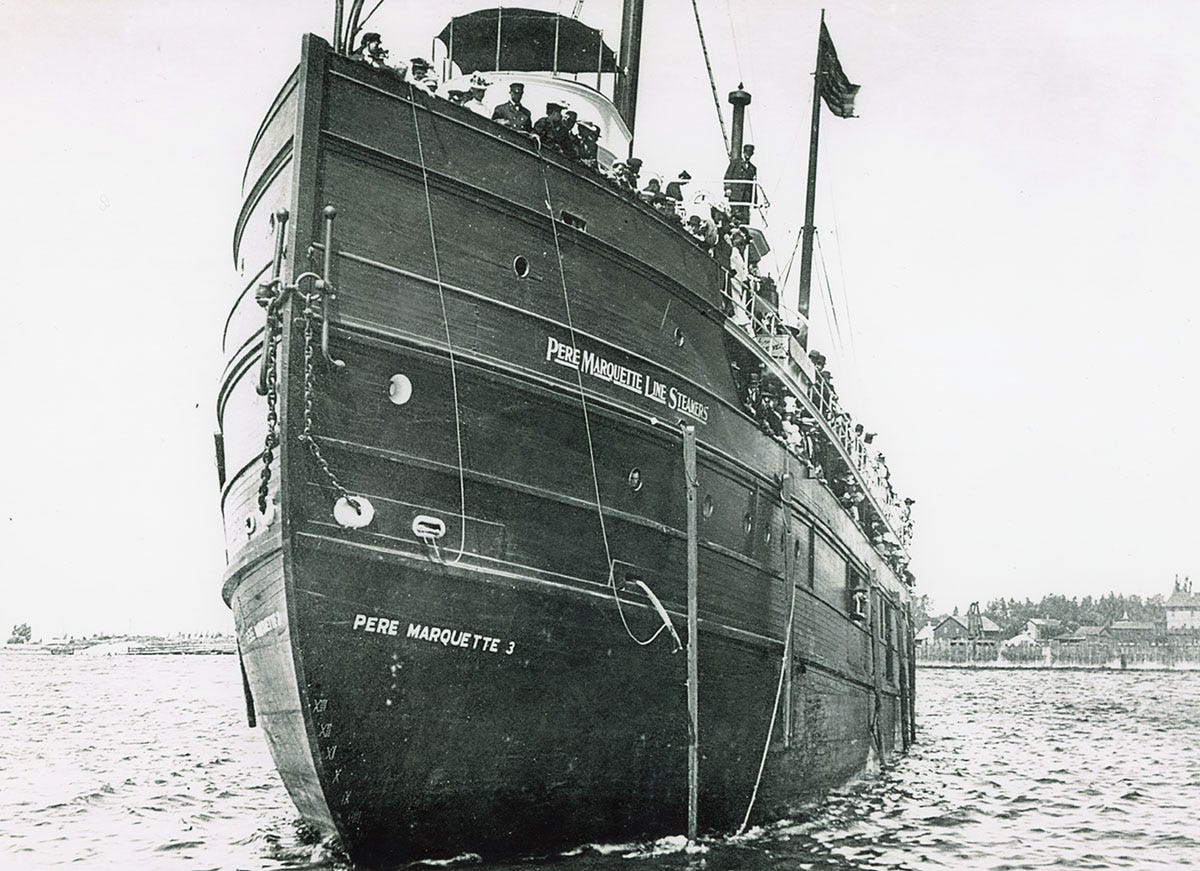
His return to command came in April 1888, when the railroad selected him to command F&PM No. 3. Designed by naval architect Frank Kirby and built under the Detroit Dry Dock Company’s contract, the 186-foot steamer carried freight and passengers between Ludington, Manistee and Milwaukee. Her service belonged to the era of the railroad’s “black boats,” when cargo still had to be handled separately from the railcars carrying it.
Stewart and his family moved to Ludington in 1888 and bought a house at 207 S. Washington Ave. in 1892. His reputation as a demanding but safety-conscious captain remained vivid for decades. In a 1953 Ludington Daily News account by historian Rose D. Hawley, former railroad employee George Warden remembered Stewart refusing to send two empty steamers to Manistee during rough weather. Stewart believed delaying the trip would be safer and ultimately more economical.
He would soon confront a storm that could not be avoided.
A December storm
On the night of Dec. 10, 1893, F&PM No. 3 left Ludington for Milwaukee with 18 passengers, 15 crew members and a cargo of freight. Heavy snow and strong winds reduced visibility during the crossing. The following morning the steamer grounded about six miles north of the Milwaukee harbor entrance.
Contemporary reports in the Milwaukee Sentinel and Milwaukee Journal described the grounding and the efforts to assist the stranded ship. Under the direction of Capt. Neils Peterson, the U.S. Life-Saving Service brought her passengers and crew ashore without loss of life. The next day, F&PM No. 4, the steamer Hilton and the tugboats Welcome and Conrad Starke helped pull No. 3 free.
The accident did not end Stewart’s career. In 1894 he took command of the passenger steamer City of Milwaukee, which operated for the Detroit, Grand Haven & Milwaukee Railway. She was the iron-hulled sidewheeler built in 1881, not the railroad car ferry of the same name built in 1931 and preserved today at Manistee.
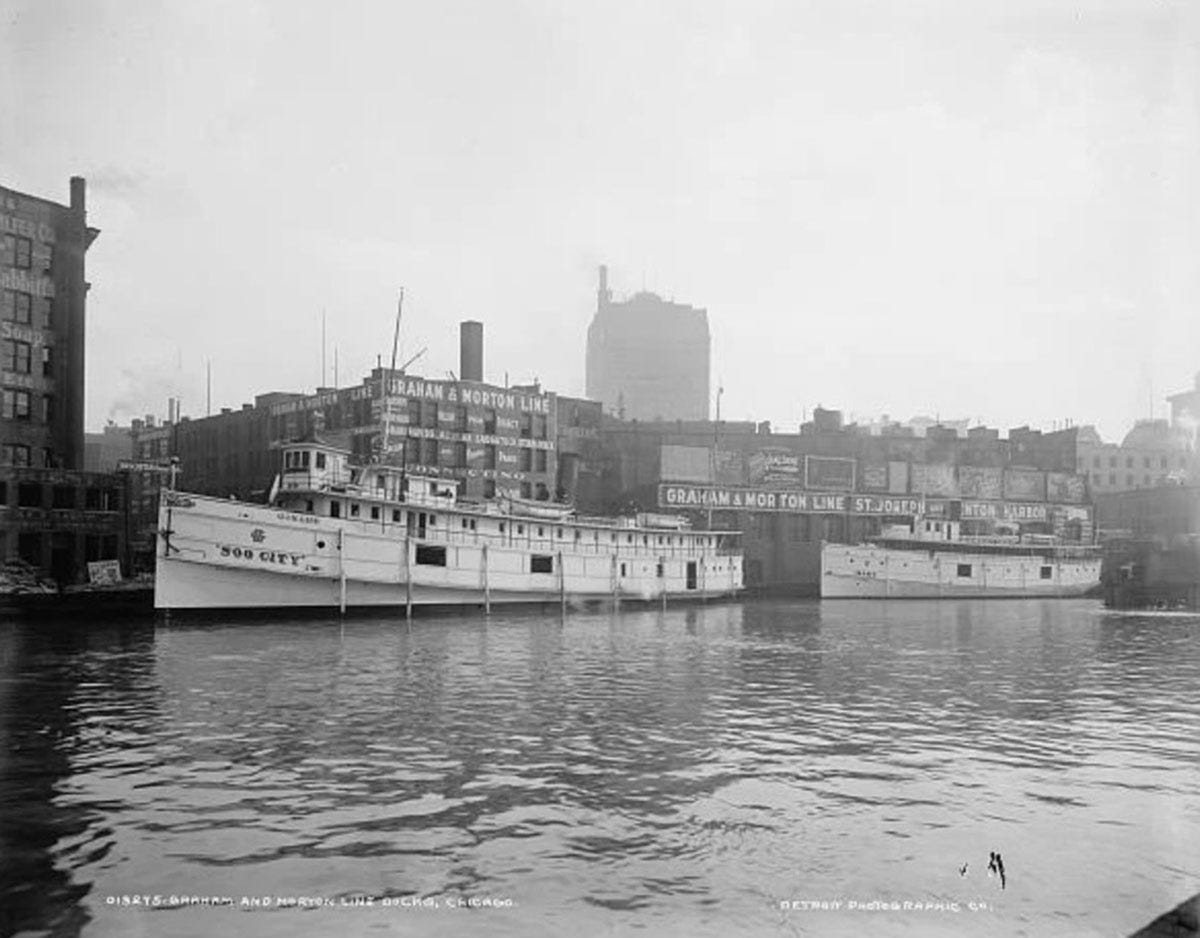
In 1896 the Graham & Morton Transportation Company purchased City of Milwaukee, renamed her Holland and kept Stewart in command. His association with the Benton Harbor-based company would define the remaining decades of his career.
“A sailor of renown”
Graham & Morton operated passenger vessels between Chicago and western Michigan communities. By the turn of the century, Stewart had become a familiar figure to generations of travelers and was widely referred to as the fleet’s commodore.
On Dec. 12, 1903, the Grand Rapids Evening Press published a feature titled “Sailor of Renown,” describing him as the “breezy commodore” of the Graham & Morton fleet. The article portrayed him as an accomplished navigator and an engaging storyteller whose experiences ranged from the Detroit River to the Pacific Ocean.
The newspaper also emphasized his safety record, reporting that despite decades of command, no passenger had been lost from a vessel under his charge.
Only two years later, that reputation would be tested in one of the most dramatic rescues of his career.
The grounding of Argo
On Nov. 24, 1905, Stewart approached Holland Harbor aboard the Graham & Morton steamer Argo, which had sailed from Chicago with 19 passengers, a crew of 22 and freight. A powerful gale and heavy seas made the entrance hazardous. Stewart waited offshore for daylight before attempting to bring her between the piers.
At about 5:30 a.m., he made his approach. As the Grand Rapids Evening Press later explained, an outer sandbar had developed near the harbor entrance. Argo struck the obstruction and lost headway. Stewart ordered her helm to starboard and the engines full astern, but a following sea drove her into the north pier. She came to rest off Ottawa Beach, exposed to the pounding surf.
Holland’s U.S. Life-Saving Service responded. An effort to rig a breeches buoy — a rescue device that carried people along a line between ship and shore — initially failed when the line snapped and the ship’s foremast broke away. Surfman Robert Smith then swam through the breakers with another line, making it possible to resume the rescue.
Stewart supervised the evacuation and remained aboard with most of his crew while passengers were brought ashore. When friends on the beach asked whether he intended to leave, he signaled a reply that the Grand Rapids Evening Press recorded:
“We’re going to stick to her as long as her gangways hold out.”
All aboard survived. Even a horse being shipped to the Grand Rapids Fire Department was rescued; the department later named the horse Argo.
In Lake Michigan Passenger Steamers, historian George W. Hilton described the difficult salvage that followed. Graham & Morton surrendered the vessel to its insurers, but crews eventually freed her after nearly three months, and she returned to service following repairs.
The grounding could easily have ended Stewart’s long career. Instead, his decision to remain aboard during the rescue reinforced his standing as a captain who placed his passengers’ safety first.
A final command
Stewart’s private life had changed in 1904 when his wife, Ida, died at age 48. He continued sailing for Graham & Morton, while family members increasingly made their homes on the Pacific Coast. He spent some winters with them before returning to Lake Michigan for the navigation season.
In 1912 Graham & Morton placed Stewart in command of its newest passenger steamer, City of Grand Rapids. Built by the American Shipbuilding Company in Cleveland, she measured 291 feet long and was the largest vessel in the company’s fleet.
The News-Palladium of Benton Harbor announced his appointment on May 27, 1912, observing that “Cap” Stewart was popular with travelers who had crossed Lake Michigan with him for years. The newspaper reported that he had commanded more than 30 Great Lakes steamers and wrote that “no boat that the captain sailed ever lost a passenger.”
For the former Detroit River deckhand, command of City of Grand Rapids was the culmination of a career that had begun nearly half a century earlier. He retired after more than 50 years in maritime service and died in Chicago. Reports of his death circulated in newspapers in early January 1919.
Stewart never commanded one of the great railroad car ferries that later made Ludington famous. His contribution came earlier, when the railroad was testing whether vessels could provide a reliable link across Lake Michigan. From his first sailing aboard John Sherman to his later command of F&PM No. 3, he helped establish the standards of seamanship and passenger service on which that enterprise grew.
The captains who followed him would command larger and more specialized ships. But on May 31, 1875, the first of those crossings belonged to Capt. John W. Stewart.
This article is adapted from Rob Alway’s research for “Masters of the Ludington Steamers: The Captains, Engineers and Others Who Powered a Great Lakes Tradition.”
Help support this Substack page and check out our merchandise store.
This story is copyrighted 2026 by Sable Points Media.