


By Rob Alway
This is part 1 of a three-part Great Lakes Boat Blog series examining Kewaunee, Wisconsin, its railroad carferry port, historic lighthouse and World War II-era tugboat.
KEWAUNEE, Wisconsin — The small Wisconsin city of Kewaunee played a significant role in the history of railroad carferry operations on Lake Michigan. It was here that the transportation system began in 1892, and it was here that the last railroad carferry service ended nearly a century later.
Kewaunee is a city of fewer than 3,000 people. The 2020 census recorded a population of 2,837. Despite its relatively small size, its location at the mouth of the Kewaunee River made it an important transportation center for railroads serving the Great Lakes region.
The harbor offered a connection between the railroads of Wisconsin, Minnesota and other western states and the expanding railroad network in Michigan. By transporting loaded railroad cars across Lake Michigan aboard specially designed ships, railroads could avoid routing freight through the congested Chicago, Illinois, rail yards.
For nearly a century, Kewaunee served as one of the important western terminals for this unique form of Great Lakes transportation.
Where it all began
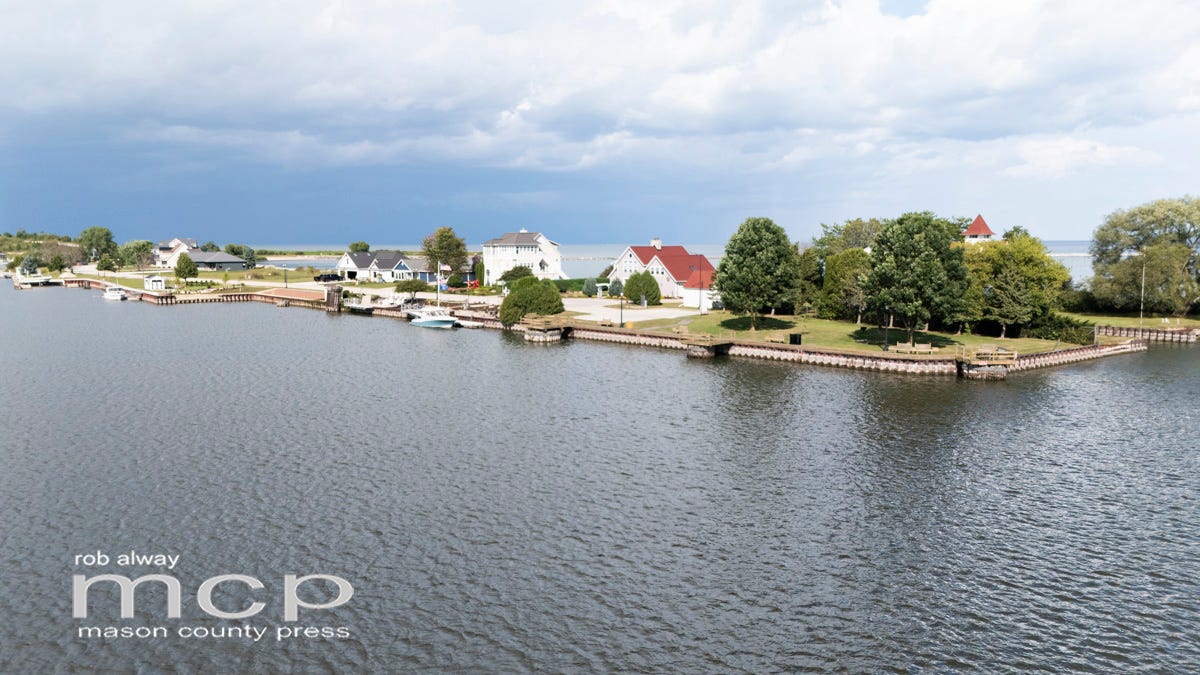
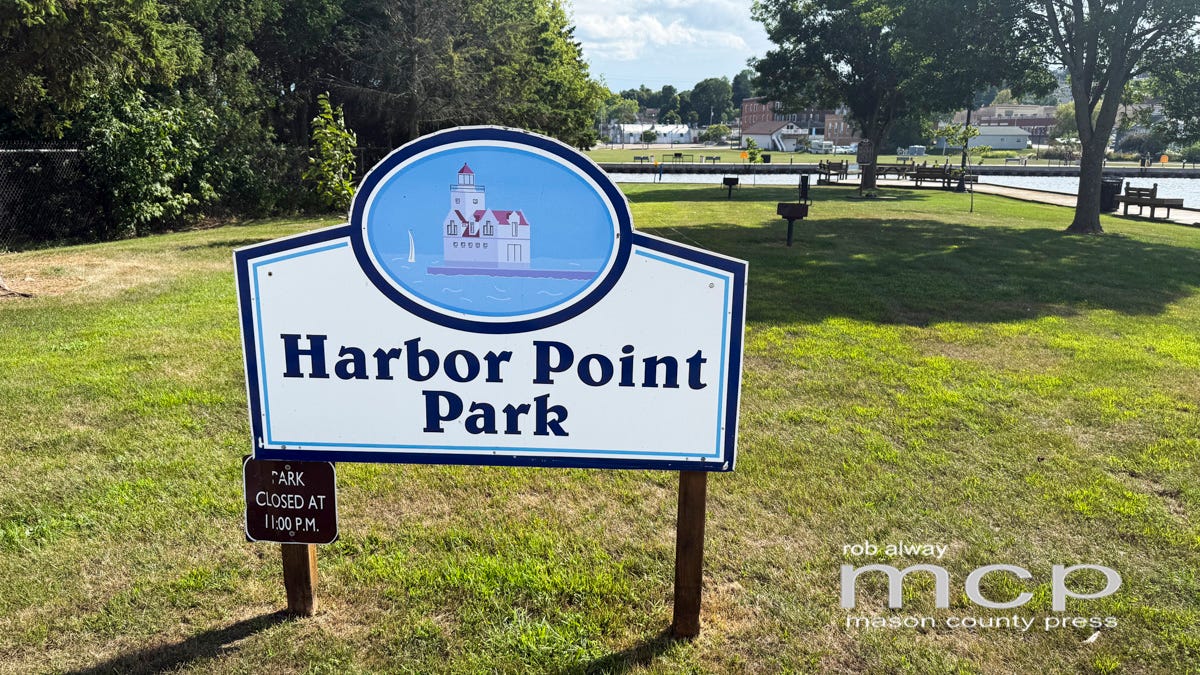
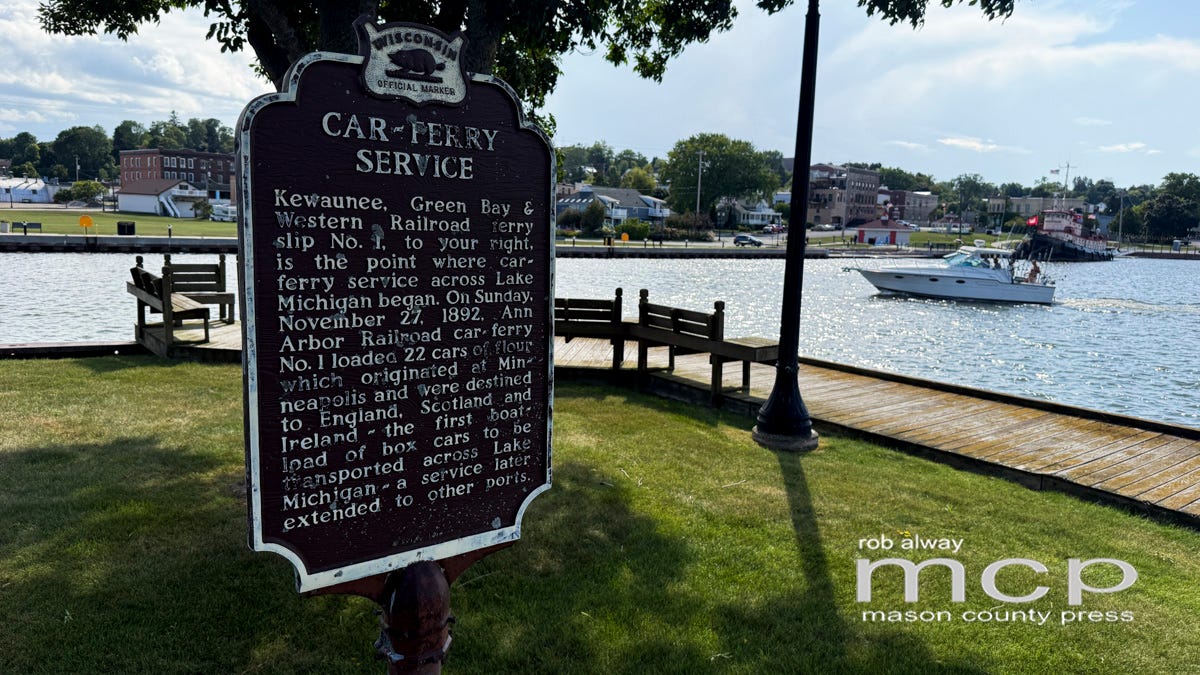
Harbor Point Park, located at the end of Hathaway Drive, occupies part of the former railroad carferry terminal, including the location of ferry slip No. 1 of the Kewaunee, Green Bay and Western Railroad.
This was the birthplace of Lake Michigan railroad carferry service.
Railroad service reached Kewaunee in 1891. Initially, freight arriving by rail had to be unloaded from the railroad cars, placed aboard ships and then reloaded into railroad cars when it reached the opposite shore. This process, known as break-bulk shipping, required considerable labor and time.
The Toledo, Ann Arbor and North Michigan Railway, predecessor of the Ann Arbor Railroad, introduced a much more efficient system in 1892.
The railroad had reached the Frankfort, Michigan, area, establishing its Lake Michigan terminal at nearby Elberta, Michigan, on the south side of Betsie Lake. Kewaunee was a logical destination because of its harbor and connections to western railroad lines.
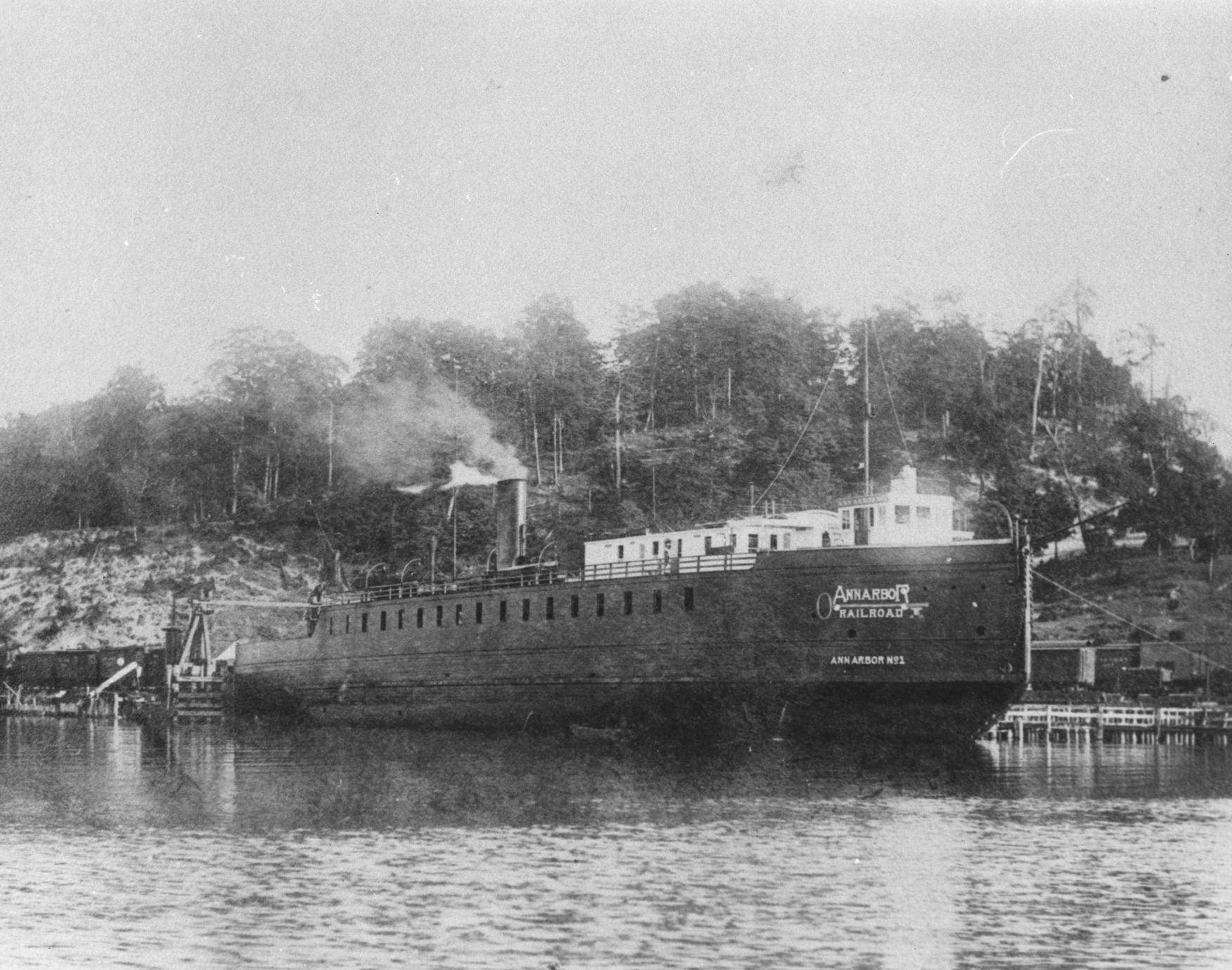
The wooden-hulled Ann Arbor No. 1 departed Elberta on Nov. 24, 1892, beginning what would become almost a century of transporting railroad cars across Lake Michigan.
Her first voyage was anything but successful.
While approaching Kewaunee, the vessel ran aground north of the harbor and remained stranded for two days before being freed.
On Sunday, Nov. 27, the Ann Arbor No. 1 loaded 22 railroad cars carrying flour that originated in Minneapolis, Minnesota. The shipment was destined for England, Scotland and Ireland.
It marked the first complete boatload of railroad boxcars transported across Lake Michigan without unloading their cargo.
A Wisconsin historical marker, installed in 1964 at Harbor Point Park, commemorates the shipment and identifies the adjacent slip as the birthplace of Lake Michigan railroad carferry service.
The idea proved successful and eventually transformed railroad transportation across the lake.
Ludington enters the carferry business
Five years after the Ann Arbor No. 1 made her historic voyage, the Flint & Pere Marquette Railway began operating railroad carferries from Ludington, Michigan.
The railroad had already established cross-lake freight service in May 1875, approximately six months after reaching Ludington. That operation initially relied on break-bulk shipping.
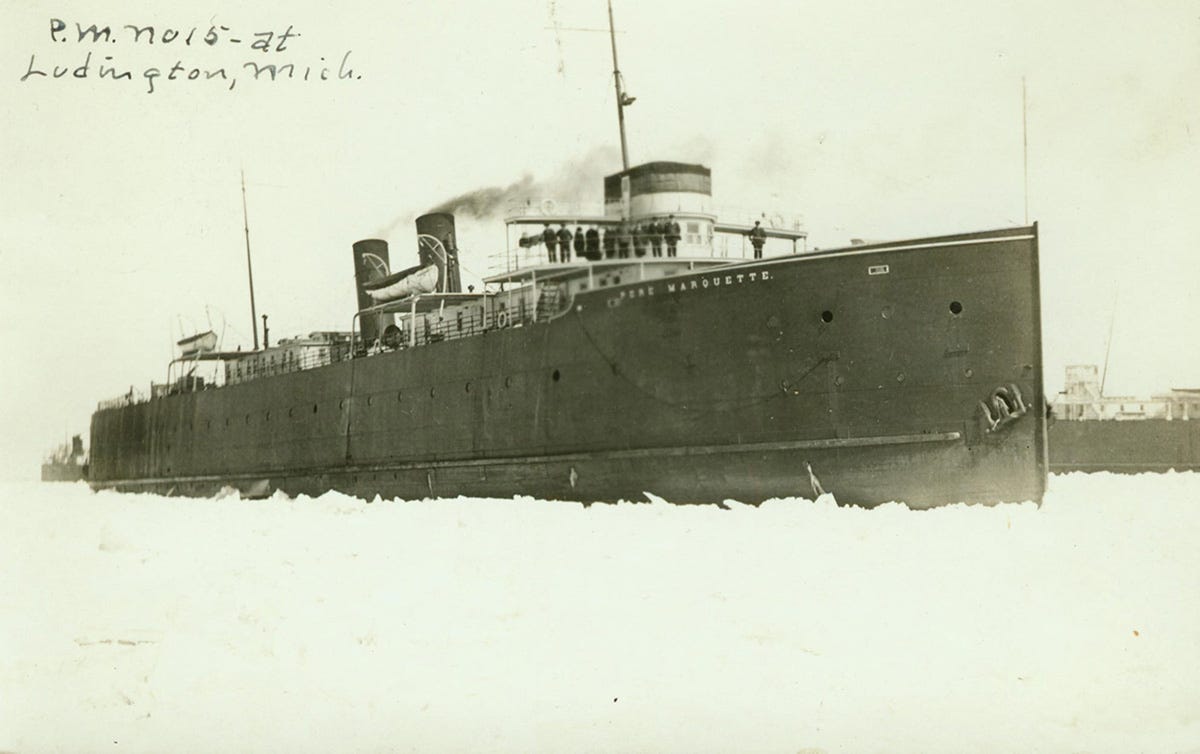
In February 1897, the F&PM placed its first railroad carferry, Pere Marquette, into service.
Over the following decades, Ludington became one of the most important railroad carferry ports on the Great Lakes. Its fleet connected Michigan with Kewaunee, Manitowoc, Wisconsin, and Milwaukee, Wisconsin.
During the 1950s, at the height of Ludington’s carferry operations, seven ships operated year-round, carrying railroad cars, automobiles and passengers across Lake Michigan.
The carferries provided railroads with a significant advantage. Loaded cars could travel directly between railroad systems without having their freight handled multiple times or being routed around the southern end of Lake Michigan.
However, the economics of operating the ferries gradually changed.
Improved railroad connections around the lake, competition from highway transportation and declining rail freight traffic made the operation increasingly difficult to sustain.
By the 1970s and 1980s, Lake Michigan’s railroad carferry industry was in serious decline. Railroad carferry service to Milwaukee and Manitowoc eventually ended, leaving Kewaunee as the final Wisconsin destination for the Ludington fleet.
The final years of railroad carferry service
The Chessie System, whose railroad holdings included the Chesapeake and Ohio and Baltimore and Ohio railroads, ended its Lake Michigan carferry operation on June 30, 1983.
The following day, Michigan-Wisconsin Transportation Co. assumed the Ludington operation.
The company’s owners, a group of Ludington businessmen led by Glen F. Bowden, acquired the three remaining C&O carferries: Badger, Spartan and City of Midland 41.
Michigan-Wisconsin Transportation initially relied primarily on City of Midland 41 for its Ludington-Kewaunee railroad carferry service. The company also attempted to operate Badger on a seasonal Ludington-Milwaukee route, but the venture was unsuccessful.
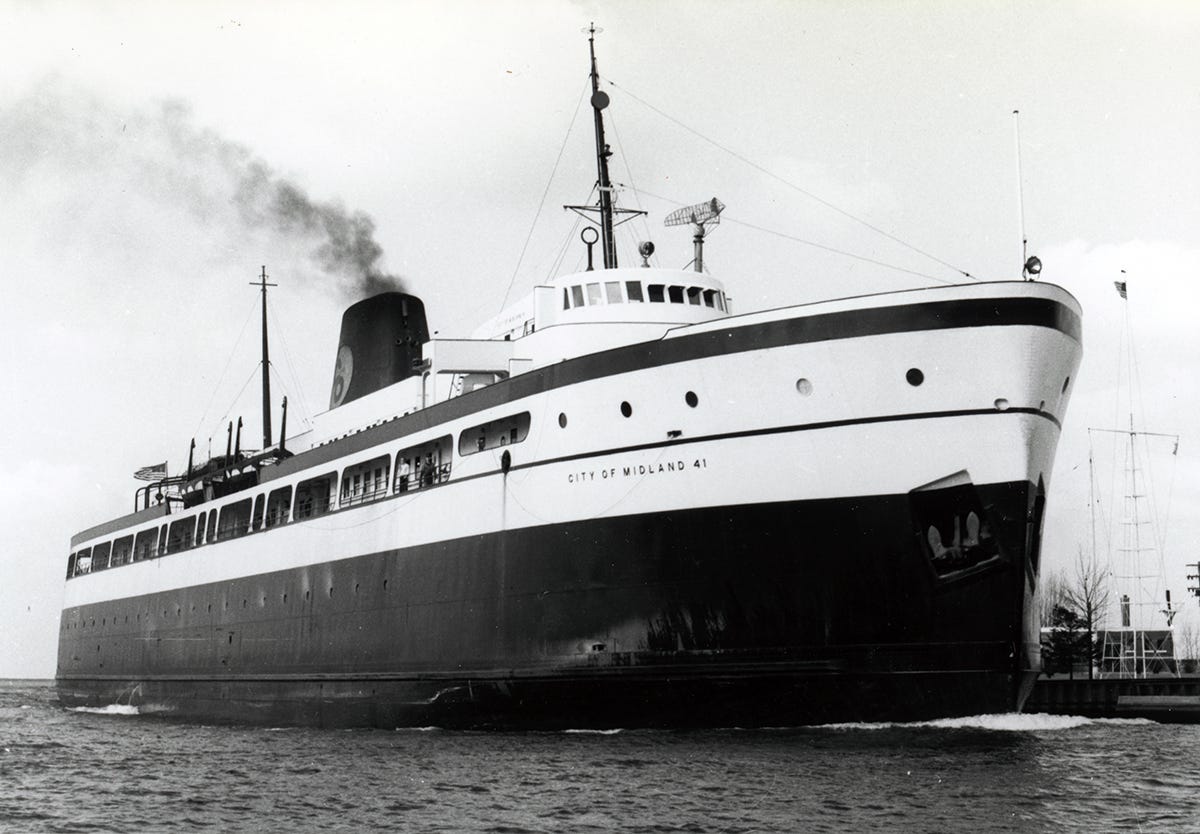
Badger was laid up in 1984.
By 1987, the aging City of Midland 41 was also facing significant mechanical challenges.
A U.S. Coast Guard inspection discovered that her boiler mounts had deteriorated and required expensive repairs. Following a temporary waiver allowing continued operation, the company elected to refurbish Badger rather than undertake the costly boiler work on City of Midland 41.
City of Midland 41 made her final crossing in November 1988.
Badger returned to service and became the company’s primary vessel, continuing to transport railroad cars between Ludington and Kewaunee.
But the operation could not survive indefinitely.
On Nov. 16, 1990, Badger completed her final railroad carferry service, bringing an end to nearly 98 years of railroad car transportation across Lake Michigan.
The historic vessel would eventually return to service in 1992, carrying automobiles, commercial trucks and passengers between Ludington and Manitowoc.
However, railroad cars would never again cross Lake Michigan aboard a carferry.
Kewaunee had witnessed both the beginning and the end of an important chapter in Great Lakes transportation history.
Remembering the railroad carferries
Harbor Point Park offers a glimpse into a time when Kewaunee was a busy railroad port, with locomotives switching cars along the waterfront and railroad cars rolling across the loading apron and onto the tracks inside the carferries.
Ship whistles would have echoed through the harbor as the vessels arrived and departed, connecting Wisconsin’s railroad network with destinations across Lake Michigan.
Historic photographs and films document the operation, but much of the railroad infrastructure has disappeared.
The historical marker at Harbor Point Park, installed more than six decades ago, has become faded and chipped. Sections of the waterfront boardwalk have warped, and the park would benefit from additional maintenance and attention.
This is an important historical site, not simply the remains of an abandoned railroad terminal.
It was here that a transportation innovation helped reshape Great Lakes commerce. Railroad carferries allowed freight to move more efficiently between Michigan and Wisconsin, supporting industries and communities across the region.
The significance of that history deserves greater recognition and preservation.
Help support this Substack page and check out our merchandise store.
This story is copyrighted 2026 by Sable Points Media.