


By Rob Alway
STURGEON BAY, WIS. -- It was built for a war that had already ended, later sent into another war half a world away, spent decades dragging enormous rafts of pulpwood across Lake Superior, became one of the most powerful salvage tugs on the Great Lakes and once helped pull a Ludington carferry from the sand.
More than a century after it was built, the tug John Purves is still afloat.
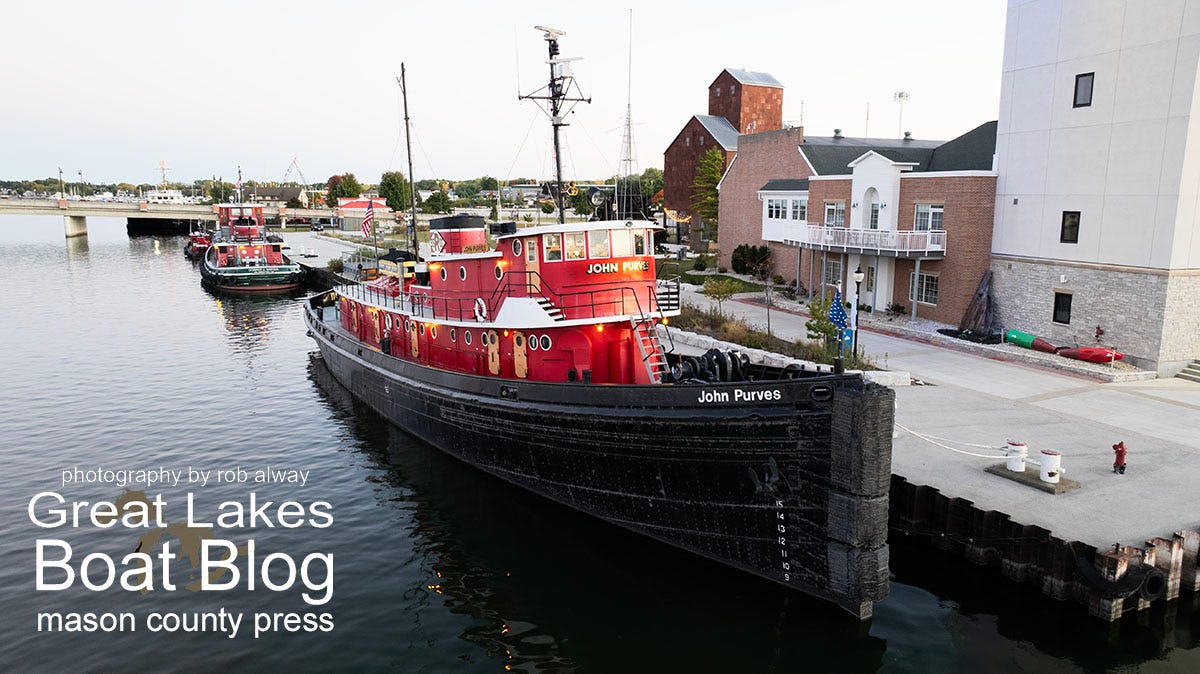
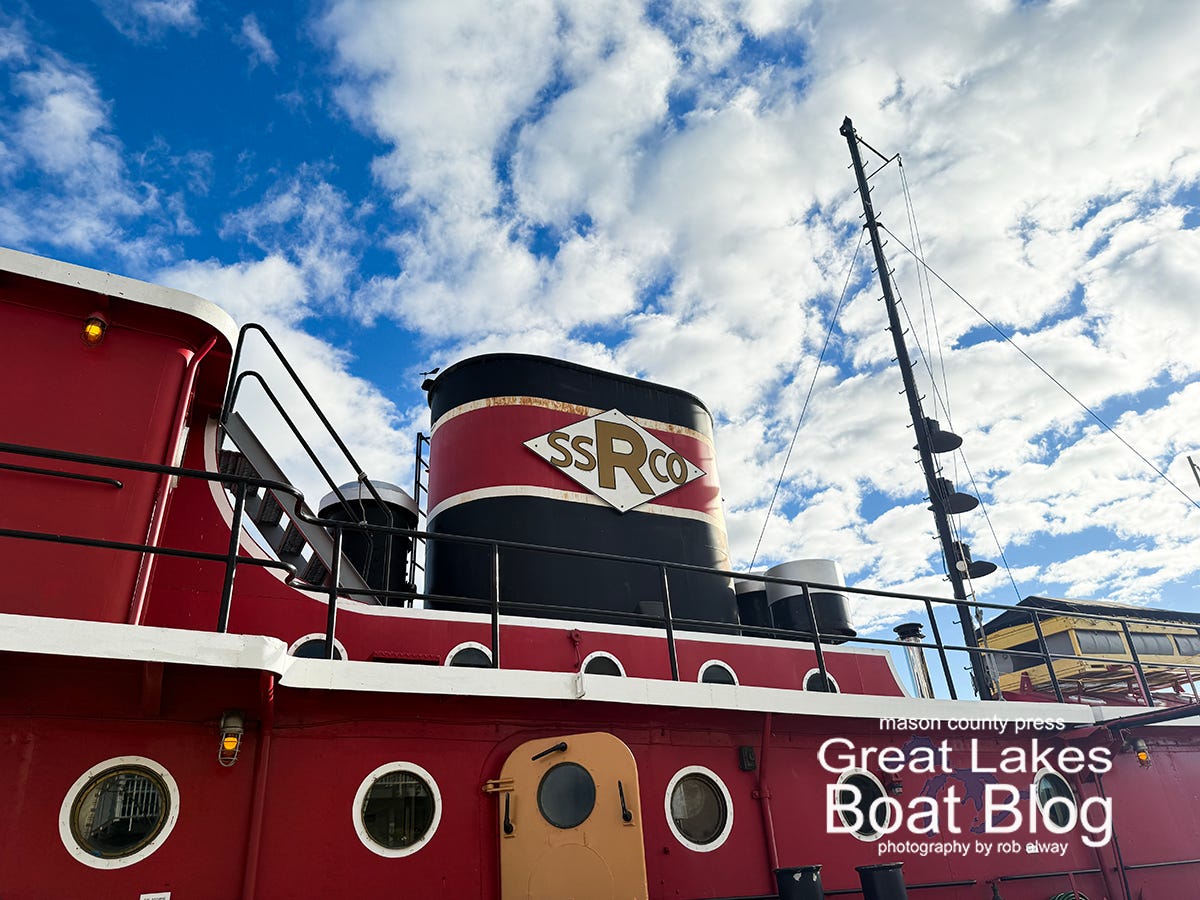
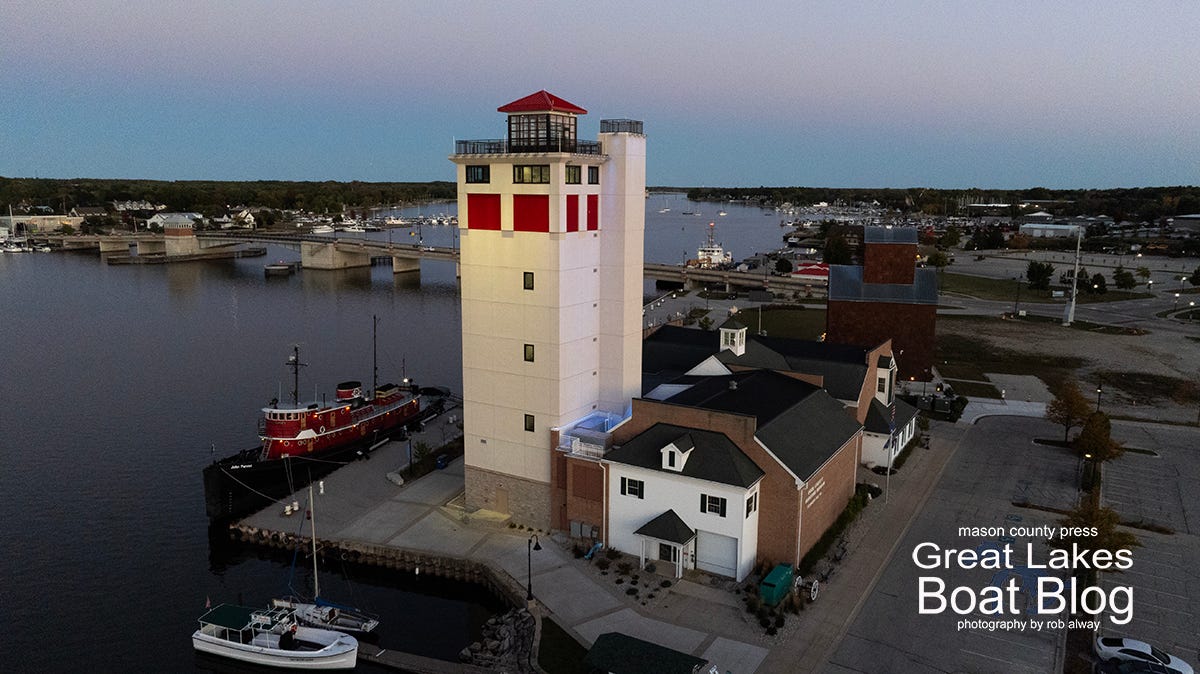
Today the 149-foot tug is permanently moored at the Door County Maritime Museum in Sturgeon Bay, painted in the black-and-red colors of the Roen Steamship Company. Its museum career, however, is only the latest chapter of a working life that stretched from the Atlantic Ocean and Caribbean Sea to Alaska and virtually every corner of the Great Lakes.
Built as the Butterfield
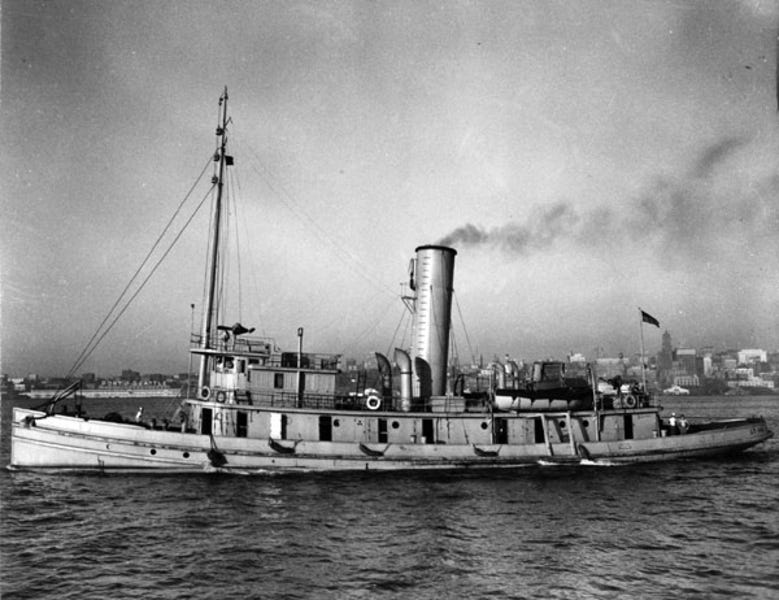
The tug began life as the Butterfield, built in 1919 by Bethlehem Shipbuilding Corp. at Elizabeth, New Jersey, for the United States Shipping Board.
The vessel was part of a large shipbuilding program undertaken during World War I, but by the time Butterfield was completed, the fighting had ended. The steel-hulled ocean tug measured about 149 feet long with a beam of approximately 28 feet and was originally powered by an 850-horsepower triple-expansion steam engine driving a single propeller.
Rather than becoming surplus immediately, Butterfield found work in the Atlantic. By 1920, the Shipping Board had leased the tug to Bermuda Bunkering Co. at St. George’s, Bermuda, where it performed towing, salvage and search-and-rescue work. Historical records also describe the tug serving as a temporary floating radio station for the U.S. Navy in the Caribbean.
The tug quickly demonstrated the kind of offshore capability that would characterize much of its career. In June 1920, it was ordered on a roughly 900-mile voyage from Bermuda to assist a disabled freighter. Contemporary Bermuda newspapers described Butterfield heading into heavy weather in which the tug nearly “stood on end.”
From the ocean to Lake Superior
In 1922-23, Butterfield was acquired by Newaygo Tug Line of Milwaukee and brought to the Great Lakes. Newaygo was associated with Consolidated Paper, and the tug eventually became part of Consolidated Water Power & Paper Co.’s marine operation.
Its primary assignment became one of the more unusual towing jobs on the lakes: moving enormous rafts of pulpwood across Lake Superior to the company’s facilities at Ashland, Wisconsin.
The work was slow. The huge mass of logs created so much drag that towing speeds could average only about 1 mph. Trips across Superior might take three days under good conditions or more than a week. Because of Lake Superior’s notoriously severe weather, much of the work was concentrated in the relatively calmer summer months.
It was hard, repetitive industrial work, but Butterfield proved exceptionally well suited to it.
Then war came again.
LT-145 goes to Alaska
In 1942, the U.S. Army requisitioned Butterfield for service during World War II.
The civilian tug was painted military gray, armed with three 20 mm guns and designated LT-145, the Army classification for a large tug. It departed the Great Lakes, traveled to the Atlantic and continued through the Panama Canal before reaching the West Coast. Its wartime operating base became Seattle.
From there, LT-145 was sent into one of the most unforgiving operating environments of the war - Alaska’s Aleutian Islands.
American forces were fighting to secure the island chain after Japanese forces occupied Attu and Kiska in 1942. Isolated Army installations at places such as Dutch Harbor and Adak depended on a long and difficult supply chain.
LT-145 hauled barges and supplies to those garrisons between 1942 and 1945. Its substantial radio equipment also allowed the tug to serve as a floating weather station and radio relay vessel.
For a vessel already accustomed to Lake Superior weather, Alaska provided an even harsher test: open Pacific water, fog, cold, storms and wartime operations.
It survived.
At the end of the war, the Army released the tug. Once again named Butterfield, it returned to the Great Lakes and resumed its civilian career.
Becoming John Purves
The transformation that created the tug recognizable today began in the mid-1950s.
Capt. John Roen’s Roen Steamship Company of Sturgeon Bay acquired Butterfield in late 1956. The following year, Sturgeon Bay Shipbuilding and Dry Dock Co. undertook an extensive conversion.
The original steam plant and single propeller were replaced by two General Motors Electro-Motive Division diesel engines driving twin screws. Initially rated at about 900 horsepower each, the diesels gave the tug about 1,800 horsepower while greatly improving maneuverability. Much of the original wooden deckhouse construction was replaced with steel. The modernization also allowed the vessel’s crew to be reduced from about 32 people to 13.
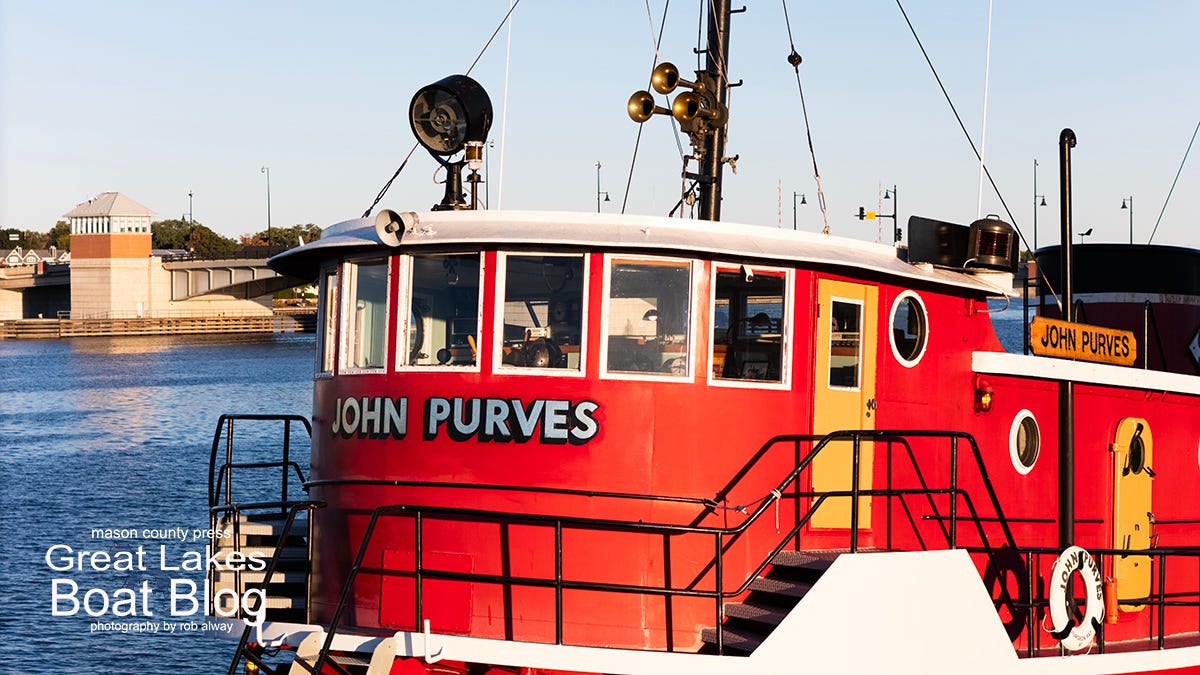
With the rebuilding came a new name: John Purves.
John H. Purves was one of Roen’s longtime executives, serving in management and as company treasurer during his decades with the organization. He later wrote the 1983 history “Roen Steamship Company: The Way It Was, 1909-1976.”
Under Roen ownership, John Purves became a familiar Great Lakes workboat.
Further engine improvements around 1960 increased its power, and historical accounts describe the Purves at the time as one of - if not the - most powerful tugs operating on the Great Lakes.
The timing was good. The opening of the St. Lawrence Seaway in 1959 brought increasing numbers of oceangoing ships into unfamiliar Great Lakes waters. Groundings meant work for salvage companies, and John Purves developed a reputation as a formidable towing and salvage vessel.
The tug worked all five Great Lakes, assisting grounded vessels, towing barges and moving ships that could no longer move themselves.A Ludington rescue
A Ludington rescue
One of the tug’s better-known Lake Michigan jobs occurred during the violent November 1966 storm that also claimed the freighter Daniel J. Morrell on Lake Huron.
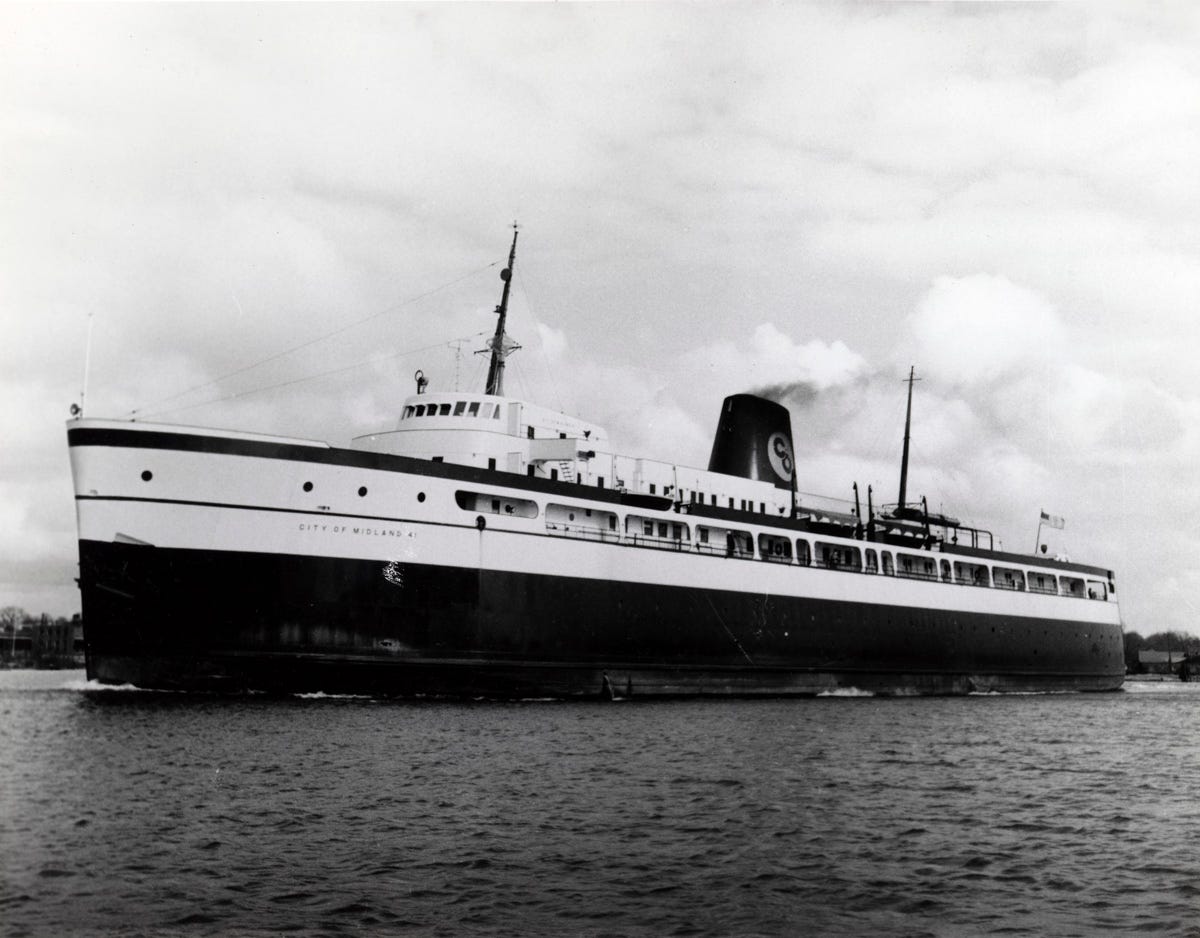
At Ludington, the Chesapeake & Ohio Railway carferry City of Midland 41 grounded near the harbor while battling the storm.
After attempts to free the ship under its own power failed, John Purves was summoned from Sturgeon Bay.
The weather initially prevented the tug from crossing Lake Michigan. It finally reached Ludington at 9:20 a.m. Wednesday, Nov. 30, and moved into position near the grounded carferry. Lines were passed between the vessels while water that had been placed in the Midland’s ballast tanks to hold it securely during the storm was pumped out.
By that evening, John Purves had helped pull the 407-foot carferry free.
City of Midland 41 then entered Ludington harbor under its own power as ship whistles, automobile horns and cheering spectators greeted its return.
It was exactly the sort of job for which John Purves had been rebuilt: tremendous pulling power, a heavy seagoing hull and the ability to work when conditions were far from ideal.
Changing owners
Roen’s ownership ended during the 1970s as the Great Lakes towing and salvage business changed.
John Purves passed through several owners, including Eder Barge & Towing Co. of Milwaukee, Bultema Dock & Dredge and Canonie Transportation. Andrie Inc. of Muskegon acquired the tug in the late 1980s. Through the changes, the John Purves name remained.
The tug continued performing towing and salvage work, but a vessel constructed in 1919 was becoming increasingly expensive to operate and maintain.
By the beginning of the 21st century, its working career was essentially over.
And for a time, its future looked grim.
Saved from the scrapyard
After John Purves was laid up, Andrie considered disposing of the aging vessel. Instead, an effort developed to preserve the tug as a historic ship.
In 2003, Andrie donated John Purves to the Door County Maritime Museum. John Asher, grandson of Capt. John Roen, helped arrange the donation, returning the tug to the Sturgeon Bay community where it had spent some of the most significant years of its career.
Getting the vessel back was only the beginning.
Volunteers spent approximately five and a half years restoring the tug. The project consumed more than 30,000 volunteer hours and involved nearly $1 million in donated money, materials and services.
Rather than interpret the vessel at the end of its career, the museum restored John Purves largely to its appearance during the Roen Steamship era, complete with the company’s distinctive red-and-black color scheme.
The tug opened for public tours in 2008.
Preserving a steel ship in the water, however, is never finished.
In December 2023, John Purves was towed from the museum to Fincantieri Bay Shipbuilding in Sturgeon Bay for significant hull and structural repairs. More than $350,000 in grant support was raised for the project, including funding through the National Park Service’s Save America’s Treasures program.
The tug returned to its museum berth April 15, 2024.
More than a museum tug
Today, visitors can climb through the engine room, crew quarters, galley and wheelhouse of John Purves. In many ways, it is a time capsule of the period when large tugs were among the hardest-working vessels on the Great Lakes.
But the story of John Purves reaches well beyond Sturgeon Bay.
The same hull that sits quietly beside the Door County Maritime Museum once worked the waters around Bermuda, dragged forests across Lake Superior, passed through the Panama Canal, supplied American troops in the Aleutians, pulled stranded ships from Great Lakes shoals and spent decades doing the largely unseen work that kept maritime commerce moving.
Few surviving Great Lakes vessels can claim such a varied career.