

By Rob Alway
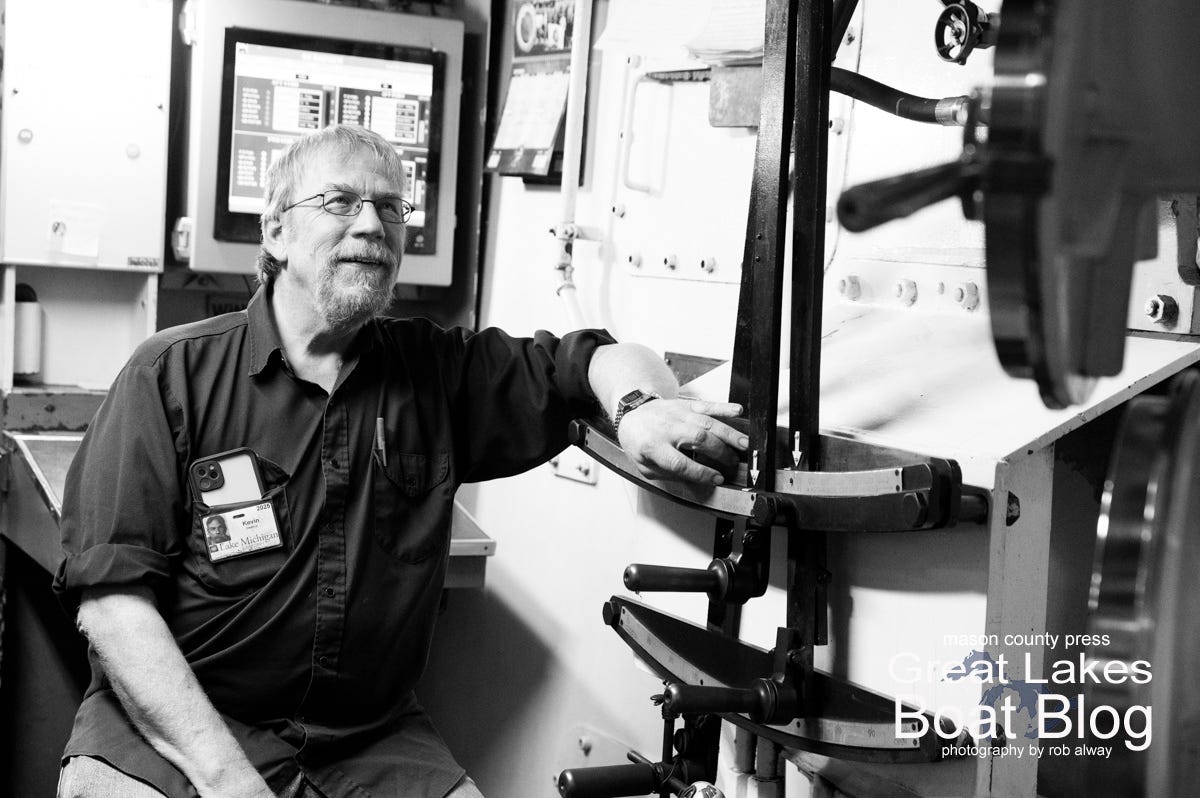
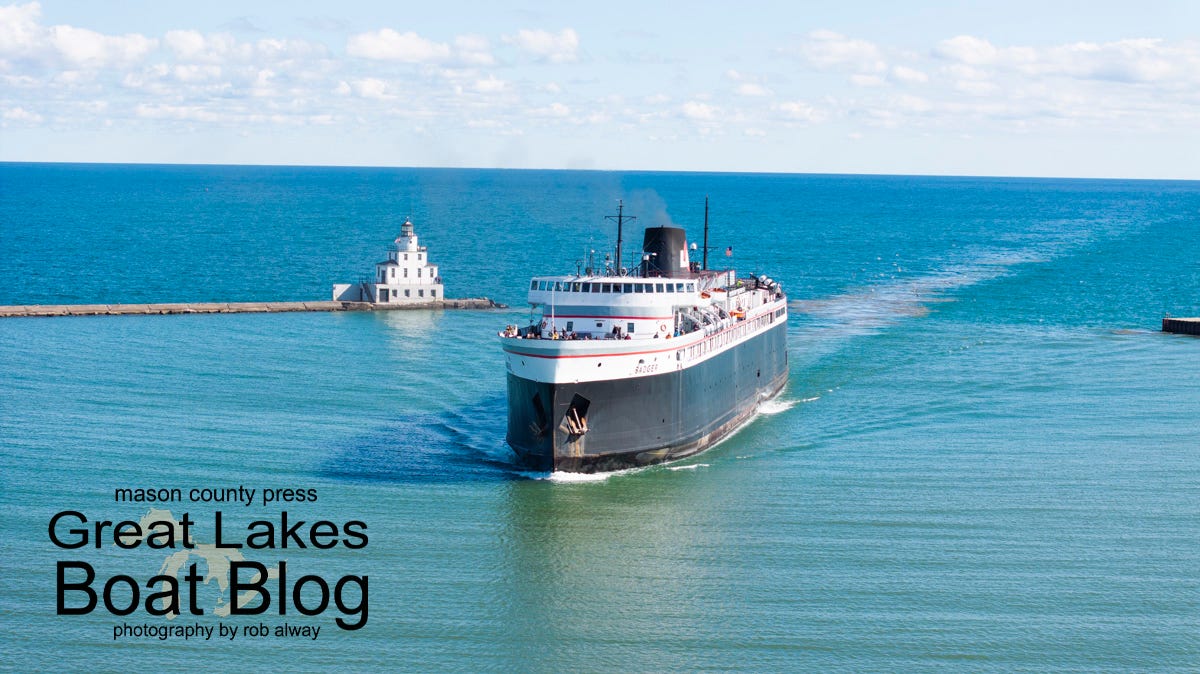
Long before Kevin Diedrich learned the maze of pipes, valves and machinery deep within the engine room of the SS Badger, he knew the Ludington carferries from the shoreline.
Diedrich grew up in Manitowoc, where his grandparents lived near Lake Michigan. He and his sister would mow their grandparents’ lawn, then head toward the lakeshore to watch the carferries arrive and depart.
His sister drew pictures of the ships — the Badger, City of Midland 41 and Viking, the former Ann Arbor No. 7. It was simply part of growing up in a Lake Michigan port city where the big railroad ferries were part of the landscape.
Diedrich could not have known then that he would eventually spend nearly a quarter-century aboard one of those ships, working his way through every position in its engine department before finishing his career as chief engineer.
Diedrich retired at the conclusion of the Badger’s 2025 sailing season, bringing to a close a maritime career that had come full circle — from a boy watching carferries from shore to one of the people entrusted with keeping the last Ludington carferry running.
A return to the lake
A 1979 graduate of Lincoln High School in Manitowoc, Diedrich initially went into manufacturing, working as a production machinist.
In 1982, he joined the U.S. Coast Guard. He attained the rank of petty officer second class as a machinery technician and served six years, including two years aboard a 180-foot buoy tender in Alaska.
After leaving the Coast Guard, Diedrich returned to Manitowoc and to manufacturing. Over the next two decades he worked as a machinist and later a millwright.
But eventually he missed sailing.
In 2001, Diedrich began looking for a way back onto the water. His previous Coast Guard experience helped him obtain his Qualified Member of the Engine Department credential, commonly known as QMED, and he began applying to Great Lakes shipping companies.
Then he learned that the Badger was hiring.
Senior Chief Engineer Chuck Cart encouraged Diedrich not to immediately leave his manufacturing job. Instead, Cart suggested he begin aboard the Badger as a weekend relief crew member.
It proved to be good advice.
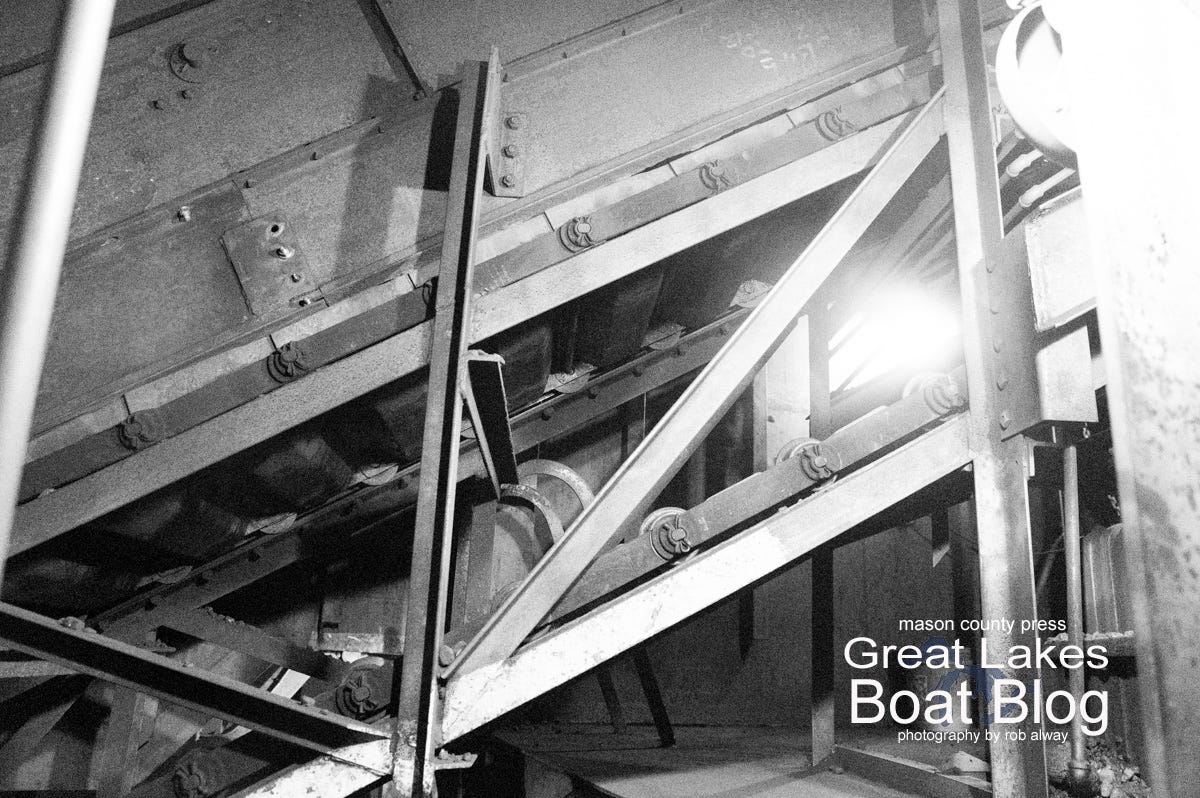
Diedrich started as a coal passer, one of the most basic — and physically demanding — positions in the engineering department. From there, he steadily worked his way upward.
During his career aboard the Badger, Diedrich served as coal passer, fireman, water tender, oiler, junior engineer, third engineer, second engineer, first engineer, chief engineer and senior chief engineer.
It was a progression he took considerable pride in.
“I’m pretty proud of that,” Diedrich said.
He believed he was the only person since the railroad era to have worked every position in the Badger’s engine department.
In 2012, Diedrich earned his unlimited chief engineer’s license, completing a progression of engineering credentials that had taken him from an entry-level position shoveling coal to responsibility for one of the most historically significant marine propulsion plants still operating.
Keeping steam alive
The Badger is unlike virtually any other commercial vessel operating on the Great Lakes.
Built by Christy Corporation at Sturgeon Bay, Wisconsin, and launched in 1952 for the Chesapeake & Ohio Railway, the 410-foot, 6-inch ship was constructed along with sister ship Spartan during the final years of the railroad carferry era.
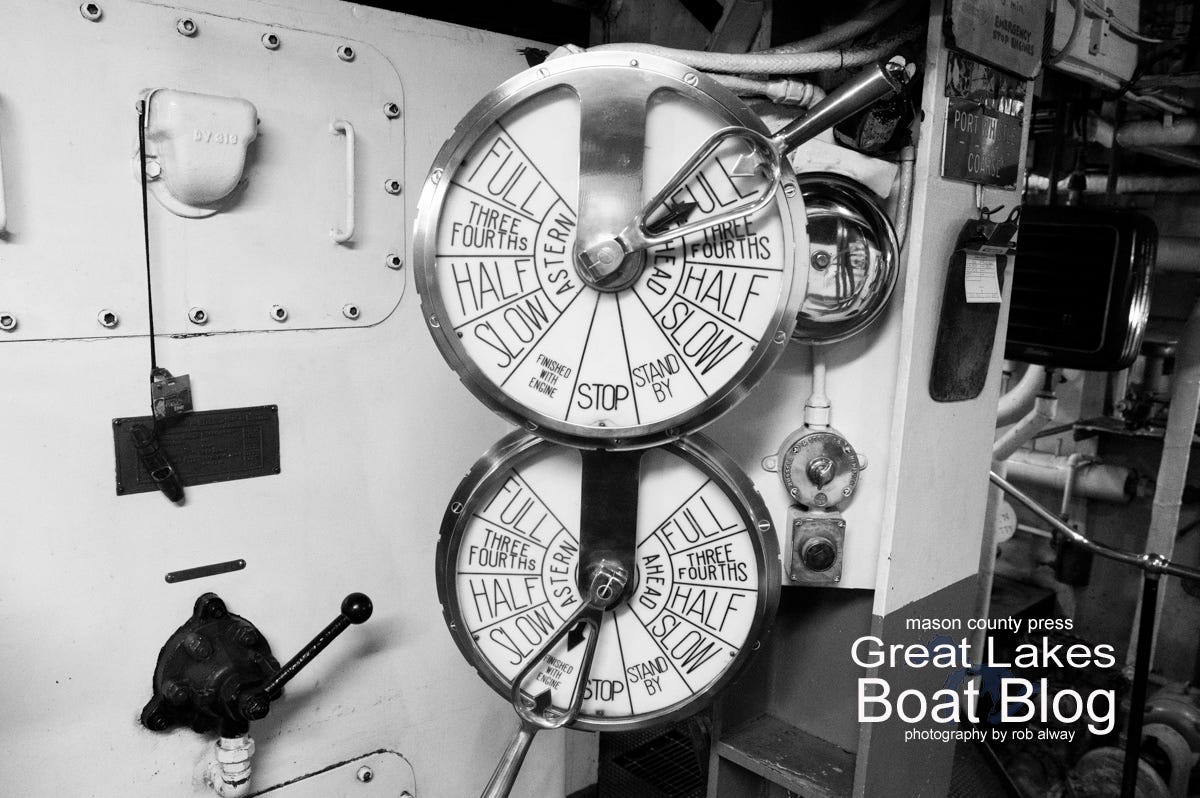
Deep inside the Badger are two four-cylinder Skinner Unaflow reciprocating steam engines. Each is rated at 3,500 horsepower, giving the ship 7,000 horsepower in total. Steam is produced by four Foster-Wheeler coal-fired boilers.
The machinery represents an earlier era of marine engineering. The Badger’s propulsion system has been designated a Historic Mechanical Engineering Landmark by the American Society of Mechanical Engineers, and the ship itself is a National Historic Landmark.
For Diedrich, the machinery was one of the reasons the job became much more than simply employment.
“I just fell in love with these engines. They are just so unique.”
Operating machinery designed more than seven decades ago requires a different kind of mechanical knowledge than working with many modern propulsion systems. Replacement components cannot always be ordered from a catalog. Parts may have to be fabricated. Problems must often be diagnosed using experience and an intimate understanding of how the machinery sounds, feels and operates.
Diedrich spent years developing that knowledge and then passing it along to others.
The engine room also became its own community.
While passengers several decks above enjoyed the four-hour crossing between Ludington and Manitowoc, Diedrich and the engineering crew worked below decks keeping steam pressure up, machinery lubricated and the ship’s massive propulsion plant operating.
It was, as Diedrich described it, the engineering department’s own little world within the larger ship.
Part of the Badger’s transition
Diedrich’s career also spanned an important period in the Badger’s history.
He joined Lake Michigan Carferry less than a decade after the vessel had returned to service as a passenger and vehicle ferry in 1992. He served through changes in the ship, its operation and eventually its ownership.
For most of his career, Lake Michigan Carferry was owned by Bob Manglitz, Don Clingan and the late Jim Anderson. In 2020, the company and the Badger were acquired by Interlake Maritime Services.
Through those changes, the fundamental job in the engine room remained the same: keep the steam plant operating safely and reliably so the Badger could continue crossing Lake Michigan.
And for Diedrich, that meant maintaining machinery unlike anything he had encountered before coming aboard.
Cart, who eventually moved into a shoreside management position, remained an important mentor throughout Diedrich’s career. When Diedrich advanced to senior chief engineer, Cart helped accommodate his desire to remain in Manitowoc during the winter rather than spending the entire layup season in Ludington.
The relationship represented another important element of Great Lakes maritime culture — experienced sailors teaching the people coming behind them.
Eventually Diedrich became one of those experienced sailors himself.
The final season
By 2025, Diedrich knew it was time to bring his sailing career to an end.
Life aboard a vessel comes with sacrifices that are not always apparent to passengers. Sailing schedules do not stop for birthdays, weddings, funerals or other family events. For decades, Diedrich spent much of each sailing season aboard the ship.
With his son grown and established in his own career, Diedrich wanted more time at home with his family.
The Badger completed its 2025 sailing season in October. When Diedrich stepped away, he left behind much more than a job.
He had begun aboard the ship as a weekend relief coal passer in 2001 and finished his career as one of the people responsible for preserving and operating one of the most remarkable surviving steam propulsion systems in the world.
There is a fitting symmetry to Diedrich’s story.
As a boy in Manitowoc, he stood along Lake Michigan watching the carferries.
Years later, thousands of passengers stood on shore and watched the Badger sail while Diedrich was several decks below them, surrounded by steam pipes, gauges, connecting rods and the rhythmic movement of the Skinner engines, helping keep the ship moving across the same lake.
For nearly a quarter-century, that engine room was his place aboard the Badger.
And by the time he retired, Diedrich had become part of the history he once watched from shore.