

From Newfoundland fishing boats to the Great Lakes: Capt. Paul Easton’s life aboard Northern Venture
By Rob Alway
When the 508-foot Canadian freighter Northern Venture approached Ludington, Michigan, late morning, November 4, 2026, Lake Michigan was not ready to welcome her. Strong winds and waves prevented the vessel from entering the harbor, forcing her to turn north and wait beyond Big Sable Point for conditions to improve.
Several hours later, at about 5:30 p.m., Northern Venture returned, entering the Port of Ludington against the backdrop of a magnificent Lake Michigan sunset.
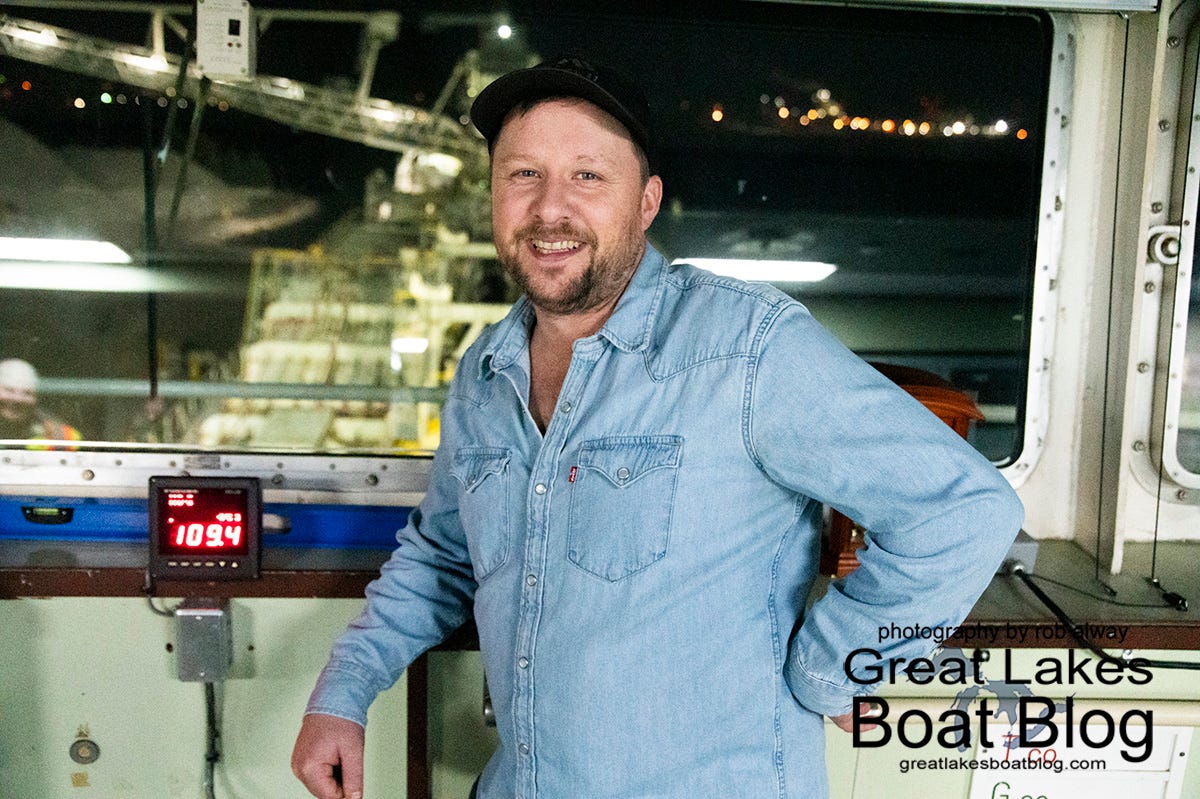
For Capt. Paul Easton, navigating around weather is simply part of life at sea. The 37-year-old Canadian mariner is in his 19th year of sailing and his fourth year as a captain. Most of his career has been spent on the Atlantic Ocean, the St. Lawrence Seaway, and the Great Lakes.
The ship had carried trap rock from Bruce Mines, Ontario, to Rieth-Riley Construction’s Great Lakes Materials terminal on Pere Marquette Lake in Ludington. After discharging part of her cargo, she was scheduled to sail north to Manistee, Michigan, to deliver sand to Rieth-Riley’s terminal on Manistee Lake.
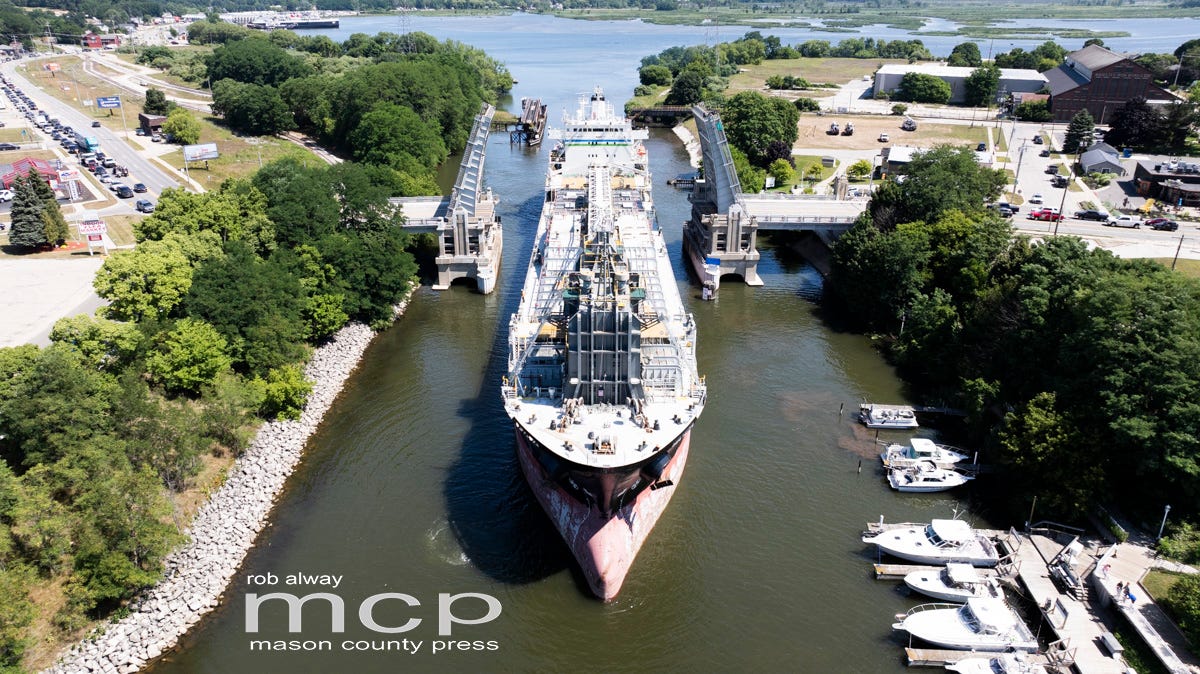
The weather disrupted that plan. Easton expected Northern Venture to remain in Ludington a couple days. The crew spent the next day transferring cargo within the ship to adjust her draft for the more demanding approach to Manistee. That passage requires navigating the narrow Manistee River and passing through two drawbridges in the city’s downtown.
For Easton, the delay was another episode in a career that began along the rugged coastline of Newfoundland.
Growing up on the water
Easton grew up in Carmanville, a Newfoundland community of about 800 people, where commercial fishing shaped his childhood. His father was a fisherman, and Easton spent his early years around boats and the fishing industry.
“My father was a fisherman, so I always just grew up around boats and on boats all my life,” Easton said.
He accompanied fishing vessels harvesting lobster, crab, shrimp, turbot, capelin, and herring. When he was not aboard a boat, he could often be found along the beach, sometimes building rafts.
“I just always had a passion for it,” he said.
Despite that passion, Easton was prone to seasickness as a youngster, particularly aboard smaller boats. The problem largely disappeared as he grew older and began working aboard larger vessels.
He studied at the Fisheries and Marine Institute of Memorial University of Newfoundland, where classroom training was supplemented by experience aboard working ships. As Easton explained, Canada’s maritime training system combines several years of academic instruction with a year of cadet service on commercial vessels. After graduation, mariners acquire additional sea time and complete Transport Canada examinations as they advance through the licensing system.
His early career took him along the Atlantic coasts of Canada and the United States, including voyages to Philadelphia, Pennsylvania; Jacksonville, Florida; and the Gulf of America. He also made ocean crossings.
In 2015, Easton joined a Quebec-based marine transportation company and worked primarily along the St. Lawrence River and Seaway. He met his wife while living in Quebec and eventually made his home there. In 2020, he began sailing on the Great Lakes.
Easton has been assigned to Northern Venture since shortly after she arrived in Canada in the fall of 2023.
A ship with an international history
Like her captain, Northern Venture followed a long route to the Great Lakes. Built in 1998 at Shin Kurushima Dockyard in Japan, she originally sailed as Asia Cement No. 7. After operating overseas, she was renamed Da Shen.
McKeil Marine, based in Burlington, Ontario, acquired the ship in 2022 and arranged an extensive refit in China to prepare her for service on the Great Lakes and St. Lawrence Seaway. She arrived in Canada in October 2023, and Easton joined her in early November of that year.
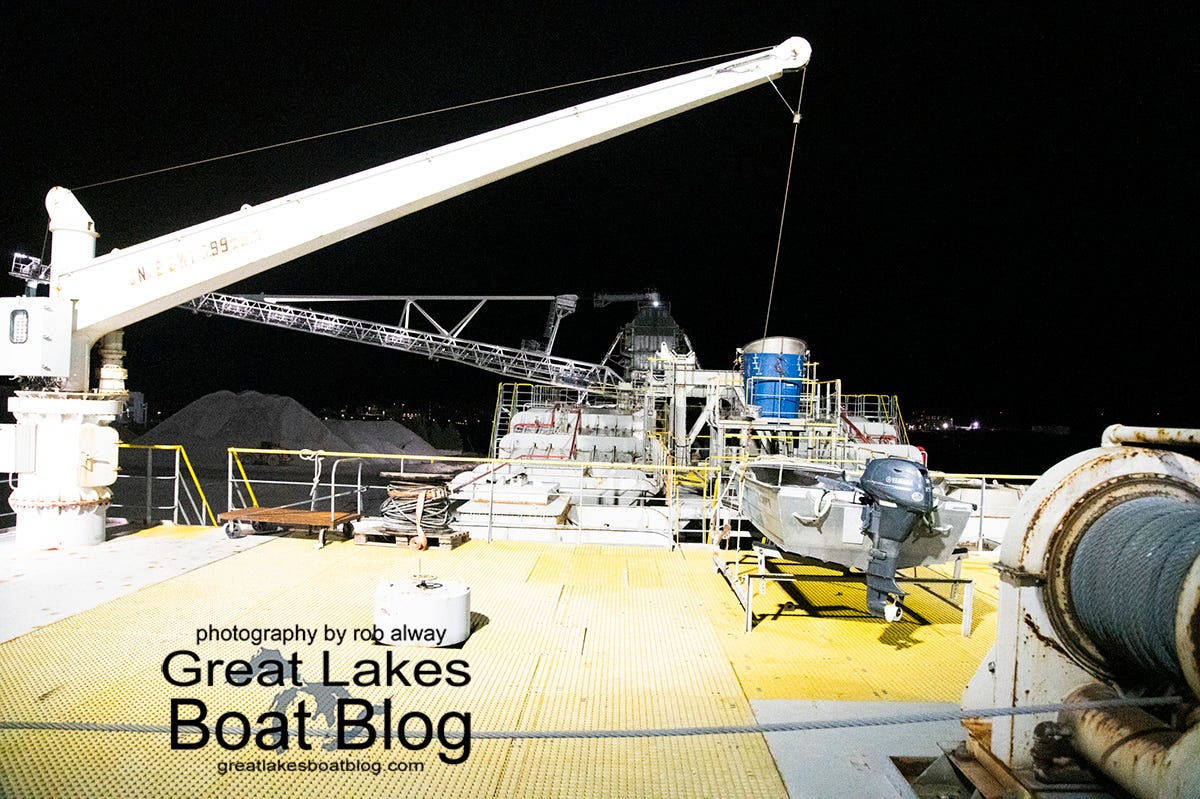
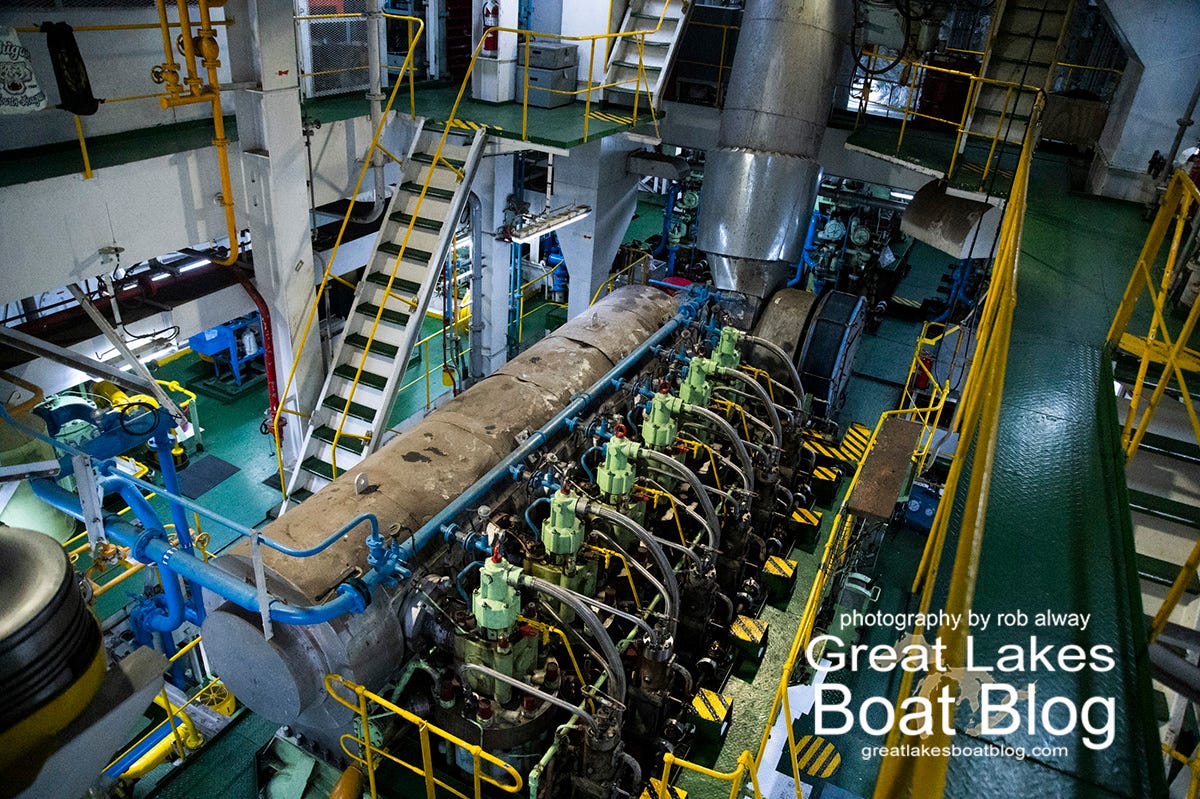
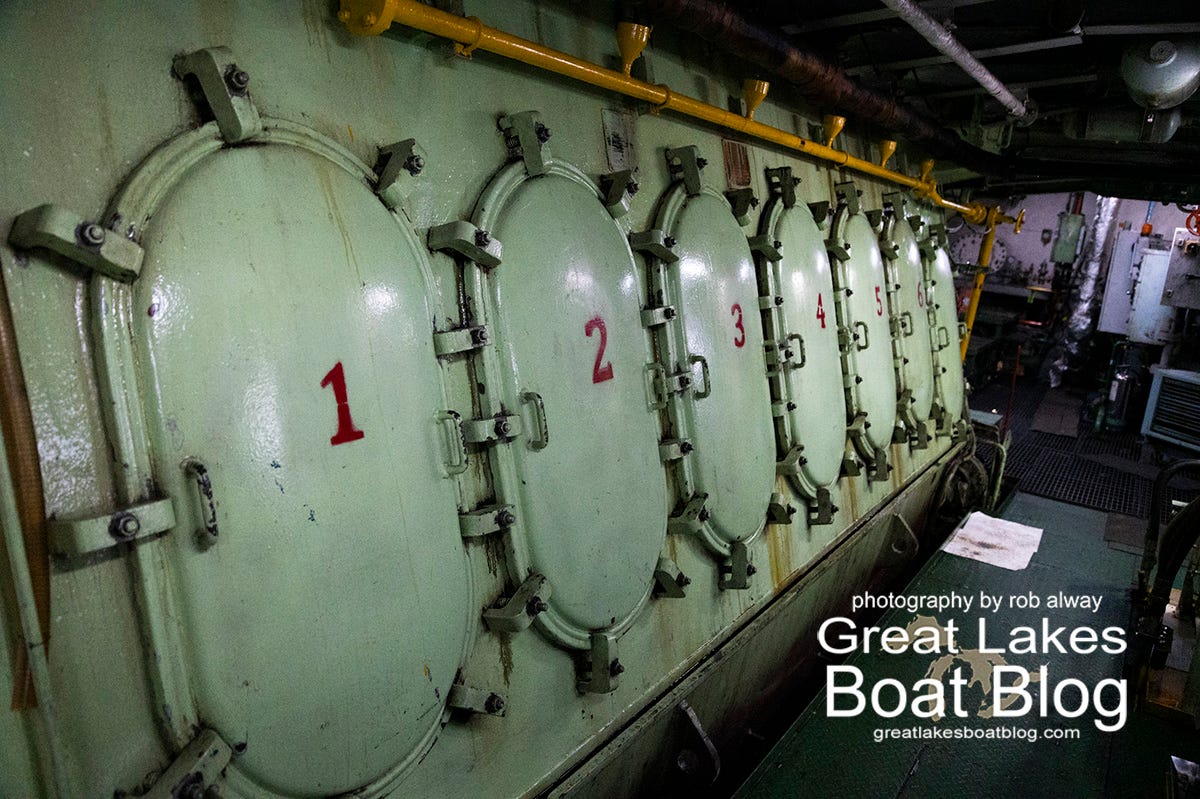
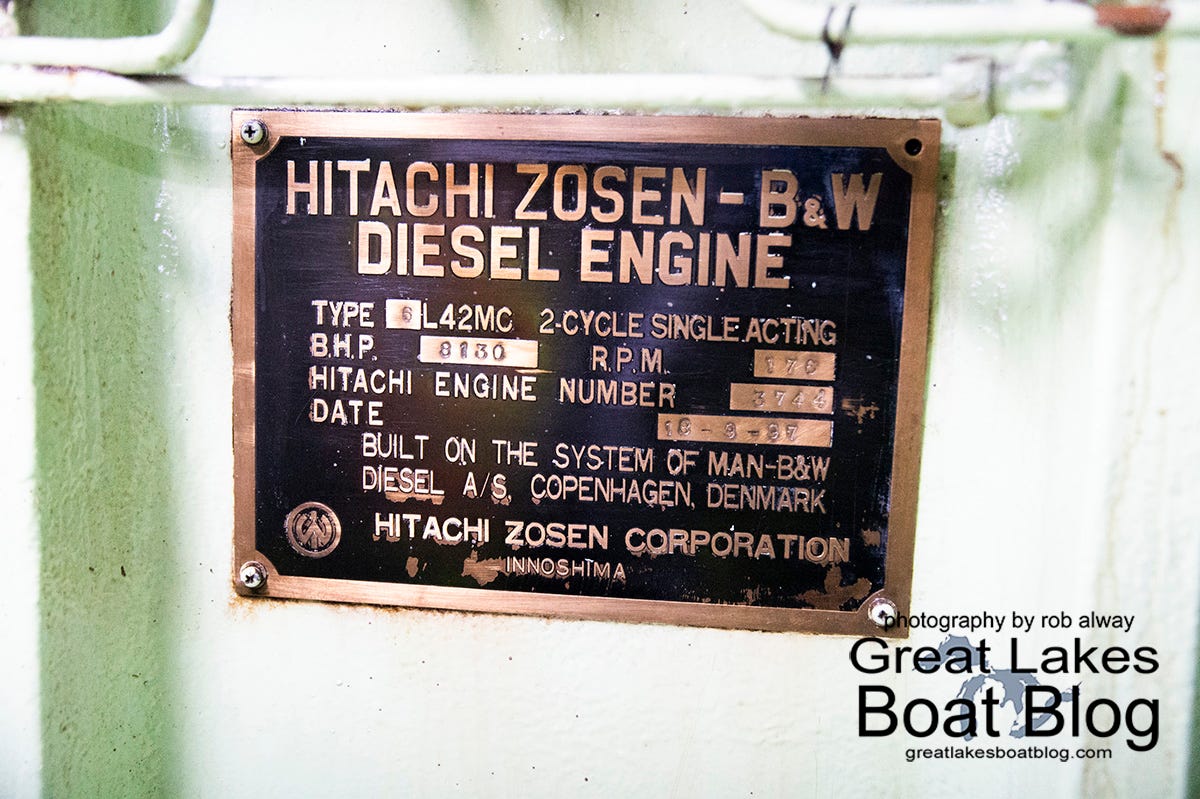
Northern Venture measures 508 feet, 6 inches in length and 72 feet, 2 inches in breadth, with a molded depth of 41 feet, 4 inches. An 8,130-horsepower diesel engine drives a single propeller. Classified as a River Class self-unloading bulk carrier, she is designed to navigate waterways and serve terminals that are inaccessible to larger Great Lakes freighters.
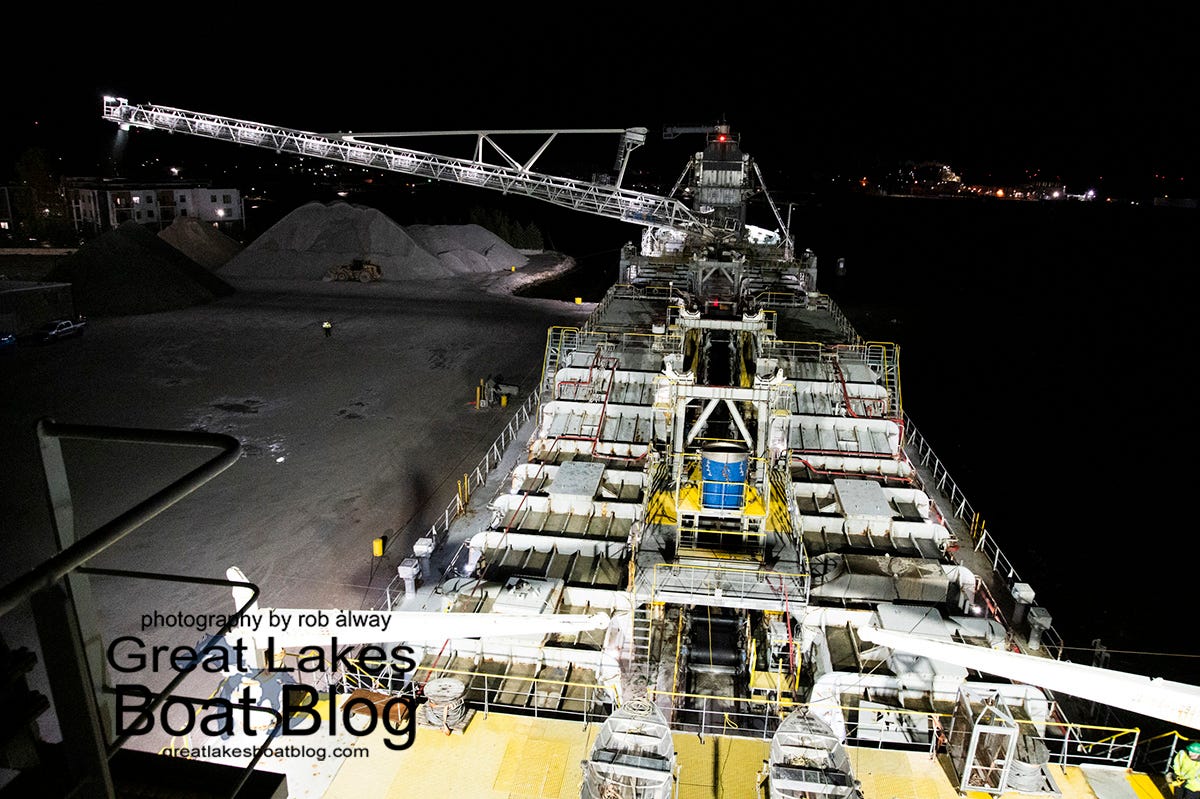
Her cargo-handling arrangement is one of her distinguishing characteristics. Four cargo holds are sloped at 50 degrees to encourage the movement of bulk materials. Her self-unloading system consists of 40 hydraulic gates, two tunnel conveyors, two transfer conveyors, a loop-belt elevator, and a 260-foot discharge boom.
The ship also has a single-point loading system. A deck-mounted hopper and conveyor arrangement distributes cargo among the four holds without requiring the vessel to be moved repeatedly along the dock, as can be necessary when loading traditional Great Lakes freighters.
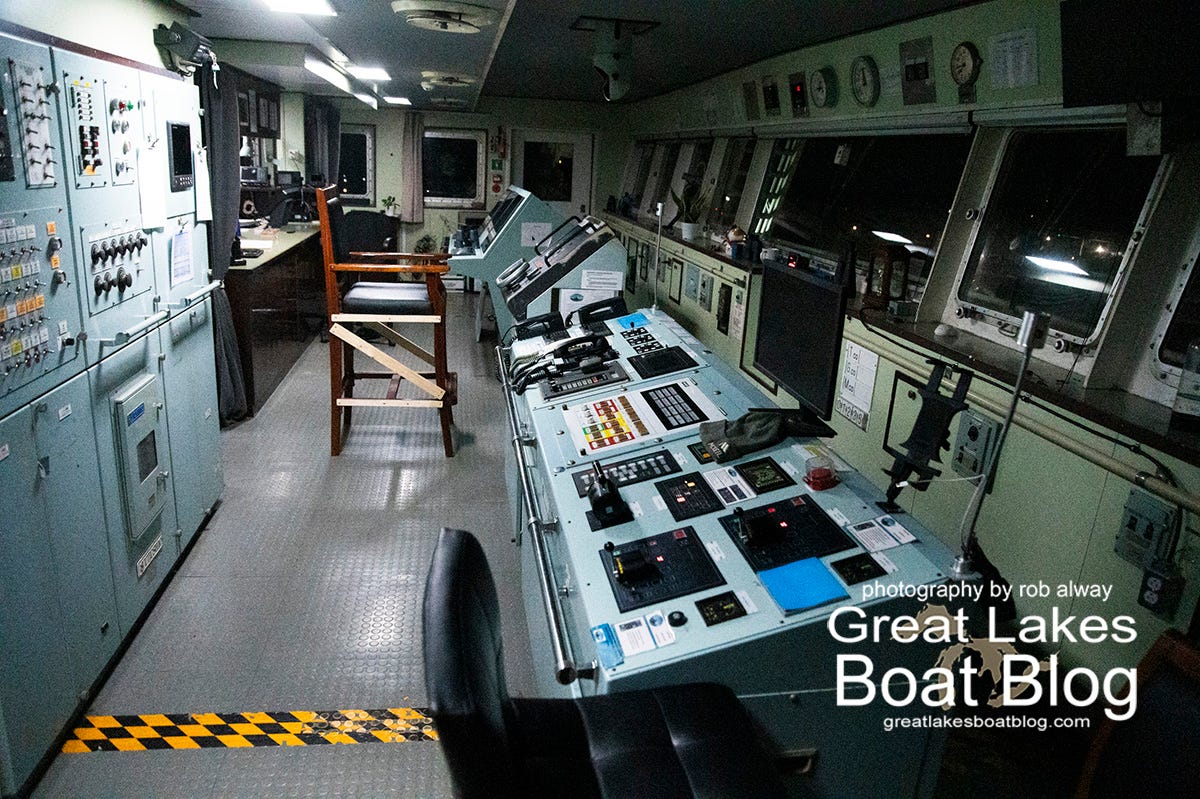
That flexibility also adds work for the crew. A mate operates the loading equipment from the cargo control office while other officers oversee the loading process and the ship’s stability.
Although the hull dates to 1998, Northern Venture‘s conversion into a Great Lakes self-unloader is relatively recent. Easton said the extensive rebuild has brought some challenges. A mechanical problem kept her in dry dock for approximately the first three and a half months of the 2026 shipping season. While she was out of service, Easton worked aboard other McKeil Marine vessels, including tug-and-barge operations and ships on Lake Ontario.
He said Northern Venture is now operating well, although the crew continues to address occasional technical issues.
Carrying the materials that build communities
Stone and sand account for most of Northern Venture‘s work, but the ship is able to handle a diverse range of bulk commodities.
Easton estimated that, in a typical season involving about 100 cargoes, approximately 65 are stone or sand. Another 15 to 20 are salt. Other voyages carry potash, grain, or occasional shipments of furnace coke.
Some of the potash is loaded at Thunder Bay, Ontario. The ship also carries grain between Canadian ports and destinations such as Toledo, Ohio, and Windsor, Ontario. Easton said Northern Venture is not particularly well suited to grain, but her adaptable cargo-handling equipment allows her to carry it when needed. She does not ordinarily transport iron ore.
On the November visit to Ludington, the trap rock had been loaded at Bruce Mines, Ontario. The hard aggregate is commonly used in construction. The sand remaining aboard was destined for Manistee.
Northern Venture had also called at Ludington and Manistee in August 2026 with a similar delivery of trap rock.
The crew makes the ship
For Easton, one of the rewards of command is the opportunity to work with Northern Venture‘s crew.
The vessel normally sails with 17 crew members, although the number can vary with staffing and cadet assignments. During the Ludington visit, three cadets were aboard: two training for deck positions and one studying marine engineering.
Easton described a relatively young, culturally diverse crew that includes mariners from Newfoundland, Nova Scotia, Quebec, Ontario, and British Columbia. Several crew members originally came from the Philippines and have established their lives in Canada.
Their backgrounds bring a range of experiences aboard, but Easton believes a person’s attitude matters more than experience alone.
“Attitude is everything,” he said.
Life aboard a working freighter demands close cooperation. Crew members live, work, and eat together for weeks, often through difficult conditions, and cannot return home at the end of a trying day.
“One sour grape just ruins it for everybody,” Easton said.
He would rather work with someone who lacks experience but brings a good attitude than with a highly skilled mariner who disrupts the crew.
“If you’re a good guy but you’re not the smartest, that’s fine by us. We’re going to teach you,” he said.
The hours can be demanding. The pilothouse follows a traditional four-hours-on, eight-hours-off watch rotation, but officers frequently work additional hours to supervise cargo operations. Because of the complexity of the equipment, Easton said the engineers generally work at least 12 hours a day. Deckhands and wheelsmen typically average 10 to 12 hours.
Even with that workload, the atmosphere aboard is positive. Jokes, laughter, and occasional practical jokes are part of daily life, although everyone recognizes when the task at hand requires complete concentration.
“The crew is what makes the ship,” Easton said.
He also takes satisfaction in mentoring younger mariners. Under supervision, cadets learn to operate mooring winches, check the ship’s draft, monitor conveyors, and steer. Within a week or two, he said, many are ready to assist with routine duties, developing skills while contributing to the work of the regular crew.
The pull of home
Easton has spent most of his life preparing for and pursuing a career at sea. Becoming a father, however, has changed the way he experiences time away from home.
He and his wife have a daughter, Charlotte, who will turn 2 in December, and Easton also has a stepson. McKeil Marine’s typical rotation is five weeks aboard followed by five weeks at home. Easton boarded Northern Venture on October 22 and expected to complete his current assignment near the end of November.
He hoped to spend Christmas with his wife and daughter in Newfoundland, visiting the community where he grew up. The family also had a late-fall vacation to Mexico planned.
Before becoming a father, Easton said, his weeks at home offered an opportunity to relax. Living with a toddler has reversed that expectation.
“Before I go home for a rest, now I come back to the ship for a rest,” he joked.
Behind the humor is one of the hardest parts of a seafaring career. As Charlotte grows older, she increasingly understands when her father is gone, making the departures more difficult. During her first year, Easton said, leaving was not quite as hard. Now she asks for him, and calls home can be painful.
“She sees me on the phone on FaceTime, and it just breaks your heart,” he said.
Easton praised his wife for caring for the family while he is aboard. She is preparing to return to work in January, while Charlotte is gradually getting used to daycare. He knows his daughter will grow up understanding that her father’s work takes him away for weeks at a time.
He also recognizes that leaving shipping would mean giving up the career he has built. His qualifications and experience might open doors in maritime education or pilotage, but he remains drawn to the work of commanding a vessel.
“I enjoy my job, man. I really enjoy my job,” he said.
The 2026 season also brought him an unusual honor. When Northern Venture became the first upbound vessel to transit the Welland Canal at the season’s opening, Easton took part in the canal’s traditional top hat ceremony, recognizing the captain of the first ship to make the passage.
It was a milestone in a career that has carried him from Newfoundland fishing boats to the bridge of a Great Lakes freighter. Yet his most difficult challenge is not navigating a narrow river, managing an elaborate cargo system, or waiting out rough weather on Lake Michigan.
It is being away from his family.
“The challenge for me right now is I wish that when I went into that door there, my wife and my baby were there,” Easton said. “But it’s just not the case.”
Help support this Substack page and check out our merchandise store.
This story is copyrighted 2026 by Sable Points Media.