


By Rob Alway
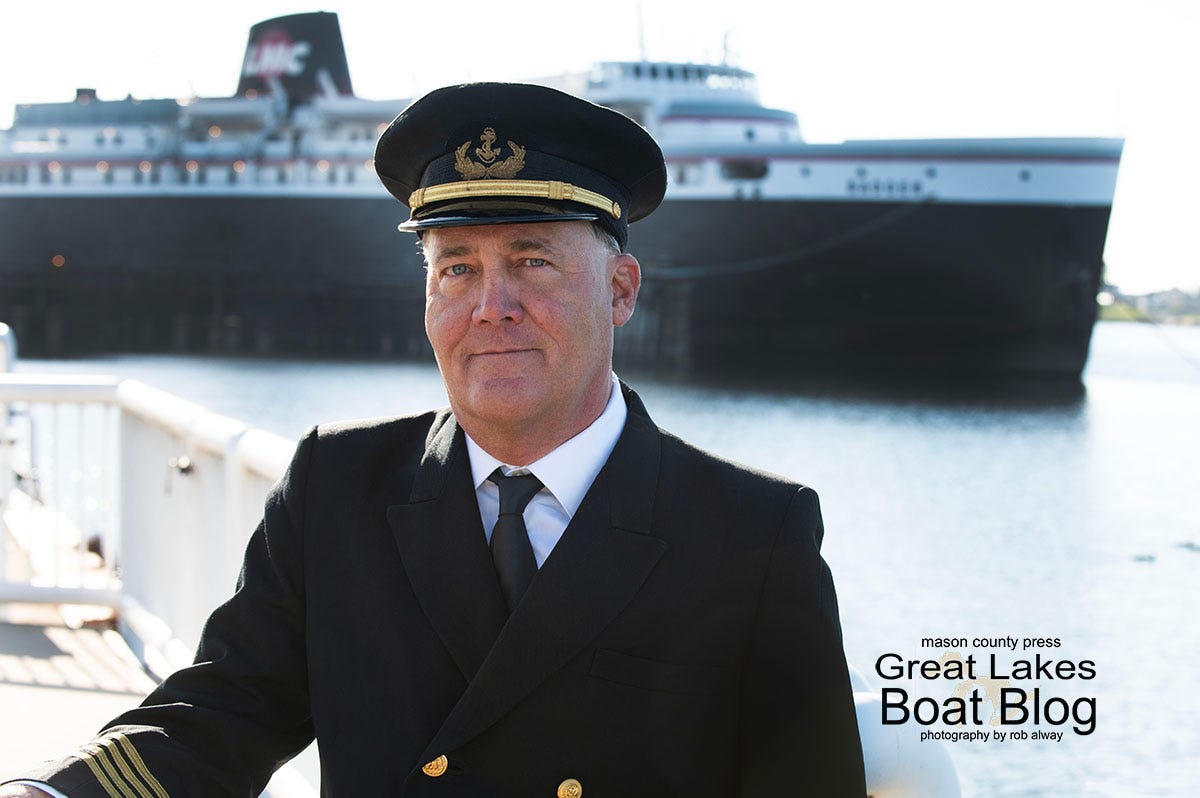
Long before Capt. Gregg Andersen commanded the SS Badger, he was a young boy watching Lake Michigan carferries through binoculars from the shoreline of Ludington, Michigan.
Growing up near the port, Andersen developed a fascination with the great railroad carferries that connected Michigan and Wisconsin. He studied their movements, photographed their arrivals and departures, and dreamed of someday working aboard one of the ships.
That childhood fascination eventually became a career that would take him from the decks of the City of Midland 41 to the pilothouse of the Badger, where he became one of the youngest captains in the history of the Ludington carferry fleet.
“I always had a view of the carferries going in and out,” Andersen recalled. “In the winter, before the condos were built on the peninsula, I’d ride my snowmobile down to the end of the Buttersville Peninsula during storms just to watch them or take pictures. I have thousands of prints and slides, and hundreds of hours of videos of various vessels.”
The collection represents decades of Great Lakes maritime history. Andersen recently donated his extensive video collection to the Mason County Historical Society’s Rose Hawley Archives in Ludington. Plans call for many of those recordings to eventually become part of an interactive exhibit at the Port of Ludington Maritime Museum.
Growing up with the carferries
Andersen grew up on his family’s historic farm near Phillips Cemetery in Pere Marquette Township, just south of Ludington.
Ships were part of his family history. His uncle, Howard Harrington, served as chief engineer aboard the Pere Marquette 22 and later the Spartan. A cousin from Milwaukee, Wisconsin, helped introduce him to the history of the Lake Michigan ferry fleet.
By the mid-1970s, Andersen had decided that his future would be on the Great Lakes.
After graduating from Ludington High School in 1979, he enrolled at the Great Lakes Maritime Academy in Traverse City, Michigan. He earned his first-class pilot’s license in 1982, but the recession had reduced employment opportunities throughout the shipping industry.
Instead of immediately joining a commercial Great Lakes vessel, Andersen went to work for the National Ocean Survey, part of the National Oceanic and Atmospheric Administration. His assignments included locating shipwrecks along the Gulf and Atlantic coasts.
His opportunity to work aboard a Ludington carferry came unexpectedly in August 1983.
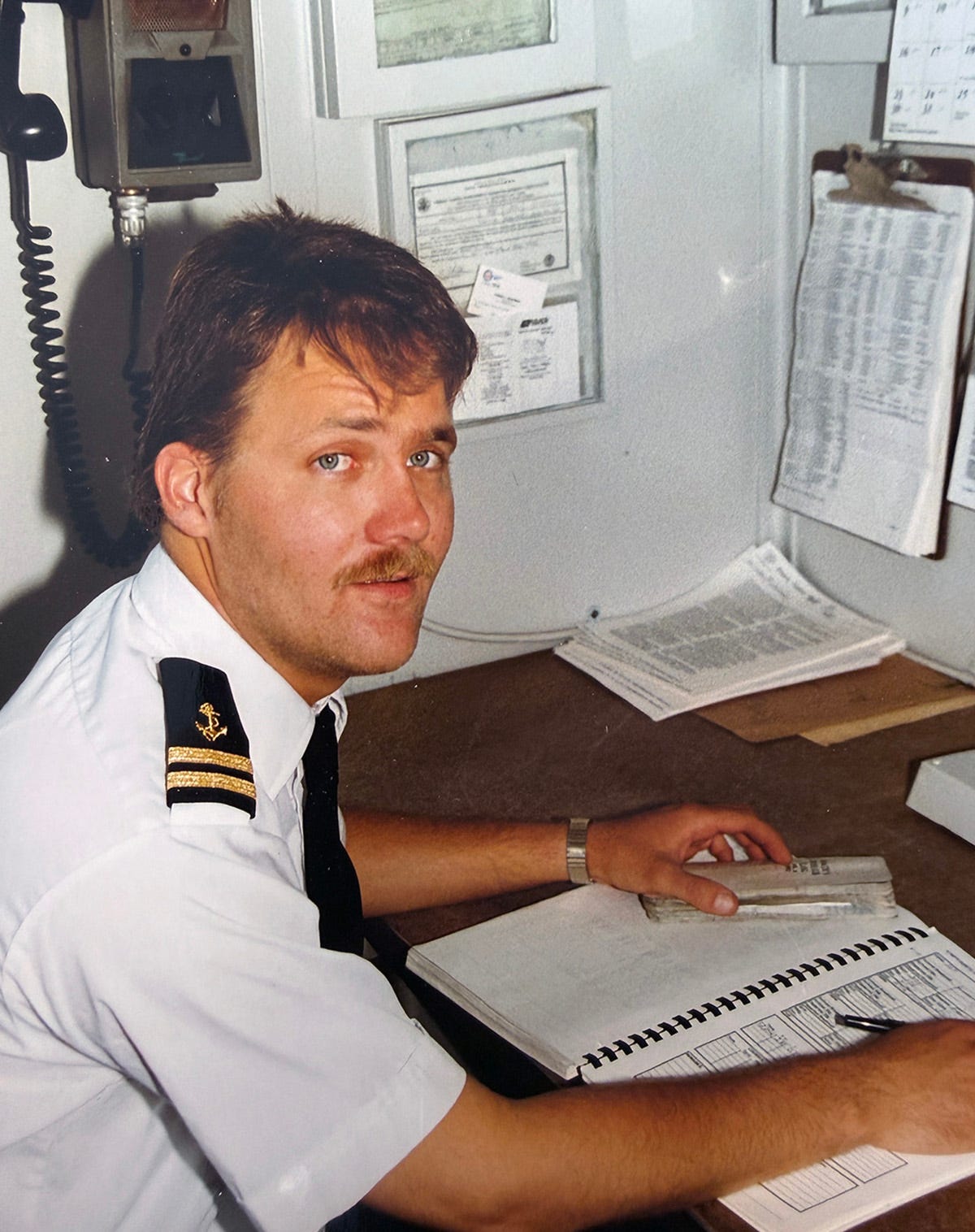
Andersen had returned home for his brother’s wedding when he learned that the City of Midland 41 needed a relief mate.
“I worked eight days aboard her that August, which was my first job using my license,” he said.
The brief assignment opened the door to the career he had imagined as a boy.
In 1984, Andersen joined Michigan-Wisconsin Transportation, then the operator of the Ludington carferries, on a full-time basis.
Throughout the 1980s, he worked aboard the City of Midland and Badger, serving as both purser and relief mate. He later sailed with Interlake Steamship Company before returning to Ludington in 1991.
A new era for the Badger
By the early 1990s, the future of the Ludington carferry fleet was uncertain.
For more than a century, the port had been an important link in the railroad transportation network connecting Michigan and Wisconsin. The ferries were designed to carry railroad cars across Lake Michigan, avoiding the congested rail routes around the southern end of the lake.
But changes in railroad operations and declining demand for cross-lake rail service threatened the continuation of the fleet.
In 1991, Ludington native and businessman Charles Conrad purchased the ferry operation and established Lake Michigan Carferry.
The company began transforming the Badger from a railroad freight vessel into a passenger and automobile ferry.
Andersen returned during that transition and became directly involved in preparing the ship for her new role.
“Everyone worked to get the Badger ready,” he recalled. “We were doing electrical work, tearing out panels and preparing the ship for her maiden season under the new ownership.”
One of the most significant alterations involved the car deck.
Approximately 300 tons of asphalt were placed over the railroad tracks, creating a surface suitable for passenger vehicles. The transformation symbolized the end of one chapter in the Badger’s working life and the beginning of another.
The ship that had been built to transport railroad freight was becoming a tourism and transportation attraction in her own right.
For Andersen, who had grown up watching the carferries during their railroad years, participating in that transition was particularly meaningful.
Taking command at 30
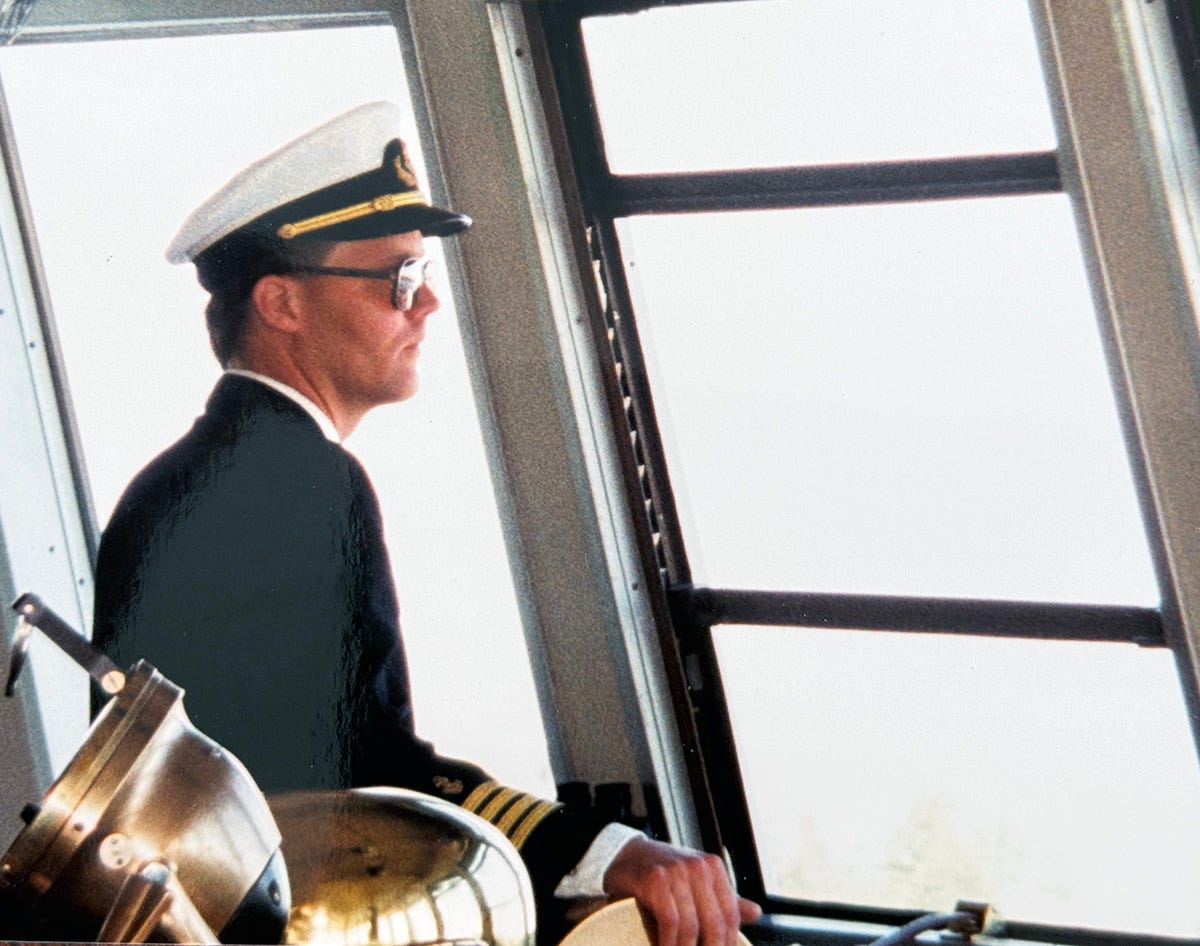
In the spring of 1993, Andersen was promoted to captain of the Badger.
He was just 30 years old, making him one of the youngest, if not the youngest, captains in the fleet’s history of more than 100 years.
He succeeded Capt. Bruce Masse, who had retired but would later return to the ferry operation.
Taking command of a 410-foot steamship at such a young age came with considerable responsibility. Andersen was now guiding one of the last operating examples of an American railroad carferry across Lake Michigan.
His first season also included an unexpected challenge.
On June 13, 1993, shortly after the Badger began her schedule of double sailings, she struck the north breakwater at Ludington. The damage eventually required repairs at Sturgeon Bay, Wisconsin.
Andersen was neither aboard the vessel nor in command when the accident occurred. Another captain had been operating the ship.
Nevertheless, he recalled that some people mistakenly associated him with the incident because of his recent promotion and relatively young age.
Despite the scrutiny, Andersen continued to develop as a master under the guidance of experienced officers whose careers extended back into the Chesapeake & Ohio Railway era.
Among his mentors were Capt. Ernest Barth (1925-2002), a former master of the Badger, and Capt. John Bissell (1924-2013), who had commanded both the Spartan and City of Milwaukee.
“Capt. Barth trained me in handling the Badger,” Andersen said. “He lived on Dowland Street and would often ride his scooter over to the dock to watch me bring the ship in. On days with certain sea and wind conditions he would ride the 43 (the number unofficially assigned to the Badger) offering his thoughts and advice.”
Bissell also played an important role in Andersen’s development as a captain.
These veteran mariners had spent their careers navigating Lake Michigan in an era when shiphandling depended heavily on direct observation, experience and a thorough understanding of the lake’s sometimes unpredictable conditions.
For a young captain, their advice was invaluable.
Navigating before GPS
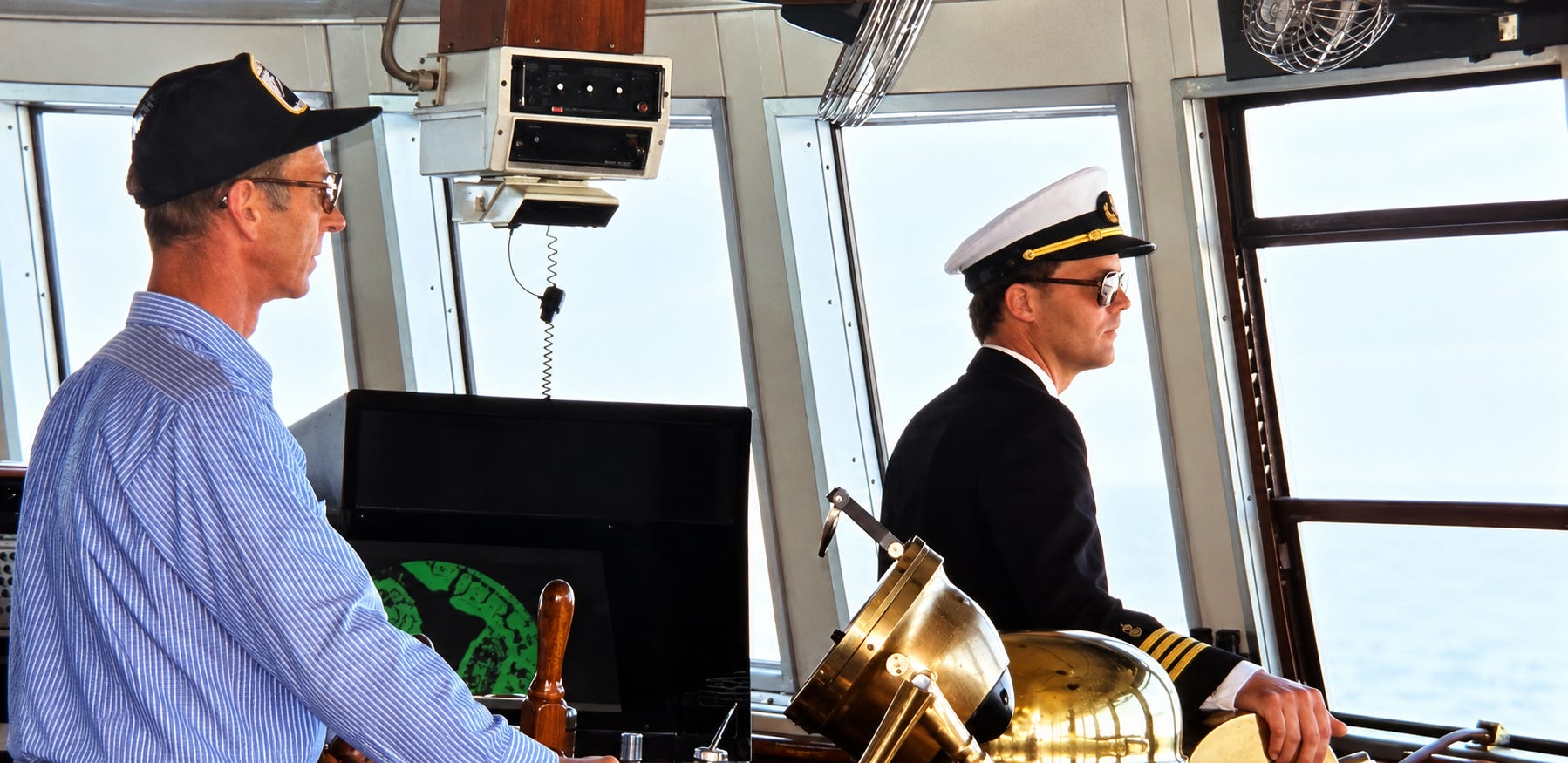
The technology available in the Badger’s pilothouse in the early 1990s was considerably different from what mariners use today.
Electronic navigation systems were evolving, but traditional methods remained essential.
“When I first commanded the Badger, navigation still depended heavily on magnetic compasses, radar and experience,” Andersen recalled.
“GPS was just beginning to appear. We simply set a course for Wisconsin and used visual landmarks and radar to make the crossing.”
Those methods had served generations of Great Lakes captains.
The regular Lake Michigan crossings required more than simply maintaining a compass heading. Experienced masters learned to anticipate changing winds, lake conditions, visibility and the handling characteristics of their vessels.
Andersen benefited from the knowledge of officers who had spent decades operating the same ships.
Remembering the City of Midland
Although Andersen eventually commanded the Badger, his favorite vessel in the Ludington fleet was the City of Midland 41.
Built as a railroad carferry, the Midland was remembered by many crew members for her accommodations and working conditions.
Andersen recalled that the vessel was exceptionally well maintained.
The crew quarters were located near the galley on the Texas deck, an arrangement that created one of his favorite memories of life aboard.
“You’d wake up smelling breakfast cooking,” he said. “It was a comfortable place to work.”
The memory captures something about life aboard the old carferries that is easily overlooked when discussing their horsepower, tonnage and operating histories.
For the men and women who worked aboard them, the vessels were more than transportation equipment. They were workplaces, living quarters and, for extended periods, homes.
The routines of meals, watches, docking and crossing Lake Michigan created lasting connections between crews and their ships.
A career beyond the carferries
Andersen left Lake Michigan Carferry in 1995, but his maritime career continued.
He became a Great Lakes pilot, guiding foreign vessels through the upper Great Lakes. The work required specialized knowledge of the lakes, channels and ports navigated by international commercial shipping.
Eventually, he decided to leave shipboard work and pursue a career in marine management.
Now retired, Andersen divides his time between Ludington and Phoenix, Arizona.
His interest in the ships that shaped his career has never diminished.
He remains particularly interested in the Badger, which continues to operate between Ludington and Manitowoc, Wisconsin.
Interlake Maritime Services acquired the carferry operation in 2020, bringing the historic vessel under the ownership of a company with deep roots in Great Lakes shipping.
Andersen believes that ownership has been positive for the ship’s long-term future.
“The fact that they invested heavily in rebuilding the dock infrastructure after the slip collapse demonstrates their commitment,” he said. “I think the Badger has a strong future under Interlake ownership.”
Bringing the Badger home
Among all his experiences aboard the Lake Michigan carferries, one moment remains especially vivid.
Following the Badger’s repairs at Sturgeon Bay in 1993, Andersen was assigned to bring her back across Lake Michigan to Ludington.
The crossing ended at sunset.
“The weather was perfect, the ship looked brand new and it felt like I was delivering a new vessel to the community,” he recalled. “It was one of the most satisfying moments of my career.”
It was a remarkable experience for someone who had once watched the same ship from shore, studying her movements through binoculars and photographing her in storms.
Over the years, Andersen had progressed from ferry enthusiast to licensed officer, from relief mate to captain, and eventually to a maritime career beyond the ships he had grown up admiring.
Yet when he reflects on those years, it is not necessarily the title of captain that stands out.
It is the experience of working aboard the carferries themselves.
“Working on the ferries, even as a purser, was one of my favorite jobs,” he said. “It was a simple life and a good one.”
For the boy who once rode his snowmobile to the end of the Buttersville Peninsula just to watch the ships crossing Lake Michigan, the opportunity to stand in their pilothouses and command one of them was a childhood dream fulfilled.