

By Rob Alway
Among the many sounds aboard a Great Lakes steamship, few are as distinctive as the ringing of an engine order telegraph. The sharp sound of a bell signals communication between two of the most important departments aboard a vessel: the pilothouse and the engine room.
For more than 150 years, engine order telegraphs have allowed captains and deck officers to communicate instructions to the engineers responsible for operating a ship’s propulsion machinery. Although technology has transformed much of the maritime industry, these instruments remain in active use aboard Great Lakes steamers, including the SS Badger and SS Wilfred Sykes.
Often called a Chadburn, after one of the best-known manufacturers, the engine order telegraph is an essential piece of equipment aboard traditionally operated steamships. Its familiar circular dial and brass handles have become symbols of maritime history, but aboard these vessels they continue to serve the same practical purpose for which they were designed.
How an engine order telegraph works
An engine order telegraph, commonly abbreviated EOT, provides a direct means of communicating commands from the pilothouse to the engine room.
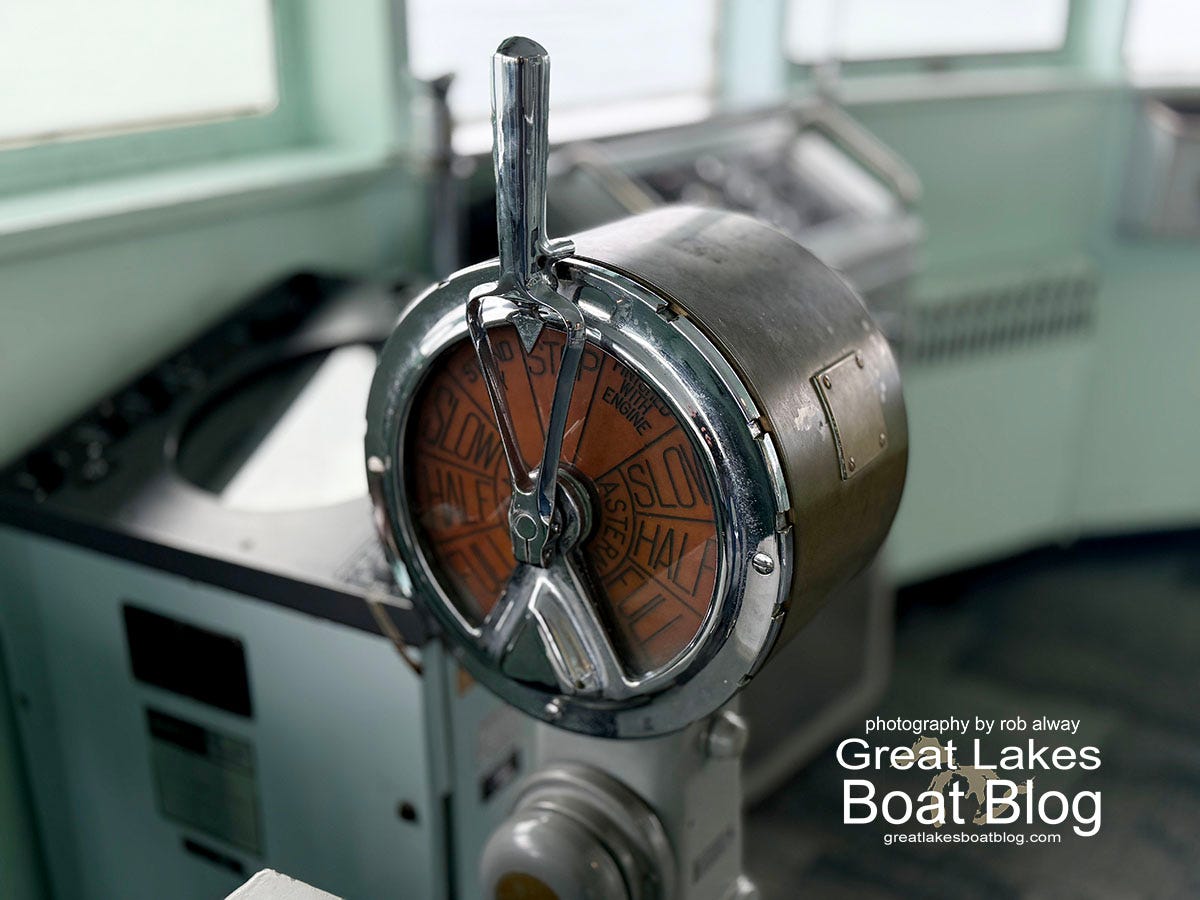
The instrument typically consists of a circular dial with a series of commands indicating the desired direction and speed of the ship. Common settings include Stop, Slow Ahead, Half Ahead, Full Ahead, Slow Astern, Half Astern and Full Astern. Other positions can include Stand By and Finished With Engines.
When the captain or another officer wants to change the ship’s speed or direction, the telegraph handle is moved to the desired position.
That movement activates a bell in the engine room and moves an indicator on the receiving instrument to the corresponding order.
An engineer acknowledges the instruction by moving the engine room telegraph handle to match the indicated position. The action sends a return indication to the pilothouse, confirming that the order has been received.
The acknowledgement is important. It tells the officer on the bridge that someone in the engine room has received the command. It does not necessarily mean the machinery has already reached the requested speed.
The engineer must then make the necessary adjustments to the propulsion equipment.
Unlike the bridge controls aboard many modern vessels, which allow officers to operate propulsion machinery directly, traditional engine order telegraphs are communication devices. Moving the handle does not itself increase or decrease the ship’s speed.
The actual control of the machinery remains with the engineers.
This arrangement requires close coordination between the pilothouse and engine room, particularly when maneuvering in confined harbors, approaching docks or navigating narrow waterways.
A technology dating to the 19th century
The development of engine order telegraphs was part of the broader technological transformation brought about by steam propulsion.
Before the widespread use of mechanical propulsion, sailing vessels depended primarily on wind and the coordination of their crews to change speed and direction.
Steam-powered vessels introduced a new challenge. The captain and navigation officers were stationed on the bridge, while the machinery controlling the ship’s movement was located elsewhere, often several decks below.
As ships became larger and their engine rooms more complex, an efficient and reliable means of transmitting orders became increasingly important.

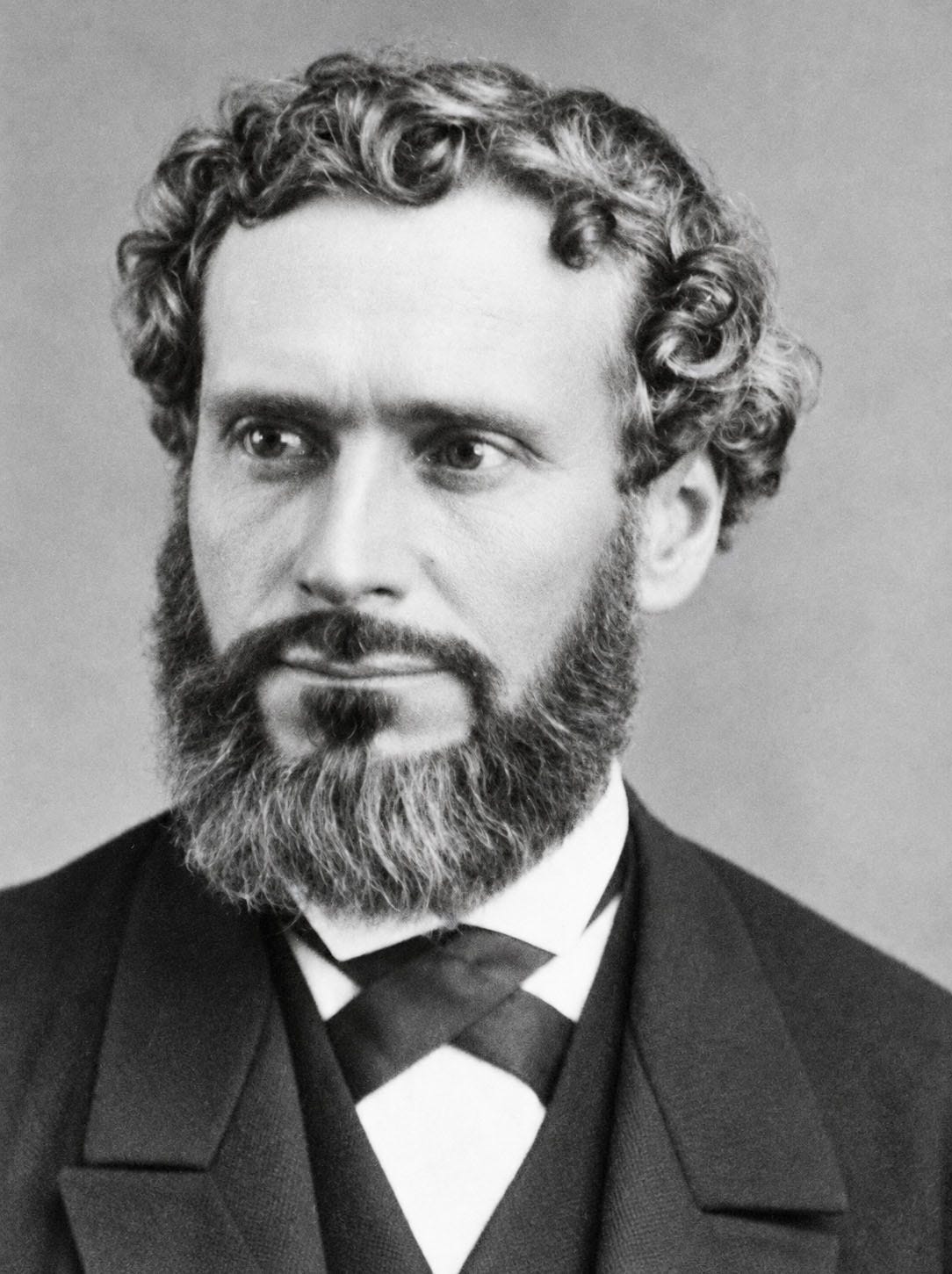
American inventor Charles Grafton Page (1812-1868), an engineer, physician and pioneer in electromagnetism, is credited with developing an early engine order telegraph during the 1850s.
Page experimented extensively with electricity and magnetism and contributed to the development of electromagnetic technology during a period when electrical communication was still in its infancy.
The engine order telegraph became a familiar piece of maritime equipment during the latter part of the 19th century.
One of the most prominent manufacturers was the Chadburn family of England. William Chadburn developed ship’s telegraph equipment during the 1870s, and the company’s instruments became widely used aboard merchant ships and naval vessels.
Chadburn’s company, based in Liverpool, England, became so closely associated with the equipment that its name entered the maritime vocabulary. Mariners commonly refer to an engine order telegraph as a Chadburn, even when the instrument was manufactured by another company.
The equipment’s fundamental purpose has remained remarkably consistent through successive generations of maritime technology.
The Chadburns aboard the Badger
The SS Badger, which operates between Ludington, Michigan, and Manitowoc, Wisconsin, is one of the best examples of the continued use of traditional engine order telegraphs.
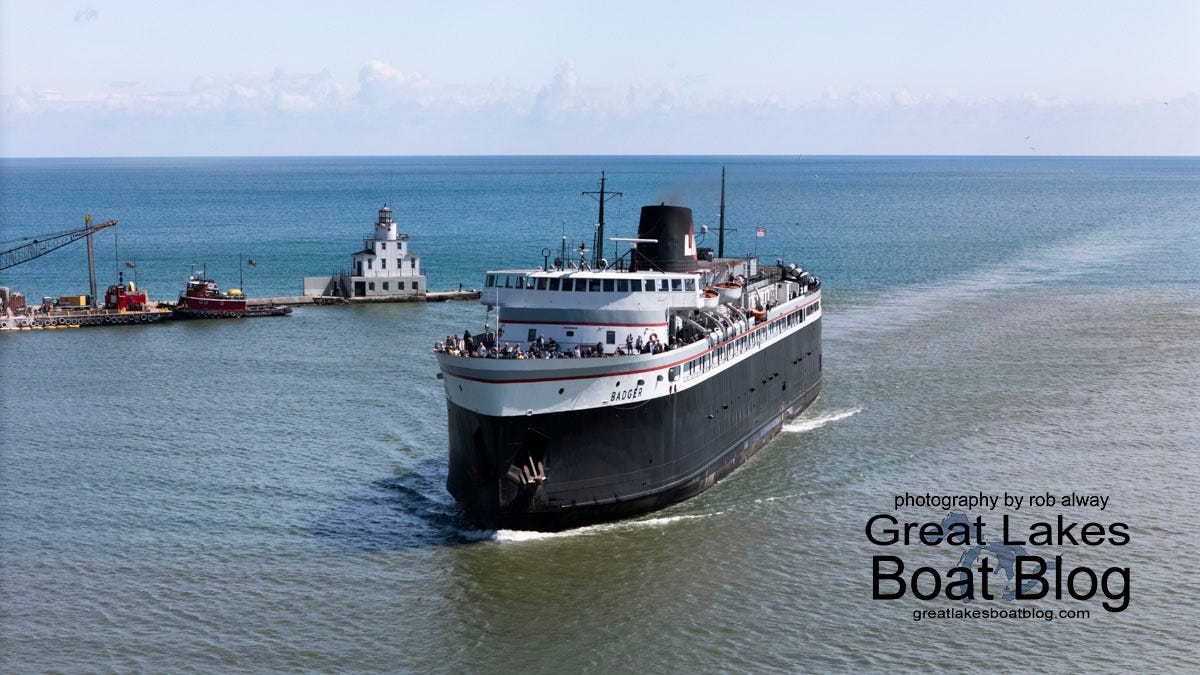
Built in 1952 by the Christy Corporation in Sturgeon Bay, Wisconsin, the Badger entered service in March 1953 for the Chesapeake & Ohio Railway. She remains the last coal-fired passenger steamship operating on the Great Lakes.
The 410-foot vessel is powered by two Skinner Unaflow reciprocating steam engines, each rated at 3,500 horsepower. The engines turn separate propellers, providing the ship with a combined 7,000 horsepower.
Unlike most modern ships, which use bridge-controlled propulsion systems, the Badger continues to depend on engineers to operate her main engines.
The Badger’s engine order telegraphs were manufactured by Chadburn’s Limited of Liverpool and installed during the ship’s original construction. The vessel has telegraphs in her forward and aft pilothouses, along with corresponding instruments in the engine room.
Each engine is controlled independently, allowing the captain to order different speeds and directions for the port and starboard propellers.
This capability is particularly important when maneuvering the vessel in her harbors.
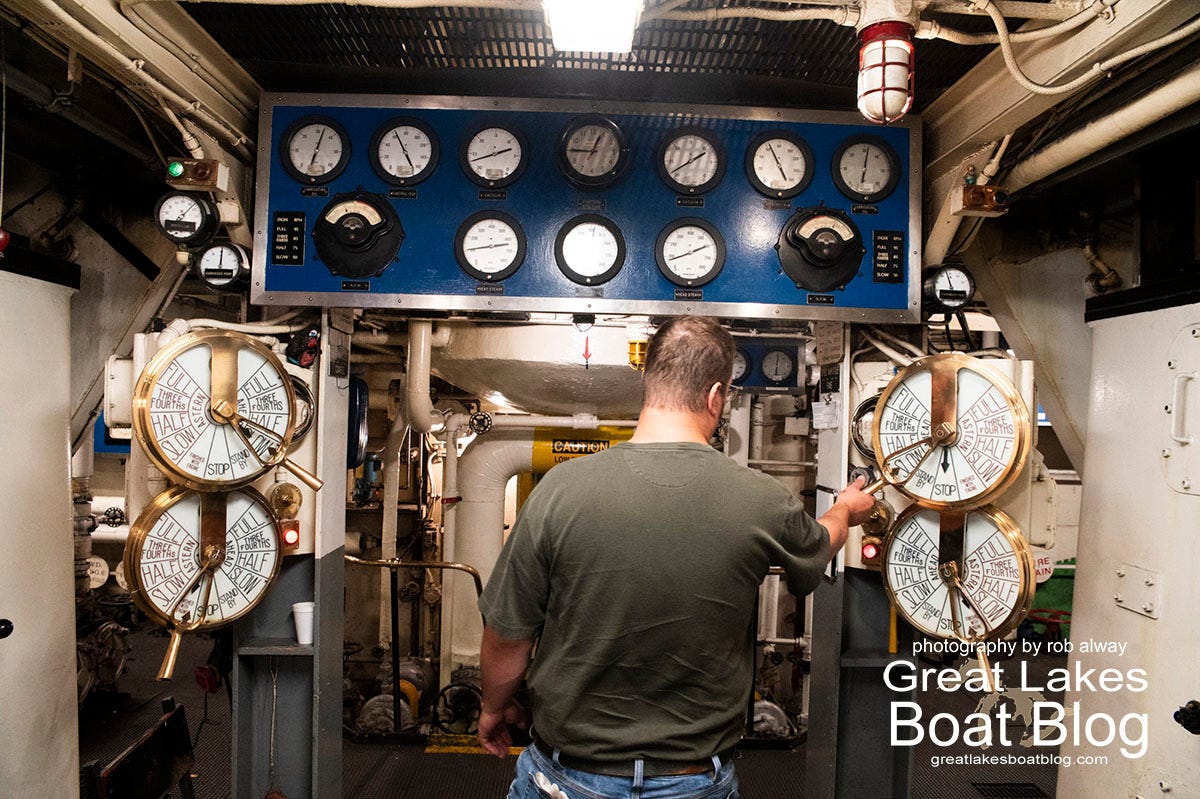
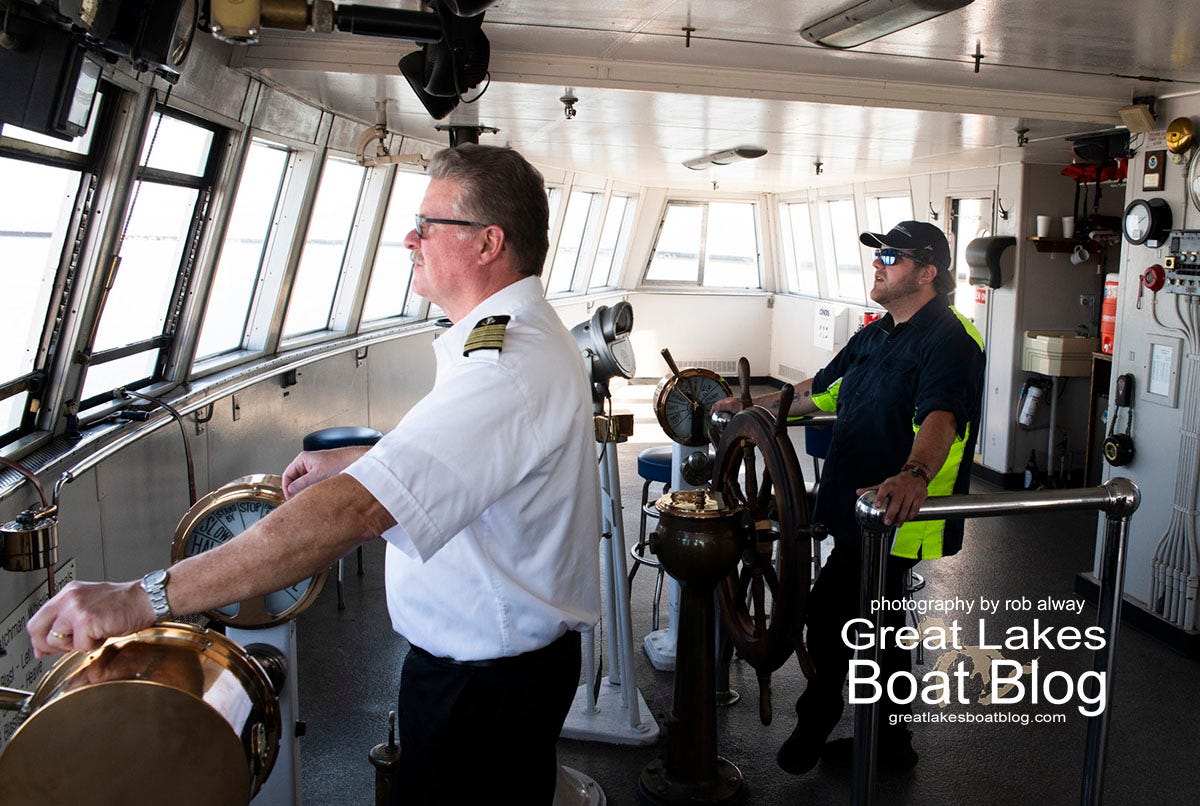
During docking, passengers aboard the Badger can sometimes hear the distinctive sequence of bells as the captain operates the telegraphs from the aft pilothouse. The bells signal instructions transmitted to the engineers below, who respond by adjusting the engines to control the ship’s movements.
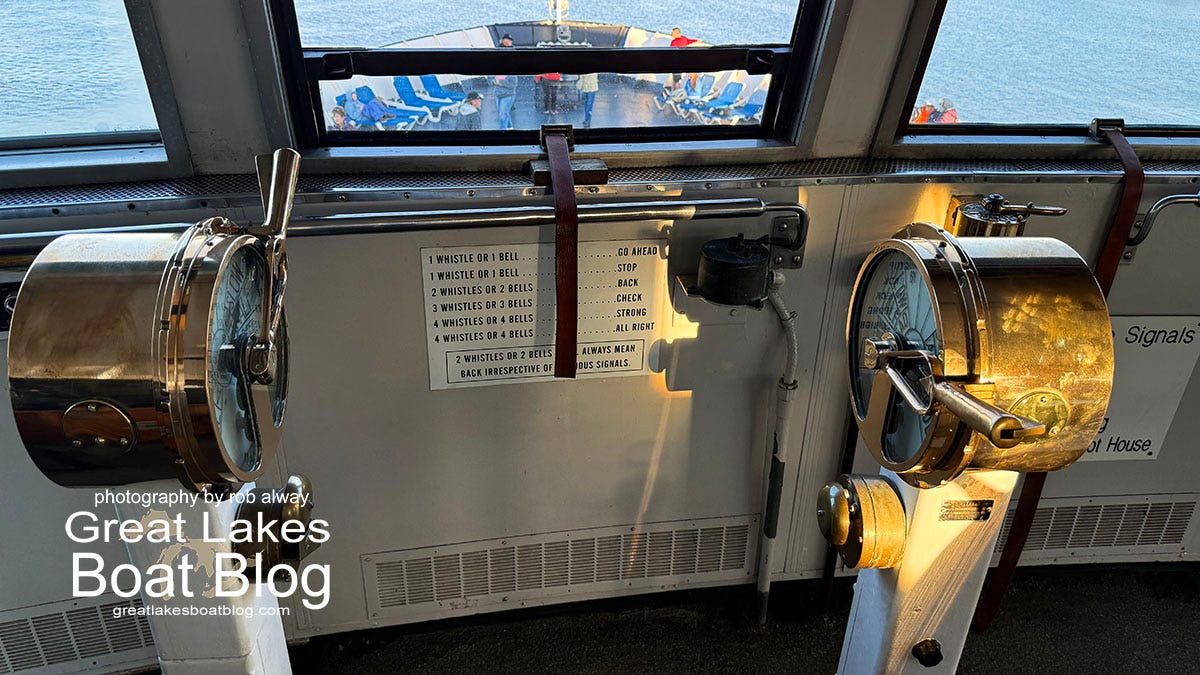
Two engineers monitor the engine order telegraphs, one responsible for the port engine and another for the starboard engine. An oiler monitors the machinery’s instruments. The communication continues throughout the docking maneuver, with each change in engine order requiring acknowledgement from the engine room.
For passengers observing the process, the ringing bells offer an audible connection to an era when nearly every major steamship employed similar equipment.
For the crew, however, the instruments are not historical displays. They remain an integral part of operating the ship.
Engine orders aboard the Wilfred Sykes
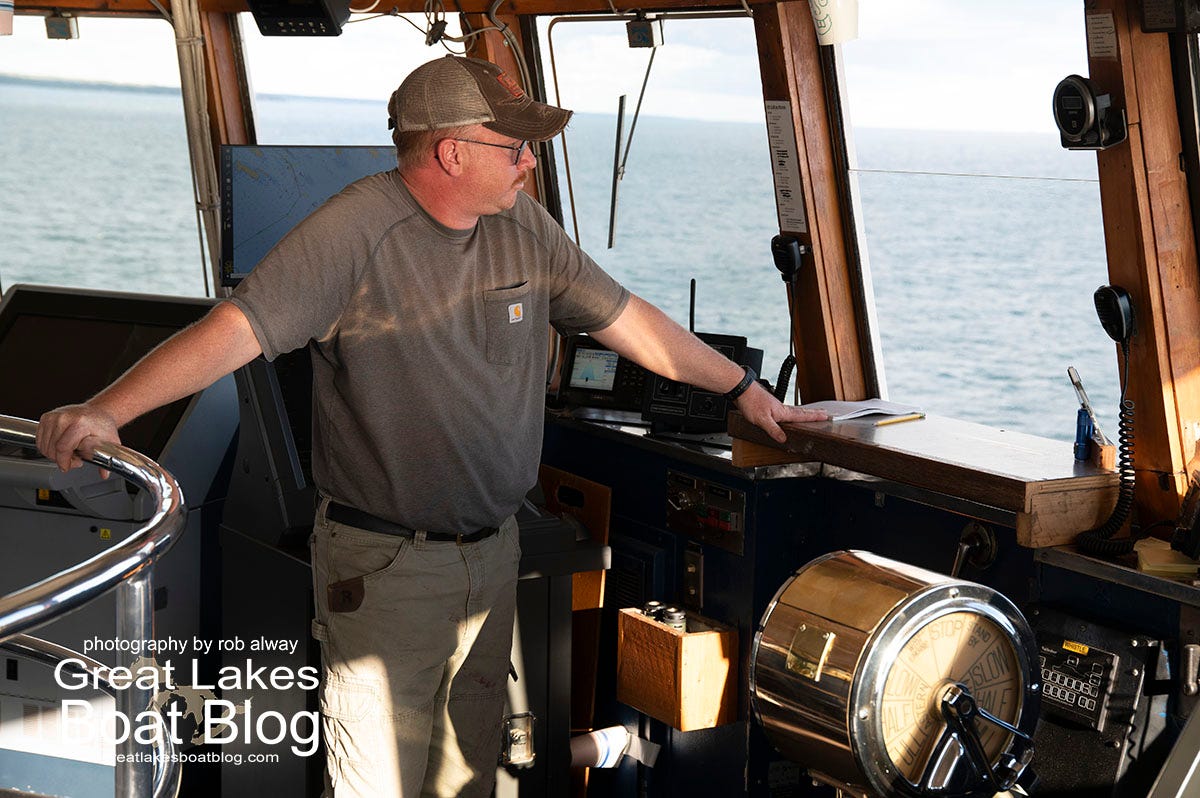
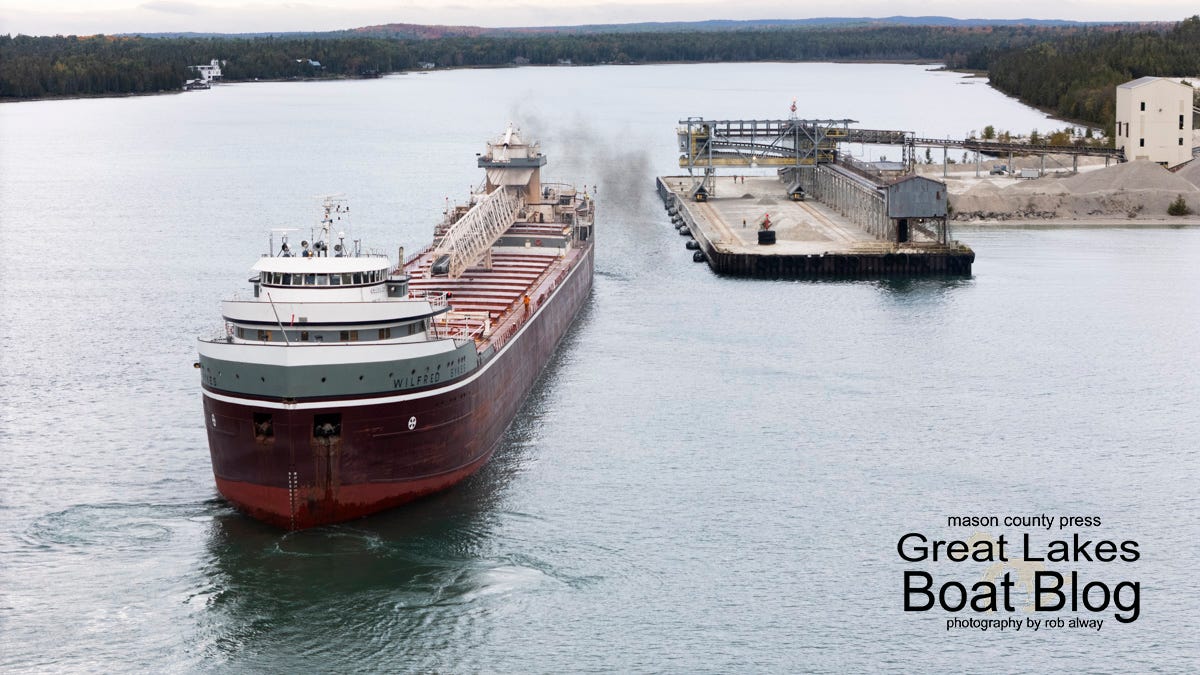
Another Great Lakes steamer that continues to use engine order telegraphs is the SS Wilfred Sykes.
Built in 1949 by the American Ship Building Company in Lorain, Ohio, the 678-foot bulk carrier entered service in 1950 for Inland Steel. She is now operated by Central Marine Logistics.
Unlike the Badger, which uses reciprocating steam engines, the Sykes is powered by an oil-fired steam turbine propulsion system driving a single propeller.
Her machinery arrangement is different, but the fundamental principle of communication between the pilothouse and engine room remains the same.
When the captain calls for a change in speed or direction, the order is transmitted to the engineers, who operate the steam machinery.
The relationship between captain and engineer was documented aboard the Sykes more than 70 years ago.
In a radio documentary broadcast Sept. 1, 1956, Chicago radio station WBBM and the Illinois Institute of Technology took listeners aboard the vessel as she approached Indiana Harbor, Indiana. The program, Ear on Chicago, included an interview with Capt. George Fisher, who explained the equipment aboard the ship’s pilothouse.
When interviewer Hugh Hill asked about the engine order telegraph, Fisher described how he would first signal the chief engineer to stand by as the ship approached harbor. Once the engineer acknowledged the instruction, Fisher could transmit additional orders to reduce speed or maneuver the ship.
Fisher also explained how astern engine orders helped control the vessel’s momentum and position when approaching a dock.
The interview provides a particularly interesting glimpse into Great Lakes steamship operations during the 1950s. The same basic communication process described by Fisher remains relevant aboard the Sykes today.
Although navigation technology has advanced considerably since the ship entered service, the engineers remain responsible for responding to propulsion orders and operating the turbine machinery.
Why engine order telegraphs still matter
The continued use of engine order telegraphs aboard the Badger and Wilfred Sykes illustrates the differences between traditional steamship propulsion and the systems aboard most modern commercial vessels.
On newer vessels, propulsion controls are often integrated into the bridge, allowing the officer handling the ship to adjust the engines directly.
Traditional steam-powered vessels require a different arrangement.
Steam turbines and reciprocating engines involve complex systems of valves, boilers, condensers, lubrication equipment and auxiliary machinery. Operating these systems requires trained engineers who monitor the condition of the propulsion plant.
Although changes in engine speed can be requested from the pilothouse, they must be carried out within the operating requirements of the machinery.
Engine order telegraphs provide a clear and standardized method for issuing these instructions.
The acknowledgement feature also reduces the possibility of misunderstandings. Both the pilothouse and engine room have an indication of the order being communicated.
The importance of this communication is particularly evident during docking and undocking, when changes in engine direction and speed may be frequent.
On a steamship, a command to reverse the propeller involves more than simply moving a control lever. The engineers must manage the machinery as the propeller slows, stops and begins turning in the opposite direction.
The process requires coordination, anticipation and an understanding of how the ship responds.
The engine order telegraph is one of the principal tools supporting that coordination.
The sound of Great Lakes steamship history
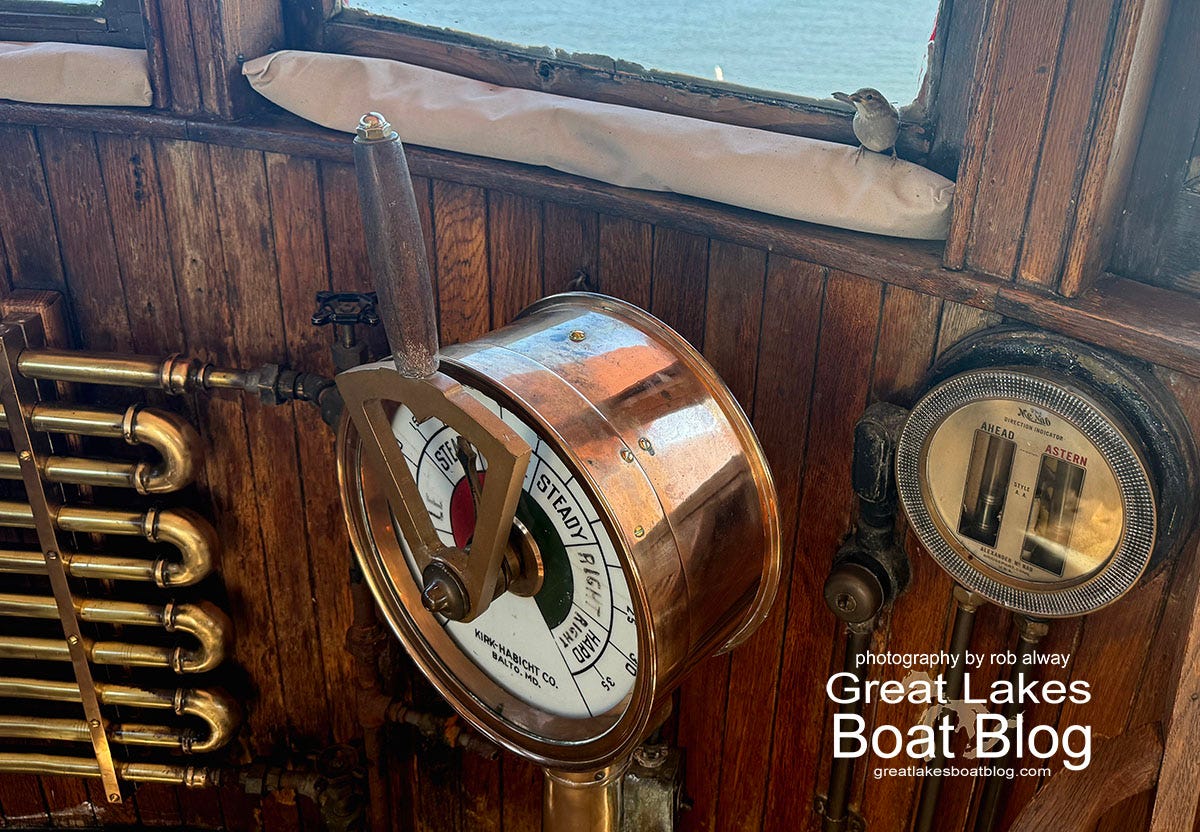
Engine order telegraphs were once commonplace aboard the passenger steamers, railroad carferries, bulk carriers and other powered vessels that traveled the Great Lakes.
For generations of mariners, the ringing of a telegraph bell was part of the daily routine of life aboard ship.
A bell could announce an approaching harbor, a change in speed, the beginning of a maneuver or the completion of a voyage.
As diesel propulsion and remote-control technology became more widespread, traditional engine order telegraphs gradually disappeared from much of the commercial fleet.
Many surviving instruments have found their way into maritime museums, historic ships and private collections.
But aboard the Badger and Wilfred Sykes, the bells continue to ring.
The instruments connect today’s mariners with a technology that helped generations of captains and engineers safely operate ships across the Great Lakes.
And while the brass dials and handles may appear to belong to another age, their purpose remains unchanged: communicating the captain’s orders to the people who keep the ship moving.
Visitors can see — and, in some cases, operate — these instruments at maritime museums around the Great Lakes. At the Port of Ludington Maritime Museum in Ludington, Michigan, a 180-degree pilothouse simulator allows visitors to navigate the railroad carferry Pere Marquette 22. One visitor can operate the engine order telegraphs while another takes the wheel. Both the telegraphs and wheel came from one of the carferries in the historic Ludington fleet.
In Manistee, Michigan, the museum ship SS City of Milwaukee retains its original engine order telegraphs in the pilothouse. At the Dossin Great Lakes Museum on Belle Isle in Detroit, Michigan, the preserved pilothouse of the SS William Clay Ford has been integrated into the museum, complete with the ship’s original EOTs.
Other examples of Chadburns and engine order telegraphs can be found at the Wisconsin Maritime Museum in Manitowoc, Wisconsin, and the Door County Maritime Museum in Sturgeon Bay, Wisconsin, as well as other maritime museums around the Great Lakes.
Sources: Lake Michigan Carferry, “The Chadburn Engine Order Telegraphs” by Rob Alway; American Society of Mechanical Engineers, SS Badger Carferry; Science Museum Group Collection, Model of Chadburn’s Ship’s Telegraph; American Archive of Public Broadcasting, Ear on Chicago: Iron Ore Boats on the Great Lakes, Sept. 1, 1956; Lake Carriers’ Association fleet records; and Great Lakes Vessel History, Wilfred Sykes.