


By Rob Alway
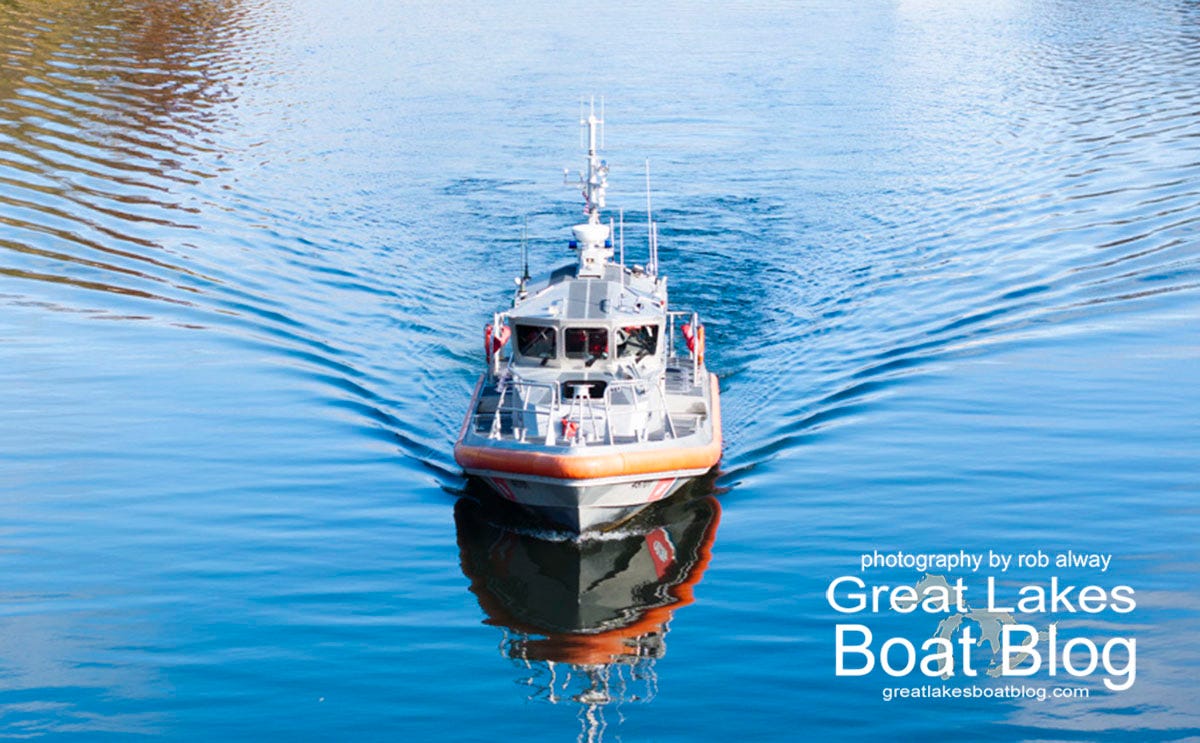
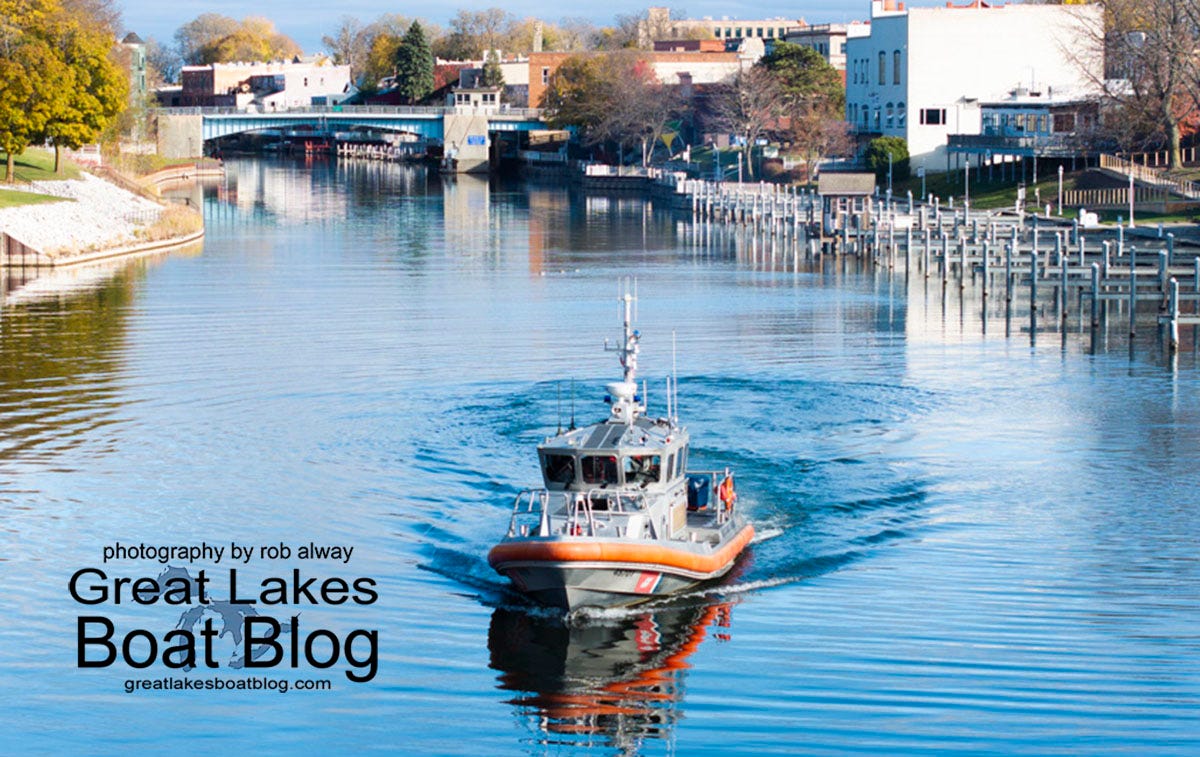
MANISTEE, Mich. — One of the U.S. Coast Guard’s versatile rescue and patrol boats made its way down the Manistee River Sunday afternoon, Nov. 15, 2026, heading toward Lake Michigan on patrol.
The vessel, Coast Guard Response Boat–Medium 45701, is a 45-foot, high-speed craft designed for a variety of missions, including search and rescue, maritime law enforcement, homeland security and coastal patrols.
A powerful and versatile rescue boat
Although relatively small compared with the Coast Guard’s cutters, 45701 belongs to a class of vessels designed to respond quickly to emergencies and conduct extended patrols.
The Response Boat–Medium, commonly referred to as the RB-M, was developed to replace the Coast Guard’s aging fleet of 41-foot utility boats. The newer design provides greater speed, maneuverability and crew protection while supporting a broader range of missions.
The 45-foot boats entered service in 2008. A total of 174 were acquired by the Coast Guard, with construction undertaken by Marinette Marine in Marinette, Wis., and Kvichak Marine Industries in Seattle, Wash.
Each boat measures approximately 44 feet, 9 inches long and has a beam of 14 feet, 8 inches. Her aluminum hull is built around a deep-V design that provides stability and maneuverability in a variety of operating conditions.
Power comes from two MTU diesel engines, each developing 825 horsepower, for a combined 1,650 horsepower.
Rather than conventional propellers, the engines drive waterjet propulsion systems. These draw water through intakes beneath the hull and discharge it through steerable nozzles at the stern.
The arrangement provides excellent maneuverability, particularly when operating near other vessels, navigating confined waterways or recovering people from the water. The absence of exposed propellers also reduces hazards during rescue operations.
The RB-M has a maximum rated speed of approximately 42.5 knots, making her substantially faster than many conventional rescue boats. At a cruising speed of 30 knots, she has an operating range of approximately 250 nautical miles.
The boat weighs approximately 36,700 pounds in hoisting condition and draws just 3 feet, 4 inches of water.
The vessel is normally operated by a crew of four. Inside her enclosed, climate-controlled wheelhouse are shock-mitigating seats designed to reduce the physical impact of operating in rough water.
The boat also has self-righting capability, allowing her to recover from a capsize under specified conditions. Recessed recovery areas along both sides of the hull help crew members bring people aboard from the water.
The Coast Guard rates the class for operations in seas up to 10 feet and winds up to 30 knots.
More than a lifesaving boat
Search and rescue remains one of the Coast Guard’s best-known responsibilities, particularly on the Great Lakes, where changing weather, heavy seas and cold water can quickly turn a routine boating trip into an emergency.
However, Coast Guard crews also enforce federal maritime laws, inspect recreational vessels, assist disabled boats and patrol waterways to protect commercial shipping and port facilities.
Following the terrorist attacks of Sept. 11, 2001, maritime homeland security became an increasingly visible responsibility of the Coast Guard. Its missions include protecting ports, waterways, commercial vessels and other elements of the nation’s maritime transportation system.
The RB-M was developed with these multiple responsibilities in mind. Her speed allows crews to respond rapidly to distress calls, while her maneuverability makes her suitable for approaching and boarding other vessels.
The boat’s enclosed wheelhouse and onboard accommodations also allow crews to remain on patrol for extended periods.
Coast Guard Station Manistee serves an important role along the eastern shore of Lake Michigan. Its responsibilities include search and rescue, maritime law enforcement, security patrols and seasonal ice rescue operations.
These missions place Coast Guard crews in contact with commercial freighters, fishing vessels, recreational boaters and other users of Lake Michigan’s waterways.
Continuing a lifesaving tradition
The modern Response Boat–Medium represents another chapter in a lifesaving tradition dating back more than a century.
The United States Life-Saving Service was formally established in 1878, operating coastal stations whose crews launched small boats into dangerous conditions to rescue shipwrecked mariners.
In 1915, the Life-Saving Service merged with the Revenue Cutter Service to create the modern United States Coast Guard.
The early lifesavers relied upon oars, sails and, eventually, small gasoline engines. Today’s Coast Guard crews operate sophisticated vessels equipped with powerful engines, modern navigation systems and advanced rescue equipment.
Despite those technological changes, the underlying mission remains much the same: protecting lives and property on the nation’s waterways.
Sunday’s departure of 45701 from Manistee offered a glimpse of that continuing mission. What appeared to be an ordinary afternoon patrol was another example of the Coast Guard maintaining a presence on Lake Michigan, prepared to respond when needed.
For the mariners who travel the Great Lakes, the sight of a Coast Guard boat heading toward open water remains a reminder that help is available when conditions turn dangerous.
Great Lakes Boat Blog publisher Rob Alway captured drone footage of the boat as she traveled downriver toward Lake Michigan. Before launching his drone, Alway sought and received permission from the Coast Guard crew to film the vessel. The precaution was taken out of respect for the Coast Guard’s homeland security responsibilities and to ensure the crew was aware of the drone’s presence.