



By Rob Alway
Capt. Charles Edward Moody spent 66 years sailing the Great Lakes, commanding everything from harbor tugs and railroad steamers to steel freighters and one of the most unusual passenger vessels ever built.
For nearly three decades, he was master of the Christopher Columbus, the only passenger whaleback ever constructed. Before that, however, Moody was among the early captains of the Flint & Pere Marquette Railway’s steamship fleet operating out of Ludington, Michigan.
His career began during the Civil War and continued into the Great Depression, spanning an extraordinary period of change in Great Lakes transportation.
A sailor from the beginning
Moody was born July 27, 1850, in Buffalo, New York, the son of Capt. James E. Moody and Emily Armstrong Moody. His father was an experienced Great Lakes sailor, tug captain and vessel owner who eventually settled his family in Milwaukee, Wisconsin.
Charles followed his father’s profession at an early age. In 1864, at just 14, he left school and went to sea aboard the bark Newsboy. Over the next several years he served aboard the brig Starlight, bark Cream City and steamer Governor Cushman.
By 1867, he was working as a wheelsman, learning the skills of navigation and vessel handling that would serve him throughout his career.
He eventually entered Milwaukee’s busy harbor towing industry, advancing from linesman to tug captain.
According to J.B. Mansfield’
s 1899 “History of the Great Lakes,” Moody commanded several Milwaukee harbor tugs, including the B.F. Davidson, J.J. Hageman and Welcome.
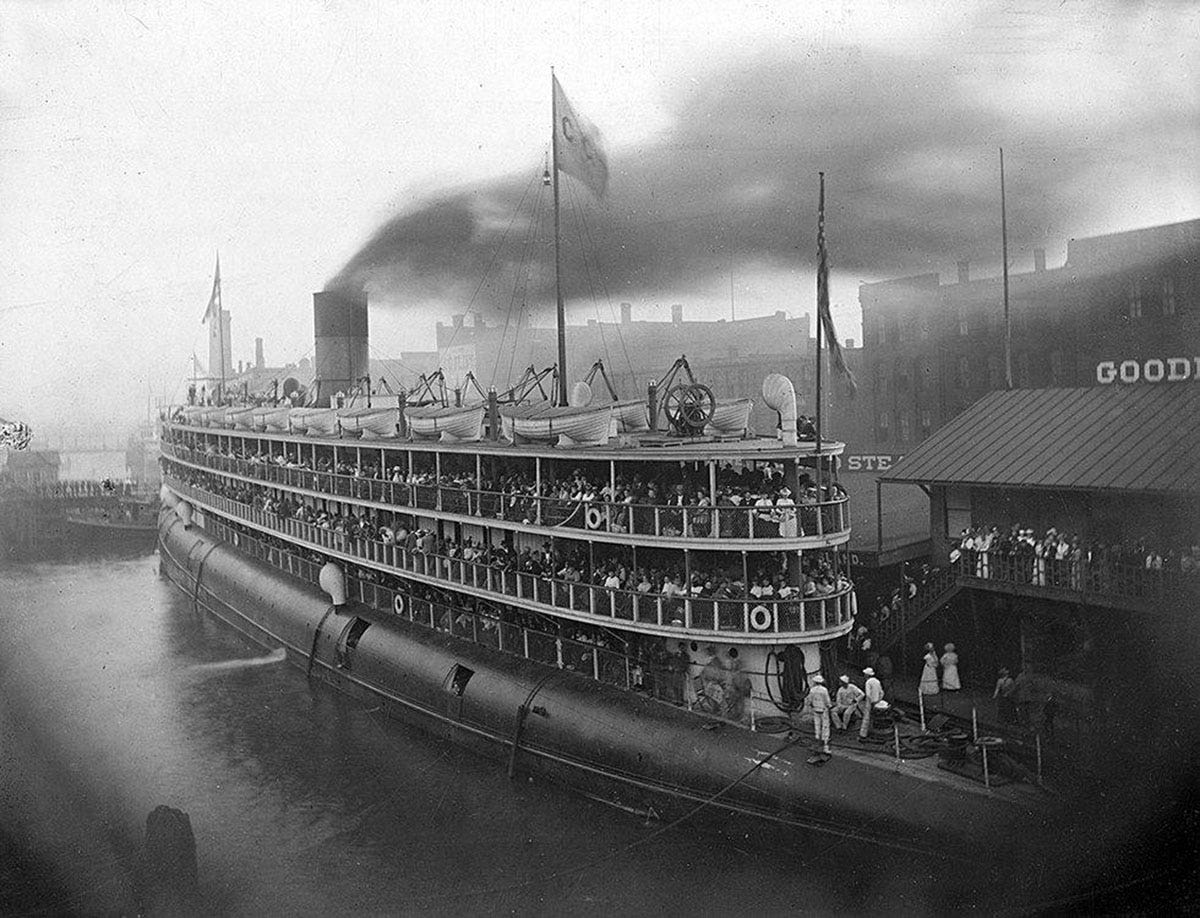
Tugboat work required considerably more than moving vessels between docks. Captains were frequently called upon to assist grounded schooners, rescue sailors and recover damaged vessels.
Moody developed an exceptional reputation for wrecking and lifesaving.
While aboard the tug American Eagle, he jumped overboard to rescue a man who had fallen into the water. During his command of the Welcome, he rescued three fishermen from a capsized boat in a northeast gale. On another occasion, he jumped into the water to save two boys from drowning.
In November 1883, the Welcome assisted the Milwaukee Life-Saving Station in rescuing four men stranded aboard the schooner Guiding Star, which had grounded north of Milwaukee.
Mansfield also credited Moody with helping pull several stranded vessels from a beach near Milwaukee during a single night.
His accomplishments earned him a gold watch recognizing his meritorious service during the 1880 navigation season.
The dangers of wrecking work were personal to Moody. His father drowned in 1883 during a salvage operation involving the brig Lucy J. Clark, which had grounded near Cross Village, Michigan.
The Ludington connection
In 1887, Moody entered the employ of the Flint & Pere Marquette Railway as captain of F&PM No. 2.
The railroad had established cross-lake steamship service between Ludington, Michigan and Wisconsin in 1875. These early vessels transported package freight and passengers, connecting Michigan’s growing railroad system with western Great Lakes ports.
Moody commanded F&PM No. 2 for two seasons before eventually taking charge of a larger addition to the fleet.
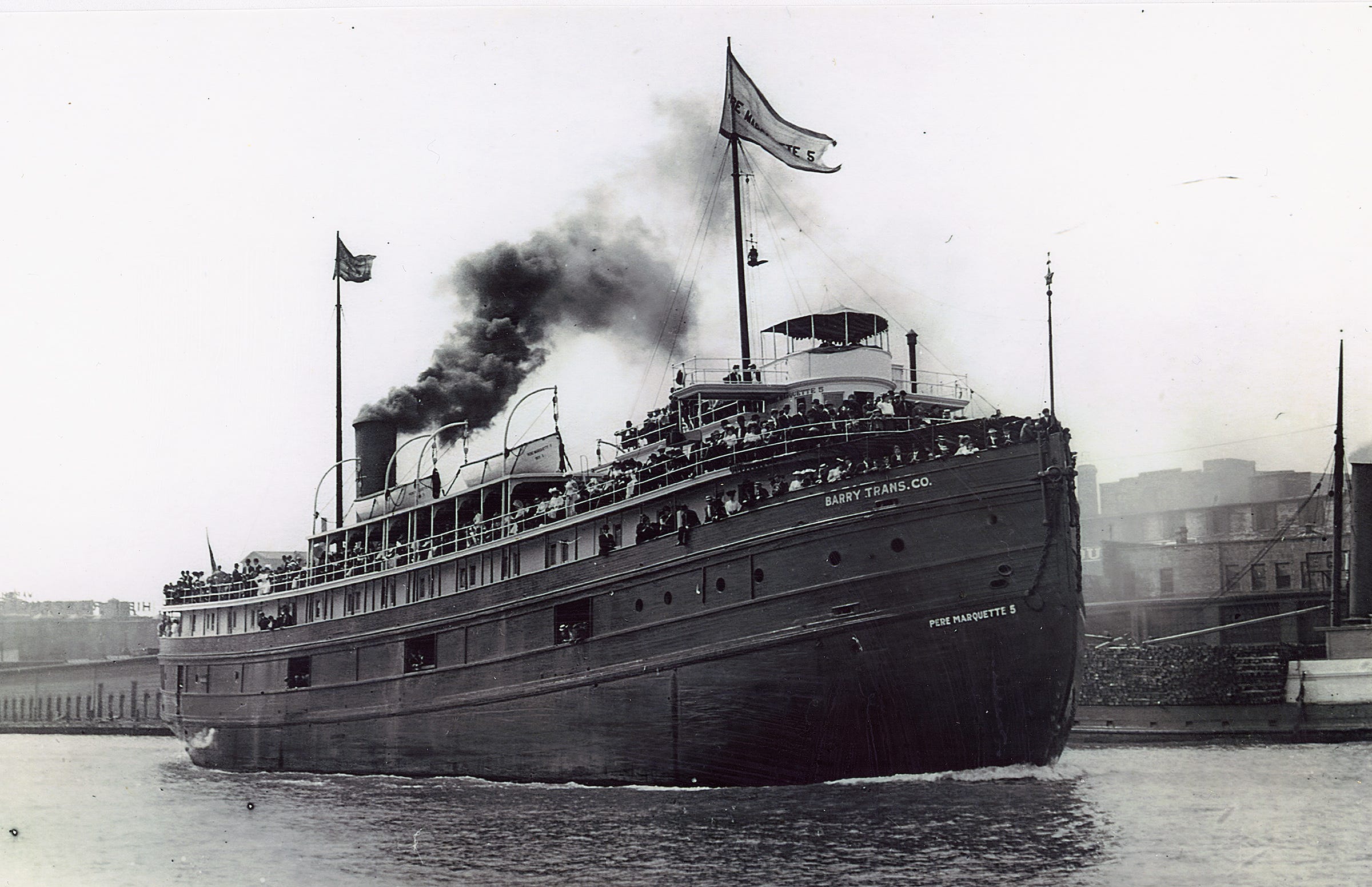
Built in 1890 by F.W. Wheeler & Co. at West Bay City, Michigan, F&PM No. 5 was a wooden package freighter measuring 240 feet, 6 inches long, with a beam of 38 feet and 1,722 gross tons.
Unlike the railroad carferries that would later become synonymous with Ludington, F&PM No. 5 did not carry railroad cars. Her cargo consisted primarily of packaged freight, salt and grain.
Moody brought the new steamer into service.
On her maiden voyage, she transported 10,000 barrels of salt from West Bay City to Chicago. She arrived in Ludington for the first time on Thanksgiving Day, Nov. 27, 1890, with Moody in command.
The vessel subsequently worked on several Great Lakes routes, including grain shipments between Duluth, Minnesota, and Ogdensburg, New York, and salt shipments between Manistee, Michigan, and Chicago.
A history of the Pere Marquette marine department published in the Ludington Record-Appeal on Feb. 4, 1904, reported that Moody remained in command until Jan. 1, 1895.
His years aboard the Ludington steamers connected him with a transportation system undergoing substantial changes. Within a few years, the railroad would introduce vessels capable of carrying loaded freight cars directly across Lake Michigan.
Moody would also gain experience with that new technology.
Following his Flint & Pere Marquette service, he commanded the railroad carferry Ann Arbor No. 1, along with other Great Lakes steamers.
Master of the whalebacks
In 1896, Moody became captain of the steamer Washburn for the Bessemer Steamship Company. The following year he transferred to the John Ericsson, one of the distinctive whaleback vessels developed by Capt. Alexander McDougall.
Whalebacks featured rounded steel hulls designed to allow waves to wash over their decks. Their unconventional appearance, particularly their projecting bows, earned them the nicknames “pigs” and “pig boats” among Great Lakes sailors.
Moody’s experience aboard these vessels continued in 1898 when he took command of the steel steamer Sir Henry Bessemer.
That October, while crossing Lake Superior during a northeast gale, the whaleback barge Alexander Holley broke loose from her tow.
According to Mansfield, Moody made nine unsuccessful attempts to recover the barge before finally securing a line on the tenth attempt. The tow was recovered the following morning.
By the turn of the century, Moody had accumulated experience aboard sailing ships, harbor tugs, railroad steamers, carferries, bulk freighters and whalebacks.
Great Lakes vessel directories preserved by Bowling Green State University’s Historical Collections of the Great Lakes document his subsequent commands aboard the Charles R. Van Hise, Robert W.E. Bunsen and Mataafa.
In 1904, he received the command that would define the remainder of his career.
The Christopher Columbus
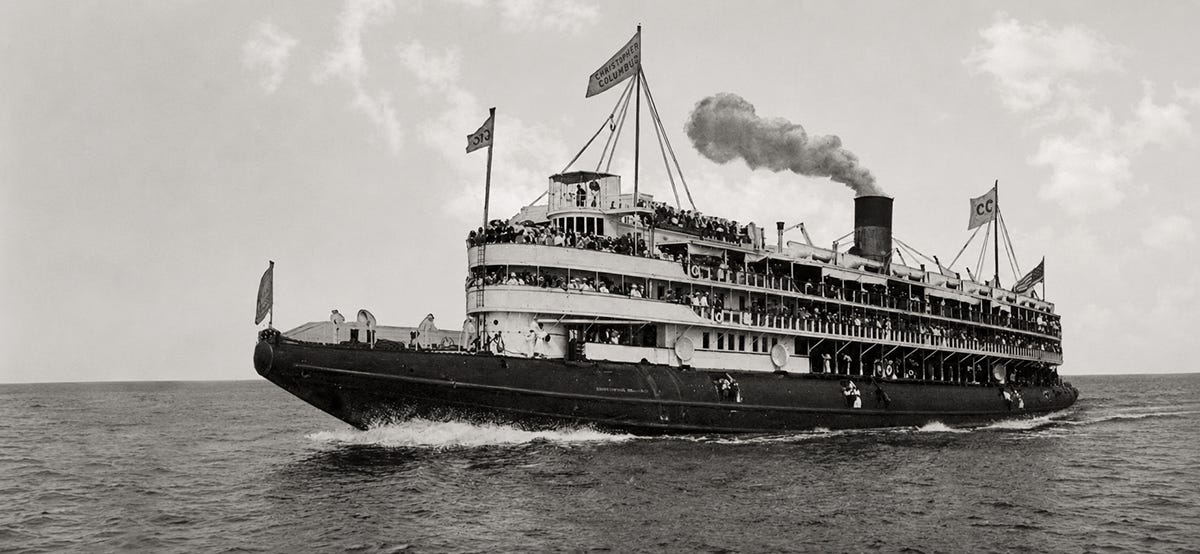
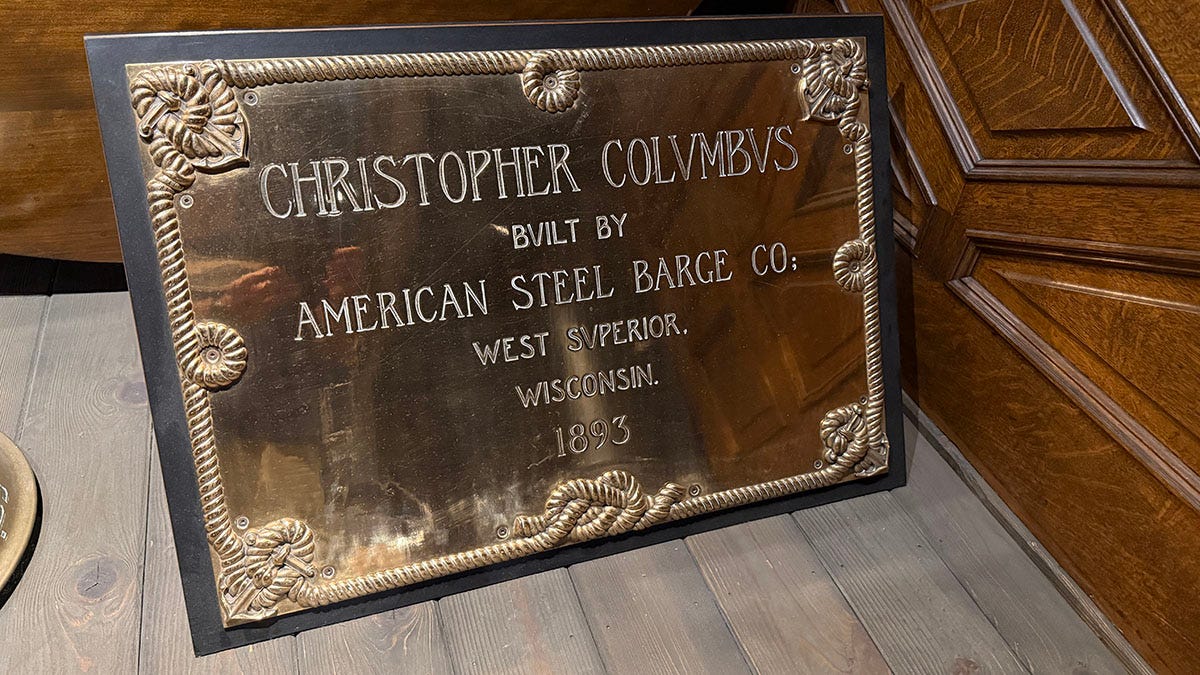
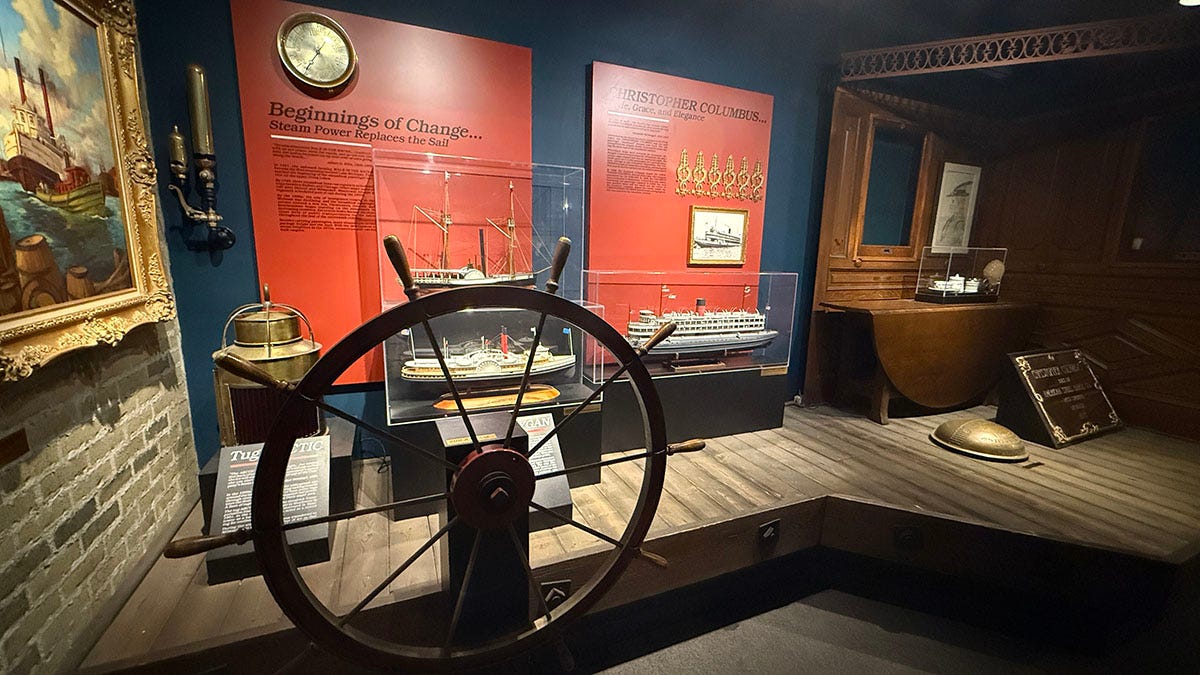
Built at Superior, Wisconsin, in 1892, the Christopher Columbus was the only passenger whaleback ever constructed.
Designed by McDougall and built as hull No. 128, she was intended for passenger service during Chicago’s 1893 World’s Columbian Exposition.
Unlike the utilitarian freight-carrying whalebacks, the Christopher Columbus featured multiple passenger decks and elaborate accommodations.
She eventually entered the Goodrich Transportation Company’s fleet, operating excursions between Milwaukee and Chicago.
Her interiors were remarkably ornate. According to Moody’s great-granddaughter, Marjorie Timian, writing in the 1981 maritime publication “Soundings,” the vessel featured crystal chandeliers, red carpeting, inlaid mahogany, stained-glass skylights and soda fountains decorated with Italian marble. An aquarium stocked with trout was another attraction.
The enormous steamer could carry thousands of passengers. Excursions aboard the unusual vessel became a popular Lake Michigan attraction.
Moody was particularly well suited to command her.
He understood the handling characteristics of whalebacks and possessed decades of experience navigating Milwaukee’s confined harbor and river.
He became known for personally handling the wheel when entering or leaving port.
His confidence and willingness to move the large steamer briskly through the Milwaukee River did not always please crews aboard other vessels.
An anonymous poem, “The Passenger Hog,” later reproduced in James L. Elliott’s “Red Stacks Over the Horizon: The Story of the Goodrich Steamboat Line,” humorously criticized the wake created by the big whaleback as she passed other ships along the waterfront.
The poem also played upon the vessel’s nickname as a “pig boat.”
Tragedy on the Milwaukee River
Moody’s long command of the Christopher Columbus included one particularly tragic episode.
On June 30, 1917, the steamer was preparing to depart Milwaukee with 413 passengers, including approximately 200 University of Chicago students.
Heavy rains had swollen the Milwaukee River, creating a powerful current.
As assisting tugs maneuvered the enormous whaleback away from her dock, the current carried her toward a nearby structure.
Moody ordered the wheel hard to starboard and the engines full astern, but the vessel struck supports beneath a large elevated water tank.
The tank and its supporting structure collapsed onto the steamer’s forward decks, sending wreckage and water across the vessel.
Sixteen people were killed and more than 20 seriously injured, according to Elliott’s detailed account. Some other historical sources report 18 deaths.
Moody suffered a minor leg injury.
Investigators examined the circumstances surrounding the disaster. Although the unusually strong current was considered a major contributing factor and criminal negligence was not established, steamboat inspectors concluded that additional caution by the vessel masters might have prevented the accident.
The Christopher Columbus was taken to Manitowoc, Wisconsin, for repairs and remained out of service for the rest of the season.
She returned in 1918.
Moody returned to her pilothouse.
Twenty-six seasons in command
Moody continued commanding the Christopher Columbus throughout the 1920s.
Elliott estimated that during Moody’s 26 seasons aboard her, the vessel carried more than 2.6 million passengers. The 1917 disaster was the only incident during those years in which passengers lost their lives aboard the ship.
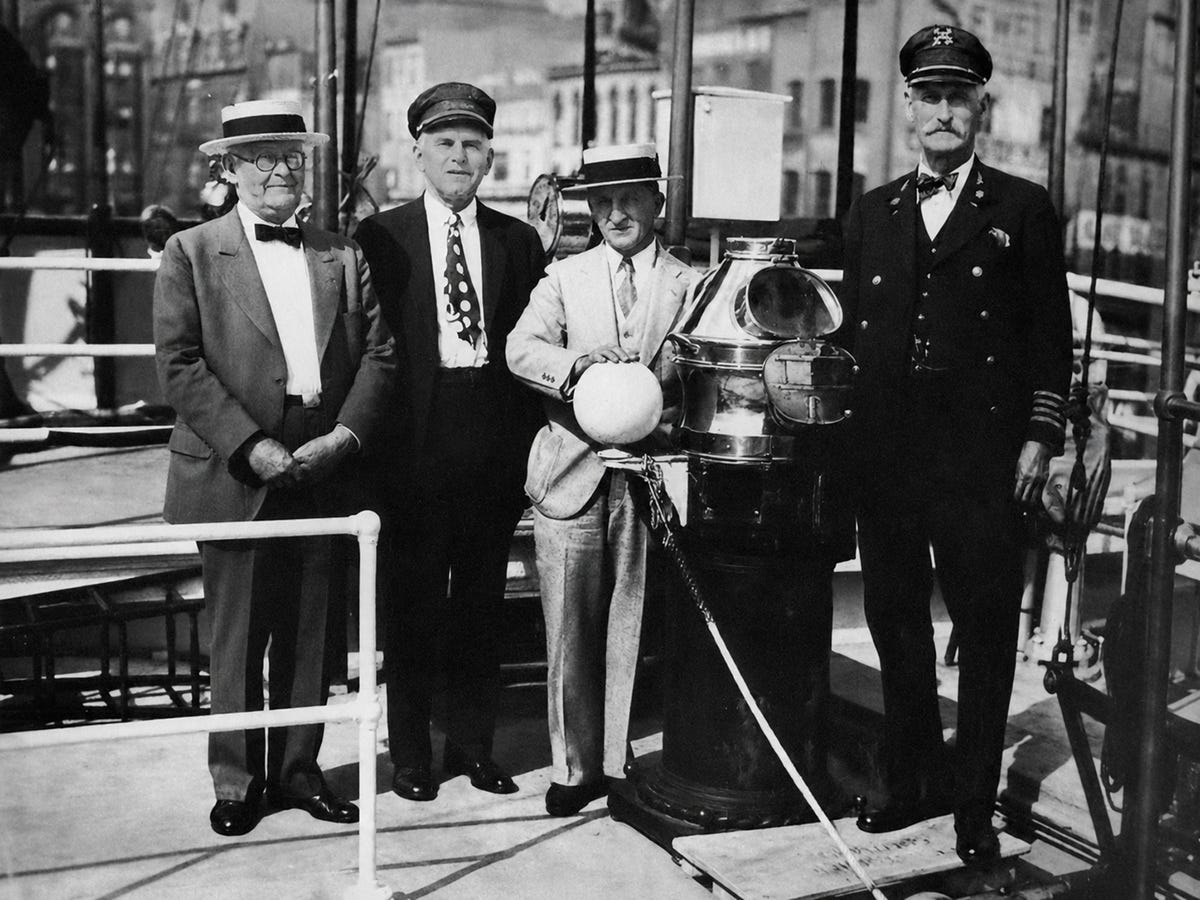
Moody retired March 1, 1930, at age 79, ending a maritime career that had begun 66 years earlier.
Goodrich recognized his service with a formal certificate of appreciation dated April 1, 1930, commending his work and the responsibility he had carried for hundreds of thousands of passengers.
Retirement did not entirely separate Moody from the waterfront. Newspaper accounts described him returning to visit the Christopher Columbus and spending time with her succeeding captain.
His great-granddaughter remembered him as an engaging storyteller, particularly popular with children who enjoyed hearing about his experiences aboard Great Lakes vessels.
Moody’s wife, Rose Rouch Moody, whom he married in 1881, died in 1934. The couple had four children: Florence, Olive, Hazel and Henry. Olive and Hazel died during childhood.
The Christopher Columbus made her final voyages in 1932. After several years out of service, she was dismantled for scrap.
Moody outlived the unusual vessel he had commanded for more than a quarter century.
He died in Milwaukee in February 1944 at age 93 and was buried beside Rose in Forest Home Cemetery.
His career had encompassed an extraordinary transformation in Great Lakes shipping, from the age of commercial sailing vessels to steel steamships and railroad carferries.
For Ludington’s maritime history, his years aboard F&PM No. 2 and F&PM No. 5 provide an important connection to the years before railroad carferries dominated the cross-lake trade.
For the broader Great Lakes maritime community, Moody remains closely associated with the Christopher Columbus, the extraordinary passenger whaleback that became a Lake Michigan landmark.
Few captains experienced as many different forms of Great Lakes transportation or spent so many years navigating its waters.
Historical sources for this article include J.B. Mansfield’s “History of the Great Lakes” (1899); James L. Elliott’s “Red Stacks Over the Horizon” (1967); Marjorie Timian’s “My Great-Grandfather, Captain Moody and His Ship, the Christopher Columbus” (1981); the Historical Collections of the Great Lakes at Bowling Green State University; the Milwaukee Public Library’s Great Lakes Marine Collection; and historical accounts published in the Ludington Record-Appeal and Ludington Daily News.
This article is adapted from Rob Alway’s research for “Masters of the Ludington Steamers: The Captains, Engineers and Others Who Powered a Great Lakes Tradition.”
Help support this Substack page and check out our merchandise store.
This story is copyrighted 2026 by Sable Points Media.