

By Rob Alway
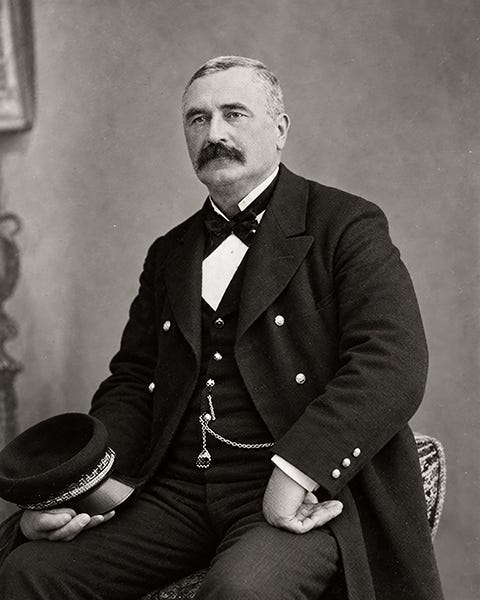
During the early morning of Sept. 9, 1910, Capt. John Joseph “Joe” Russell received an urgent message aboard the railroad carferry Pere Marquette 17 in Milwaukee, Wisconsin. Another vessel in the fleet, Pere Marquette 18, was taking on water in Lake Michigan and calling for help.
Russell immediately got his ship underway. By approximately 6:30 a.m., he had reached the disabled ferry some 20 miles east of Sheboygan, Wisconsin. Heavy seas made the rescue dangerous, and the stricken vessel was settling lower in the water. Russell attempted to bring the two ships together, but winds and waves prevented a safe transfer of passengers and crew.
Before he could complete a second approach, Pere Marquette 18 sank. Russell and the crew of Pere Marquette 17 launched their lifeboats and began pulling survivors from the lake. Their efforts saved dozens of people, although two members of the rescue party died when one of their own lifeboats was smashed against the ship.
Twenty-seven people died in the disaster, including Pere Marquette 18‘s master, Capt. Peter Kilty (1860–1910). Russell’s response helped prevent an even greater loss of life. It became the defining event of a career that had already carried him from wooden sailing vessels to some of the most advanced steamships on the Great Lakes.
A sailor before the age of carferries
Russell was born in Wisconsin in October 1853, the son of Irish immigrants George and Mary Russell. Accounts differ on whether his birthplace was Greenfield, near Milwaukee, or Rock County, but census records agree on his birth state and month.
He began his maritime career aboard the schooner Clipper City, a celebrated Great Lakes sailing vessel built at Manitowoc, Wisconsin, in 1854 by shipbuilder William W. Bates. Russell worked in the grain and lumber trades and gained experience aboard canal boats before entering steamship service.
In 1873, he became a mate with the Englemann Transportation Company, which connected Milwaukee with Michigan ports. His first assignment was aboard the wooden propeller Ironsides. On Sept. 10, he was transferred to another vessel. Four days later, Ironsides encountered a violent gale while bound from Milwaukee to Grand Haven, Michigan. After an unsuccessful attempt to enter the Grand River, Capt. Harry Sweetman anchored offshore. The vessel foundered, and three lifeboats overturned in the heavy seas. Twenty-one people died. Russell had left the ship only days before.
He continued with Englemann aboard Manistee during summers and Messenger during winters. Later assignments included Minneapolis, City of Duluth and City of Fremont. His work gave him experience on numerous routes and in the difficult conditions of winter navigation.
Russell eventually joined the Goodrich Transportation Company, one of Lake Michigan’s major passenger and freight operators. There he served aboard Michigan and Wisconsin, near-identical propellers designed by naval architect Frank E. Kirby and built in 1881 by the Detroit Dry Dock Company. The ships helped connect Ludington, Michigan, and Milwaukee at a time when railroads depended on lake steamers to move freight between their lines.
As first mate of Michigan in the winter of 1885, Russell experienced another maritime disaster. The ship became trapped in heavy ice and drifted for weeks until ice pressure opened her hull. Russell and the other crew members escaped before the steamer sank. He later commanded Wisconsin.
Building the Ludington fleet
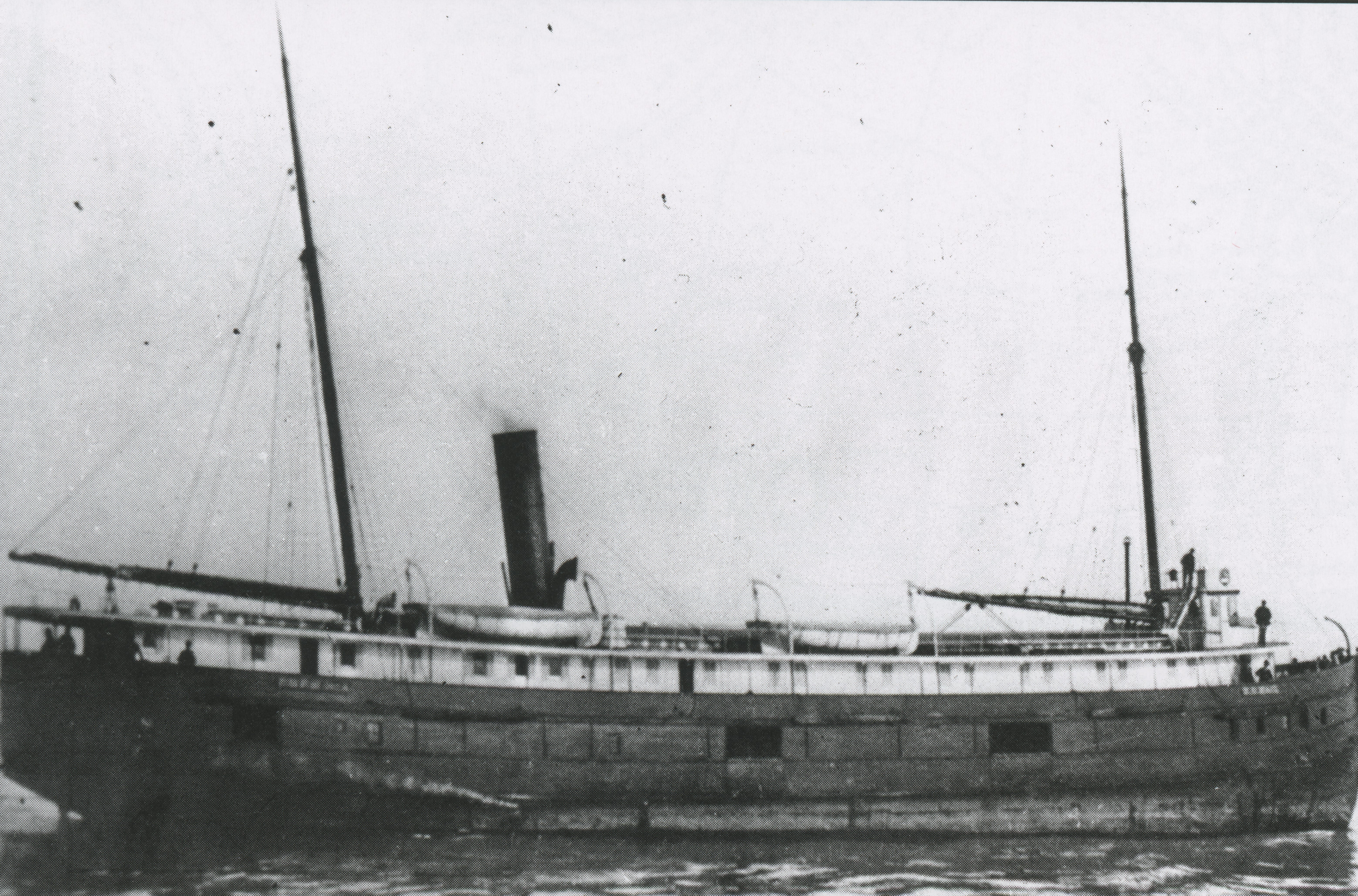
In 1886, Russell entered the marine department of the Flint & Pere Marquette Railroad as first mate aboard F&PM No. 2, under Capt. John W. Duddleson (1846–1927). The railroad had reached Ludington in 1875 and initially relied on private carriers, including Goodrich Transportation Co., for its Lake Michigan service. By 1882, however, it had begun building its own fleet to exercise greater control over freight schedules and connections.
Duddleson left F&PM No. 2 in 1887 to oversee construction of another steamer. Capt. John W. Stewart (1847–1918) succeeded him, with Russell remaining as first mate. In 1888, Russell assumed command of F&PM No. 2. The following year he took command of F&PM No. 4, remaining associated with the freight steamer for more than a decade.
Those vessels transported merchandise across Lake Michigan, but moving railroad freight remained labor-intensive. Workers unloaded cargo from freight cars, transferred it onto ships and then reversed the process upon arrival. The development of railroad carferries offered a more efficient solution: roll entire loaded freight cars aboard a vessel and carry them across the lake without handling the contents.
The Ann Arbor Railroad began wooden carferry service between Frankfort, Michigan, and Kewaunee, Wisconsin, in 1892. The Flint & Pere Marquette followed with a much larger steel vessel, Pere Marquette, designed by Robert Logan and constructed by F.W. Wheeler & Co. at West Bay City, Michigan.
The 337-foot carferry had a steel hull, twin engines and four Scotch boilers. Russell was given command for her first voyage. On the evening of Feb. 16, 1897, he departed Ludington for Manitowoc with 22 loaded freight cars and the private railroad car of General Manager Samuel T. Crapo aboard. The successful crossing marked the beginning of a new era for the railroad’s marine operation.
Russell later relinquished command to Capt. Frank A. Dority (1865–1938), but he had earned a distinction that would remain part of his record: first master of Ludington’s first steel railroad carferry.
At the helm of Pere Marquette 17
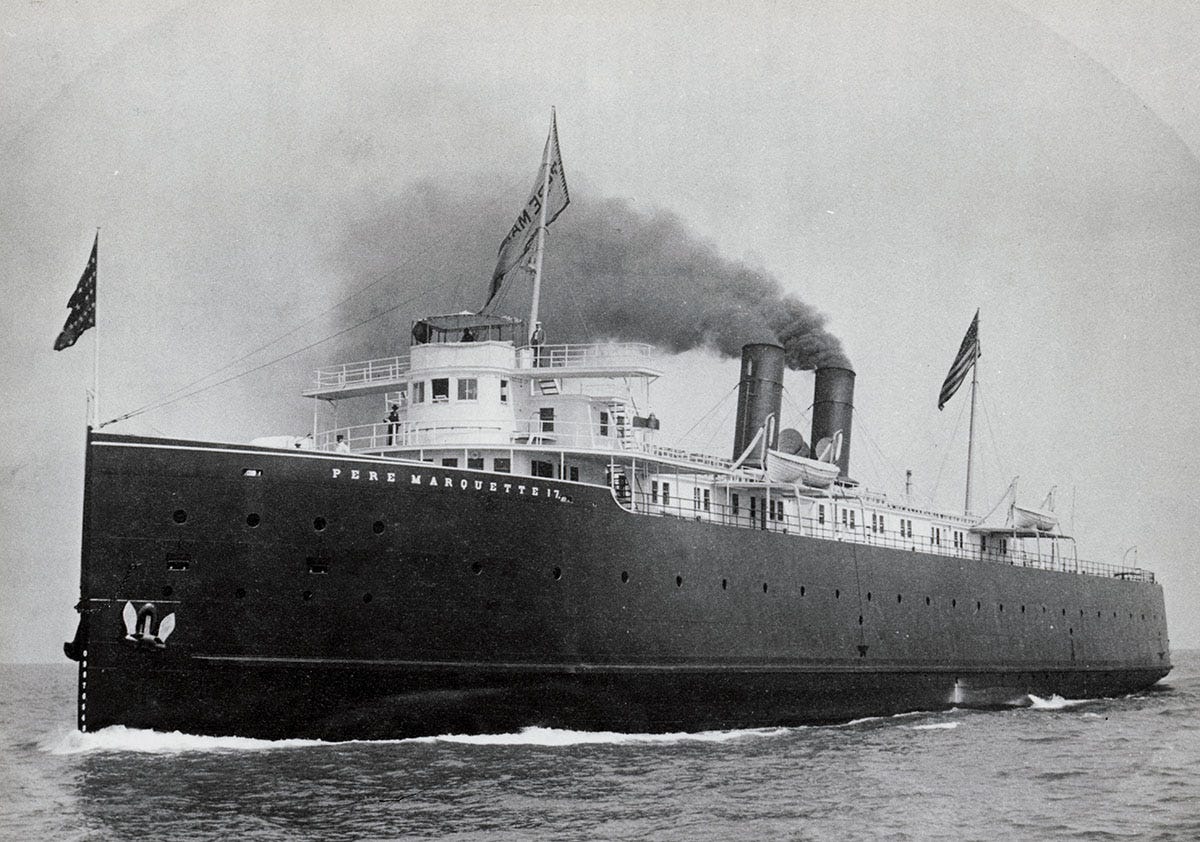
The creation of the Pere Marquette Railway in 1900 brought another expansion of the fleet. Under Superintendent of Steamships William L. Mercereau, the railway ordered four larger carferries. Among them was Pere Marquette 17, built in 1901 at Cleveland, Ohio, by the American Ship Building Company.
Also designed by Logan, Pere Marquette 17 measured 338 feet long and could carry 30 standard freight cars on four tracks. Passenger accommodations included staterooms for approximately 300 travelers. The steel hull was heavily reinforced for winter service, when ice could make even familiar Lake Michigan crossings hazardous.
Kilty was the ferry’s first master. Russell succeeded him in 1902, when Kilty moved to the newly completed Pere Marquette 18. Russell’s experience with freight steamers, winter ice and the original Pere Marquette made him a natural choice.
A February 1904 profile in the Ludington Record-Appeal described Russell as “preeminently a safe navigator,” praising his combination of “cool judgment and extreme caution.” His reputation was not based on an absence of danger. In January 1909, Pere Marquette 17 grounded on a sandbar near Big Point Sable during severe winter weather. Russell remained aboard as winds and ice delayed salvage crews, and the ship was eventually freed.
Russell’s personal life remained rooted in Milwaukee. He had married Mary LeFleur (1856–1939) in 1876, and the couple raised four children: Annie May, Frank, Frederick and Lillian. Mary’s younger brother, Capt. William H. LeFleur (1870–1926), also became a master of Pere Marquette carferries. Russell spent much of each navigation season on the lake, but the family’s home remained in Milwaukee, where city directories placed them for years on Greenfield Avenue.
The call from Pere Marquette 18
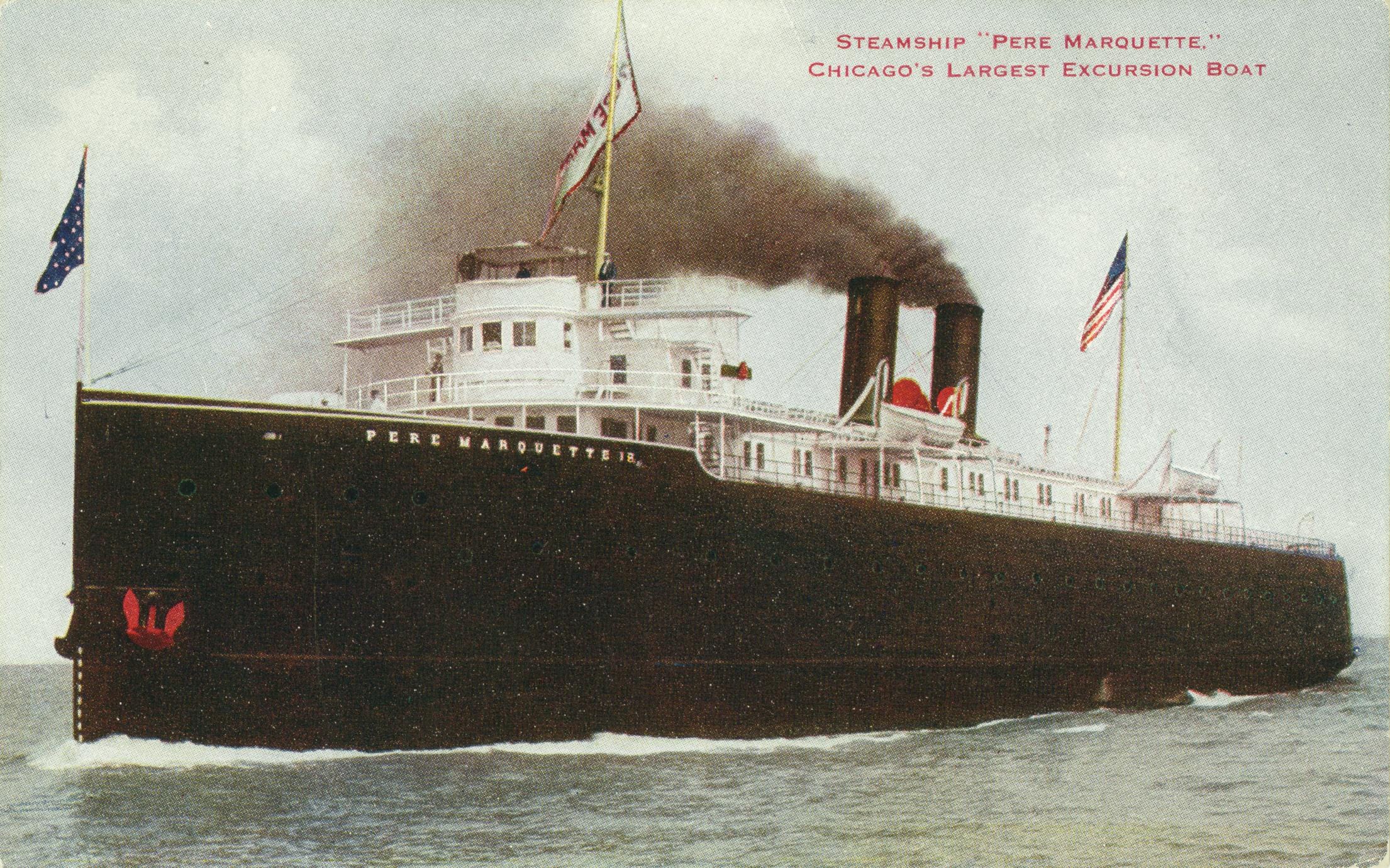
On Sept. 9, 1910, Pere Marquette 18 was en route from Ludington to Milwaukee when water began entering the vessel. At about 4:15 a.m., Purser Stephen F. Sczepanek (1878–1910) began sending the wireless distress signal “CQD,” commonly used before SOS became the international standard. One urgent message called repeatedly for Pere Marquette 17 to help.
Mercereau had long tried to keep carferries within reach of one another during cross-lake operations. That policy placed Russell close enough to respond, and he brought Pere Marquette 17 to the scene about two hours after the first wireless calls.
At 7:15 a.m., Russell attempted to come alongside the starboard side of the sinking ferry. The seas would not permit the vessels to be secured together. He pulled away and prepared to approach from the port side, but before he could complete the maneuver, Pere Marquette 18 lurched and disappeared beneath the waves.
The crew of Pere Marquette 17 launched boats into rough water and worked to recover survivors. Some of those rescued had been pulled beneath the surface as the sinking ferry went down, only to rise again. The rescue was itself deadly: two sailors from Pere Marquette 17 died when a lifeboat was crushed against the ship. Still, Russell’s crew continued until they had recovered dozens from the lake.
The sinking remains the greatest loss of life in the Ludington-based Pere Marquette carferry fleet. Kilty and 26 others died. Russell could not save the ship, but his quick departure, careful maneuvering and the determination of his crew kept the toll from becoming higher.
His final command
The railway replaced the lost ferry with a second vessel bearing the name Pere Marquette 18. Built at South Chicago, Illinois, she entered service in January 1911. Russell assumed command on Jan. 26, bringing his career full circle: the captain who had responded to the first Pere Marquette 18‘s distress calls now took charge of her successor.
By 1913, his health was failing. Physicians urged him to remain ashore after an operation, but he returned to his vessel. Following his death, The Ludington Chronicle observed that “life ashore was not worth living in his estimation,” and that he continued serving until he could no longer summon the strength to take his ship into port.
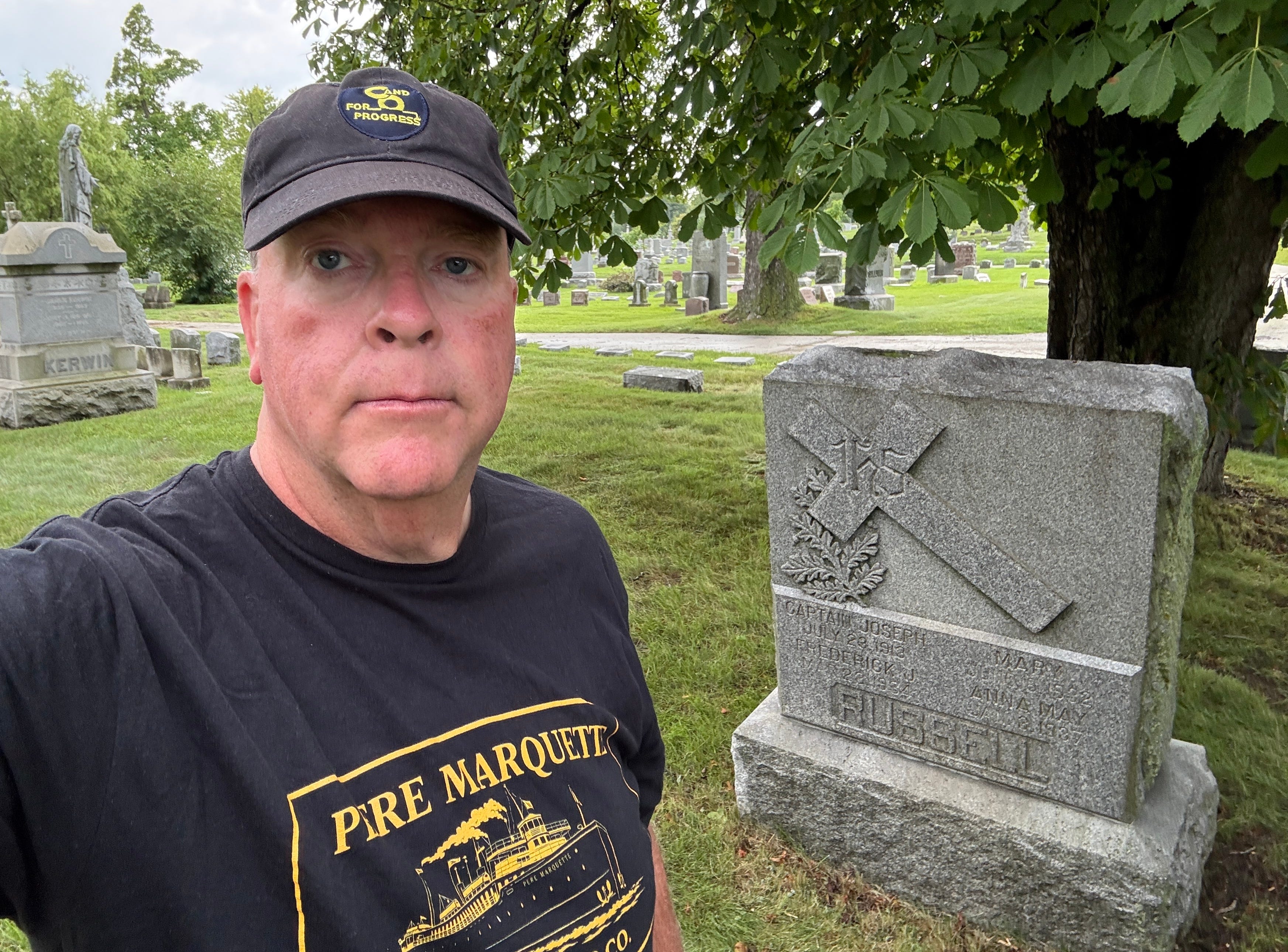
Russell died July 23, 1913, at Hanover Hospital in Milwaukee. He was buried in the city’s Calvary Cemetery. Mary survived him until 1939.
His career spanned an extraordinary transition in Great Lakes transportation: from the canvas and wooden hull of Clipper City, through the Goodrich propellers, to steel carferries able to carry entire trains across Lake Michigan. But the morning of Sept. 9, 1910, stands apart. Russell and his crew went to the aid of another ship in dangerous seas, and dozens of people lived because they did.
Sources: This article draws on contemporary reports in the Ludington Record-Appeal, The Ludington Chronicle, Grand Haven Daily Tribune and Ludington Daily News; Rose D. Hawley’s 1958 interview with survivor George Harwood; George W. Hilton’s The Great Lakes Car Ferries; records at Bowling Green State University’s Historical Collections of the Great Lakes; and census, marriage and cemetery records.
This article is adapted from Rob Alway’s research for “Masters of the Ludington Steamers: The Captains, Engineers and Others Who Powered a Great Lakes Tradition.”