

By Rob Alway
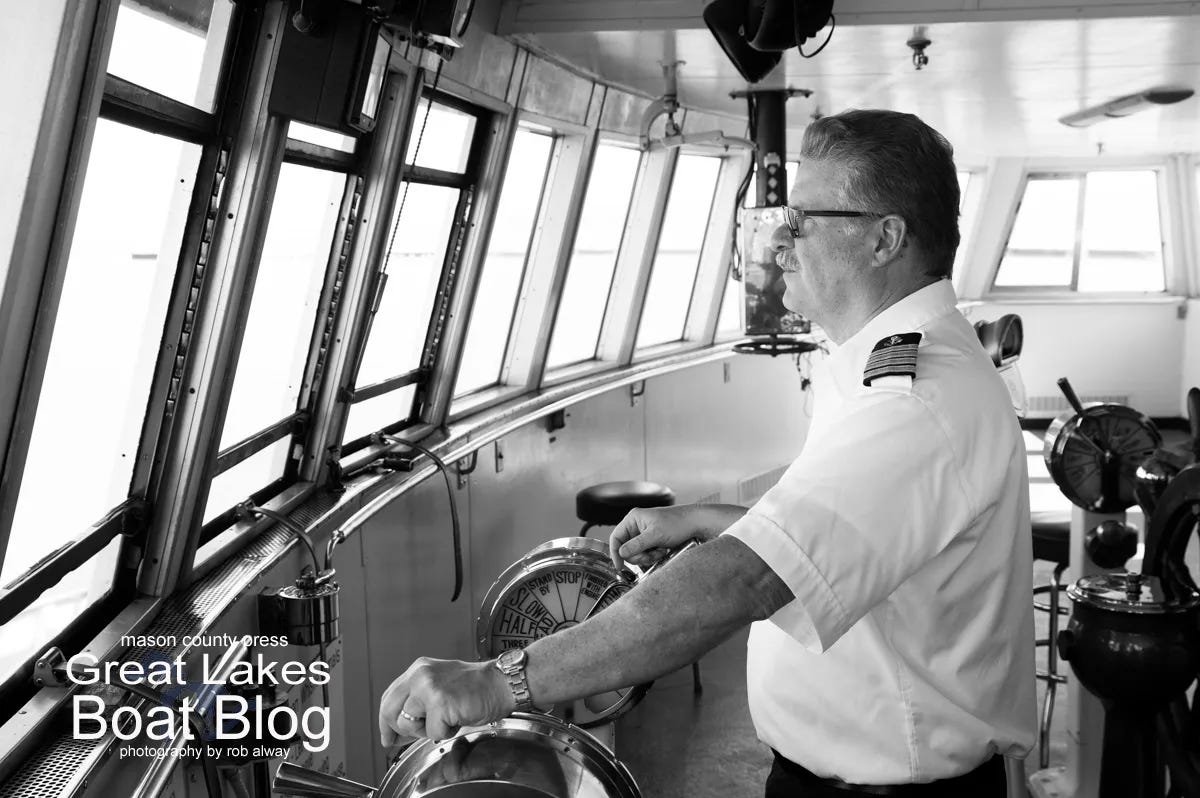
LUDINGTON — Bernard “Bunny” Robertson, Bjoruin “Lindy” Johnson, Ernest Barth, John Bissell, Bruce Masse, Gregg Andersen, Dean Hobbs and Kevin Fitch are among the men who have served as masters of the S.S. Badger, the last of a long line of car ferries based out of Ludington.
In 2023, another captain joined that list: Ed Wiltse.
While Capt. Wiltse may seem relatively new to the Badger, his relationship with Lake Michigan Carferry goes back to 1996. His first stint aboard the ship lasted only one season, but the job that followed would help shape the future of the company and preserve another important piece of Ludington’s car ferry legacy.
“Ed Wiltse is a perfect example of a ship’s captain,” said Chuck Leonard, general manager of Lake Michigan Carferry and Interlake Logistical Solutions. “He is a high-quality boat operator and also knows the value of treating the crew and visitors with dignity and respect. I’m also proud to call him my friend.”
Wiltse’s maritime career began after he graduated from Portage High School in Portage, Ind., in 1983 and enrolled at the Great Lakes Maritime Academy in Traverse City.
“I didn’t want an office job,” he said. “I wanted to work outside, in nature. I just didn’t want to spend my life working behind a desk and working for the weekend. I decided to go into the maritime industry. I had always been interested in ships and maritime history.”
He met his wife, a Traverse City native, while attending the academy.
Following three years at the academy, he earned a license as a Great Lakes mate and first-class pilot. The program now takes four years. A week after graduating, he was offered a job.
“Great Lakes shipping had really suffered in the early ’80s,” he said, referring to a downturn in the American steel industry. “When I graduated, it still wasn’t that great. But I was offered a job on the Armco.”
The M/V Armco was built in 1953 by American Shipbuilding Co. in Lorain, Ohio, for the Columbia Transportation Division of the Oglebay Norton Company of Cleveland, Ohio, the same company that operated the Edmund Fitzgerald. The 647-foot ship is now called the American Valor and is currently laid up at Toledo.
Wiltse worked aboard the Armco as a relief mate until the end of 1987. He then began working for Inland Steel Co. of East Chicago, Ind., aboard the 730-foot M/V Edward L. Ryerson, built in 1960. There, he served as a full-time mate.
He eventually moved ashore as assistant to the fleet manager and spent a total of eight years with Inland Steel.
“My wife and I decided that we wanted to move back to the Traverse City area to raise our daughter,” he said. “Plus, that’s where my wife was from.”
In 1996, Wiltse was hired by Lake Michigan Carferry to serve as a mate and eventual captain aboard the Badger.
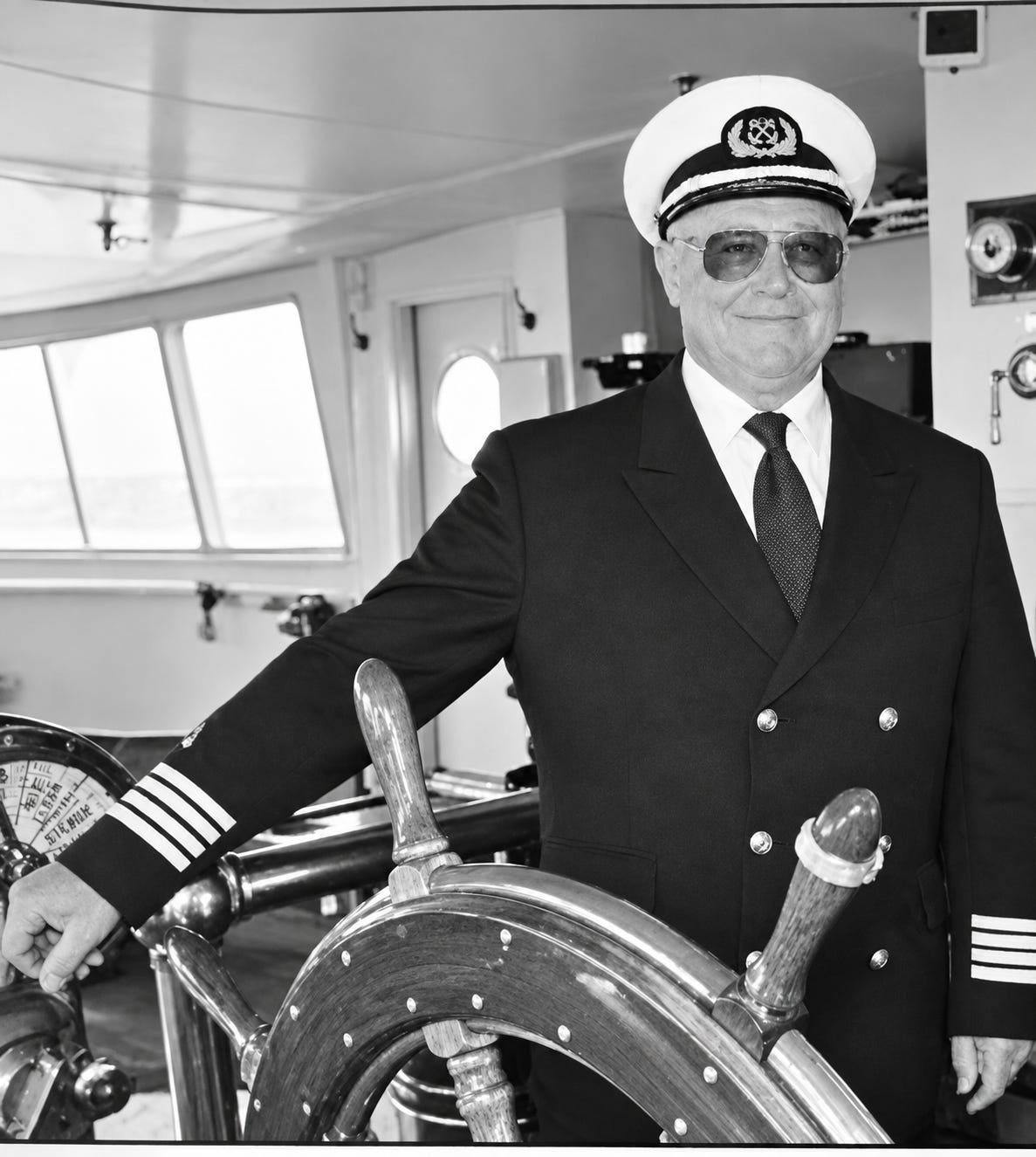
“Capt. Bruce Masse was getting ready to retire, for the second time,” he said. “So, I was hired to eventually replace him.”
Wiltse did skipper the Badger as a relief captain during the 1996 season, but his career soon took a different turn.
Lake Michigan Carferry President Bob Manglitz asked Wiltse to find an alternative to scrapping the beloved S.S. City of Midland 41.
The City of Midland 41 had been built at Manitowoc Shipbuilding Co. in Manitowoc, Wis., in 1941. She was the last car ferry built for the Pere Marquette Railway, which was later merged into the C&O Railway.
Along with the Badger and Spartan, she was purchased in 1983 by Ludington-based Michigan-Wisconsin Transportation Co. and operated as the company’s primary vessel, transporting mainly rail cars between Ludington and Kewaunee.
In 1987, U.S. Coast Guard inspections showed that the 41’s boiler mounts had deteriorated and needed replacement. The repairs were waived for a year, but in 1988 M-WT decided to lay her up and use the 410-foot Badger instead.
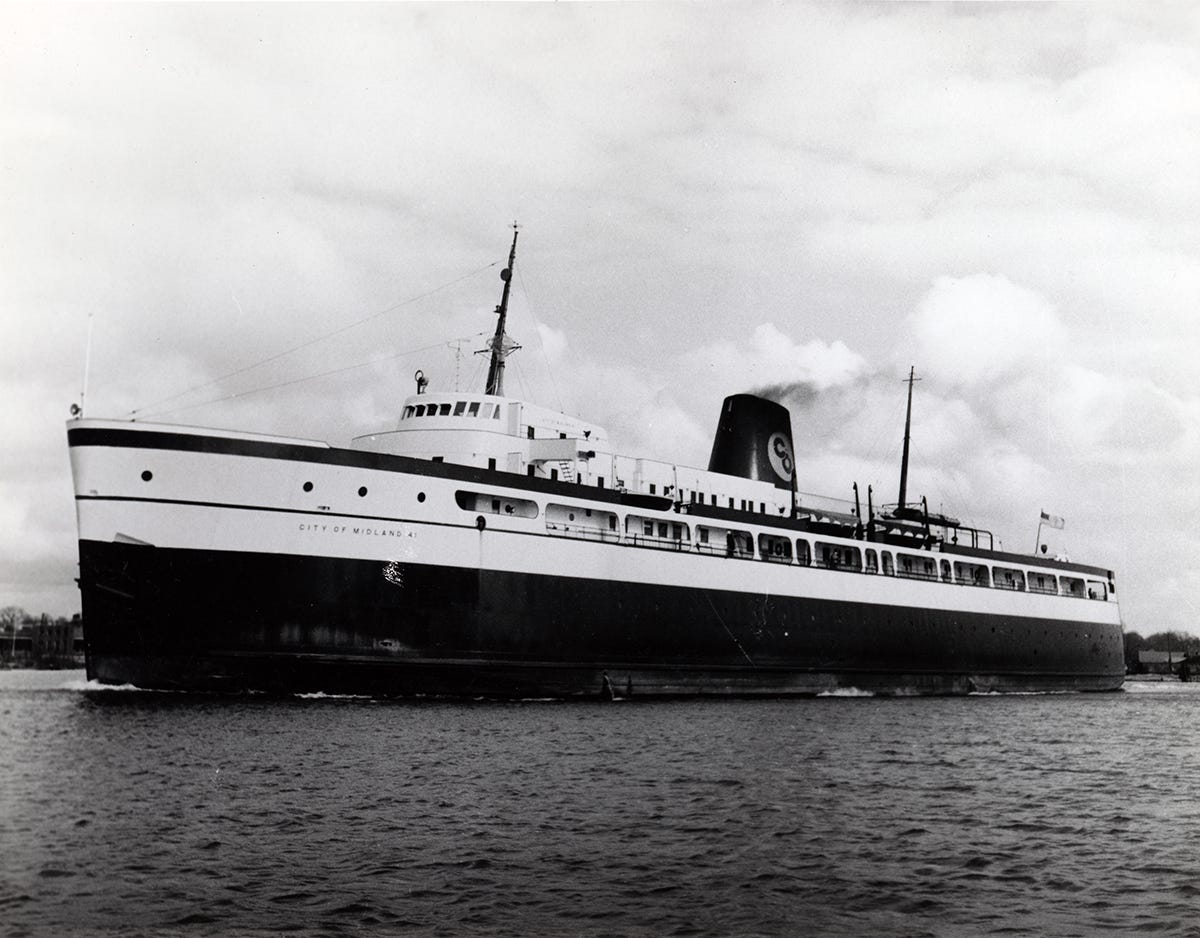
The three vessels were purchased in 1991 by retired Holland businessman Charles Conrad, a Ludington native, with the formation of Lake Michigan Carferry. The Badger remained the company’s flagship, while the Spartan and City of Midland 41 stayed moored. The Spartan was preserved in part because she was nearly identical to the Badger and could serve as a source of parts.
“In the winter of 1996, we came up with the idea of converting the 41 into a barge,” Wiltse said. “There was a need for a bulk ship to handle materials that the larger self-unloaders couldn’t handle, a niche market for a vessel.”
The concept was to convert the City of Midland 41 into a barge and pair it with a tug, creating an articulated tug-barge operation.
After financing was secured, the 41 was towed from Ludington harbor to Muskegon on Oct. 1, 1997, where her superstructure was reduced and she was renamed Pere Marquette 41.
Wiltse was then tasked with finding a tug.
He located the M/T Undaunted in Escanaba, a 133-foot tug built in 1943 for the U.S. Navy. The vessel, then known as ATA-199, had been assigned to the Pacific Theater during World War II. By 1993, it was owned by Basic Marine Inc. of Escanaba and was named Krystal K.
The name Undaunted honored the name the tug had carried while serving in the naval reserve fleet and, briefly, for the National Oceanic and Atmospheric Administration.
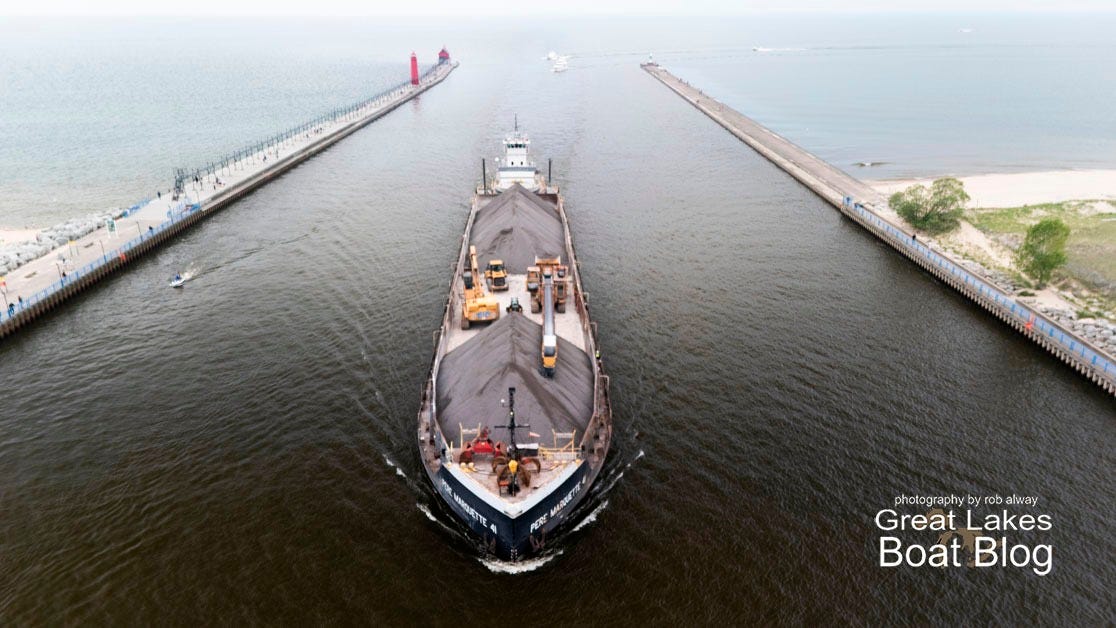
In 1998, Pere Marquette Shipping began operating the tug-barge combination, with Wiltse serving as executive vice president and chief operating officer. The new company created an additional revenue stream for the car ferry operation.
Today, that company is known as Interlake Logistics Solutions and, like the Badger, is owned by Interlake Maritime Services of Middleburg Heights, Ohio.
One of Wiltse’s assistants at Pere Marquette Shipping was Chuck Leonard, who is now his boss.
“When I left Pere Marquette Shipping in 2001, Chuck took over the operation and continues in that capacity today,” Wiltse said. “This summer he was also assigned the duties of general manager of Lake Michigan Carferry. I am honored to serve under Chuck’s leadership, which has helped solidify that both operations will be successful for years to come.”
Like many mariners, Wiltse eventually found himself drawn back to the water.
“My career seems to alternate between sailing positions and working ashore,” he said with a chuckle.
He next became a captain for Grand River Navigation, a division of Rand Logistics Inc. of Jersey City, N.J. He later moved ashore again as fleet captain, but only after arranging to remain based in northern Michigan.
“I said I wouldn’t work in Ohio,” he said. “I needed to stay in Traverse City. That’s one thing that has been a priority to me throughout my career, being in a place where I could be with my family, living a lifestyle that we enjoy and cherish. That has been more important to me.”
Following a five-year career at Grand River Navigation, Wiltse joined Port City Marine Services in Muskegon, where he served as president. He later became vice president of operations for VanEnkevort Tug & Barge Inc. in Escanaba.
Eventually, the sea came calling again, as did the Badger.
The ship he had once been hired to captain had remained part of the arc of his career, even as his work took him elsewhere. In 2023, nearly three decades after first joining Lake Michigan Carferry, he was offered the opportunity to become one of the Badger’s two captains.
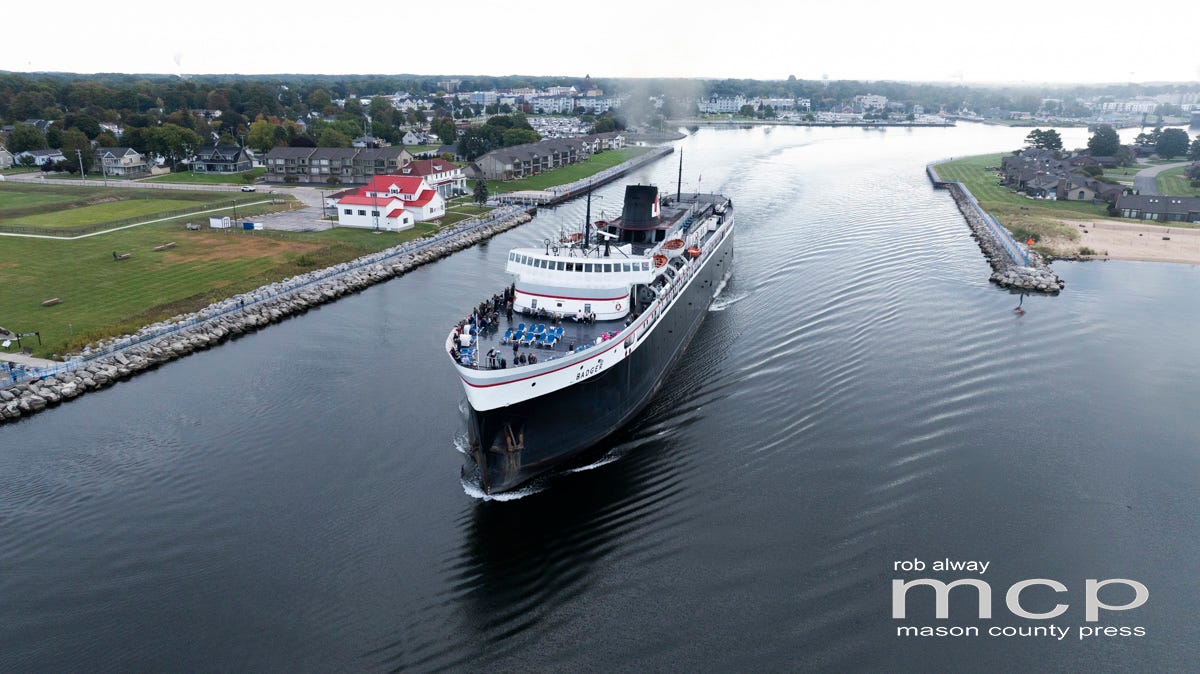
“It’s kind of funny that it took that long for me to finally become captain of the Badger,” Wiltse said. “But this is where I want to spend the rest of my career: on the water, captain of this incredible, historic steamship. The Badger is so unique. There is nothing else like her around. Operating the Badger is not like sailing on a laker.
“She is historically significant. I’ve always been a history buff, and being a part of a sailing history that began in the 1890s is just a true honor. Her Skinner Unaflow reciprocating engines are the only ones I am aware of that are still in operation. I am just really proud of what I do and am happy to finish my career here.
“My hope is that when I leave, the Badger’s legacy is even stronger than when I began back in the ’90s. I think under the current leadership and owners, that is a sure thing.”