


By Rob Alway
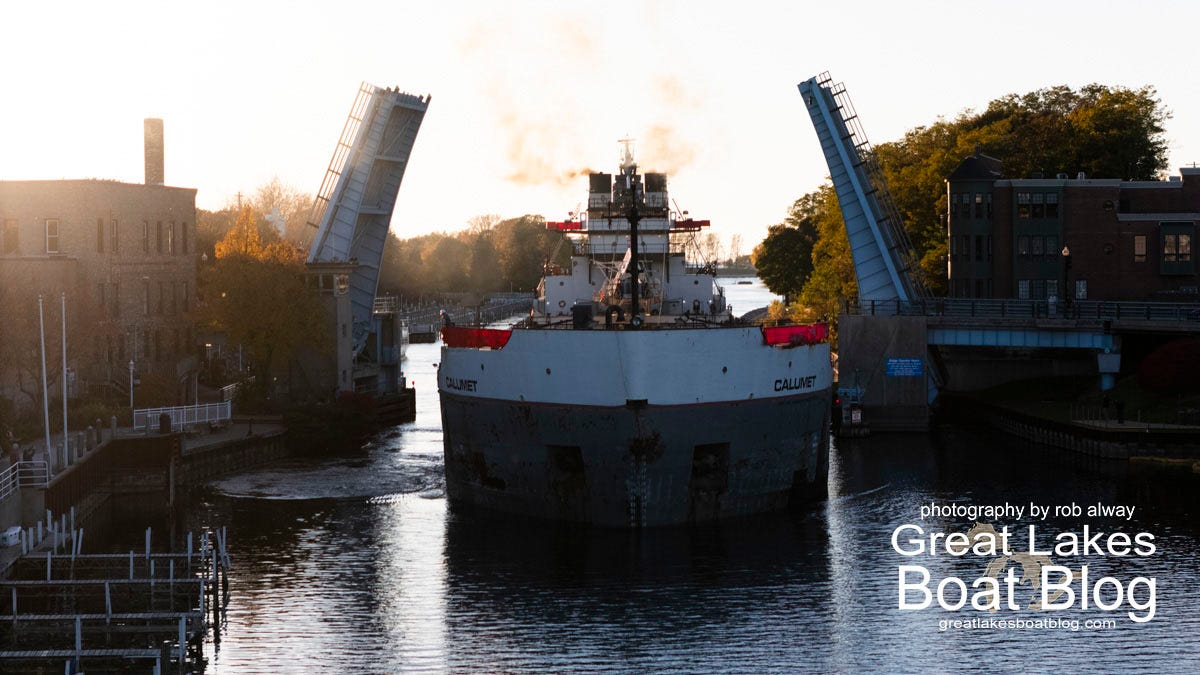
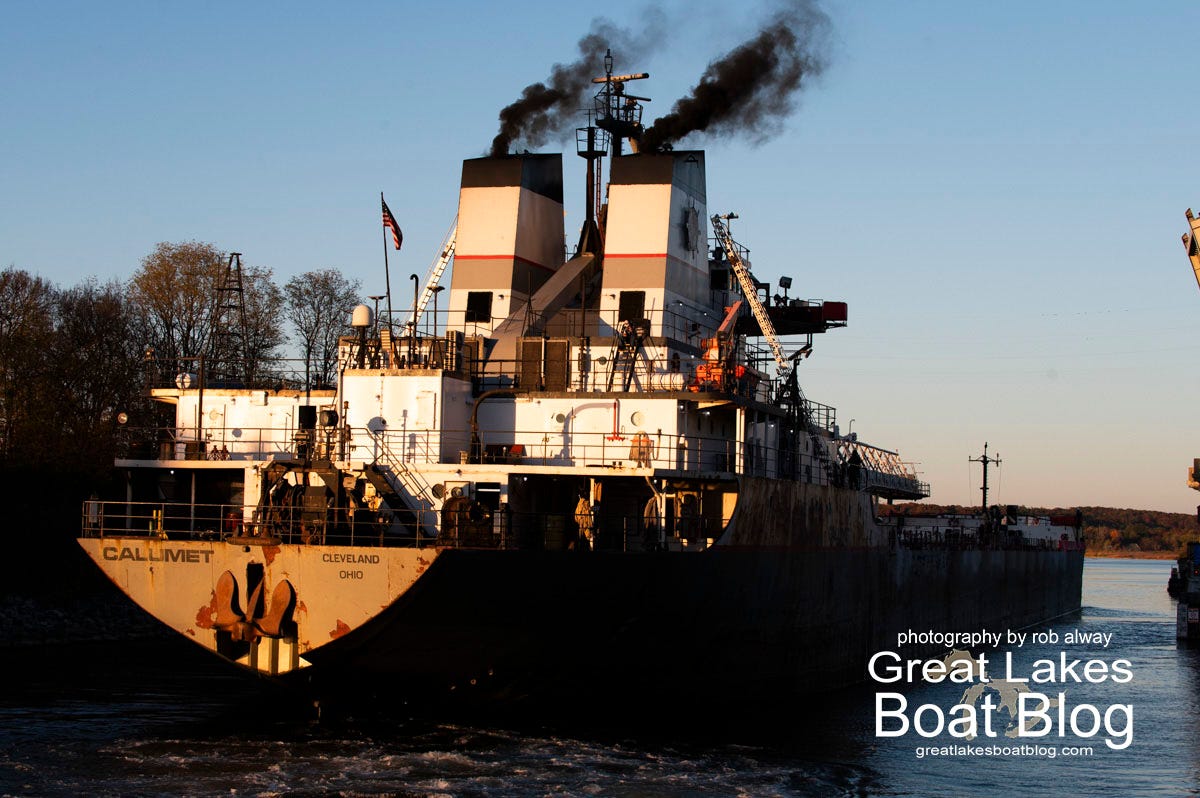
More than half a century after entering service, the 630-foot motor vessel Calumet continues to carry the raw materials that support industry and construction throughout the Great Lakes region.
Built in 1973 at the American Ship Building Co. shipyard in Lorain, Ohio, the American-flagged self-unloading bulk carrier has operated under four names and several different fleet arrangements during her 53-year career. She has carried iron ore, coal, limestone, aggregates and other bulk commodities to ports throughout the Great Lakes.
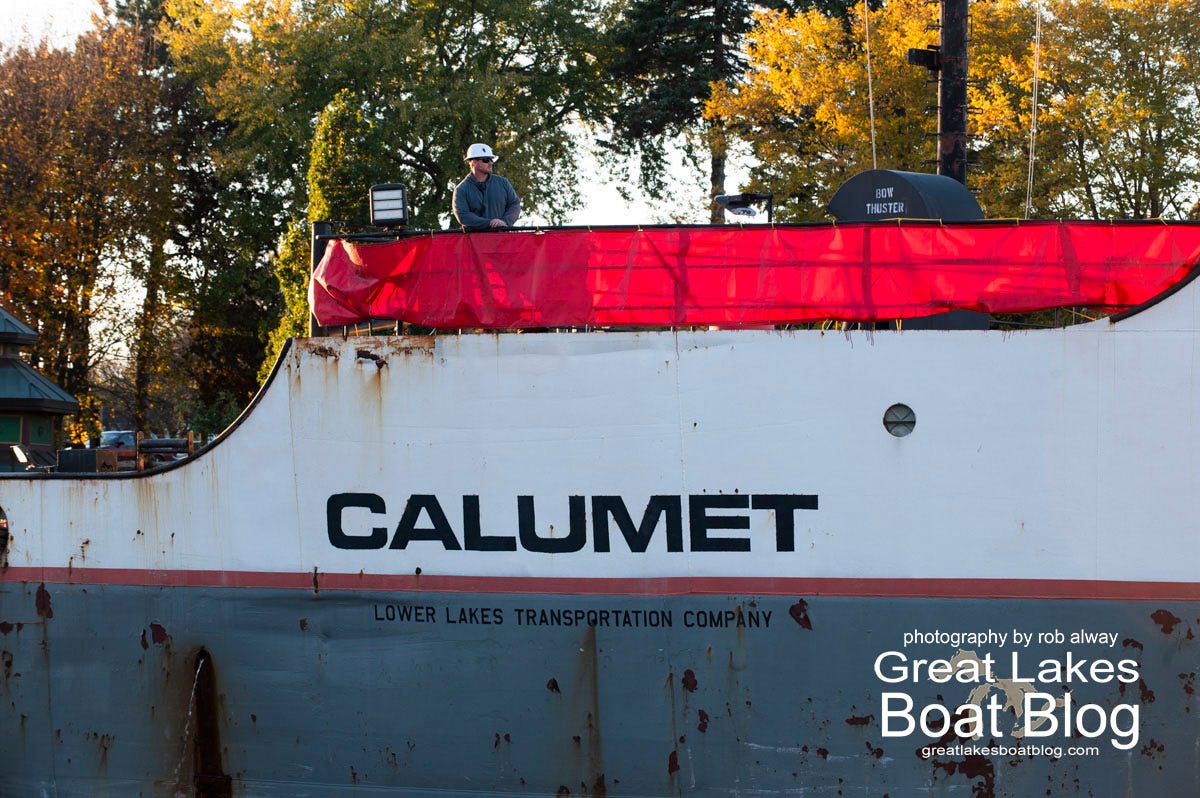
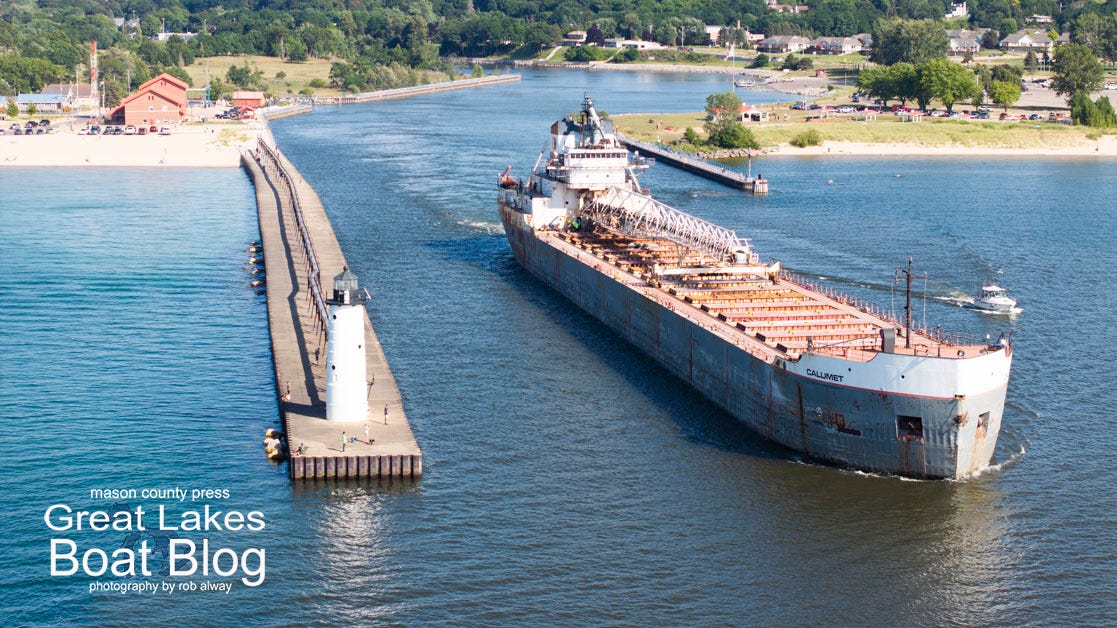
Today, Calumet operates in the Grand River Navigation fleet, part of Mainstay Maritime, formerly Rand Logistics. The Traverse City, Michigan-based operation specializes in moving bulk commodities throughout the lakes, including into smaller commercial harbors that larger lake freighters cannot easily access.
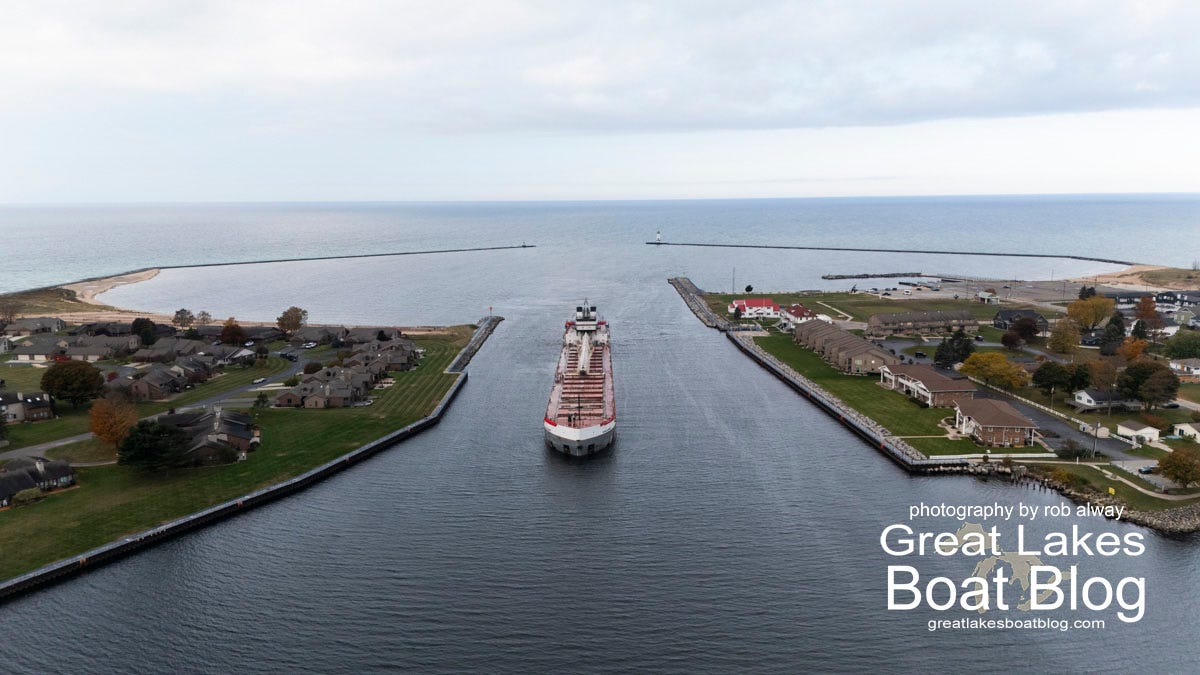
Although the Great Lakes shipping industry is often associated with the 1,000-foot freighters that dominate the iron ore trade, vessels such as Calumet serve a different and equally important purpose. Her 630-foot length allows her to reach terminals and navigate waterways that are less accessible to the largest vessels.
That versatility has helped keep her working more than five decades after her first voyage.
From William R. Roesch to Calumet
The vessel was launched June 22, 1973, as William R. Roesch, named for an executive of Jones & Laughlin Steel Corp. She was constructed as American Ship Building Co. hull No. 901 and entered service that July.
Originally owned by Union Commerce Bank of Ohio, she was managed by Kinsman Marine Transit Co. and entered service during a period when Great Lakes fleets were investing in diesel-powered, self-unloading bulk carriers.
In 1976, she began operating for Pringle Transit Co., an Oglebay Norton Marine subsidiary. The arrangement continued until 1994, when the vessel was transferred to Oglebay Norton.
In 1995, she was renamed David Z. Norton, honoring the founder of the Cleveland-based Oglebay Norton enterprise.
Oglebay Norton was among the major Great Lakes transportation companies of the 20th century, operating a fleet that transported iron ore, coal, limestone and other bulk cargoes to industrial and commercial destinations.
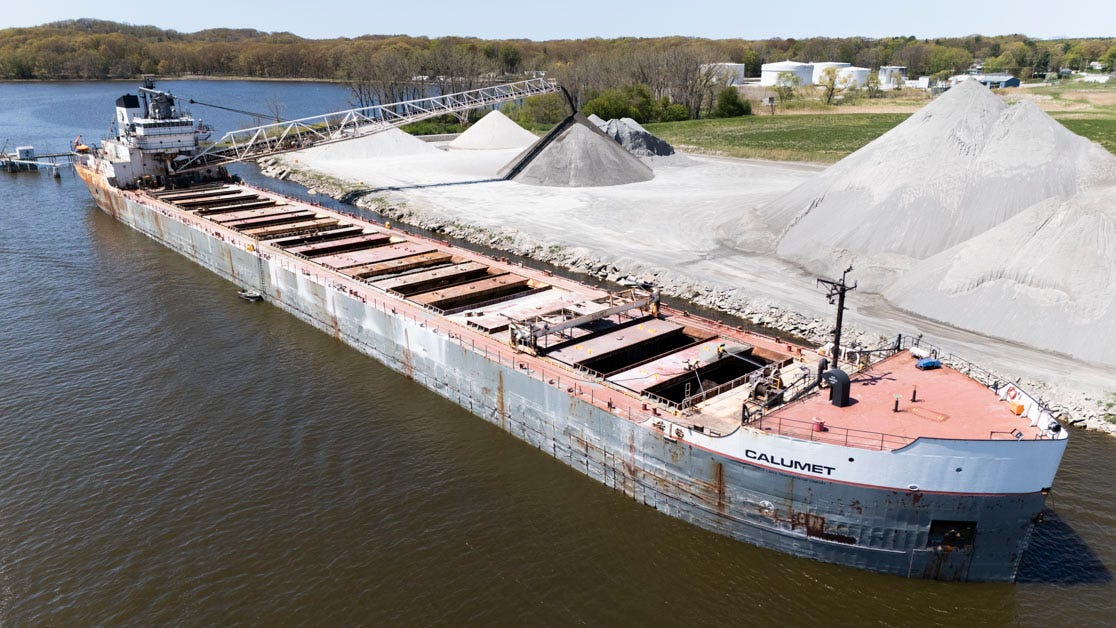
The ship remained in the Oglebay Norton fleet until 2006, when the company’s smaller River Class freighters were sold as part of a restructuring of its marine operations.
She subsequently became David Z., operating under an arrangement involving Wisconsin and Michigan Steamship Co., a subsidiary of Muskegon-based Sand Products Corp., and Lower Lakes Transportation.
In February 2008, Rand Logistics announced the purchase of David Z. and two fleetmates for a combined $20 million. The vessel was renamed Calumet, continuing a name already associated with the Grand River Navigation fleet.
The previous Calumet, built in 1929 for U.S. Steel, had been sold for scrapping in 2007.
The name itself has long-standing associations with Great Lakes shipping and industry, particularly the Calumet industrial region along the southern shore of Lake Michigan near Chicago and northwest Indiana.
The renamed vessel continued the work for which she had been constructed: transporting bulk freight between the industrial, mining and commercial ports of the Great Lakes.
Designed for the smaller harbors
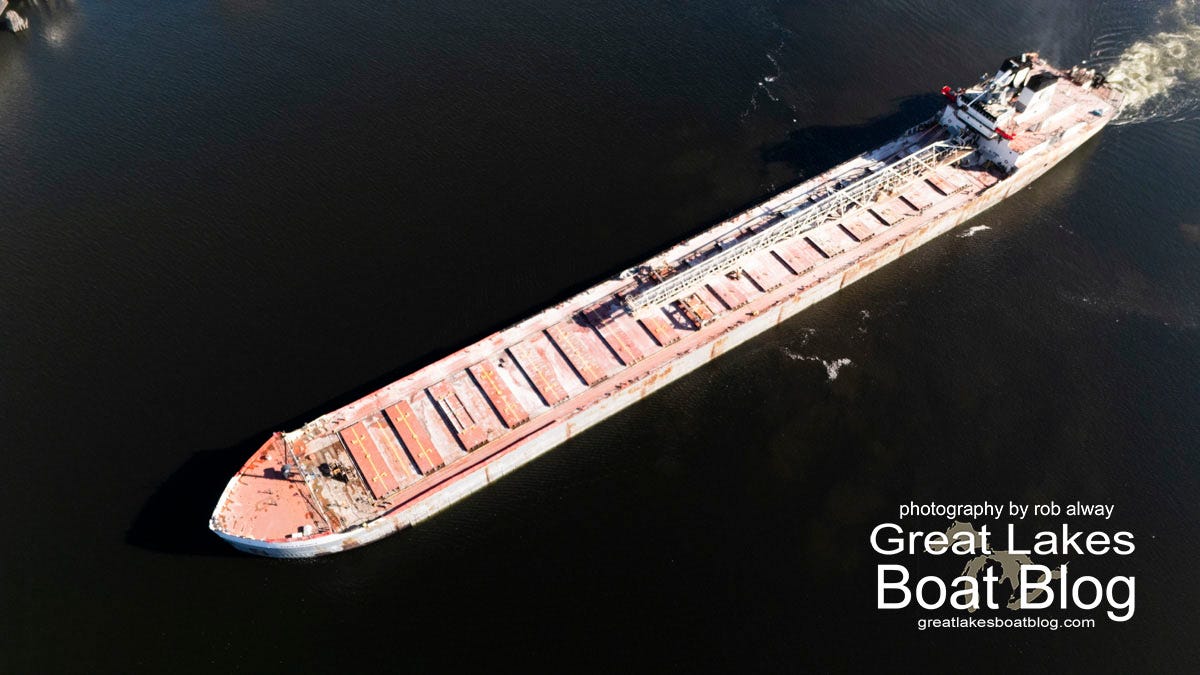
Calumet is 630 feet long, with a beam of 68 feet and a depth of approximately 37 feet. Her midsummer draft is about 26 feet.
She is powered by two ALCO V16 diesel engines developing a combined 5,600 brake horsepower. Her service speed is approximately 14 knots, or 16 mph, and she is equipped with a 1,000-horsepower bow thruster to assist with maneuvering in confined waterways.
Her cargo capacity is approximately 19,600 tons, considerably less than the 70,000-plus tons carried by some of the largest lake freighters. However, her smaller dimensions make her particularly useful in the regional bulk cargo trade.
As a self-unloader, Calumet carries an onboard conveyor system that moves material from her cargo holds to a 260-foot unloading boom. The system is rated to discharge up to 5,000 tons per hour, depending on the cargo and operating conditions.
This equipment allows her to discharge material directly onto shore without requiring the extensive unloading infrastructure needed by traditional bulk carriers.
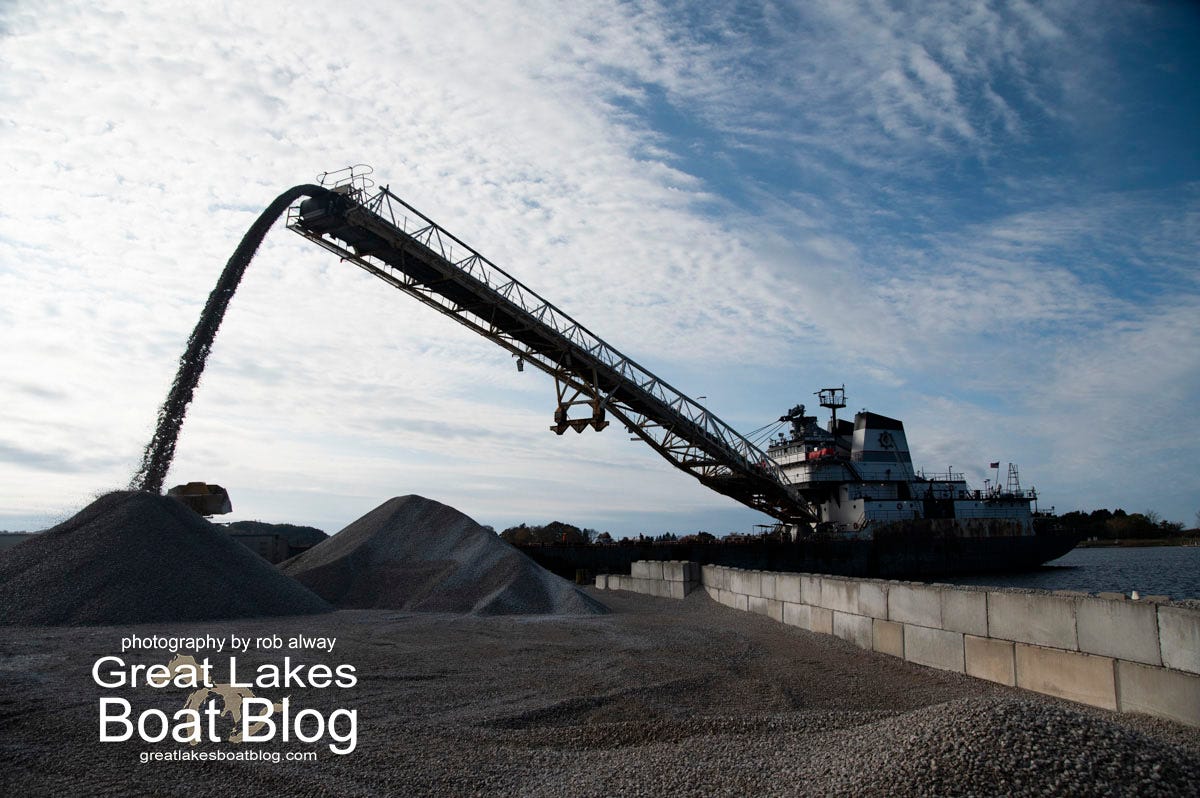
The system is particularly valuable when carrying limestone and aggregate destined for construction projects, coal for industrial use or road salt for winter maintenance.
Her cargo holds have also been modified during her service life. During the winter of 1977-78, while still operating as William R. Roesch, she underwent a significant alteration to her cargo spaces.
These changes helped adapt the vessel to the demands of the Great Lakes bulk freight trade.
Calumet is part of a group of similarly designed vessels built during the early 1970s. Her sister ships include Manitowoc, originally Earl W. Oglebay, and Robert S. Pierson, originally Wolverine.
The vessels were built for much the same purpose: transporting substantial bulk cargoes while retaining access to the rivers and smaller harbors that make up an important part of the Great Lakes transportation network.
A changing Great Lakes industry
The vessel’s career is reflective of major changes in Great Lakes shipping since the 1970s.
When William R. Roesch entered service, the region’s major steel companies remained central to the shipping industry. Much of the fleet was dedicated to hauling iron ore from Lake Superior ports to the steel mills of the lower lakes.
During her maiden voyage, the new freighter traveled from Lorain to Superior, Wisconsin, where she loaded 18,828 tons of iron ore July 9, 1973, for delivery to Jones & Laughlin’s steelmaking operations along the Cuyahoga River in Cleveland.
The voyage demonstrated the purpose for which she had been built: moving raw materials efficiently between Great Lakes industrial centers.
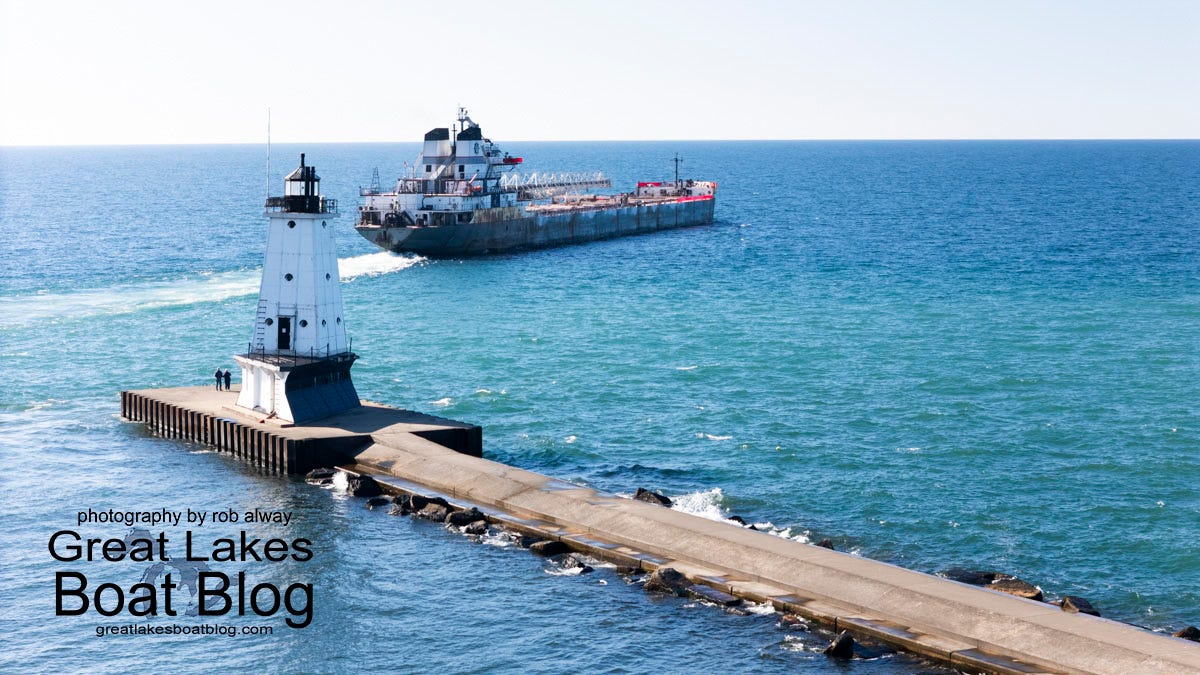
Over the following decades, changes in steel production, industrial demand and corporate ownership altered the economics of Great Lakes transportation.
Fleet consolidation became increasingly common as shipping companies sought more efficient operations and greater flexibility in the types of cargoes they transported.
For vessels such as Calumet, versatility became essential.
Rather than relying exclusively on one commodity or industrial customer, the ship could transport a variety of bulk cargoes, including coal, iron ore, grain, limestone, road salt and construction aggregates.
That flexibility remains an important part of her commercial value.
A working vessel in the Mainstay fleet
Today, Calumet is operated by Grand River Navigation, part of Mainstay Maritime.
The parent company adopted the Mainstay name in 2026, replacing Rand Logistics. Its fleet includes American Steamship Co. vessels, Grand River Navigation freighters and specialized tug-barge operations.
Mainstay reports operating 23 U.S.-flagged vessels, including self-unloading bulk carriers, tug-barge units and liquid cargo vessels. The company also manages additional specialty carriers.
The fleet serves a broad range of industrial customers, delivering the materials necessary for steel production, power generation, manufacturing, road construction and other infrastructure projects.
Within that operation, ships such as Calumet occupy an important position between the smallest commercial carriers and the large freighters serving major deepwater terminals.
They are particularly suited for the rivers, channels and industrial waterways where available draft, turning space or dock dimensions limit vessel size.
Her continued operation also illustrates the longevity of Great Lakes freighters. The lakes’ freshwater environment, combined with regular maintenance and equipment upgrades, has allowed many vessels to remain commercially active for decades beyond the service lives commonly associated with oceangoing ships.
Still earning her keep
At 53 years old, Calumet is no longer a modern addition to the Great Lakes fleet. She belongs to a period of shipbuilding when American yards were producing vessels designed around the specific geographic and commercial demands of inland navigation.
Her career has included changes of names, owners, operating companies and cargo assignments. Yet the fundamental work remains the same as it was in 1973.
Whether carrying stone for highway construction, coal for industrial customers or salt for winter roads, Calumet continues to connect the region’s natural resources with the industries and communities that depend upon them.
She may not have the size of a 1,000-foot freighter, but her longevity and versatility demonstrate why the smaller self-unloading bulk carriers remain an essential part of Great Lakes commerce.
After more than half a century, Calumet is still earning her keep.
Sources: Know Your Ships; Boatnerd.com vessel histories, including research by Laura Price; Grand River Navigation/Rand Logistics vessel specifications; Mainstay Maritime fleet and corporate information; and Great Lakes Boat Blog archives.