


By Rob Alway
MANISTEE, Michigan — While thousands of hunters headed into the woods Sunday, Nov. 15, for the opening day of Michigan’s firearm deer season, I decided to hunt something a little different.
Buffalo.
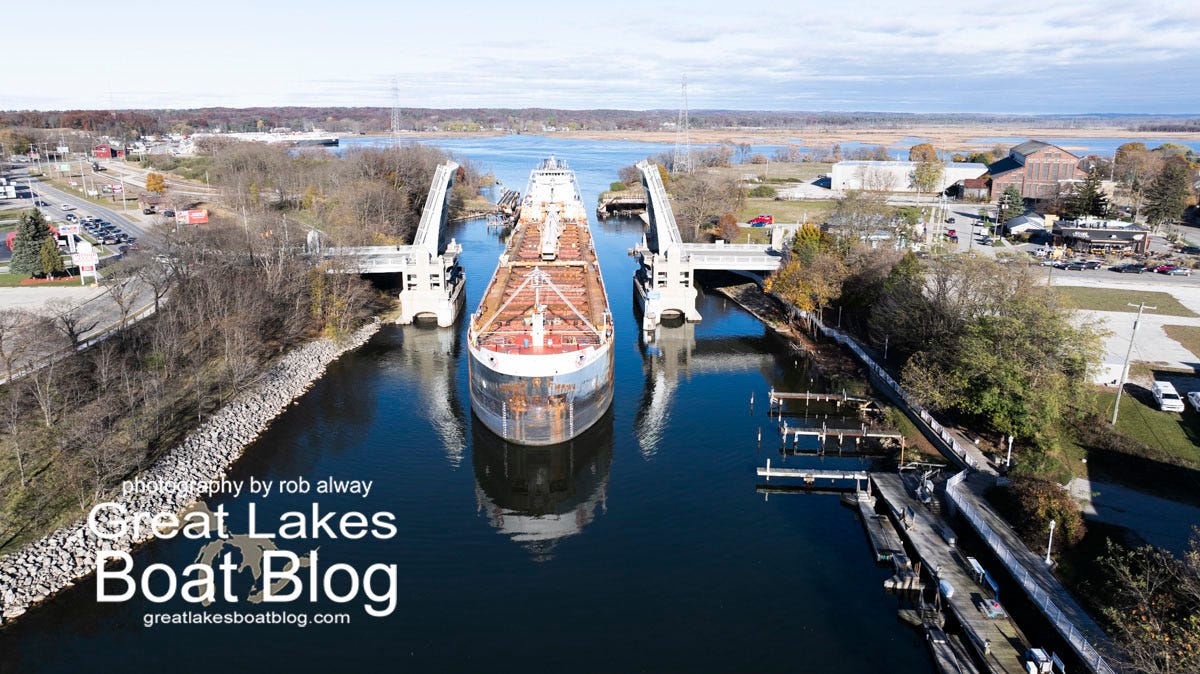
Not the four-legged kind that once roamed the Great Plains. My quarry was a nearly 635-foot-long, Canadian-flagged Great Lakes freighter capable of carrying close to 25,000 metric tons of cargo.
And, unlike the buffalo of the American West, this one floats.
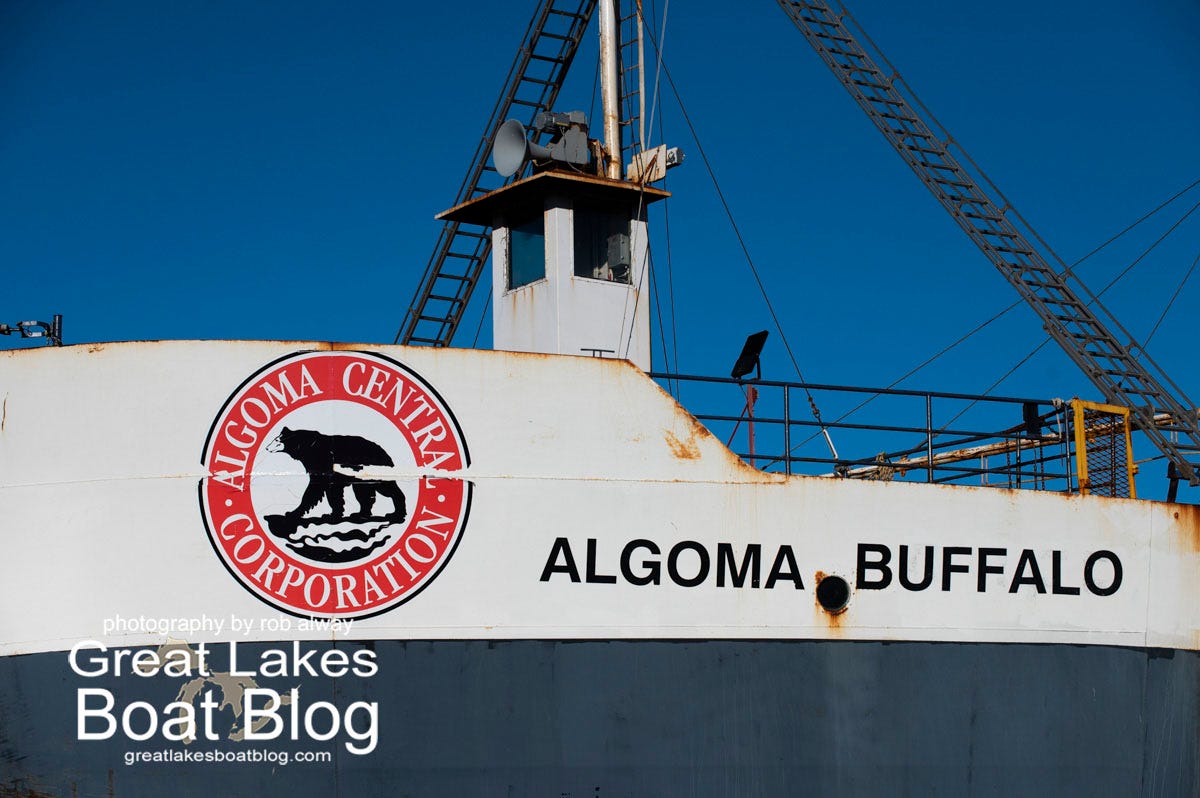
Her name is Algoma Buffalo, and she has proven to be one of the more elusive vessels I have attempted to photograph over the past year.
The elusive Buffalo
As I wrote in October on my other news site, Mason County Press, I had been trying to get a good set of photographs of Algoma Buffalo for nearly a year. My first attempt came in November 2025, when she anchored offshore at Manistee, waiting for the weather to improve.
I managed a few distant drone photographs, but they were not quite what I wanted.
Several other opportunities came and went before I finally caught her Oct. 2 at the Verplank dock on Muskegon Lake in Muskegon, Michigan. That afternoon, I was able to photograph her from the ground and air. But, she was docked. While they were nice photos, I like to get shots of the ships in motion as well.
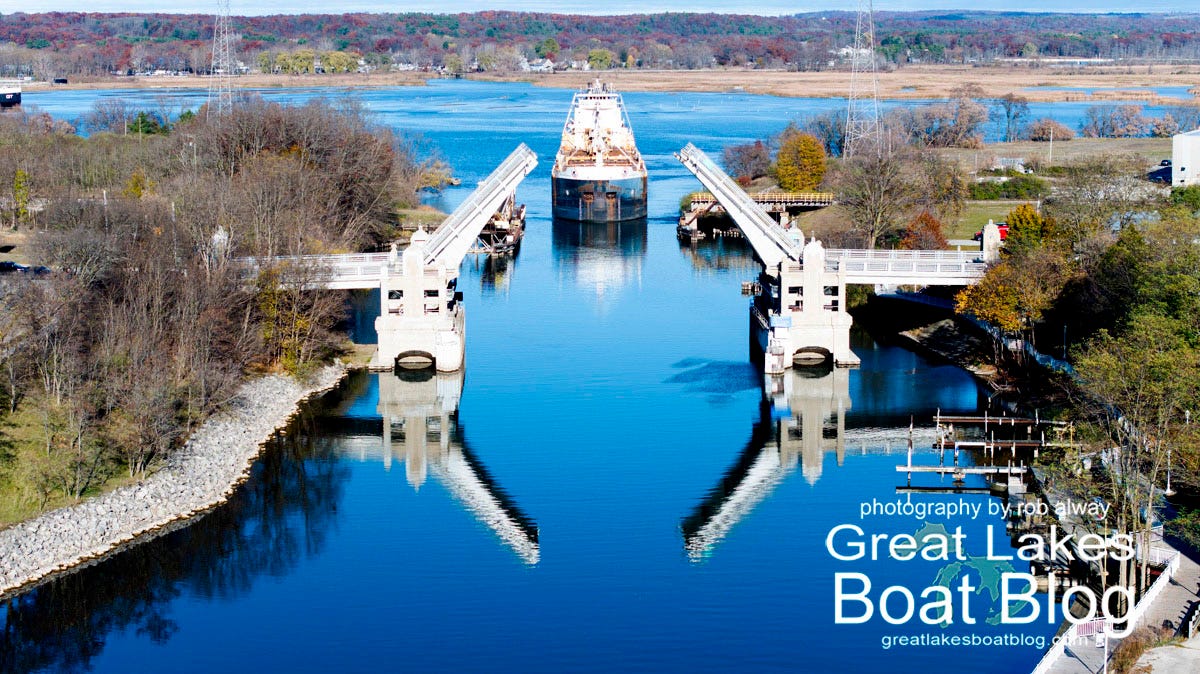
Plus, there is something special about photographing a freighter in Manistee, particularly when she is maneuvering through the relatively narrow Manistee River.
A few weeks ago, Algoma Buffalo was scheduled to deliver cargo to Manistee. She spent a couple of days anchored offshore, waiting for conditions to improve. Ultimately, the visit did not work out, and she diverted to Milwaukee, Wisconsin.
I missed her again.
This latest trip appeared headed for a similar outcome.
She was supposed to deliver her salt to the Rieth-Riley Construction dock on Manistee Lake earlier in the week, but weather once again interfered. She spent a couple of days anchored in northern Lake Michigan, and I was beginning to think the Manistee stop was not going to happen.
Then she started moving south.
I watched her progress, thinking perhaps this would finally be the opportunity I had been waiting for.
But when she reached Manistee, she anchored offshore again, waiting for the winds to settle.
For anyone who follows Great Lakes shipping, this is part of the experience. A ship’s estimated arrival time is just that — an estimate. Weather, harbor conditions, cargo operations and other factors can change the schedule considerably.
And when you are trying to photograph a particular vessel, those changes can be frustrating.
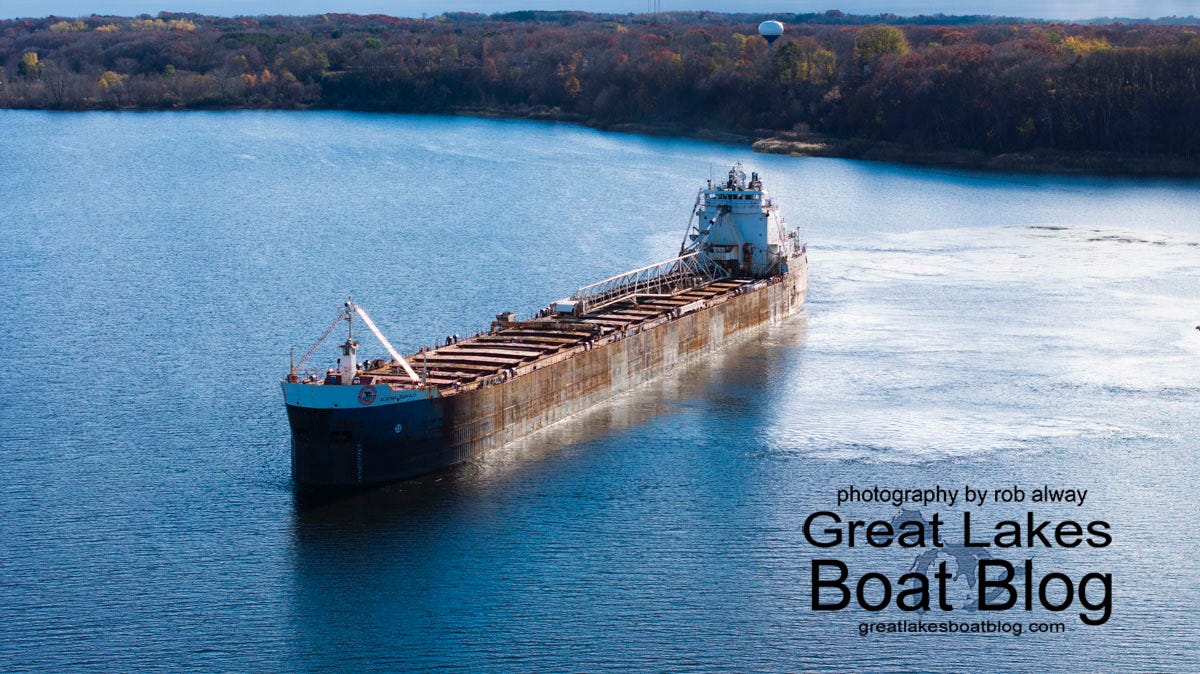
A Great Lakes veteran
Part of my interest in Algoma Buffalo comes from her history.
She is a veteran of nearly half a century of Great Lakes shipping, having been built in 1978 by Bay Shipbuilding Corporation at Sturgeon Bay, Wisconsin.
Originally named Buffalo, in honor of the city of Buffalo, NY, she was constructed for American Steamship Company as part of a major fleet modernization program during the 1970s.
She was launched March 16, 1978, christened Aug. 8 and departed Sturgeon Bay on her maiden voyage Sept. 23. Her first assignment was to load iron ore at Escanaba, Michigan, for delivery to Indiana Harbor, Indiana.
The ship cost approximately $25 million to build, a substantial investment at the time.
After nearly four decades in the American Steamship fleet, she was purchased by Algoma Central Corporation of St. Catharines, Ontario, in December 2017. She entered service under her new Canadian name, Algoma Buffalo, in 2018.
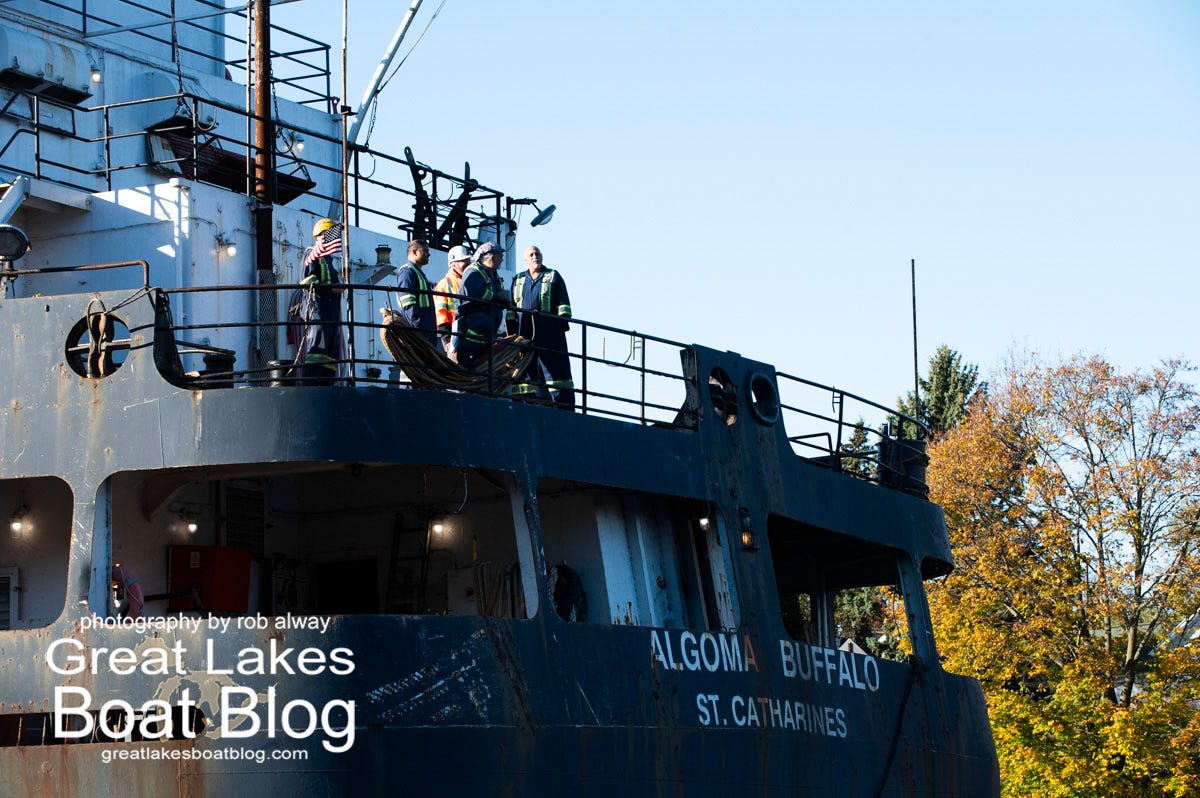
Today, she is part of Algoma’s River Class fleet, a group of smaller Great Lakes bulk carriers particularly well suited for ports and waterways where the giant 1,000-foot freighters cannot operate.
The ship measures 634 feet, 10 inches long, with a beam of 68 feet and a molded depth of 40 feet. Her relatively narrow beam allows her to navigate some of the more confined waterways and industrial harbors around the Great Lakes.
According to Algoma Central’s vessel specifications, she has a maximum cargo deadweight capacity of approximately 24,597 metric tons under midsummer loading conditions. Actual cargo capacity varies with draft restrictions and operating conditions. That figure represents her carrying capacity rather than the weight of the ship itself.
For comparison, a metric ton equals approximately 2,205 pounds. That means her maximum listed cargo capacity alone represents more than 54 million pounds.
That’s a pretty big buffalo.
Power comes from two General Motors Electro-Motive Division diesel engines, each rated at 3,600 brake horsepower. Combined, they produce 7,200 horsepower, driving a controllable-pitch propeller through reduction gears.
Her rated service speed is approximately 14 knots, or 16 miles per hour. She is also equipped with bow and stern thrusters, which are particularly useful when maneuvering in confined harbors such as Manistee.
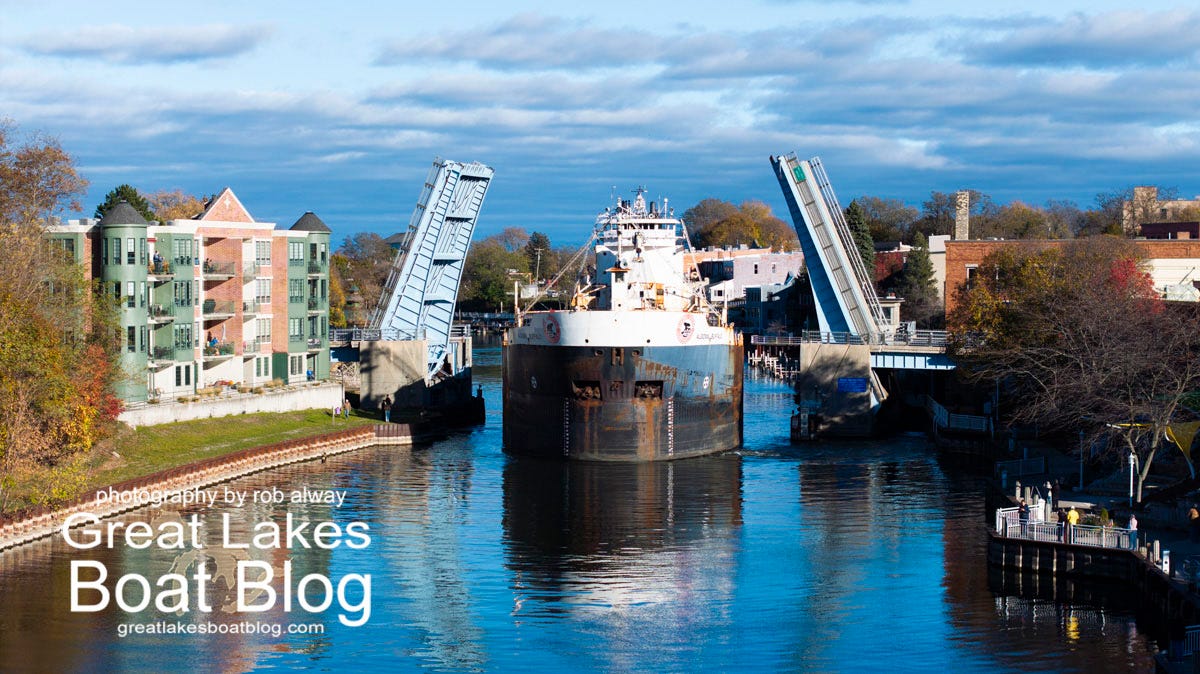
Like many modern Great Lakes bulk carriers, Algoma Buffalo is a self-unloader. Instead of relying on shoreside cranes or unloading equipment, she carries her own conveyor system.
Her unloading boom is approximately 250 feet long. Cargo moves from the holds through a system of gravity-fed gates, conveyor belts and an inclined elevator before being discharged ashore through the boom.
The system has a designed unloading capacity of up to 5,900 metric tons per hour, although actual unloading rates depend on cargo characteristics and operating conditions.
Her cargo space consists of five holds served by 20 deck hatches.
Over her long career, the ship has carried iron ore, coal, limestone, gypsum, road salt and other bulk commodities that keep the Great Lakes economy operating.
Road salt is particularly important at this time of year. As winter approaches, large quantities are transported by ship from Great Lakes salt-producing ports, including Goderich, Ontario, to storage facilities throughout the region.
The cargo aboard Algoma Buffalo on Sunday was destined for Rieth-Riley’s facility on Manistee Lake.
The hunt is on
By early Sunday morning, the weather had improved enough for Algoma Buffalo to make her way up the Manistee River and into Manistee Lake.
Unfortunately, her arrival came earlier than I had hoped.
I had pretty much given up on photographing her.
Then, shortly after noon, I started doing some calculations.
I figured unloading might take about five hours, allowing for the cargo operation and preparations for departure. If my estimate was anywhere close, there was still a chance she would be at the dock when I arrived.
Manistee is about 20 miles north of my home, so it was not a particularly long drive.
I decided to take the chance.
When I reached the area near the Rieth-Riley dock, I could see that the ship’s unloading boom had already been swung back into its stowed position.
When working cargo, the boom swings out over the dock. Once unloading is complete, it is swung back inboard and secured for the voyage.
The crew was bringing in the mooring lines.
Algoma Buffalo was preparing to get underway.
My timing had been pretty good.
For a ship that had repeatedly managed to evade my camera, I had finally caught her at Manistee with just minutes to spare. Plus, the sun was shining mixed with some brilliant clouds and beautiful reflections in the Manistee River.
Photographing ships in Manistee
One of the reasons I enjoy photographing Great Lakes freighters at Manistee is the variety of vantage points.
Unlike some ports where industrial facilities restrict most waterfront access, Manistee offers several excellent public locations for observing and photographing commercial vessels.
When ships are docked at the Rieth-Riley facility, Main Street, which follows the western shore of Manistee Lake, provides good views of vessels working cargo. This is especially true during the late fall, when vegetation is less likely to obstruct the view.
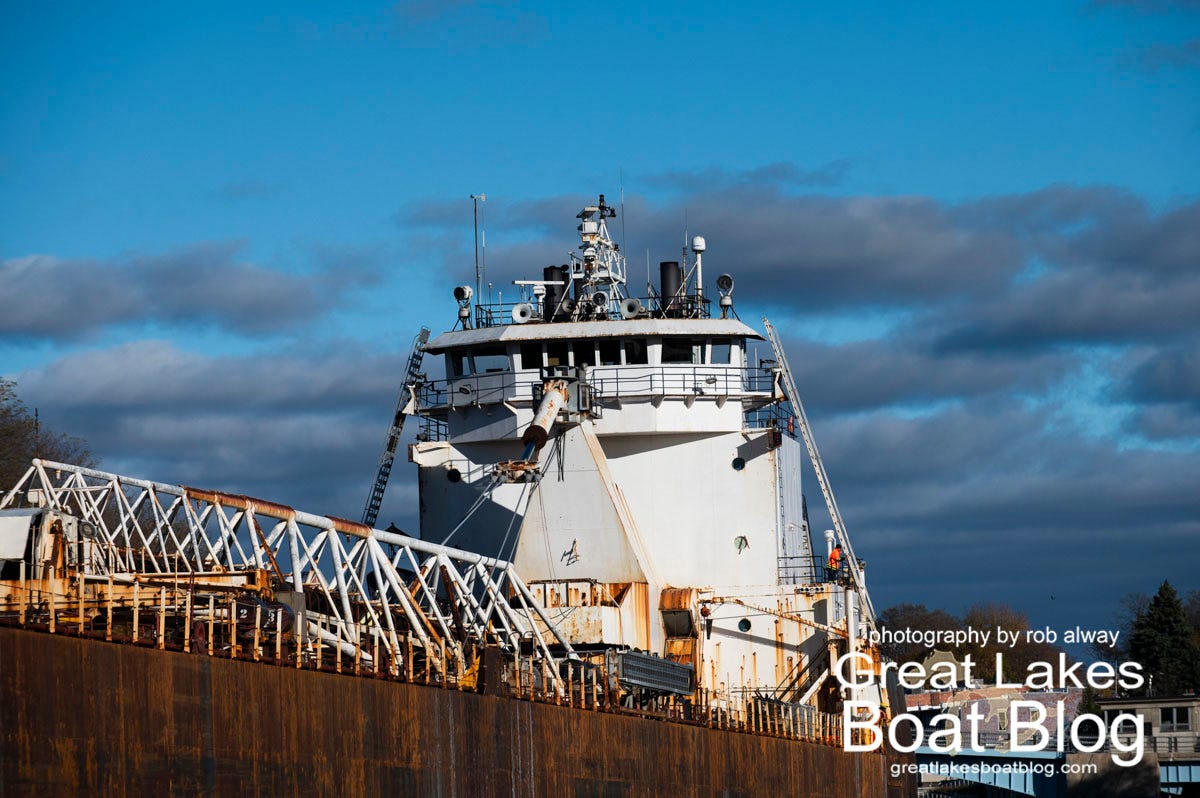
For aerial photography, I often use a location along 16th Street just east of Main Street to launch my drone.
Another good location is the public boat launch at the end of Ninth Street. It offers opportunities for both ground-level photography and aerial work when conditions and flight regulations permit.
When vessels are departing Manistee Lake and heading down the Manistee River toward Lake Michigan, I particularly like photographing from the end of Spruce Street.
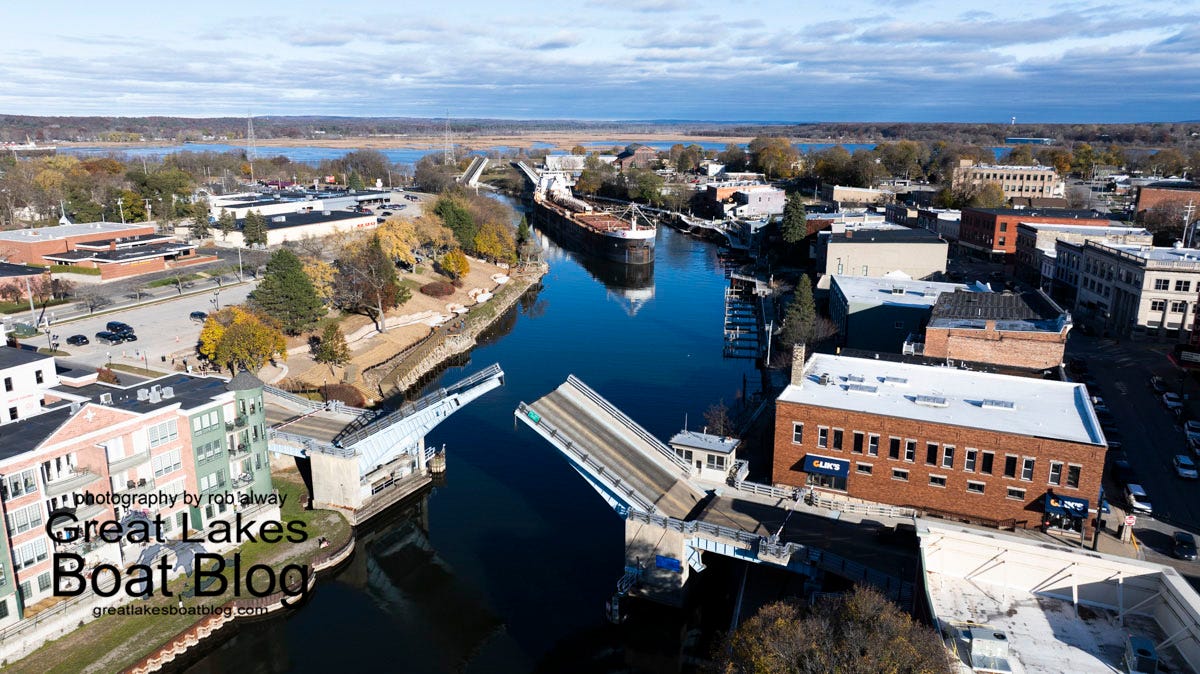
From that location, it is possible to capture ships as they negotiate the waterway, providing perspectives that emphasize the relationship between these large commercial vessels and the relatively narrow river.
Another useful vantage point is the public parking area near 324 River Street. Depending on the vessel’s direction and the available light, it can be an excellent place to photograph inbound or outbound traffic.
And, of course, Douglas Park, near the Lake Michigan pierheads, is among the best places in the area for photographing ships entering or leaving the harbor.
There is something particularly impressive about watching a 600-foot-plus freighter pass between the piers, especially when the weather is less than ideal.
For drone photography, I always consider wind conditions, available airspace, visual line of sight and the location of people and other obstacles before launching.
Photographing working ships requires patience. They operate on commercial schedules, not photographers’ schedules, and the conditions that make for good photography are not always the same conditions that make for easy navigation.
This particular Sunday, however, I decided not to chase Algoma Buffalo down the river for outbound photographs.
I had come to see her at the dock, and I had accomplished what I wanted.
A different kind of opening day
I have always enjoyed photographing Great Lakes freighters, but there is something especially satisfying about successfully catching a ship that has repeatedly eluded me.
Algoma Buffalo has been one of those vessels.
Over the past year, I have watched her movements on AIS, adjusted plans around weather delays and made several attempts to catch her in port.
Sometimes the timing worked. More often, it did not.
Sunday’s visit was another reminder that photographing ships requires a little flexibility, some patience and occasionally a willingness to get in the car without knowing whether the opportunity will still be there when you arrive.
Michigan’s firearm deer season opened Sunday, and hunters throughout the state headed into the woods hoping for a successful day.
I headed north to Manistee.
My buffalo weighed considerably more than any whitetail deer.
And I didn’t need a hunting license.
Just a camera.