


By Rob Alway
DETROIT -- Along the Detroit River, where Great Lakes freighters pass between the industrial ports of the United States and Canada, a small museum on Belle Isle preserves some of the most significant artifacts of the region’s maritime heritage.
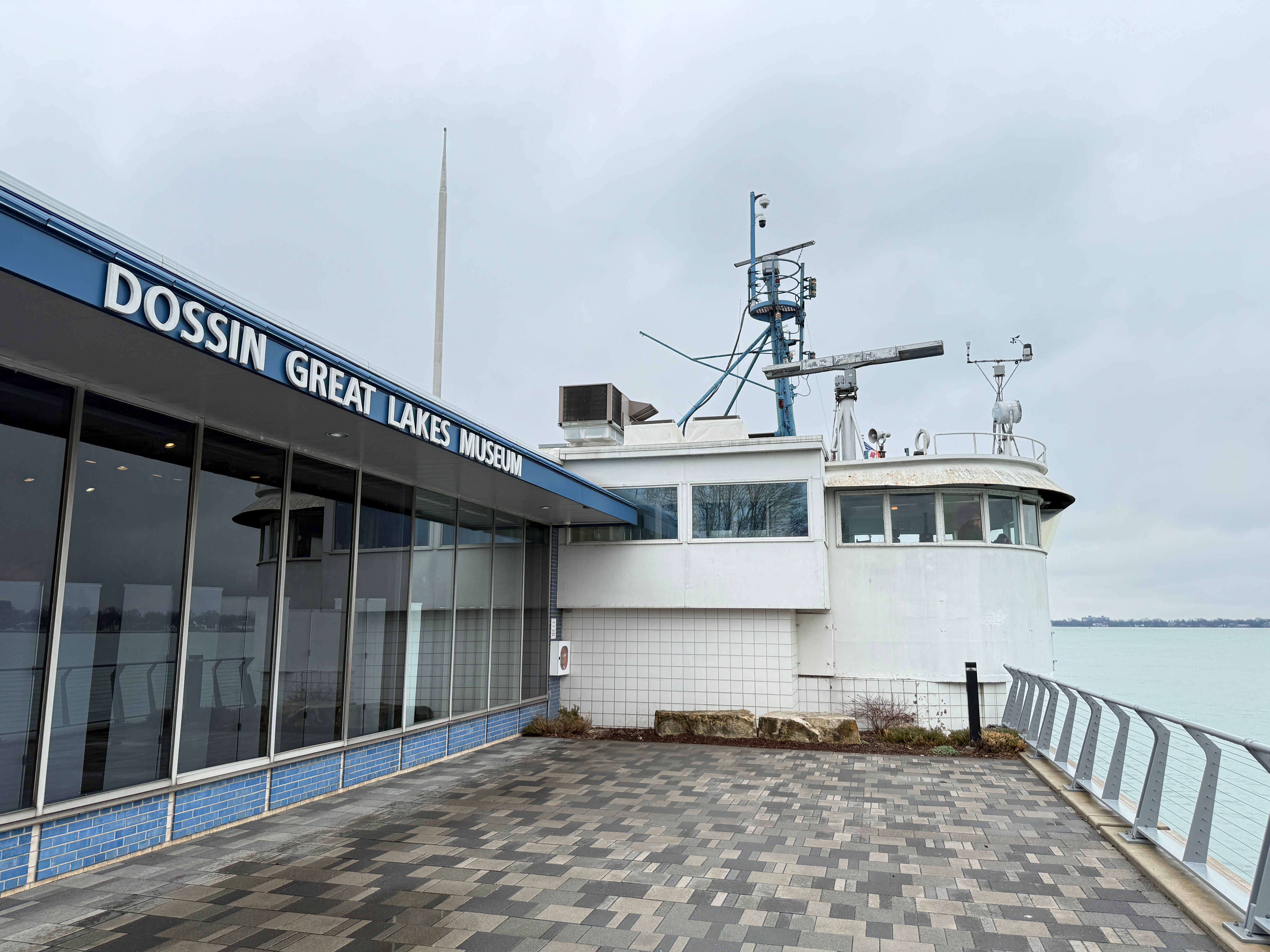
The Dossin Great Lakes Museum, located at 100 Strand Drive in Detroit, Michigan, offers visitors an opportunity to explore more than 300 years of Great Lakes history. Its exhibits range from the luxurious accommodations of early 20th-century passenger steamers to the working pilothouse of a Great Lakes freighter, including a vessel that participated in the search for survivors of the Edmund Fitzgerald.
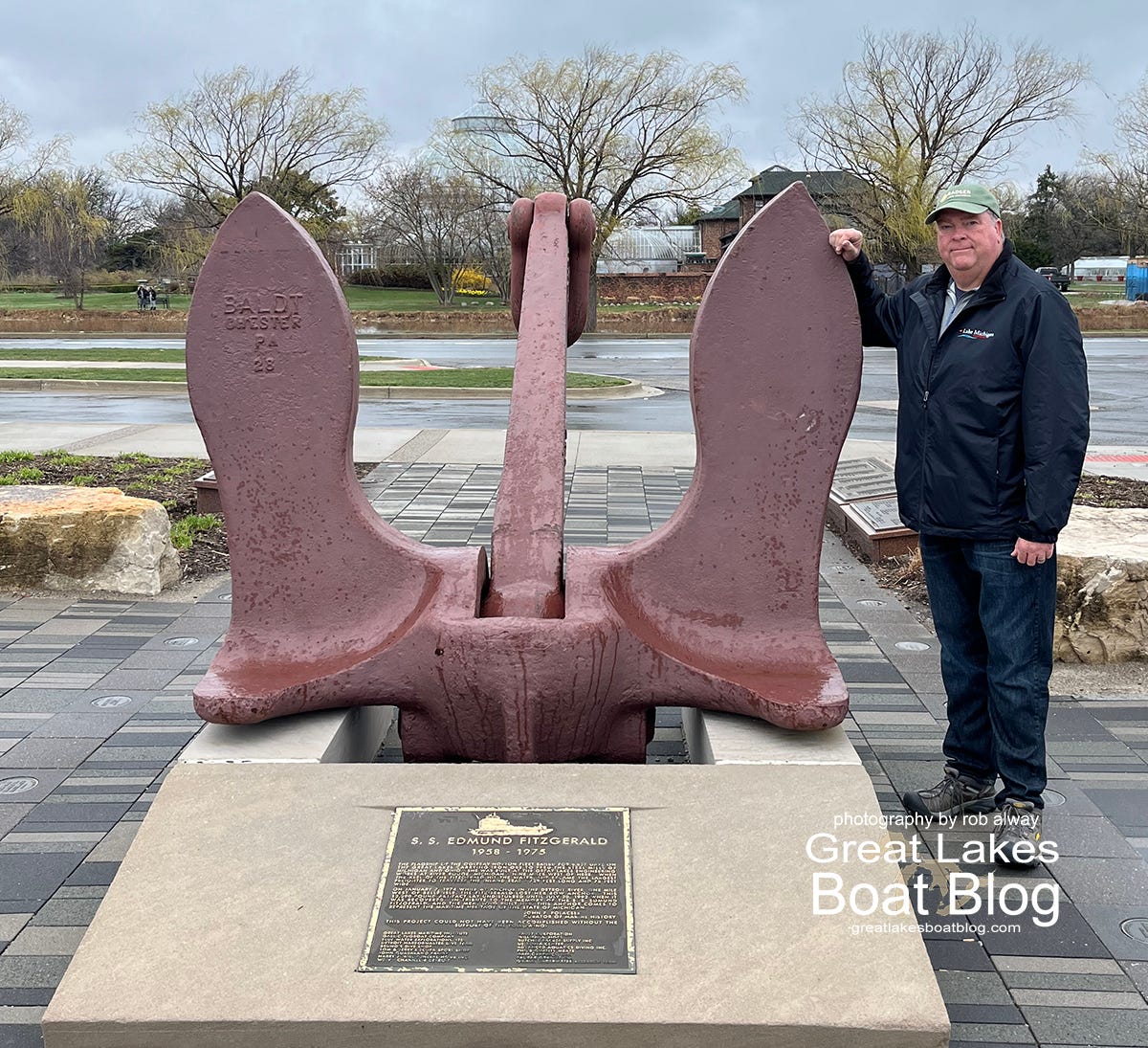
Just outside the museum, the massive bow anchor of the Edmund Fitzgerald serves as a reminder of the 29 sailors who lost their lives when the freighter sank in Lake Superior on Nov. 10, 1975.
The museum is one of several historic attractions on Belle Isle, a 982-acre island park in the Detroit River. While the island offers gardens, an aquarium, a nature center and recreational facilities, its connection to Great Lakes shipping makes it especially significant to maritime enthusiasts.
The river itself is part of the experience. Commercial vessels regularly pass Belle Isle as they travel between Lake St. Clair and Lake Erie, offering visitors an opportunity to see modern Great Lakes shipping while surrounded by artifacts from the industry’s past.
A maritime museum born aboard a schooner
The origins of the Dossin Great Lakes Museum date to 1949, when the Detroit Historical Commission established the Museum of Great Lakes History aboard the wooden schooner J.T. Wing.
The three-masted vessel had been one of the last commercial sailing ships on the Great Lakes. After her working career ended, she was brought to Belle Isle and converted into a floating maritime museum.
For seven years, the J.T. Wing introduced visitors to the history of Great Lakes transportation. More than 400,000 people toured the schooner during her years as a museum.
By 1956, however, deterioration had made the aging wooden vessel unsafe. She was considered too fragile to move and, after her artifacts were removed, was deliberately burned under controlled conditions on Nov. 3, 1956.
The loss of the J.T. Wing created an opportunity to establish a permanent facility dedicated to the region’s maritime heritage.
The Dossin family, prominent Detroit business owners and hydroplane racing enthusiasts, provided financial support for a new museum. The city also contributed to the project.
On July 24, 1960, the Dossin Great Lakes Museum opened on the former site of the schooner.
Over the following decades, the museum expanded its collection and facilities, incorporating historic ship interiors, nautical equipment, scale models and interactive exhibits.
Today, the 16,000-square-foot museum is operated by the Detroit Historical Society and remains one of Michigan’s important centers for preserving the history of Great Lakes transportation.
The grandeur of the City of Detroit III
One of the museum’s most remarkable exhibits is the Gothic Room, a restored section of the passenger steamer City of Detroit III.
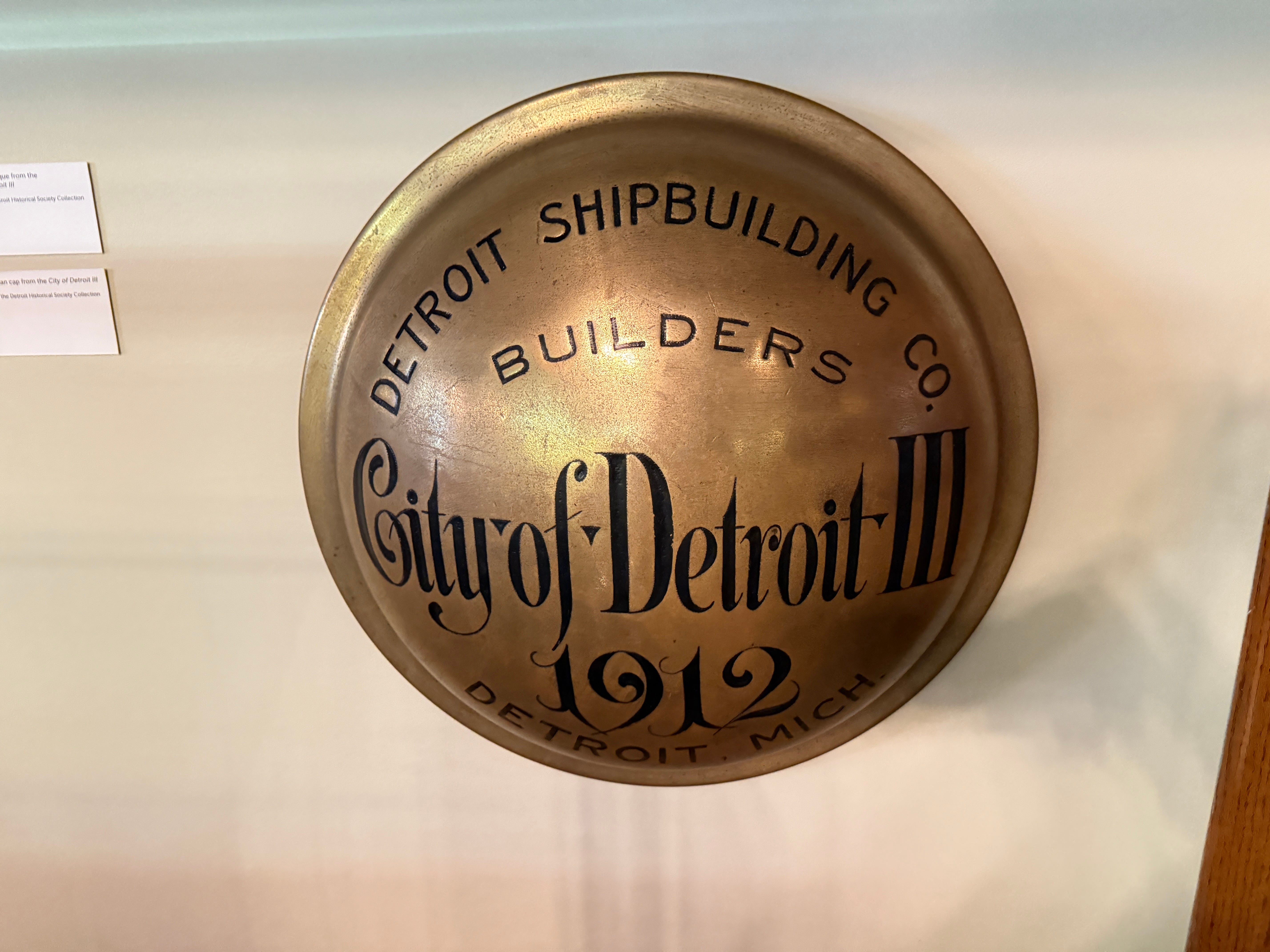
Built in 1912 for the Detroit and Cleveland Navigation Company, commonly known as the D&C Line, the City of Detroit III represented the height of luxury passenger transportation on the Great Lakes.
The approximately 500-foot sidewheel steamer was designed by prominent marine architect Frank E. Kirby and built at Wyandotte, Michigan.
At the time of her construction, she was considered the largest sidewheel passenger steamer in the world.
The vessel primarily operated between Detroit and Cleveland, Ohio, and between Detroit and Buffalo, New York. Her accommodations reflected an era when passenger steamers competed not only on speed and convenience but also on the elegance of their interiors.
Passengers enjoyed elaborate public rooms, dining facilities and comfortable staterooms. The vessel featured hundreds of passenger rooms, including accommodations with private bathrooms, while electricity and running water contributed to the experience of traveling aboard a floating hotel.
Among the most impressive spaces was the men’s smoking lounge, designed in the Gothic style.
Its elaborate carved woodwork, stained-glass windows and decorative details reflected the craftsmanship invested in the great passenger steamers of the period.
When the City of Detroit III was dismantled in 1956, the lounge was saved. Its components were stored in an Ohio barn until supporters of the Dossin museum raised money to acquire and restore them.
Volunteers devoted thousands of hours to the restoration, and the reconstructed room became a permanent museum exhibit in 1966.
Today, visitors entering the Gothic Room encounter an interior that recalls the days when travelers boarded grand steamers for overnight passages across the lakes.
It is a particularly valuable exhibit because so few of the magnificent passenger vessels that once served the Great Lakes survive. Much of their original interior craftsmanship disappeared when the ships were scrapped.
The pilothouse of the William Clay Ford
A contrasting perspective on Great Lakes transportation can be found in the museum’s preserved pilothouse from the steam-powered bulk freighter William Clay Ford.
Built in 1953 by Great Lakes Engineering Works at River Rouge, Michigan, the vessel originally measured 647 feet. She was lengthened to 767 feet in 1979.
The William Clay Ford transported iron ore and coal for Ford Motor Company’s industrial operations, including the River Rouge steel complex.
Her oil-fired steam turbine propulsion system allowed her to maintain schedules that reflected the increasing efficiency of the Great Lakes bulk transportation industry.
But the vessel is perhaps best remembered for the role her crew played during one of the Great Lakes’ most famous maritime disasters.
On Nov. 10, 1975, the Edmund Fitzgerald sank during a powerful storm on Lake Superior, taking all 29 members of her crew.
The William Clay Ford, under the command of Capt. Donald Erickson, was among the vessels that responded to the search for survivors.
Despite dangerous weather, Erickson and his crew departed the shelter of Whitefish Point to assist in the search. No survivors were found.
The William Clay Ford remained in service for several more years before changing economics and advances in self-unloading freighter technology contributed to her retirement in 1987.
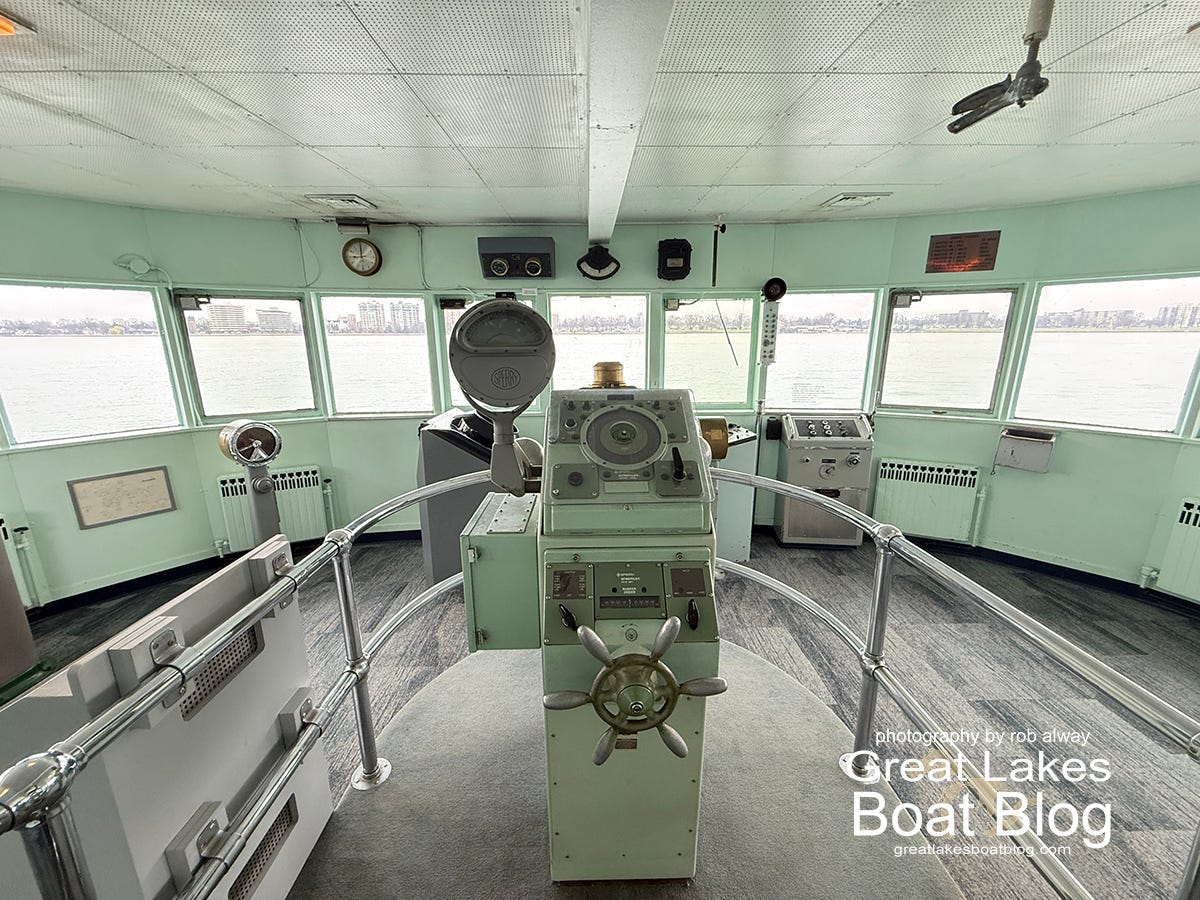
Although the vessel was scrapped, her pilothouse was preserved and donated to the Dossin museum. Following restoration, it opened as an exhibit overlooking the Detroit River in 1992.
Visitors can enter the pilothouse and experience the setting in which Great Lakes captains and wheelsmen navigated their vessels.
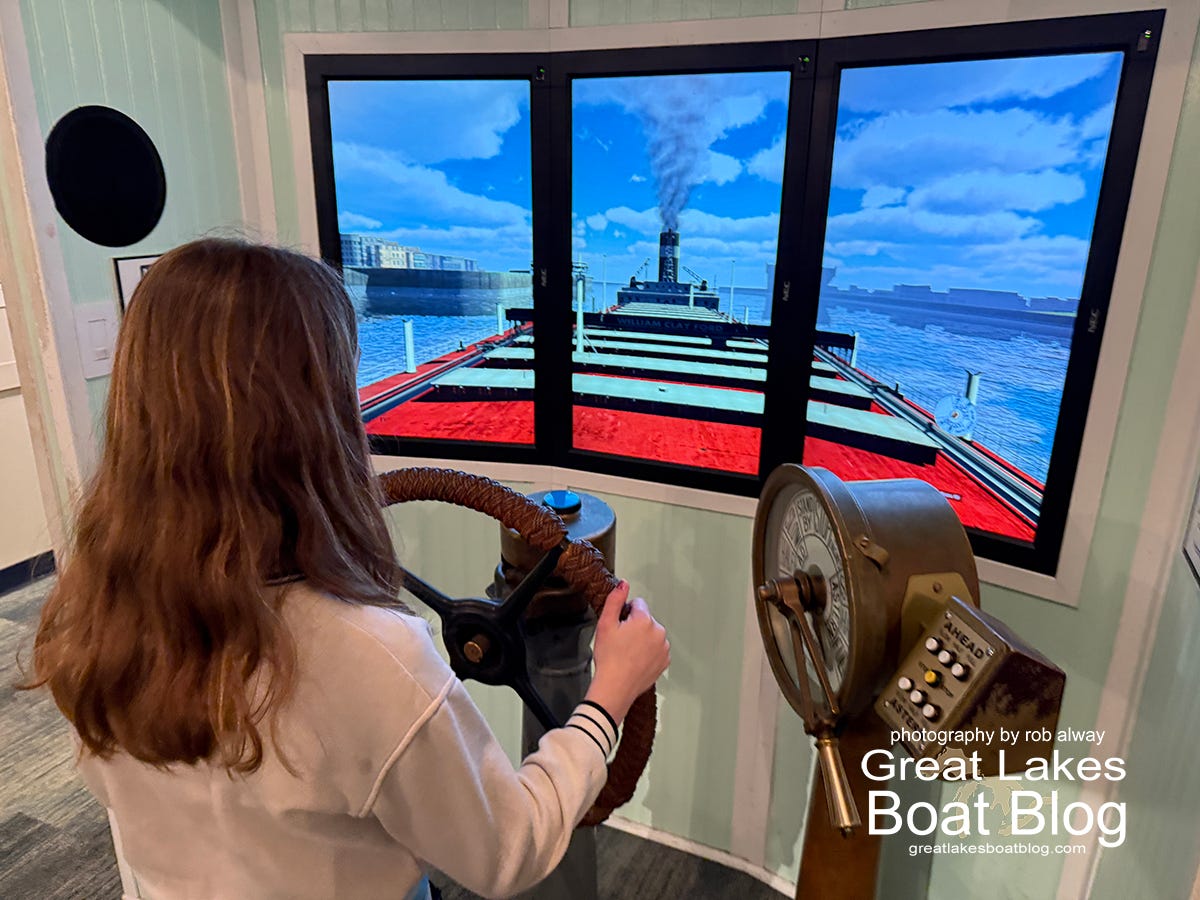
The exhibit includes the ship’s steering equipment and commanding views of the waterway. On the lower level, interpretive displays explain the operation of bulk freighters and the William Clay Ford‘s participation in the search for the Edmund Fitzgerald.
An interactive simulator also allows visitors to attempt to maneuver a freighter into port.
The preserved pilothouse is particularly meaningful because it connects the historical experience of operating a Great Lakes steamer with the commercial shipping activity still taking place outside its windows.
The anchor of the Edmund Fitzgerald
Among the most recognizable artifacts at the Dossin Great Lakes Museum is the enormous starboard bow anchor of the Edmund Fitzgerald.
Unlike many artifacts associated with shipwrecks, the anchor was not recovered from the vessel’s final resting place in Lake Superior.
Instead, it was lost in the Detroit River nearly two years before the sinking.
On Jan. 7, 1974, the Edmund Fitzgerald was at the Belle Isle Anchorage when a link in her anchor chain separated, causing the approximately 12,290-pound anchor to fall to the river bottom.
The anchor remained underwater for more than 18 years.
Divers located it on May 20, 1992, and it was recovered on July 20 of that year. The following day, it was delivered to the Dossin museum.
The anchor is now displayed outdoors as part of the Lost Mariners Memorial, which honors those who have perished on the inland seas.
Its connection to the Edmund Fitzgerald makes it one of the museum’s most significant artifacts, but its story is also unusual. It represents a tangible piece of a ship that would become internationally known for her tragic loss.
The museum’s collection provides visitors with a broader understanding of the vessel, the November 1975 storm and the search efforts that followed.
From hydroplane racing to ship models
The museum’s maritime collection extends far beyond commercial shipping.
Near its entrance is Miss Pepsi, a championship hydroplane associated with the Dossin family.
The family’s involvement in powerboat racing began in the 1940s, when brothers Russell, Walter and Roy Dossin used racing to promote their soft drink business.
Their company became a major bottler and distributor of Pepsi-Cola in Michigan and northern Ohio.
The brothers’ interest in racing eventually produced some of the most successful hydroplanes of their era.
The preserved Miss Pepsi was designed by John Hacker and built by Les Staudacher’s company. Powered by two aircraft engines, she established speed records and became a dominant force in unlimited hydroplane competition during the early 1950s.
The boat was retired from racing after her final appearances in 1956 and later became a permanent exhibit at the museum, with a dedicated pavilion completed in 1963.
Beyond the hydroplane, the museum maintains an extensive collection of scale ship models representing centuries of maritime transportation.
The Richard and Jane Manoogian Ship Model Showcase includes examples of vessels that helped build the regional economy, from early sailing craft to passenger steamers and commercial freighters.
The museum’s Built by the River exhibition explores the role of the Detroit River in the region’s development.
Detroit’s location along an important Great Lakes transportation corridor made the city a strategic center for trade, military activity, shipbuilding and manufacturing.
Before the emergence of modern highways and railroads, the waterways served as essential transportation routes for people, raw materials and manufactured goods.
The exhibit also examines the region’s Indigenous history, fur trade, international connections and recreational boating traditions.
Together, the collections demonstrate that Detroit’s maritime history is not simply a story of ships. It is also the story of the people, industries and communities whose lives were shaped by the water.
Belle Isle’s connection to Great Lakes shipping
The Dossin museum’s location is especially appropriate.
Belle Isle sits in the Detroit River between Detroit and Windsor, Ontario, placing it along one of North America’s most important international shipping corridors.
The island was acquired by the city of Detroit from the Campau family in 1879 and opened as a public park the following year. Today, it is managed by the Michigan Department of Natural Resources.
The park’s waterfront provides views of commercial vessels passing through the river. Depending on vessel traffic, visitors may see bulk carriers transporting iron ore, stone, coal or grain, along with tankers and other commercial craft.
Belle Isle also has a long history of recreational boating.
The Detroit Yacht Club and Detroit Boat Club have historic facilities on the island, reflecting the importance of sailing, rowing and other water sports to generations of Detroit residents.
Another significant maritime landmark is the Livingstone Memorial Lighthouse, located near the island’s eastern end.
The lighthouse honors William Livingstone, a Detroit businessman and longtime president of the Lake Carriers Association who was instrumental in improving navigation through the Detroit River.
Designed by Albert Kahn and completed around 1930, the Art Deco lighthouse is constructed of Georgia marble. It remains an active navigational aid and an unusual example of lighthouse architecture.
Livingstone’s work also is remembered through the Livingstone Channel, an important deep-water navigation route in the lower Detroit River.
An aquarium and conservatory from another era
While maritime history is central to Belle Isle’s identity, the island is also home to two of Detroit’s most distinctive historic public buildings.
The Belle Isle Aquarium and Anna Scripps Whitcomb Conservatory opened on Aug. 18, 1904. Both were designed by architects Albert Kahn and George D. Mason.
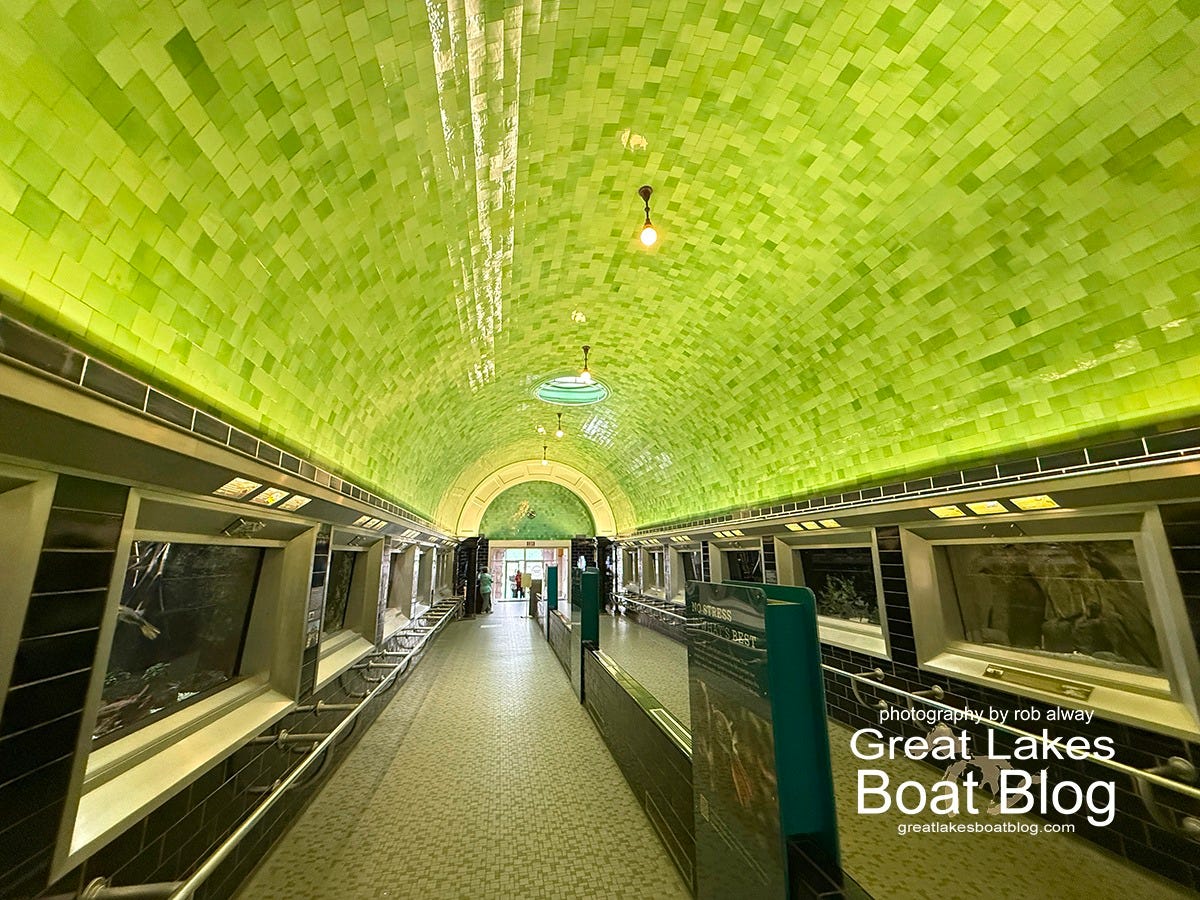
The aquarium is recognized as the oldest public aquarium in the continental United States. At the time of its opening, it was the third-largest aquarium in the world.
Its architecture is nearly as impressive as its aquatic collection.
A carved image of Neptune, the Roman god of the sea, appears above the entrance. Inside, sea-green glass tiles cover the vaulted ceiling and walls, creating an underwater atmosphere.
The aquarium features freshwater and saltwater species, including fish from the world’s great lakes and rivers.
Financial difficulties forced the city to close the aquarium in 2005. Volunteers helped preserve the facility until its reopening in 2012, and the Belle Isle Conservancy has continued to support its operation and restoration.
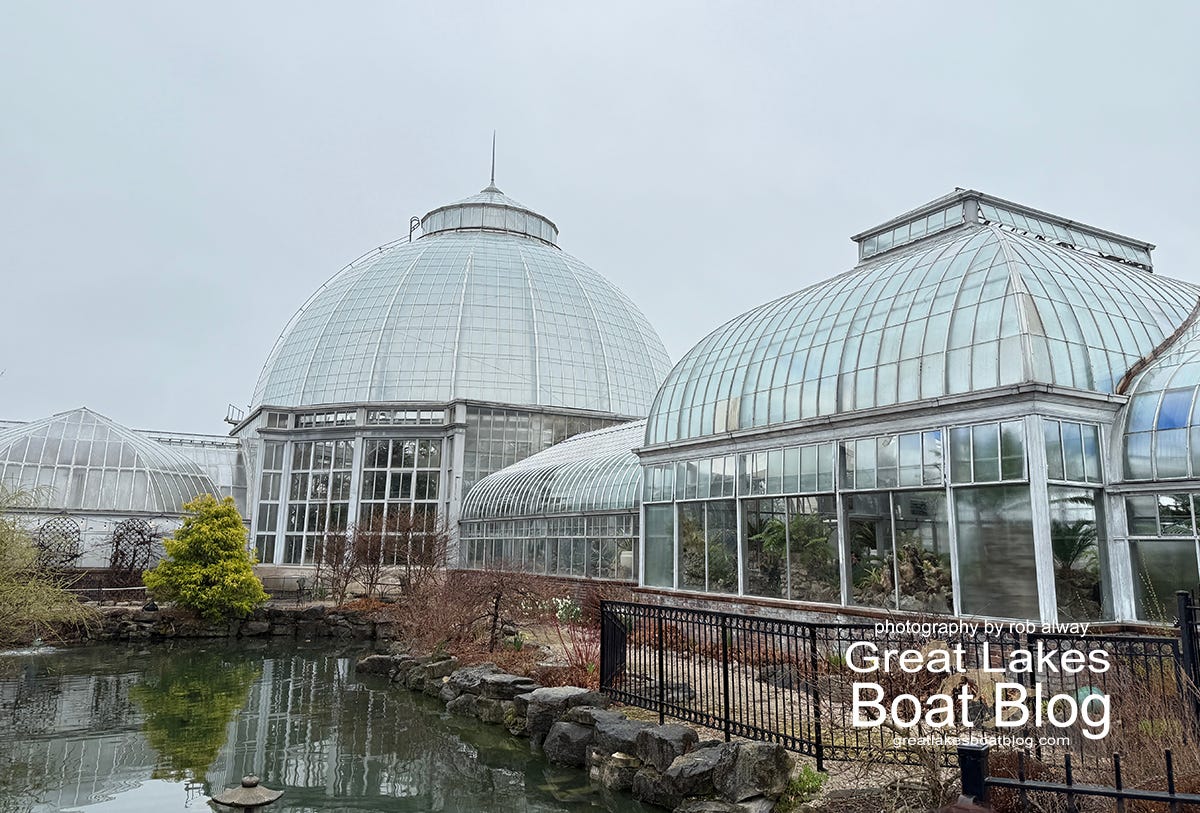
Next door, the Anna Scripps Whitcomb Conservatory preserves another part of Detroit’s architectural and botanical heritage.
The glass-domed conservatory contains five distinct growing environments, including tropical plants, palms, ferns, cacti and seasonal floral displays.
Originally known as the Horticulture Building, the conservatory was renamed in 1955 in honor of Anna Scripps Whitcomb, who donated a collection of approximately 600 orchids to the city.
The conservatory underwent an extensive renovation beginning in 2022, including replacement of more than 1,500 glass panes in its iconic dome. It reopened in December 2024.
Together, the aquarium and conservatory illustrate the investment Detroit made in public cultural and educational facilities during the city’s period of rapid growth.
Nature and recreation along the river
Belle Isle also provides opportunities to explore the natural environment of the Detroit River.
The Belle Isle Nature Center, operated by the Detroit Zoological Society, offers educational exhibits focused on Michigan wildlife, habitats and conservation.
The center introduces visitors to the plants and animals that inhabit the region, including the relationships between wildlife and urban environments.
Elsewhere on the island are walking paths, lagoons, fishing locations, beaches, athletic fields and historic architectural landmarks.
The James Scott Memorial Fountain, completed in 1925, is among the park’s best-known attractions.
Belle Isle’s combination of natural areas, historic buildings and active shipping makes it a distinctive destination. Visitors can move between the quiet surroundings of a conservatory and the industrial world represented by a passing Great Lakes freighter in a matter of minutes.
For those interested in maritime history, however, the Dossin Great Lakes Museum remains the island’s centerpiece.
Few places offer the opportunity to stand inside the pilothouse of a vessel connected to the Edmund Fitzgerald, walk through the restored lounge of a grand passenger steamer and view historic nautical artifacts before stepping outside to watch the continuing movement of commercial shipping.
The museum is more than a collection of objects from the past. It connects generations of Great Lakes sailors, shipbuilders, passengers and waterfront communities with the vessels still operating on the inland seas.
And the river flowing past its windows is a reminder that Great Lakes maritime history is not confined to a museum. It continues to be written with every vessel that passes Belle Isle.
Sources: Original Mason County Press article, April 8, 2025; Detroit Historical Society and Dossin Great Lakes Museum historical collections and exhibition materials; Michigan Department of Natural Resources; Belle Isle Conservancy; Historic Detroit; Detroit Zoological Society.