


By Rob Alway
The Alpena is the oldest active freighter on the Great Lakes. Built during World War II, she has survived major changes in the shipping industry, a dramatic reconstruction and a devastating fire. At 84 years old, she continues to carry cement between Great Lakes ports.
Originally named Leon Fraser, the vessel was launched Feb. 28, 1942, at Great Lakes Engineering Works in River Rouge, Michigan. She was built for Pittsburgh Steamship Co., a subsidiary of United States Steel Corporation, to transport iron ore from Lake Superior ports to steel mills on the lower Great Lakes.
At 639 feet, 6 inches long and 67 feet wide, the Leon Fraser was the longest freighter on the Great Lakes when she entered service. She was one of five nearly identical AA-Class bulk carriers built in 1942. Her four sister ships were the Enders M. Voorhees, A.H. Ferbert, Benjamin F. Fairless and Irving S. Olds.
Her maiden voyage began June 21, 1942, when she departed Detroit Light bound for Duluth, Minnesota.
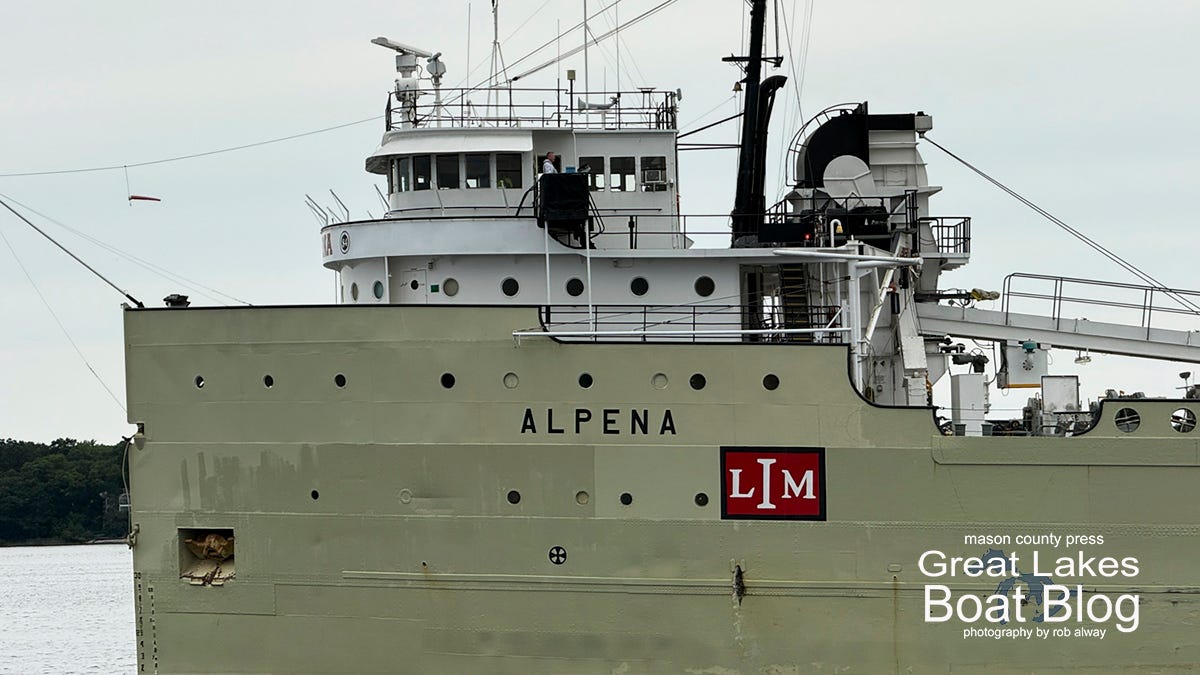
The Leon Fraser was equipped with a De Laval steam turbine powered by two Babcock & Wilcox water-tube boilers. Originally coal-fired, her boilers were converted to burn oil in 1970. The steam propulsion system remains in use today, making her one of the last steam-powered commercial vessels on the Great Lakes.
For nearly four decades, the ship transported iron ore and grain. During that time, Great Lakes shipping underwent substantial changes. The construction of larger bulk carriers, particularly the 1,000-foot freighters introduced during the 1970s, gradually made vessels such as the Leon Fraser less economical.
The ship was laid up at Lorain, Ohio, in December 1981, ending her career with the U.S. Steel fleet.
Her future remained uncertain for several years. In 1985, she was sold to Spitzer Marine as part of a proposed waterfront development in Lorain. That project never resulted in the vessel’s conversion, and she remained inactive.
In 1989, Fraser Shipyards of Superior, Wisconsin, purchased the ship and brought her to its facilities for an extensive reconstruction.
The project involved removing a 120-foot section from the middle of her hull and joining the bow and stern sections back together. The conversion reduced her overall length to approximately 520 feet.
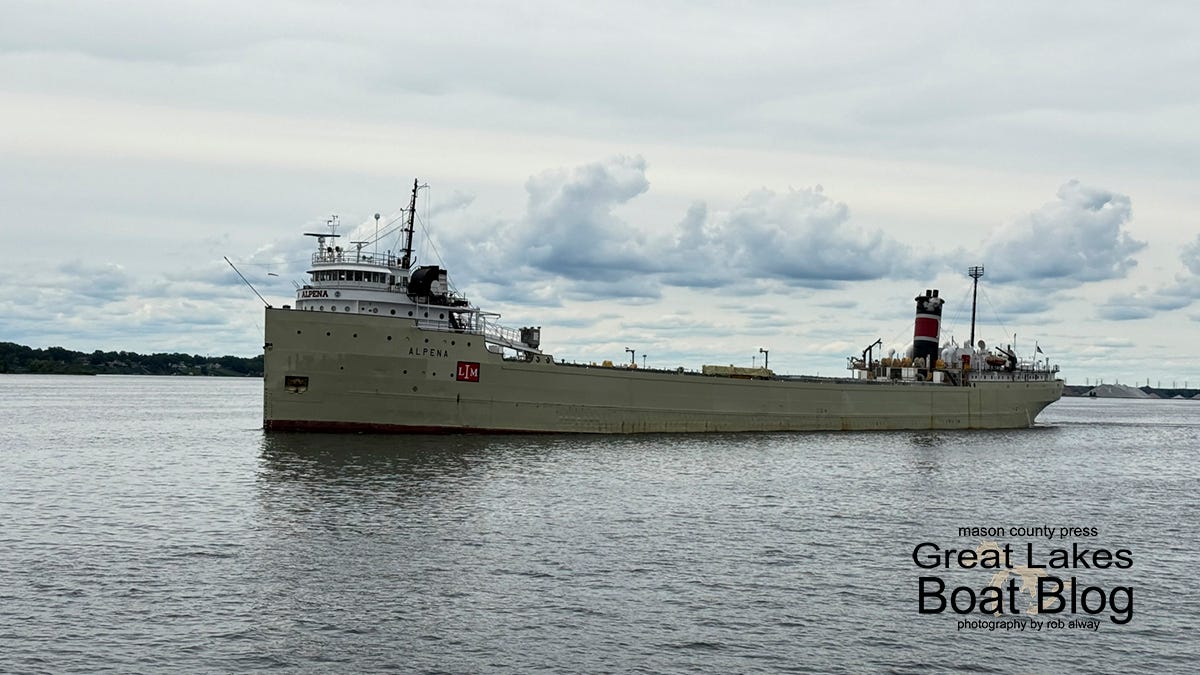
She was also converted from a conventional bulk carrier into a self-unloading cement carrier. The new configuration included cargo-handling equipment designed to transport and discharge dry bulk cement.
The ship was renamed Alpena in 1991, honoring the northeastern Michigan city that is home to one of the Great Lakes’ major cement-producing facilities.
The conversion gave the former ore carrier a second career, one that has now lasted more than three decades.
As the Alpena, she has transported cement to ports throughout the Great Lakes, including Chicago, Illinois; Milwaukee and Green Bay, Wisconsin; Duluth and Superior, Minnesota and Wisconsin, respectively; and Muskegon, Michigan.
The ship’s long career has not been without difficulties.
In December 2015, while the Alpena was undergoing maintenance in dry dock at Fincantieri Bay Shipbuilding in Sturgeon Bay, Wisconsin, a serious fire broke out in an electrical control room near her stern.
The fire spread into the vessel’s aft accommodations and caused extensive damage. More than 80 firefighters responded to the blaze.
A National Transportation Safety Board investigation determined that faulty electrical wiring supplying power to an aft anchor winch caused the fire. The damage was estimated at nearly $4 million. No injuries were reported.
Despite the severity of the damage, the ship was repaired and returned to service in 2016.
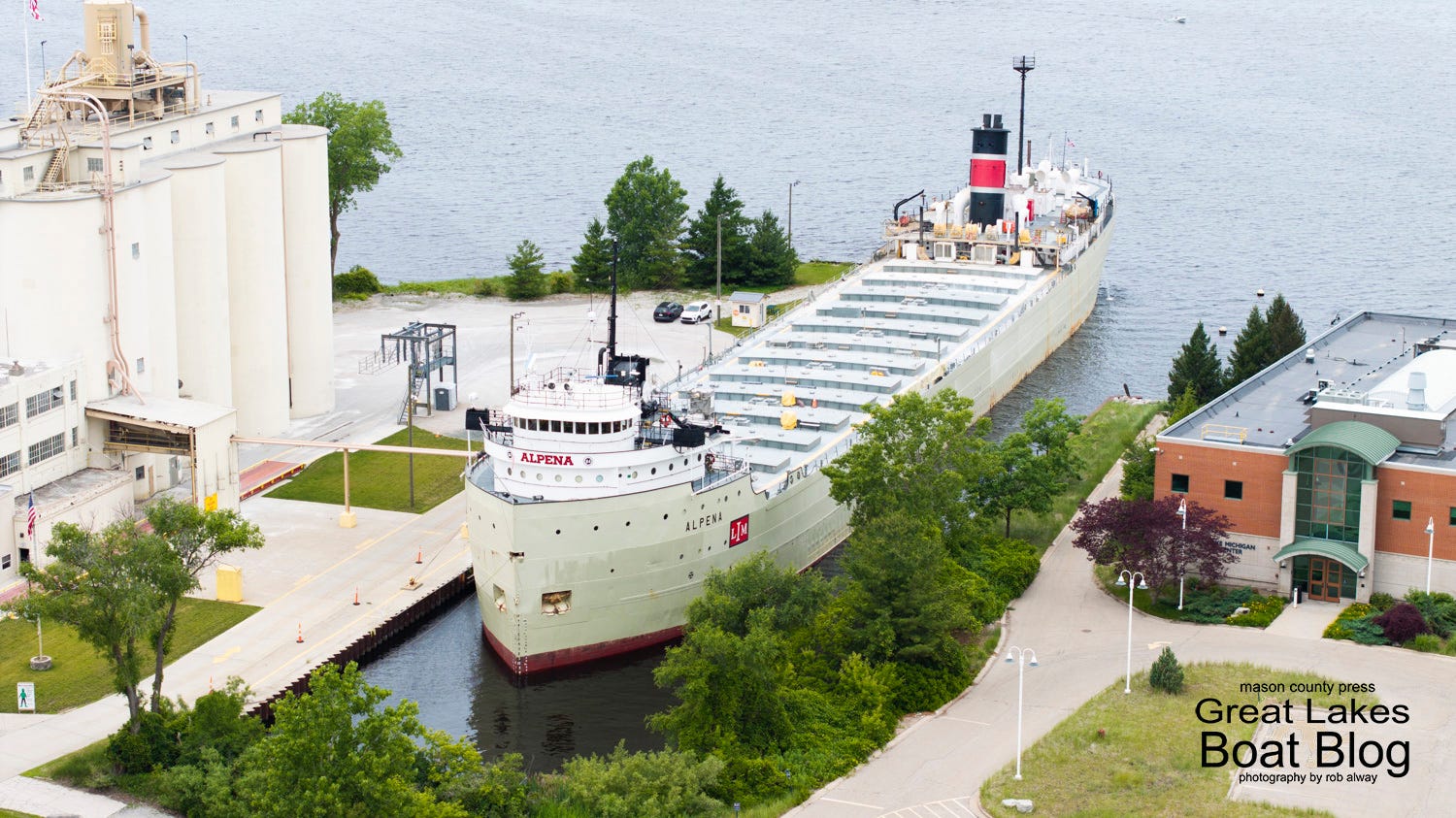
The Alpena is operated by Inland Lakes Management and Andrie Transportation Group, based in Muskegon. Her primary cargo remains cement, an essential material used in concrete production and construction projects throughout the Great Lakes region.
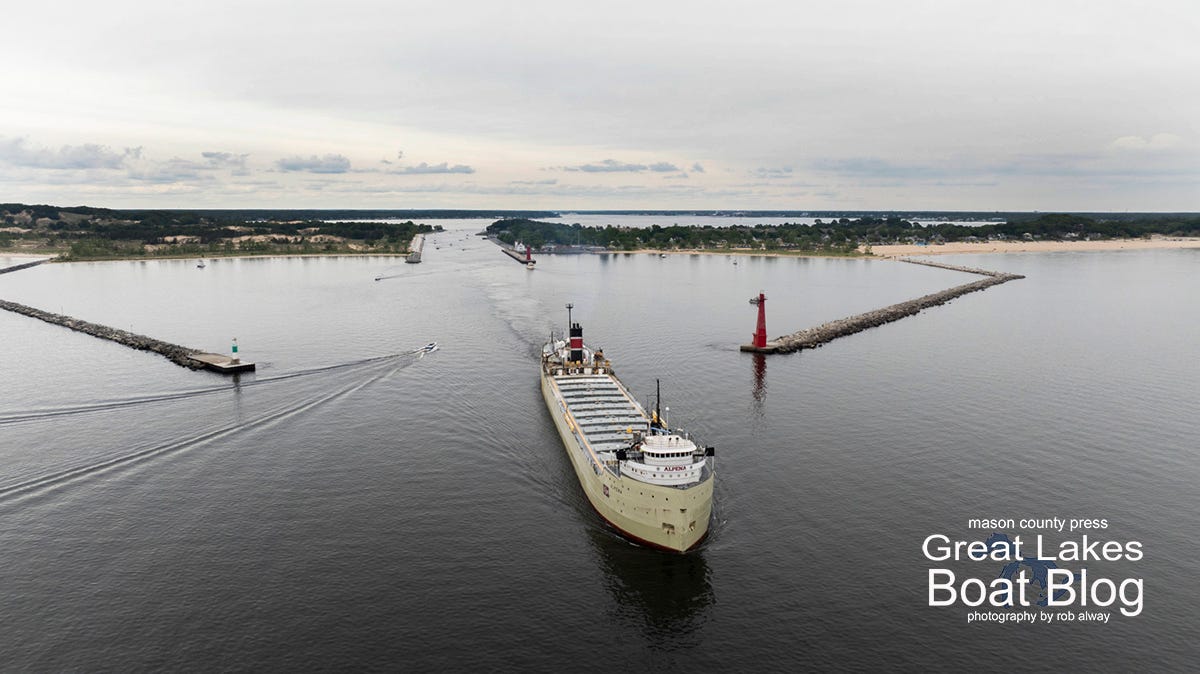
Earlier this year, I had an opportunity to photograph the Alpena as she departed Muskegon Lake after visiting the Lafarge cement terminal. I photographed her from the air as she passed the Muskegon South Pierhead Lighthouse and entered Lake Michigan.
Although considerably shorter than the modern bulk carriers that dominate Great Lakes commerce, the Alpena retains the unmistakable appearance of a traditional Great Lakes steamship. Her pilothouse sits forward, her engine room and accommodations are aft, and her long cargo deck reflects the design of the freighters that dominated the lakes for much of the 20th century.
There are few vessels still operating on the Great Lakes with a history comparable to the Alpena. All four of her sister ships have been scrapped, and most of the freighters built during her era disappeared from commercial service decades ago.
The ship that entered service as the Leon Fraser in 1942 has now spent more years carrying cement as the Alpena than she spent hauling ore and grain for U.S. Steel.
Eighty-four years after her launch, she remains a working Great Lakes freighter, carrying cargo through many of the same waterways she first traveled during World War II.
Help support this Substack page and check out our merchandise store.
This story is copyrighted 2026 by Sable Points Media.