


By Rob Alway
The Armistice Day Storm killed dozens of sailors aboard freighters off the Michigan shoreline. But near the Silver Lake sand dunes, a small fishing-tug crew would bring 17 survivors off the wrecked Novadoc. Farther south, two other fishing tugs never returned.
Novadoc: Seventeen men rescued from the wreck
Just offshore from Juniper Beach in Golden Township, Oceana County, near the Silver Lake sand dunes, the Canadian freighter Novadoc lay broken and partly submerged with survivors aboard. Her position is recorded as 43° 41.801′ N, 86° 30.954′ W.
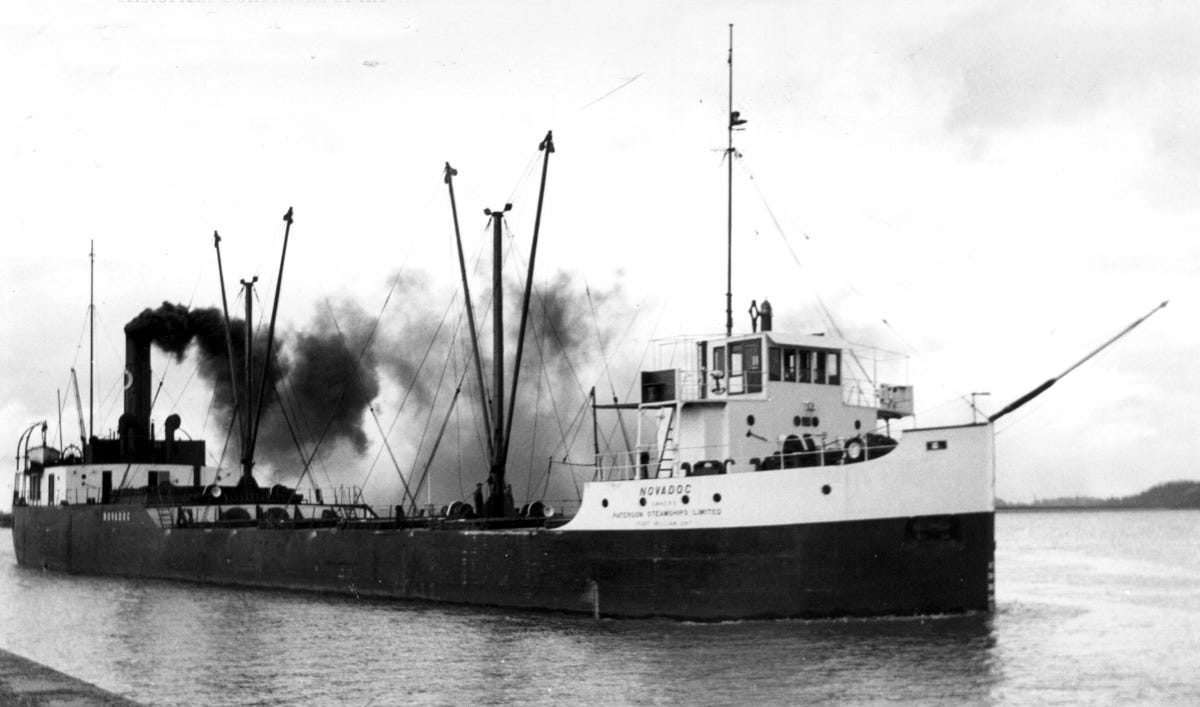
Built in 1928 by Swan, Hunter & Wigham Richardson Ltd. at Wallsend-on-Tyne, England, for Paterson Steamships Ltd. of Fort William, Ontario, Novadoc measured 253 feet long with a 54-foot beam. With 19 crew members, she was traveling from Chicago to Port Alfred, Quebec.
Capt. Donald Steip of Wiarton, Ontario, had been steering close to Lake Michigan’s eastern shore while the wind came from the southeast. When it swung around to the southwest and strengthened dramatically, the position became dangerous. Steip eventually decided to let Novadoc ground on the shore.
“The boat just couldn’t compete with the waves,” he told the Ludington Daily News in an interview published Nov. 13. He worried particularly about nine men trapped toward the stern after the ship broke apart. During the night he saw matches being lit in that portion of the wreck, evidence that at least some were still alive. Steip also recalled having seen Anna C. Minch near Grand Haven and believed she had been lost.
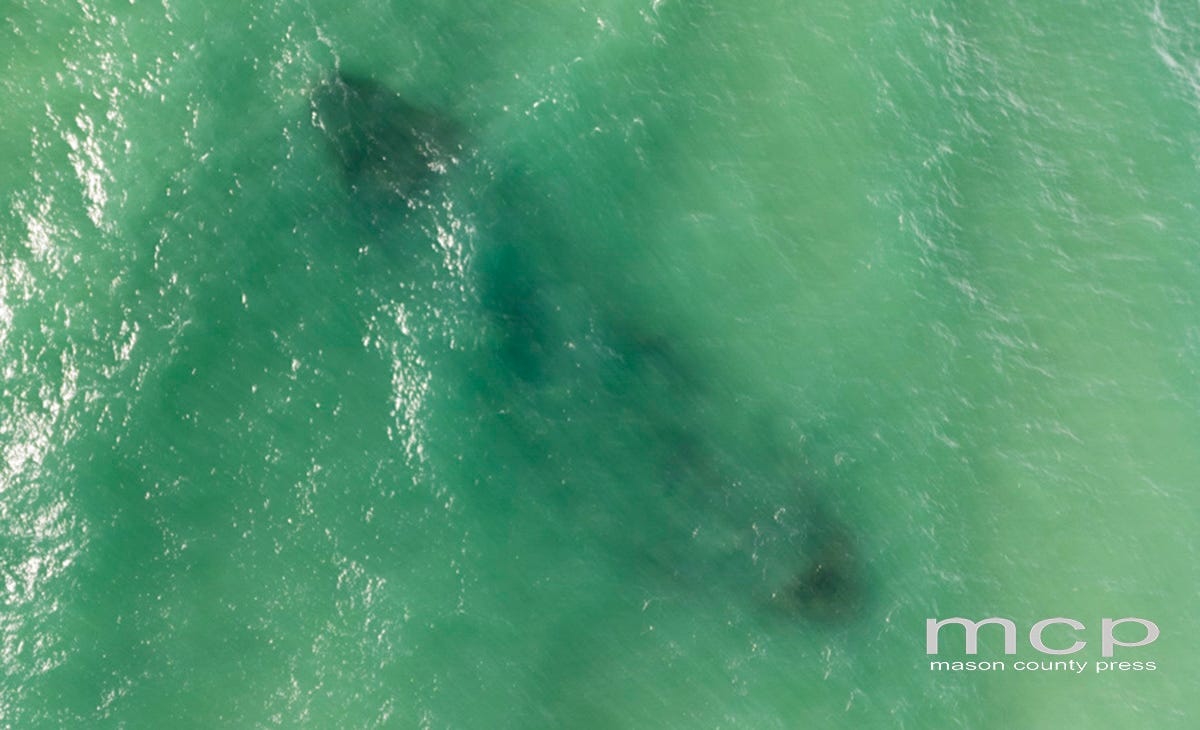
Two cooks aboard Novadoc died. The other 17 crew members survived a wait of at least 36 hours, crowding into the cramped pilothouse, which was the only part of the broken ship still above water. The Ludington Daily News portrayed their ordeal and rescue as a remarkable drama in Great Lakes shipping history.
At about 9:30 a.m. Nov. 13, after the seas finally eased, the Pentwater fishing tug Three Brothers II reached the stricken steamer shortly before a Coast Guard boat. Onboard were fishermen Clyde Cross, Gustave Fisher and Joe Fountain. A contemporary newspaper account printed the name Harry Cross, but the convergence of later maritime histories and survivor accounts supports Clyde Cross as the skipper who led the rescue. All 17 survivors were able to climb from the wreck onto the tug without assistance.
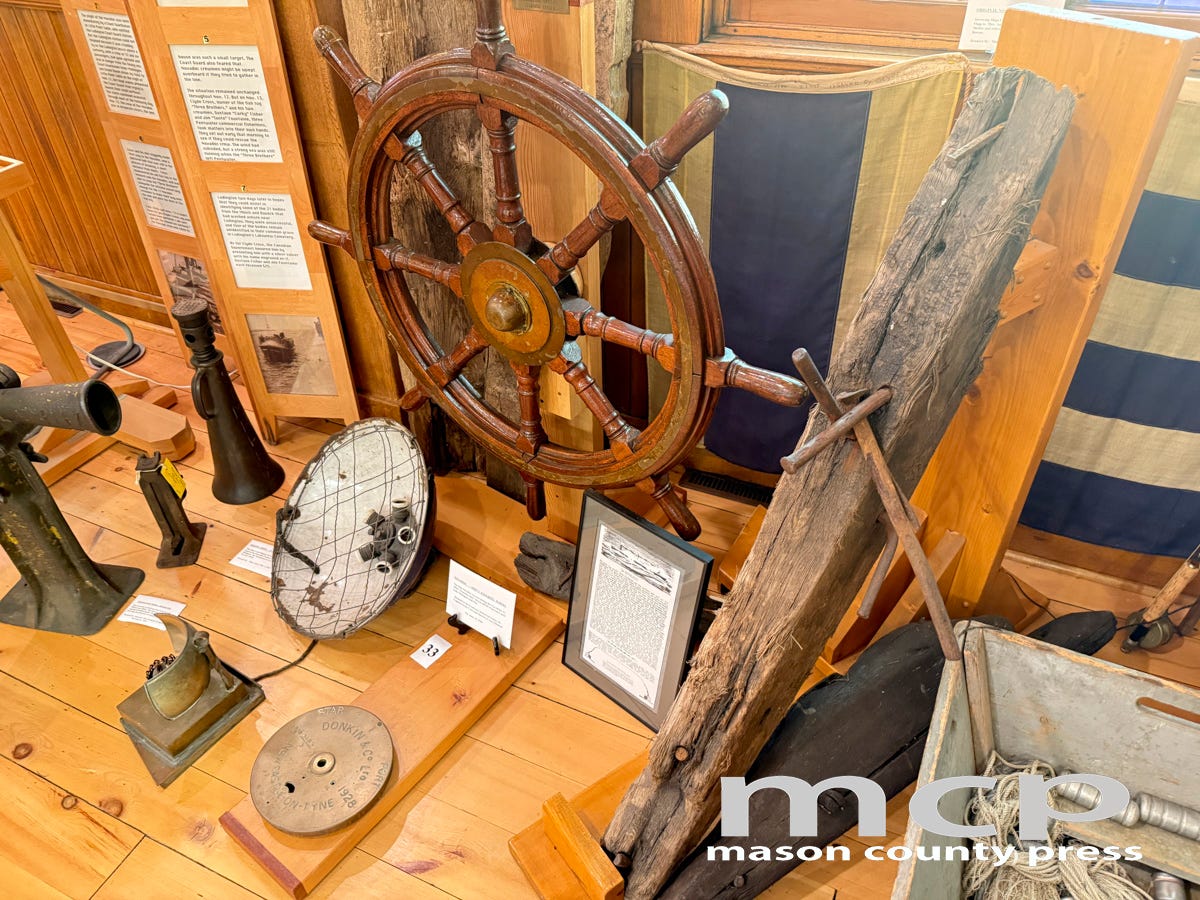
Van Heest later explained that the fishermen had become impatient with the Coast Guard’s reluctance to attempt the rescue in such hazardous seas. The Coast Guard considered conditions too dangerous, but the fishermen insisted on going out. The survivors were taken to the Pentwater Coast Guard station, where they received dry clothing, food and beverages.
The men aboard Novadoc had used flares during the night to signal that they were still alive. The rescue was narrowly timed: as the sailors came off, the remains of the ship settled farther into the surf until the decks and part of the superstructure were awash. Coast Guardsman Raymond Chapman of Muskegon was injured during rescue operations and taken to Paulina Stearns Hospital in Ludington for exposure, possibly hypothermia.
First Mate Dick Simpell of Midland, Ontario, believed that a sudden change of wind would have finished the vessel. Before the rescue, he estimated that Novadoc might have remained intact for only another two hours. Steip described the storm as the worst he had encountered in 18 years on the Great Lakes.
Crewman Howard Goldsmith of Binghamton, Ontario, told the newspaper that he and seven others had crawled over icy, twisted steel bulkheads to reach the bow. He had been in the aft section with the two cooks who died. The names are given in a maritime-history index as Joseph Deshaw and Phillip Falvin; contemporary reports and the original roster variously printed DeShane, DeShaw, Flavin and Pfalvin. The victims’ precise hometowns are likewise inconsistent in the secondary sources. Goldsmith did not know what happened to them; he said that an intact bulkhead was the only thing that made the perilous passage forward possible.
Richard H.: A South Haven fishing crew disappears
The steam-powered fishing tug Richard H. was built in Marinette, Wisconsin, in 1923. According to the Michigan Shipwreck Research Association, she registered 19 tons and measured 43.8 feet long with a 12-foot beam. Her original owner was William Prue of Green Bay, Wisconsin.
Capt. John McKay Sr. bought the tug in 1939 and remodeled her upper structure, lowering it by 10 inches. McKay had come from Alpena, Michigan, and moved his family to South Haven in the spring of 1936. He operated several fishing boats as well as a laundry business.
On Nov. 11, 1940, Richard H. was fishing in southern Lake Michigan with three men aboard. John McKay Jr., 28, was one of them. Born in Alpena, he worked for his father on the fishing boats and drove a laundry truck. He had married Blanche Maxwell, formerly of Chicago, in March 1940, and they lived in South Haven.
The other two men were Stanley White, 33, and John Taylor, 35. Although White was on his first trip with Richard H., he was an experienced fisherman and boatman who had moved to South Haven from Rhinelander, Wisconsin, identified in the original account as Rhineland. Taylor was married and had two children.
All three men disappeared with the tug. McKay Sr., who had remained ashore that day, joined the subsequent search.
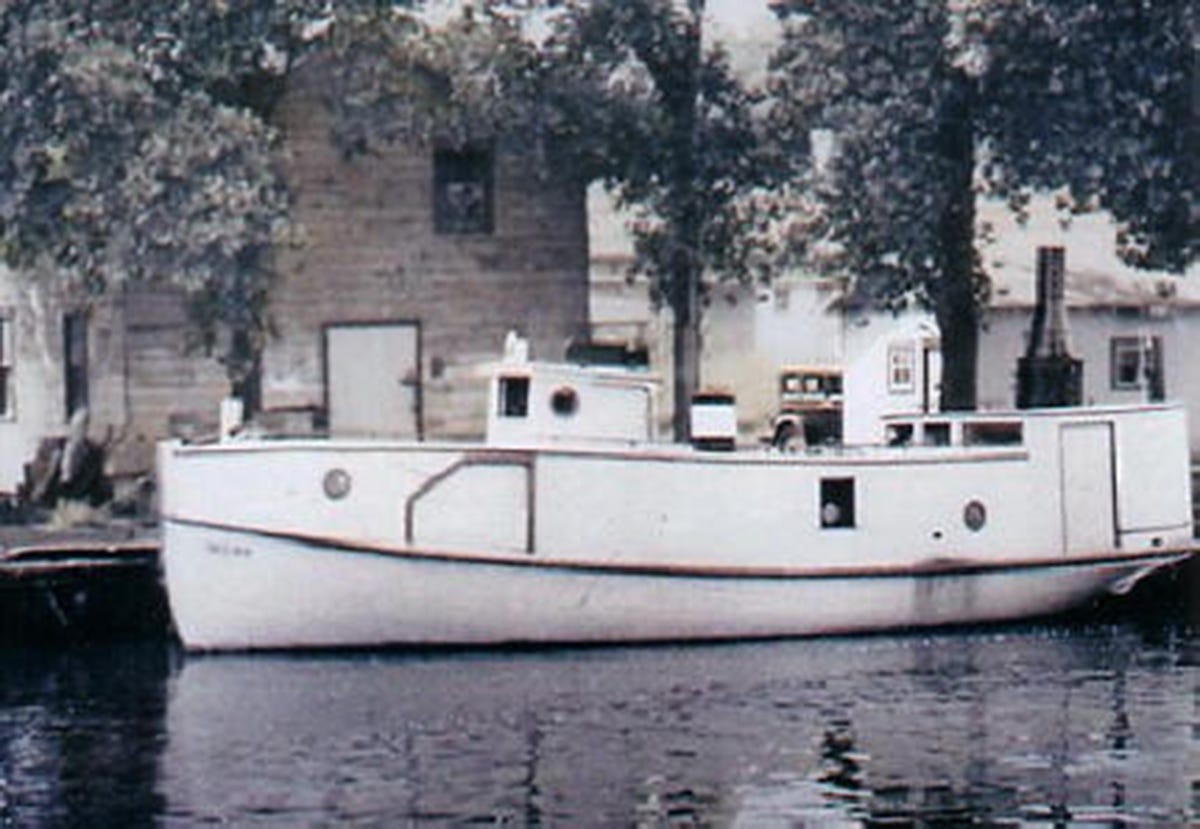
Indian: Another fishing tug lost
The fishing tug Indian was constructed in 1914 by Burger Boat Co. of Manitowoc, Wisconsin, with steam propulsion. She was 40.1 feet long, 12 feet wide and registered 26 gross tons. Her machinery was changed to a Kahlenberg oil engine in 1936. James Madsen of South Haven purchased her in 1939.
Madsen, 55, was among four men aboard when Indian departed on Nov. 11. MSRA names the others as Harold Richter, 35; Bill Bird, 30; and Art Reeves, whose age was reported as 50. An earlier narrative inadvertently listed “Jim Madson” in addition to James Madsen, creating the appearance of a fifth man, while its printed casualty roll also included Chris Walkild and used the name Glenn Richter. Those additional or alternate names are retained in the research notes below as unresolved discrepancies, not counted as confirmed deaths aboard Indian.
Both Indian and Richard H. were fishing for trout and whitefish on opening day of trout season. Indian departed South Haven at 7:35 a.m.; Richard H. followed around 9 a.m., shortly before Coast Guard storm warnings were issued. Neither fishing crew received the warning.
The storm reached southern Lake Michigan around 1:30 p.m. As sustained winds climbed to 60 mph, with gusts up to 75 mph, Richard H. was sighted approximately five miles offshore. Waves were rapidly building. Within an hour, both tugs had vanished. At 2:50 p.m., the Coast Guard launched a powered lifeboat to look for them.
First Class Boatswain’s Mate Elmer Dudley led the lifeboat crew, which also included Kenneth Cortwright, Jesse Meeker and Alvin James. When it failed to return by Monday evening, searchers faced the prospect of another loss. On Nov. 12, Coast Guard personnel patrolled the beaches between Benton Harbor and Holland, with patrols stationed at intervals of approximately four miles.
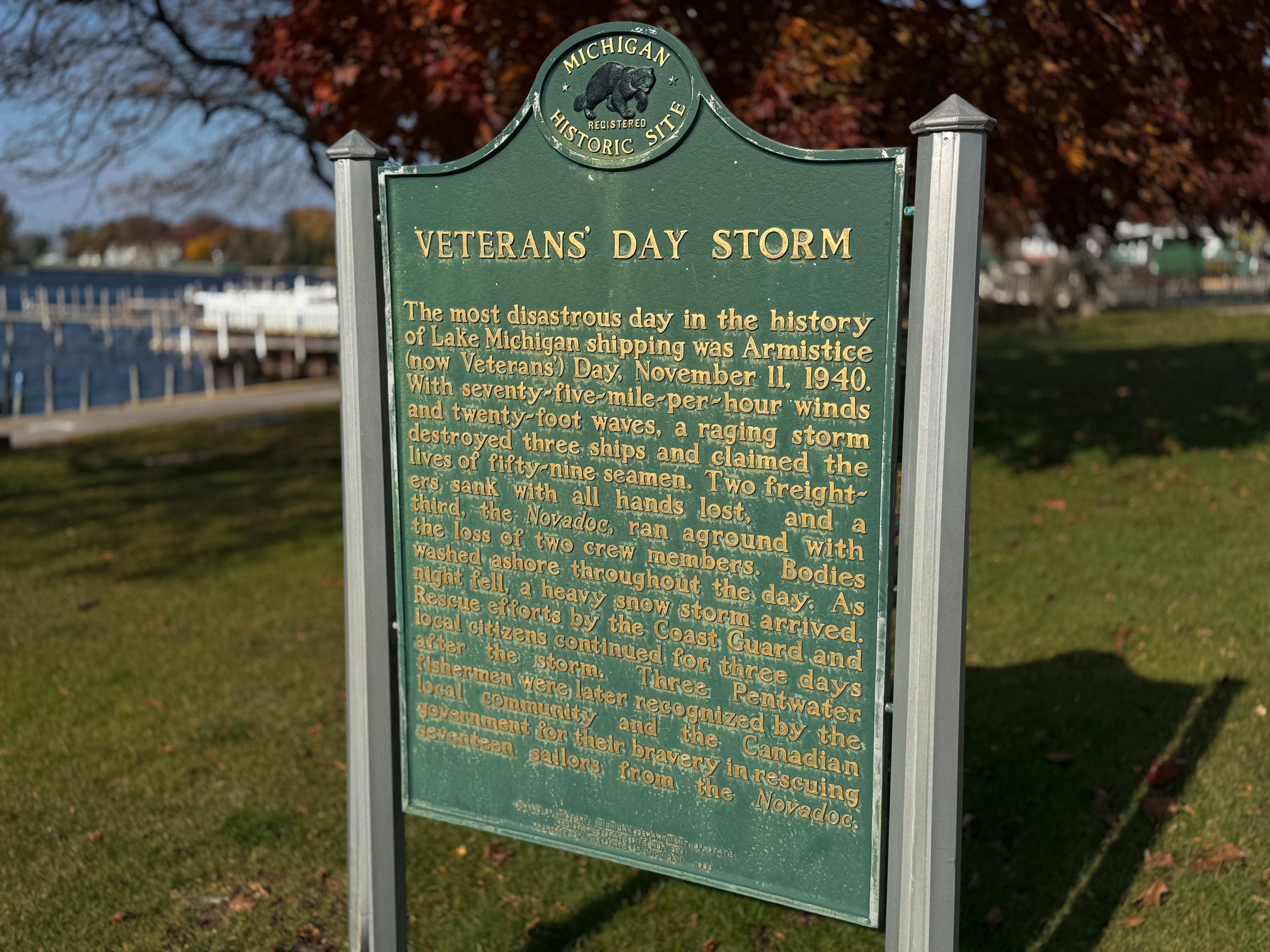
Around 6 p.m. Nov. 12, searchers found sections of Indian‘s hull on the beach between Holland and Grand Haven. More debris from Indian and Richard H. was discovered near Grand Haven on Nov. 13, including Indian‘s pilothouse roof and stack and a life preserver with broken straps and the nameboard from Richard H.
The Coast Guard lifeboat eventually was reported safe in Chicago. Her crew had fought seas said to reach 40 feet during a 25-hour ordeal after departing on the search.
At 9 a.m. Saturday, Nov. 16, the body of John Taylor, 35, was found in an inlet about a half-mile south of the Grand Haven breakwater. Debris from both tugs lay nearby. He was fully clothed and wore a life preserver. He was initially mistaken for Stanley White, but later identified as Taylor by a fellow fisherman and by his brothers. Three brothers who came to identify him removed his watch, which had stopped at 2:53 p.m. Some accounts call him John Taylor Jr.; MSRA describes him as John Taylor, and the available sources do not conclusively establish whether he used the suffix.
Taylor’s was the only recovered body among the seven fishermen confirmed lost aboard Richard H. and Indian. Two additional life preservers from Richard H. were recovered.
Final installment tomorrow, Nov. 11: What happened to the grounded *City of Flint 32*, how the disaster is remembered, and the names of the lost.
Sources: Ludington Daily News; Michigan Shipwreck Research Association; National Weather Service; contemporary rescue accounts.