


By Rob Alway
Editor’s note: For the past several years, I have made it a personal mission to tell the stories of the Great Lakes maritime industry and, especially, the people who work aboard its vessels. As someone who has spent much of my life watching, photographing and studying these ships, I believe their stories deserve to be told.
Documenting the industry is important for preserving its history, but it is equally important for its future. Great Lakes shipping plays a vital role in our nation’s economy, and its continued success depends on attracting new generations of skilled mariners.
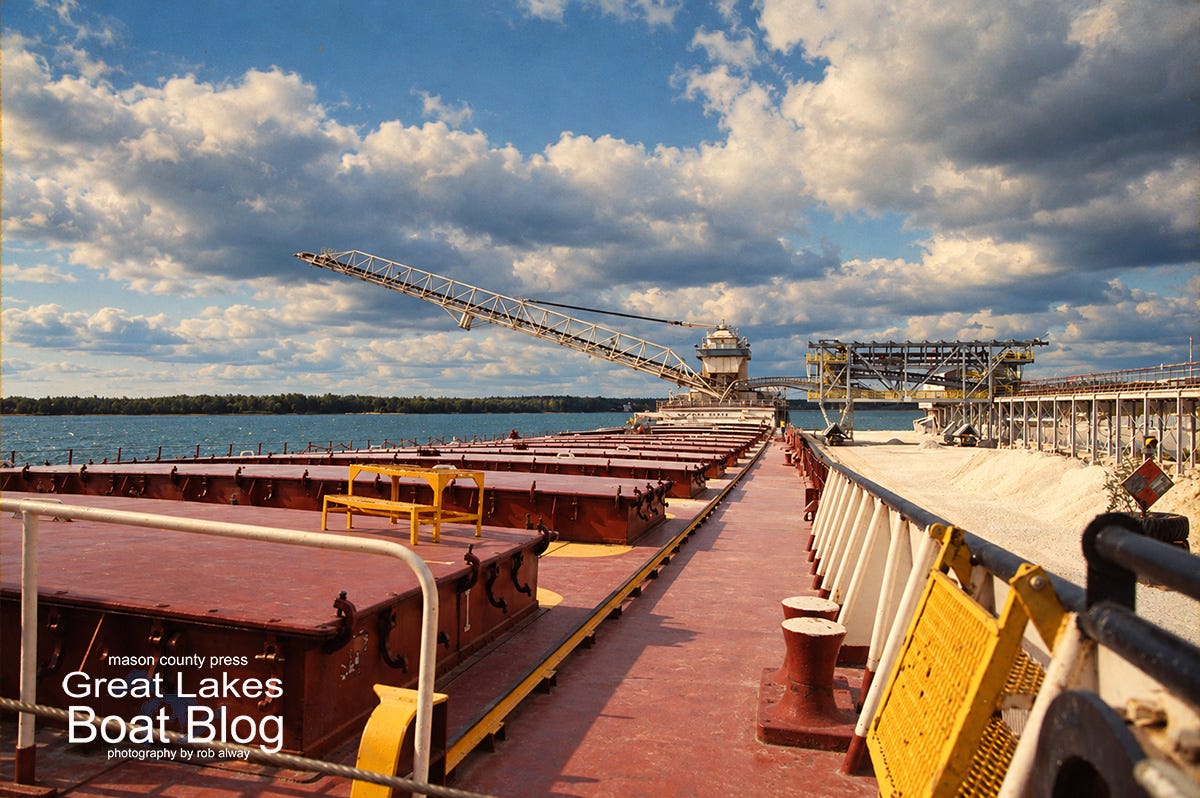
Recently, I spent five days aboard the SS Wilfred Sykes, a 1949 steam-powered freighter operated by Central Marine Logistics. This series explores the ship, the work it performs and, most importantly, the people who keep it sailing.
ABOARD THE SS WILFRED SYKES — Growing up in Escanaba, Michigan, Adam Larson knew his father worked aboard Great Lakes freighters, but he didn’t fully understand what that meant. His dad would be gone for months at a time, working on ships that Adam rarely had an opportunity to see up close.
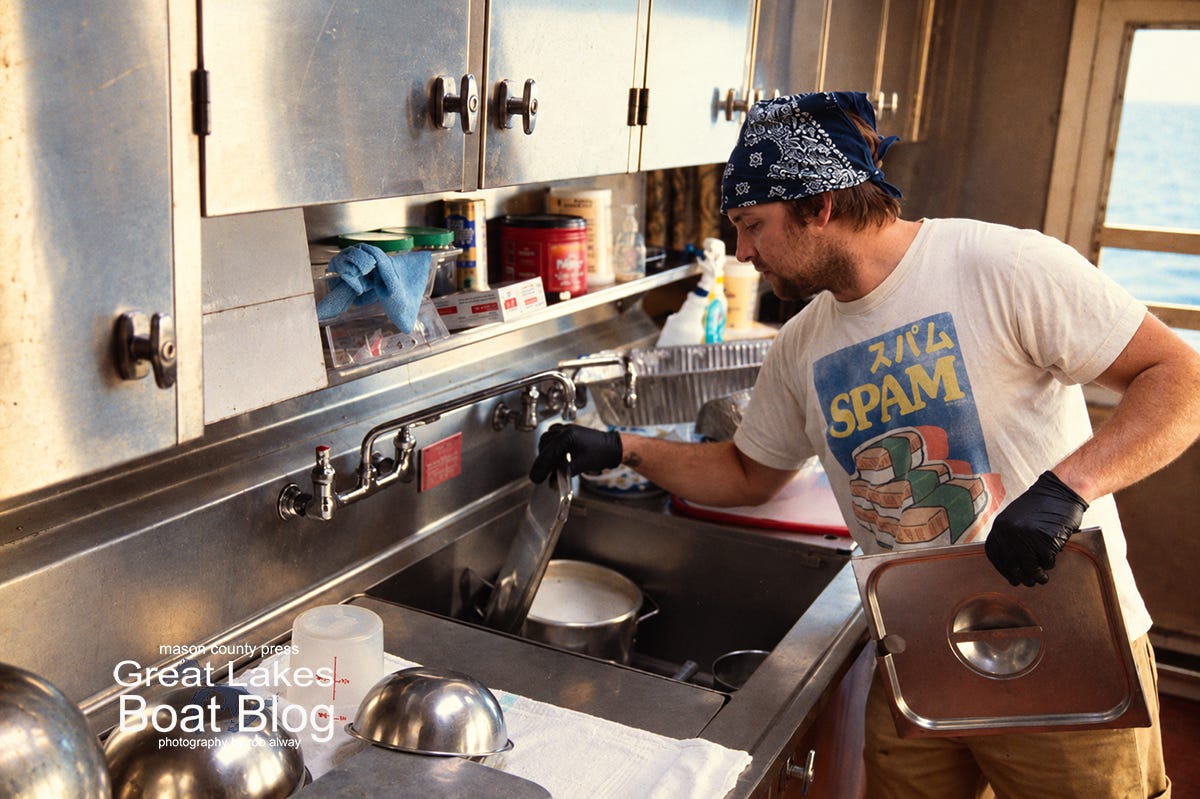
Years later, Larson followed his father’s career path. Today, the 32-year-old is an able seaman aboard the SS Wilfred Sykes, normally serving as a wheelsman and mate’s assistant. However, recently Larson has taken on a different assignment, temporarily working in the ship’s galley as a steward’s assistant.
Larson’s father, Brant Larson, spent about 30 years working on Great Lakes freighters, including many years aboard the Sykes as a wheelsman. Although as a young boy Adam knew his father worked on ships, he said it wasn’t until he got older that he began to appreciate the work his dad performed.
“My dad working on the lakes was certainly a big influence for me to follow this career path,” Larson said.
Larson graduated from Escanaba High School in 2012. After high school, he worked several part-time jobs but was frustrated by the limited income and lack of opportunities. At age 20, he decided to give Great Lakes shipping a try.
That was 12 years ago, a milestone he reached in September.
His first assignment was as an engine room wiper aboard the Joseph L. Block, another freighter operated by Central Marine Logistics. A wiper is an entry-level, unlicensed member of the engine department, performing cleaning, maintenance and other support duties under the direction of the ship’s engineering officers.
Larson enjoyed working aboard the freighter but eventually found that he wasn’t learning as much as he wanted in the engine room. When an opportunity arose to transfer to the deck department, he accepted it. He has worked on deck ever since.
Over the years, Larson advanced through the ranks of the unlicensed deck crew, earning his able seaman credentials and eventually becoming the ship’s boatswain, commonly called the bosun.
As boatswain, Larson was responsible for supervising the unlicensed deck crew, coordinating maintenance work, ensuring jobs were completed safely and helping train newer crew members.
He enjoyed the leadership responsibilities, particularly the opportunity to teach others. However, one of the challenges was the constant turnover of crew members. He would spend time training someone, only to have that person leave for another assignment.
Earlier this year, Larson decided to make another change, accepting the ship’s regular wheelsman position. A wheelsman is an able seaman assigned to the pilothouse, where he assists the mate on watch and steers the vessel under the direction of a licensed officer. Larson normally works the 12-to-4 watch.
The position also brought him closer to the work his father performed for much of his career.
For several years, Adam and Brant worked together aboard the Sykes. Brant retired a few years ago, but the years they spent sailing together remain an important part of Adam’s career.
While Larson enjoyed serving as boatswain, he said he doesn’t necessarily prefer one deck position over another. Each offers different responsibilities and opportunities.
The variety is one of the things he enjoys most about working aboard a freighter.
“I guess the best part is, you know, not having the same routine all the time,” he said. “Every day is a little different.”
He also credits the people he works with for making life aboard the vessel enjoyable.
“It’s mellow, very chill, and then the crew makes it fun,” he said.
During the recent voyage, that willingness to try something different brought Larson to the galley.
When the ship needed additional help preparing and serving meals to her crew, Larson volunteered to temporarily serve as steward’s assistant.
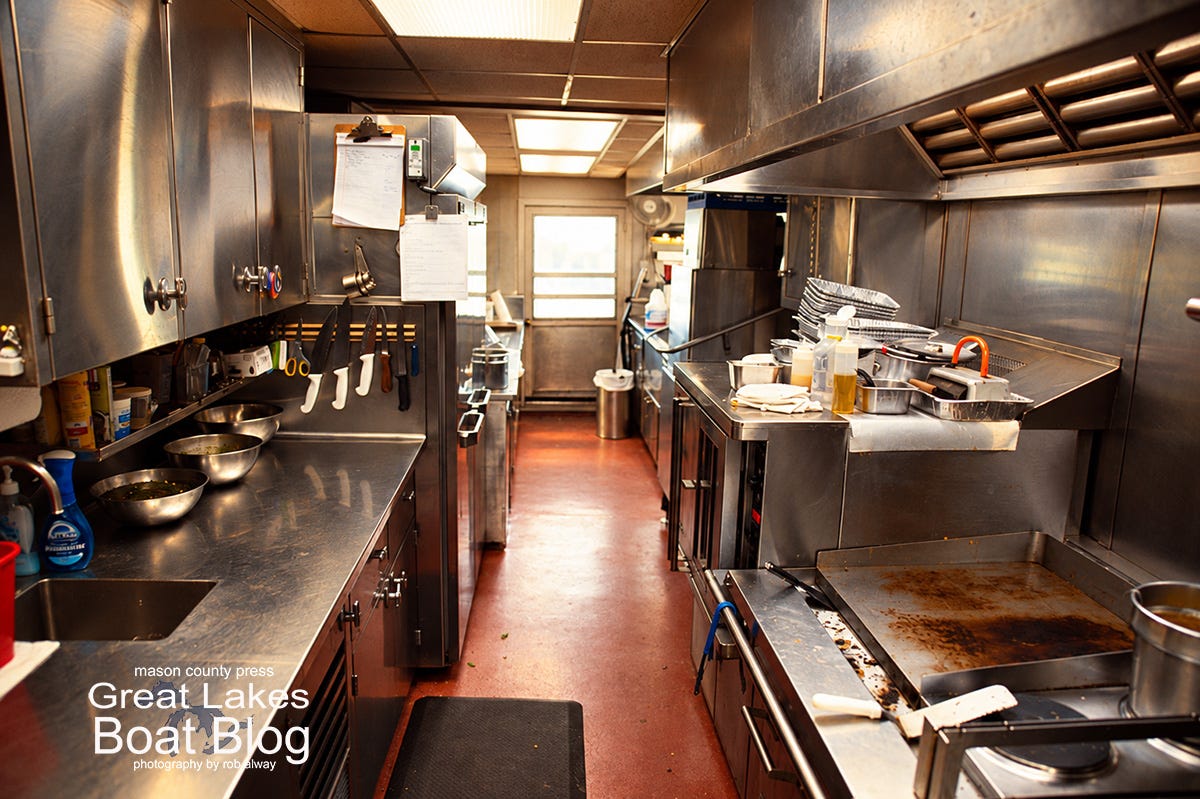
The job was considerably different from his regular deck duties. Rather than standing watch in the pilothouse or performing maintenance, he has been spending his days helping prepare meals, serving food, cleaning and assisting with the daily operation of the galley.
The galley has also offered a more predictable schedule, although that has meant working 12-hour days, every day.
Larson said he has enjoyed the change of pace and has received positive feedback from fellow crew members about his work.
After about two weeks in the galley, Larson was preparing to begin his vacation, which would conclude his temporary assignment. However, he said he would be willing to return to the galley if the ship needed his assistance again.
Beyond his regular duties, Larson also serves as the Sykes’ union representative for United Steelworkers Local 5000.
He has held the position for approximately four or five years, representing crew members in workplace matters and helping address concerns that arise aboard the vessel.
The role has also taken him beyond the ship. He has traveled to Cleveland, Ohio, to participate in union contract negotiations, giving him an opportunity to represent fellow mariners in discussions affecting their employment.
Larson has accumulated considerable seniority during his 12 years with the company. He said he ranks second among the Sykes’ unlicensed deck crew and fifth in seniority among unlicensed deck personnel across the company’s fleet.
Despite his experience, Larson said he continues to consider opportunities for advancement.
One possibility is pursuing a mate’s license, which would allow him to move from the unlicensed deck crew into the licensed officer ranks. That could eventually lead to positions as first mate or captain.
Larson said he has not yet begun the licensing process and continues to weigh whether that is the direction he wants to take.
He enjoys the hands-on responsibilities of his current work, but he also recognizes the increased earning potential and opportunities that come with becoming a licensed officer.
For now, he expects to remain with Central Marine Logistics. Living in Escanaba, he said there are limited opportunities at home that offer the same earning potential as working aboard Great Lakes freighters.
Like many mariners, Larson said the most difficult part of the job is spending extended periods away from home.
There are also challenging days when an anticipated regular shift turns into 12 or 16 hours because of unexpected work or mechanical problems.
Still, those challenges are outweighed by the benefits of the career and the relationships he has developed with his fellow crew members.
For Larson, the Great Lakes shipping industry has provided more than a job. It has given him a career with opportunities to learn, advance and take on new responsibilities, whether supervising a deck crew, steering a 678-foot freighter, representing fellow mariners or helping prepare their meals.
It is also a career that connects him to his father’s years aboard the same ship.
What began as curiosity about the work that kept his father away from home has become a profession Larson has made his own.
Next: Aboard the Wilfred Sykes: Part 10. More stories from the crew

Help support this Substack page and check out our merchandise store.
This story is copyrighted 2026 by Sable Points Media.