


By Rob Alway
Editor’s note: For the past several years, I have made it a personal mission to tell the stories of the Great Lakes maritime industry and, especially, the people who work aboard its vessels. As someone who has spent much of my life watching, photographing and studying these ships, I believe their stories deserve to be told.
Documenting the industry is important for preserving its history, but it is equally important for its future. Great Lakes shipping plays a vital role in our nation’s economy, and its continued success depends on attracting new generations of skilled mariners.
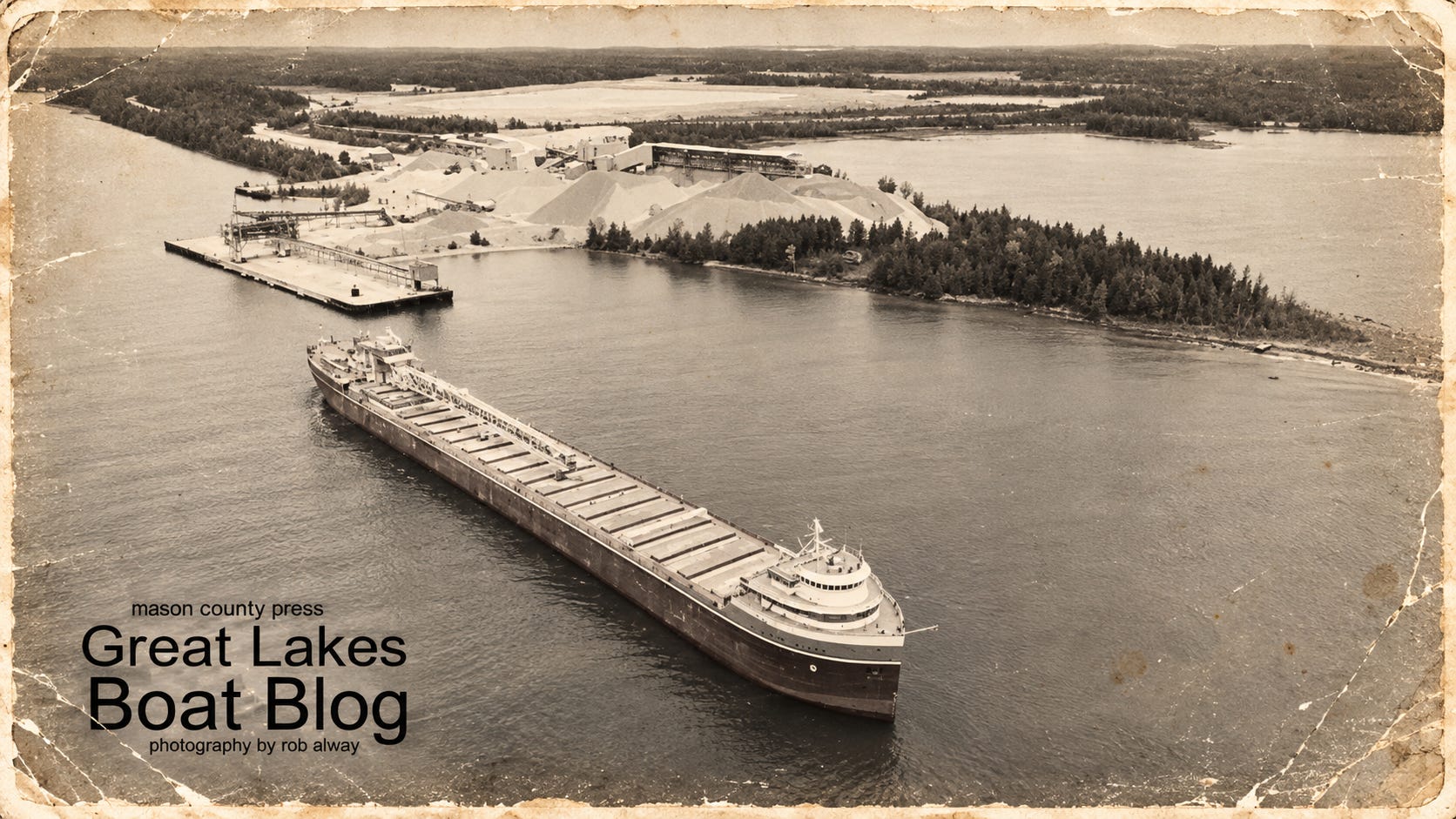
Recently, I spent five days aboard the SS Wilfred Sykes, a 1949 steam-powered freighter operated by Central Marine Logistics. This series explores the ship, the work it performs and, most importantly, the people who keep it sailing.
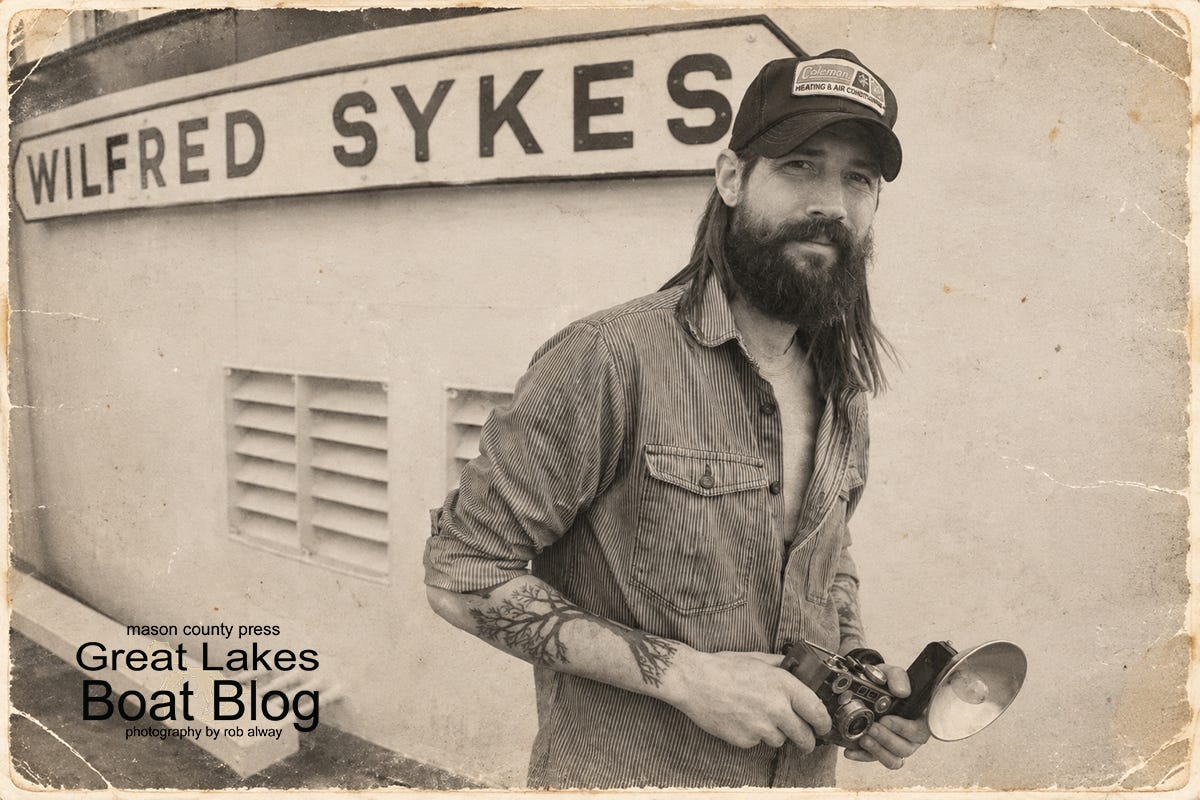
ABOARD THE SS WILFRED SYKES — For Matt Uhlbeck of Buckley, Mich. steering a 678-foot Great Lakes freighter is more than a job. It is the realization of a childhood dream and a step toward a career as a licensed deck officer.
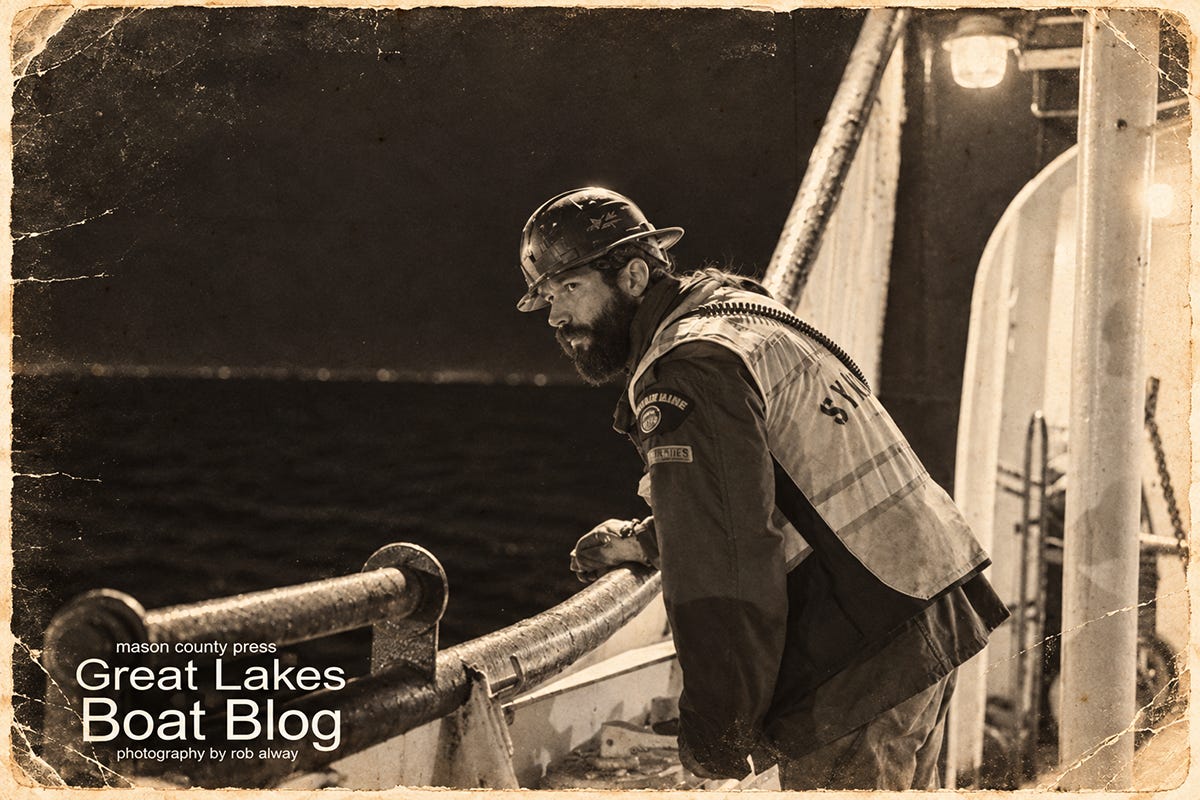
Uhlbeck, 41, is a mate’s assistant and wheelsman aboard the SS Wilfred Sykes, a 1949 steam-powered freighter operated by Central Marine Logistics. Although he holds a U.S. Coast Guard able seaman certification, his assigned position aboard the Sykes is mate’s assistant, with steering the vessel among his primary responsibilities.
Uhlbeck stands the 4-to-8 watch, working two four-hour shifts each day, from approximately 3:30 to 7:30 a.m. and again in the evening.
As wheelsman, Uhlbeck works in the pilothouse under the supervision of the licensed mate on watch. His responsibilities include steering the vessel according to the mate’s directions, maintaining assigned courses and assisting with navigation watch duties. In confined waters, such as harbors, channels and rivers, precise steering is particularly important.
The wheelsman is not responsible for independently navigating the ship. That responsibility belongs to the licensed deck officer on watch, who directs the vessel’s movements.
Uhlbeck’s responsibilities extend beyond the wheel.
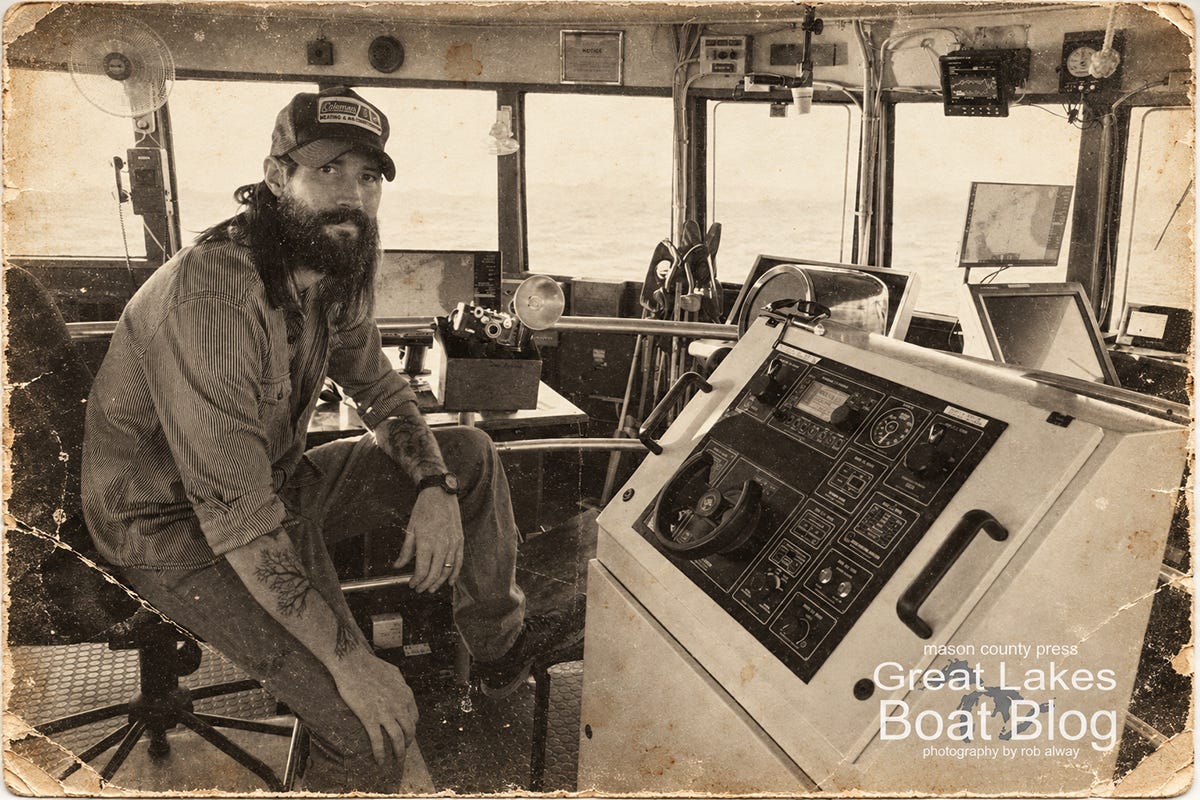
As a mate’s assistant, he helps the officer on watch with various operational duties. During loading and unloading, that can include coordinating ballast requirements and communicating with dock personnel.
Ballast water is carried in designated tanks to maintain a vessel’s stability and proper trim. As cargo is loaded or removed, ballast adjustments help keep the ship properly balanced.
The Sykes has three mate’s assistants, one assigned to each of her three navigation watches.
Uhlbeck’s able seaman certification is a Coast Guard qualification for experienced, unlicensed deck personnel. An able seaman has demonstrated knowledge of seamanship, vessel operations, safety procedures and navigation watch responsibilities. The qualification is a progression from ordinary seaman, an entry-level position in the deck department.
Uhlbeck began his Great Lakes career in 2022 as an ordinary seaman. He subsequently completed training through Great Lakes Maritime Academy in Traverse City, Mich., near his home, to earn his able seaman rating.
His next goal is to become a licensed mate.
“I probably, after next season, will have enough sea time and river trips under my belt to write for my mate’s license, and then I’m going to keep going from there,” he said.
Eventually, he might even pursue a master’s license, which would qualify him to command a vessel, although becoming a mate remains his primary goal.
Uhlbeck’s interest in Great Lakes shipping began long before he stepped aboard the Sykes.
Originally from Newberry in Michigan’s Upper Peninsula, he moved with his family when he was young to the Traverse City area during the mid-1990s. He attended Elk Rapids High School and now lives in Buckley with his wife and their young son.
As a child, he visited the Soo Locks and the museum ship Valley Camp in Sault Ste. Marie, Mich. Those experiences, along with the history and stories of Great Lakes shipping, sparked his interest in the maritime industry.
When he was about 17 or 18, he met a Great Lakes ship’s cook who encouraged him to consider working aboard the freighters.
He looked into the possibility but ultimately pursued other occupations.
Over the years, Uhlbeck worked as a cook and chef, helped his father with heating, cooling and plumbing work, served as a horse ranch foreman and operated a gun shop.
Eventually, he began reconsidering the career he had dreamed about as a child.
A friend with connections to Great Lakes Maritime Academy helped him navigate the process of obtaining his merchant mariner credentials. Rather than enroll in the academy’s full-time officer training program, Uhlbeck decided to enter the industry as an ordinary seaman and advance through experience and additional training.
He applied to several shipping companies, including Central Marine Logistics.
After submitting his application, he received a telephone call about 15 minutes later asking whether he could report to the Wilfred Sykes at Rogers City within 36 hours.
He accepted.
The assignment turned out to be a particularly good fit. Uhlbeck studied history in college and has a strong interest in historic machinery and equipment. Working aboard a steam-powered freighter built in 1949 combines those interests with his career.
“I think that I lucked out getting on this boat because I had no idea what to expect,” he said.
His interest in history has also developed into another pursuit aboard the Sykes: photography.
Uhlbeck photographs everyday life aboard the ship using vintage film cameras, particularly medium-format cameras dating from the early 1900s through the 1950s.
The hobby began when he purchased an old Argus C3 35 mm camera while browsing eBay for used books. He soon began collecting older cameras, frequently purchasing ones that needed repairs.
He enjoys restoring the cameras to working condition and using them to document life aboard the freighter.
Rather than concentrate on the ship’s appearance, he prefers photographing the crew performing routine tasks.
“There are lots of people out there taking pictures of the boats,” he said. “But like pictures that I always like to look at when I was looking at books of history of the Great Lakes and stuff, were like the guys doing everyday stuff.”
He believes the older cameras and film complement the Sykes’ historic character.
“I feel like there’s something using the old cameras and medium-format film. It fits with the age of the boat,” he said.
Uhlbeck even develops his black-and-white film aboard the freighter.
He closes the deadlights over his cabin’s portholes to block outside light and uses the bathroom as a temporary darkroom to load the film into a developing tank. He then processes the film using chemicals and the sink in his cabin.
After drying the negatives, he converts them to digital images and has photographic prints made.
He said the process has involved considerable experimentation, particularly learning to control temperatures and chemical processing times.
While Uhlbeck enjoys photography and the ship’s history, it is the experience of sailing the Great Lakes that keeps him enthusiastic about his work.
He particularly enjoys winter sailing.
“I love weather,” he said. “Summer sailing I always find really kind of boring. It becomes mundane and every day is the same.”
Winter brings changing conditions and experiences rarely witnessed by people ashore.
He described watching lake-effect snow develop as vapor rose from the lake’s surface, formed clouds and eventually became falling snow.
He also recalled witnessing St. Elmo’s fire, an electrical phenomenon that can appear as a glow around elevated objects during certain atmospheric conditions, on the ship’s steering pole.
For Uhlbeck, those experiences are among the rewards of his chosen career.
“We’re living somebody else’s dream out here,” he said. “A lot of people just daydream about this stuff, and here we are, and we get to see things that nobody gets to see.”
There are sacrifices, however.
Uhlbeck’s schedule can keep him away from home for approximately two months at a time. With a wife and a 2-year-old son, those extended absences can be difficult.
He said his wife initially had reservations about his decision to work on the lakes but has become more accustomed to the schedule and its benefits.
The extended periods at home between assignments are particularly important to him.
“When I’m home with my son and my wife, I’m home 100%,” he said.
For now, Uhlbeck plans to continue accumulating the experience and training required to advance from able seaman to licensed mate.
He also has no immediate interest in transferring to another vessel.
Of all the ships he might have joined when he entered the industry, he was assigned to one that combines his interests in maritime history, machinery, photography and Great Lakes sailing.
“I have no intention of making my way around other fleets or anything like that,” he said. “This is my boat.”
Aboard the Wilfred Sykes: Part 9. Son of a sailor, Adam Larson follows his dad to the helm
Help support this Substack page and check out our merchandise store.
This story is copyrighted 2026 by Sable Points Media.