

By Rob Alway
Editor’s note: For the past several years, I have made it a personal mission to tell the stories of the Great Lakes maritime industry and, especially, the people who work aboard its vessels. As someone who has spent much of my life watching, photographing and studying these ships, I believe their stories deserve to be told.
Documenting the industry is important for preserving its history, but it is equally important for its future. Great Lakes shipping plays a vital role in our nation’s economy, and its continued success depends on attracting new generations of skilled mariners.
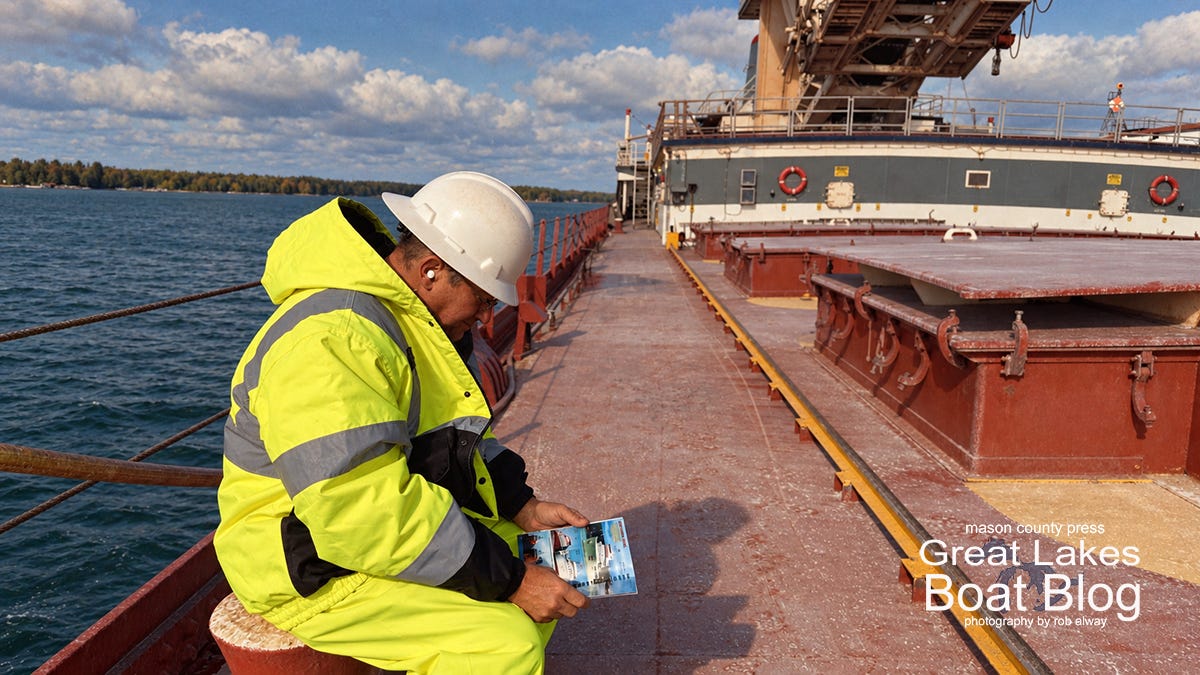
I spent five days aboard the SS Wilfred Sykes, a 1949 steam-powered freighter operated by Central Marine Logistics. This series explores the ship, the work she performs and, most importantly, the people who keep her sailing.
ABOARD THE SS WILFRED SYKES, LAKE MICHIGAN — During my visit, 22 crew members and one cadet from the Great Lakes Maritime Academy were aboard the Wilfred Sykes. Every member of her crew played an important role in operating the 678-foot-long freighter.
This series has featured various crew members whom I encountered during my five days aboard. Although I wasn’t able to conduct full interviews with everyone for various reasons, I had opportunities to talk with several other members of the crew. Some of those I interviewed are not necessarily regular members of the crew. Fall is a time when many onboard are away from the ship and while I was on the ship, there were many relief members of the crew. However, that didn’t diminish their responsibilities or their importance to fulfilling the mission.
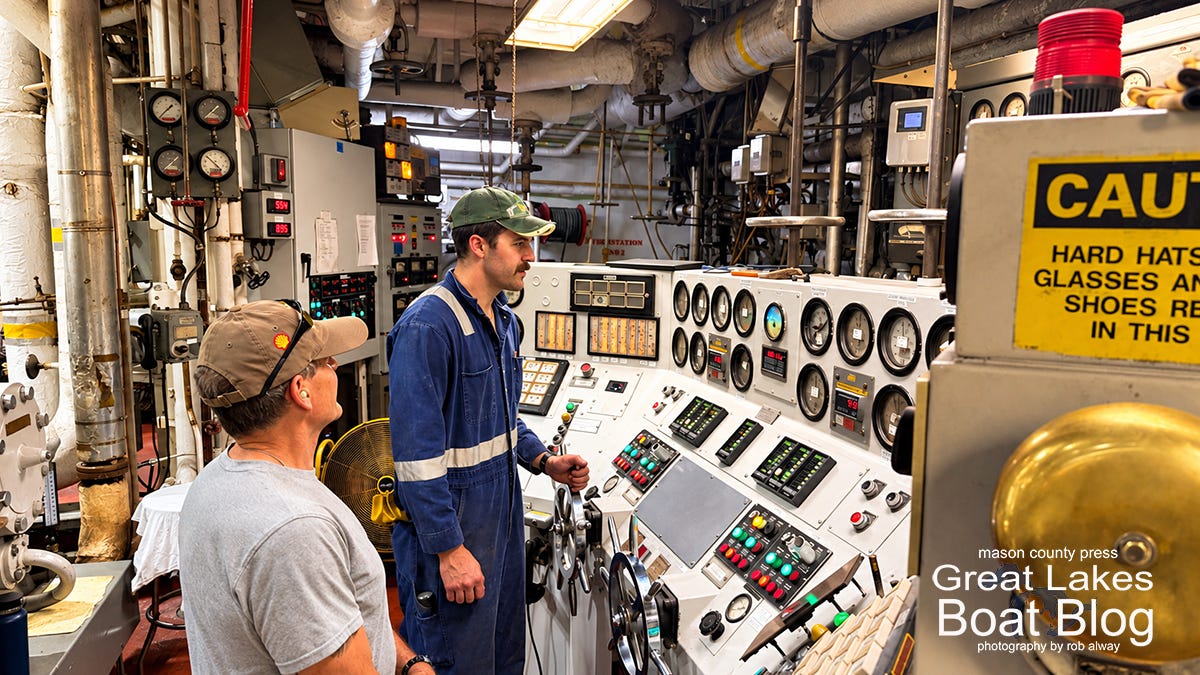
Chief Engineer Mark Nickerson began his maritime career after attending a maritime academy in 1975. He became a chief engineer in 1988.
Nickerson grew up in a military family. His father was a Marine who served in Vietnam. After his father retired, the family settled in Maine, which Nickerson has called home ever since.
Nickerson began his career with Shell Oil and has worked aboard ships around the world. However, he said working on the Great Lakes is his favorite.
“I love the lakes,” he said. “The crews are just different out here. They are proud of what they do. Plus, the people onshore are great. They love the ships and know everything about the ships.”
Nickerson said there is more camaraderie aboard Great Lakes vessels compared to ships in the ocean-going U.S. fleet. He has also been impressed by the appreciation people living along the Great Lakes have for the ships and their crews.
“I am amazed that I will go into an establishment and strike up a conversation about working on the Wilfred Sykes and people know everything about the ship, along with many of the others. There’s just a greater appreciation.”
Nickerson began working aboard the Sykes in May but had been away from the ship since July, returning earlier in October. He said he particularly enjoys working aboard steamships.
“I have worked on very technologically advanced ships but prefer steamships. When something goes wrong on a steamship, you know exactly what it is and how to fix it. These engines are built to last.”
Nickerson, 70, and his wife own a yoga business in Maine. They have adult children and grandchildren. He is one of three men in the Sykes‘ engine department who are 70 years old.
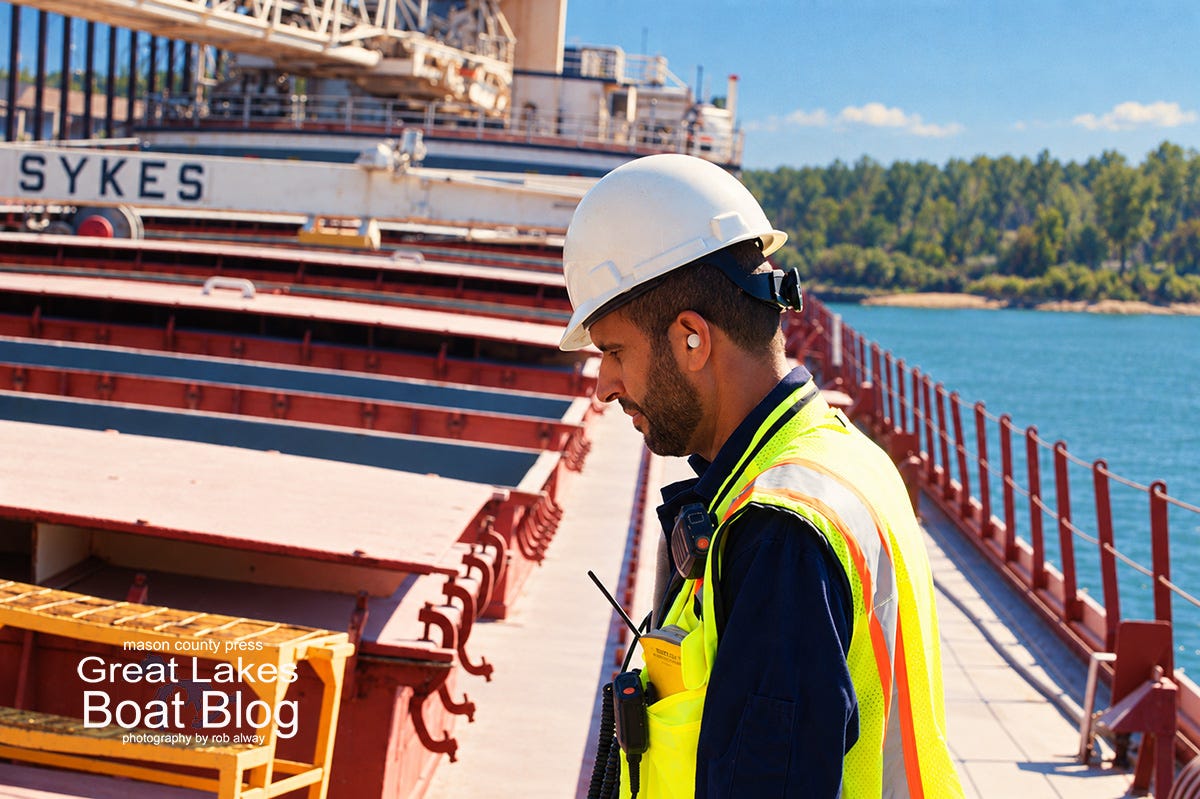
Second Mate Nazeh Nasser holds a master’s license. He immigrated to the United States from Yemen in 1993 and lives in Dearborn, Michigan. He and his wife have been married for 30 years and have six children, four of whom are now adults.
Nasser worked his way up to captain and has several years of experience aboard multiple vessels, primarily with American Steamship Company, based in Williamsville, New York. He had been serving aboard the Sykes for only about a week when I met him.
Third Mate John Lanz also holds a master’s license. He recently moved to Florida after living in Toledo, Ohio, for 20 years.
Lanz has more than 40 years of experience sailing on the Great Lakes and has served aboard multiple ships. He spent several years with Great Lakes Fleet, based in Duluth, Minnesota. Like Nasser, he had been serving aboard the Sykes for only about a week.
Oiler/Relief Repairman Ethan Rentschler is from Duluth, Minnesota. His family’s maritime heritage can be traced back five generations.
Rentschler said he began sailing when he was 14 years old. Both of his parents worked aboard lakers, the term commonly used for Great Lakes freighters.
He holds a qualified member of the engine department (QMED) endorsement and hopes to become a licensed engineer someday. Although he prefers working with steam engines rather than diesel engines, he said he may eventually pursue a career aboard tugboats.
An oiler is a member of a ship’s engine department responsible for helping maintain and monitor the vessel’s engines and mechanical systems. Working under the supervision of licensed engineers, oilers regularly inspect machinery, check operating temperatures, oil levels and pressures, and ensure moving parts are properly lubricated.
They also assist with equipment maintenance and repairs, monitor pumps and other machinery, and help identify mechanical problems before they become serious.
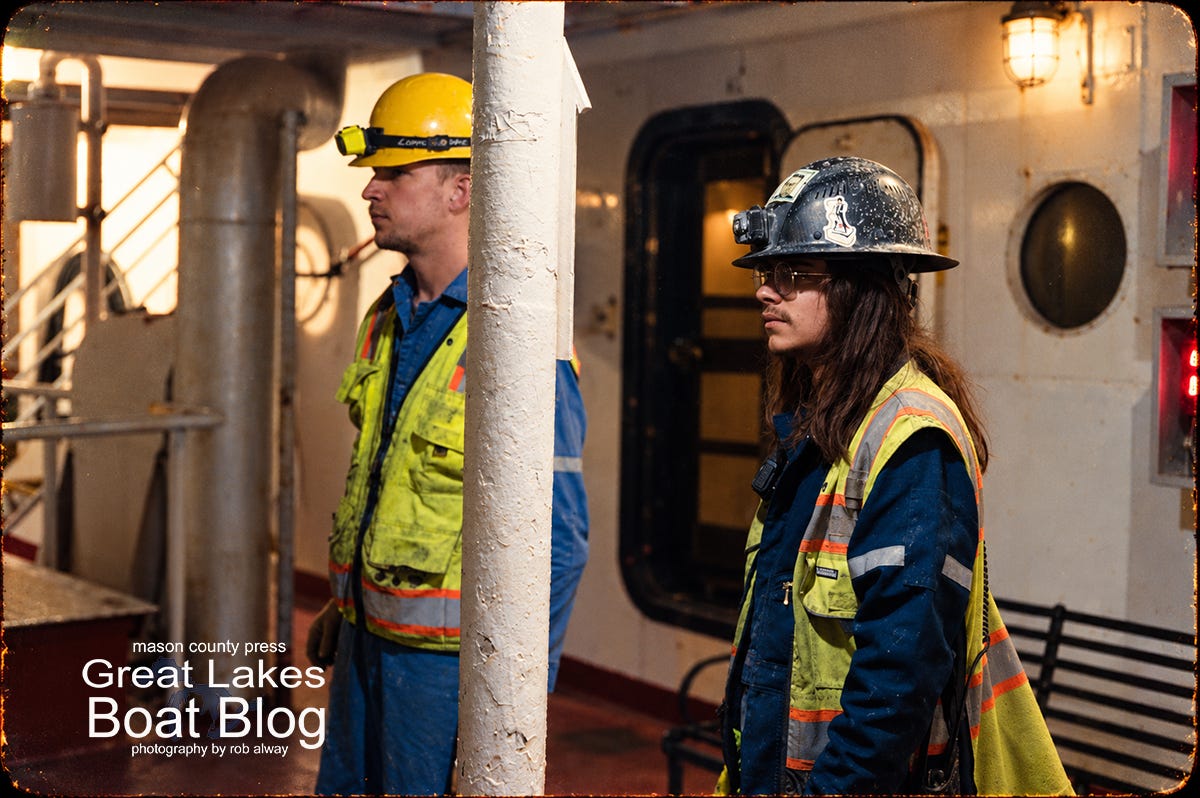
Ordinary Seaman Josh Larson of Pillager, Minnesota, began working aboard the Sykes in late September. At 22 years old, Larson said he has not yet decided whether a career sailing on the Great Lakes is for him.
An ordinary seaman is an entry-level member of a ship’s deck department responsible for assisting with the vessel’s operation and maintenance.
Working under the supervision of licensed deck officers and experienced deck crew members, ordinary seamen perform duties such as cleaning, painting and maintaining the ship’s decks and equipment. They also assist with handling mooring lines when a vessel arrives at or departs from port, securing cargo equipment and performing other general maintenance tasks.
Able Seaman Shane Garvey of Gladstone, Michigan, is continuing a family tradition of working on the Great Lakes. He was serving as a deckhand aboard the Sykes.
His father, Capt. Thomas Garvey, retired in 2024 after a 50-year career on the Great Lakes, most recently serving as master of the 728-foot MV Joseph L. Block.
An able seaman, now officially designated as an able seafarer by the U.S. Coast Guard, performs more advanced duties than an ordinary seaman. Those duties include standing navigational watches, steering the vessel under the direction of licensed deck officers, operating deck machinery, handling mooring lines and assisting with cargo operations.
Able seamen also perform maintenance and may assist with emergency response procedures and lifesaving equipment.
To advance from ordinary seaman to able seafarer, a mariner must accumulate qualifying sea service, demonstrate seamanship skills, complete required training and examinations, and obtain the appropriate endorsement on a U.S. Coast Guard Merchant Mariner Credential.
Next: Aboard the Wilfred Sykes: Part 11. Five days and a lasting appreciation

Help support this Substack page and check out our merchandise store.
This story is copyrighted 2026 by Sable Points Media.