

By Rob Alway
Editor’s note: For the past several years, I have made it a personal mission to tell the stories of the Great Lakes maritime industry and, especially, the people who work aboard its vessels. As someone who has spent much of my life watching, photographing and studying these ships, I believe their stories deserve to be told.
Documenting the industry is important for preserving its history, but it is equally important for its future. Great Lakes shipping plays a vital role in our nation’s economy, and its continued success depends on attracting new generations of skilled mariners.
Recently, I spent five days aboard the SS Wilfred Sykes, a 1949 steam-powered freighter operated by Central Marine Logistics. This series explores the ship, the work it performs and, most importantly, the people who keep it sailing.
ABOARD THE SS WILFRED SYKES -- I awoke Wednesday morning as the Sykes was passing Little Point Sable, although the shoreline was out of sight. The captain had chosen a mid-lake route to avoid higher waves forecast for Lake Michigan. Fortunately, those waves never materialized, and the ship gradually made its way closer to shore.
About 10 a.m., I glanced aft and spotted the SS Badger several miles away, making its daily crossing from Ludington, Michigan to Manitowoc, Wisconsin
Seeing the familiar carferry from the deck of another Great Lakes steamer was a reminder of the maritime traditions that have long connected these ports.
I have written many stories about the crew of the Badger, a ship whose primary purpose is transporting passengers and vehicles across Lake Michigan. Now, I was aboard a freighter carrying the raw materials that help build and maintain our nation’s infrastructure. It was an opportunity to experience another side of an industry I have spent much of my career watching, photographing and studying.
The ships themselves have always fascinated me, but the more time I spend with the people who work aboard them, the more I appreciate the knowledge, dedication and traditions that keep this industry moving. Their stories deserve to be told, not only to preserve the past, but to help secure the future of Great Lakes shipping.
After several days aboard, I was gaining a much deeper understanding that the Wilfred Sykes is more than a 678-foot collection of steel, steam piping, conveyors, machinery and cargo holds.
A ship is its crew.
The regular complement aboard the Sykes consists of 22 crew members divided among three departments - deck, engine and steward. During my trip, a cadet from Great Lakes Maritime Academy was also aboard, bringing the working complement to 23.
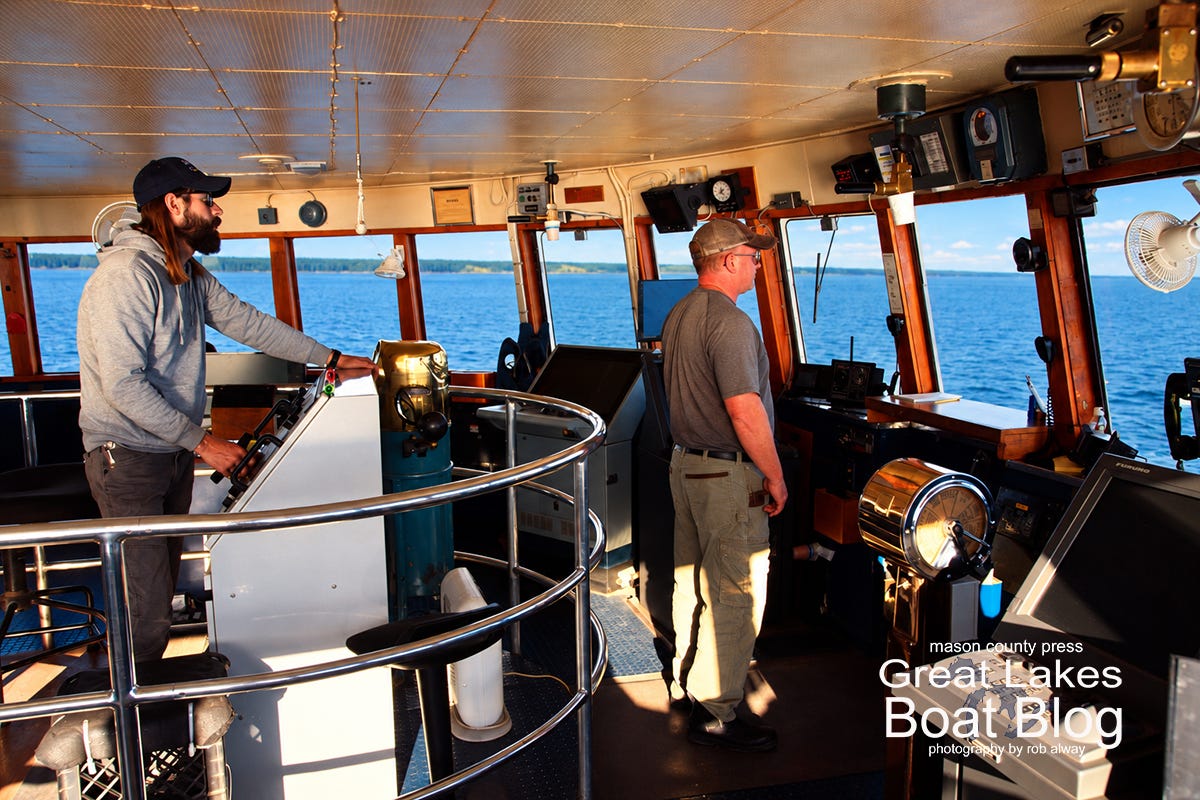
At the top is the master, commonly called the captain.
The master is in command of the entire ship and ultimately responsible for the vessel, its crew, navigation and safe operation.
Cracraft also heads the deck department, which includes the first mate, second mate and third mate. The master and three mates are licensed deck officers. The mates stand navigation watches in the pilothouse, supervise the deck crew and oversee duties that include docking, line handling, maintenance and cargo operations.
Below the licensed officers is the unlicensed deck crew.
The word “unlicensed” can be misleading to someone unfamiliar with the maritime industry. It does not mean those sailors lack qualifications.
Many hold U.S. Coast Guard ratings and endorsements earned through sea time, training and examinations.
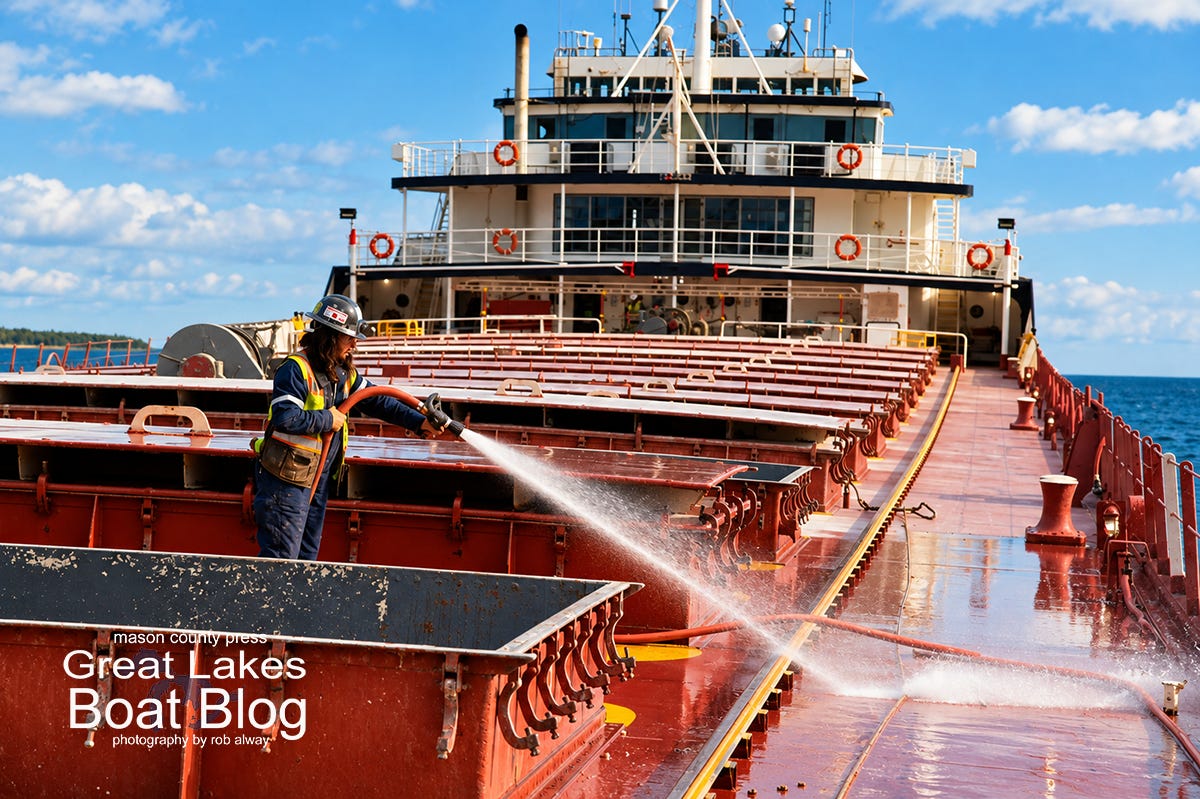
One of the entry-level ratings is ordinary seaman, or OS. An ordinary seaman performs many of the basic jobs necessary to keep the ship functioning, including line handling, cleaning, painting, maintenance and assisting more experienced deck crew members.
With enough sea time and additional qualifications, a mariner can advance to able seaman, or AB - traditionally referred to as an able-bodied seaman. An AB can perform more advanced deck work, stand lookout, steer the ship and assume greater responsibility during vessel operations.
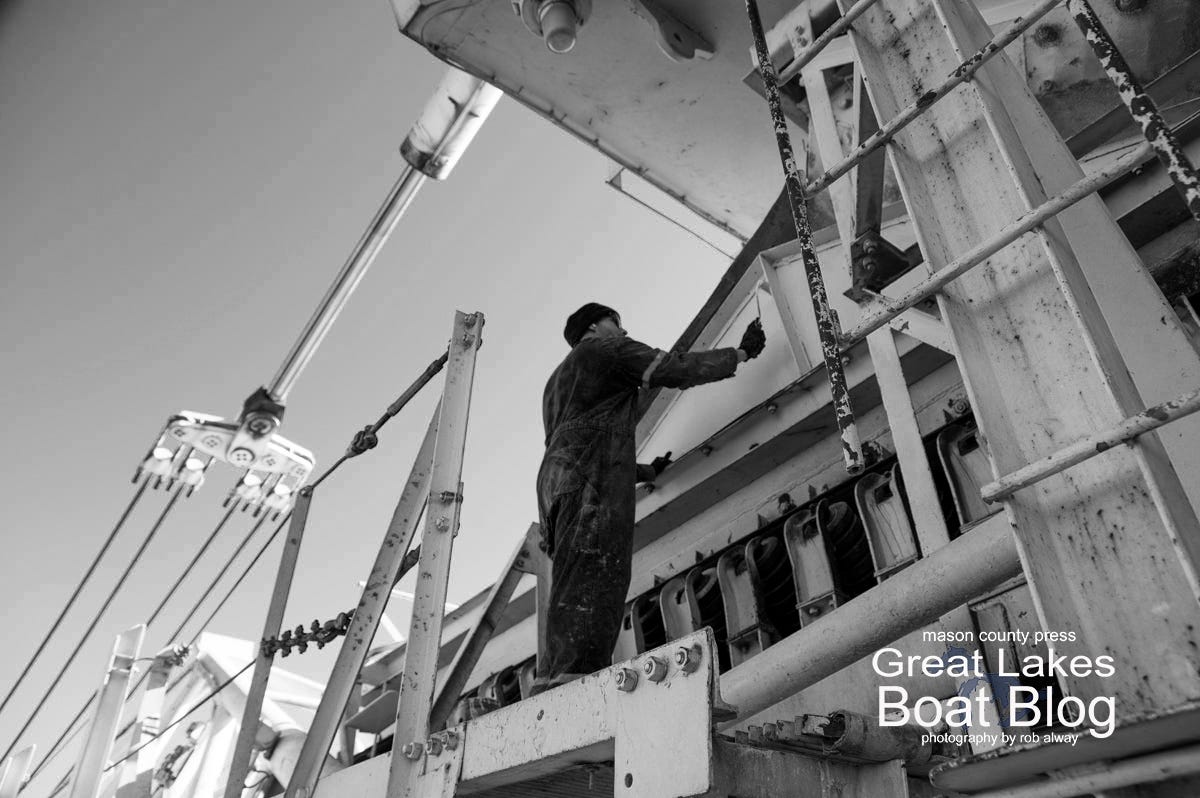
The actual shipboard job titles do not always match the rating printed on a mariner’s credential.
The Sykes has three mate’s assistants. They work with the licensed mates on the ship’s three watches and perform duties that can include steering, lookout work and assisting with operation of the deck department.
There is also an able-bodied maintenance man, or ABMM, whose duties emphasize maintenance, along with four deck utility positions performing a variety of jobs throughout the department.
The engine department has a similar structure.
It is headed by the chief engineer, the senior engineering officer responsible for the Sykes‘ steam propulsion plant and the mechanical systems needed to keep the vessel operating.
Below the chief are the first assistant engineer, second assistant engineer and third assistant engineer. All four are licensed engineering officers.
Working with them are three qualified members of the engine department, or QMEDs. A QMED is an unlicensed mariner who has earned Coast Guard qualifications to perform skilled engine-room work. QMED endorsements can cover specific jobs such as oiler and other engine-room specialties.
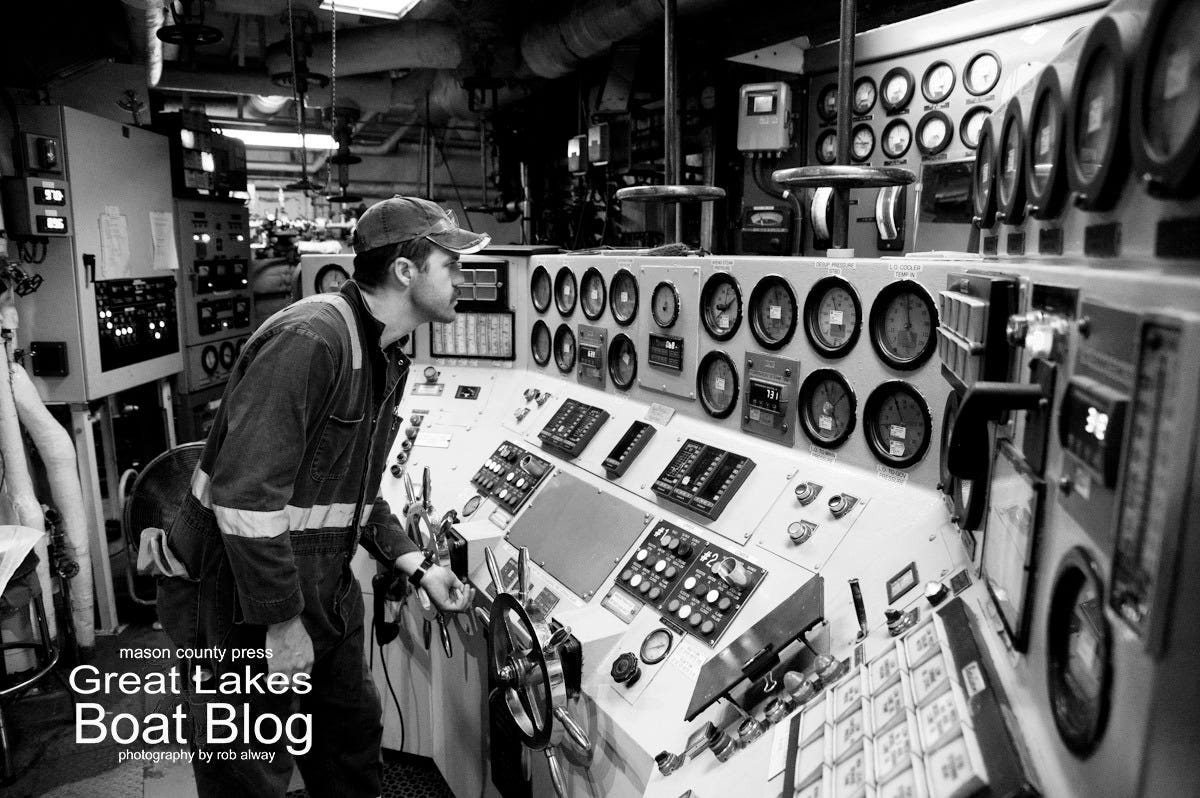
The engine department also includes the conveyorman, whose responsibilities include machinery associated with the Sykes‘ self-unloading system.
The deck and engine crew members work a schedule of four hours on and eight hours off, such as 4 a.m. to 8 a.m. then 4 p.m. to 8 p.m.
The third department is steward, consisting of the chief steward and steward’s assistant.
The deck department gets the ship where it needs to go. The engine department keeps it mechanically operating. The steward department keeps everyone fed and supports the daily operation of the galley and living spaces.
And feeding more than 20 people three meals a day, seven days a week, while aboard a working freighter is no small responsibility.
The crew itself is a combination of young mariners just beginning their careers and sailors who have spent decades on the lakes.
There are currently three people aboard who hold master’s licenses - Cracraft and two of the mates - while at the other end of the experience spectrum is a 21-year-old ordinary seaman who had started working on the lakes only about two weeks before my trip.
The ship’s officers collectively have well over 150 years of experience.
Some worked their way up through the hawsepipe, starting in unlicensed positions and earning credentials through sea time and examinations. Others entered the industry through a maritime academy.
Those paths eventually meet aboard the same ship.
Tomorrow: Part 4: Capt. Crafcraft follows grandpa Bruce Masse’s footsteps

Help support this Substack page and check out our merchandise store.
This story is copyrighted 2026 by Sable Points Media.