

By Rob Alway
LUDINGTON, Mich. — The SS Badger concluded her 2026 sailing season Sunday, Oct. 11, wrapping up what Lake Michigan Carferry officials have described as one of the historic steamship’s best seasons in recent years.
For me, the ride was a special milestone as it was the second Great Lakes steamship I rode in less than a week. The previous Sunday I boarded the SS Wilfred Sykes and spent four days on the 77-year-old ship.
According to Lake Michigan Carferry spokesman Thom Hawley, the 2026 season was among the most successful in recent years for the 73-year-old vessel, which carries passengers and vehicles across Lake Michigan between Ludington and Manitowoc, Wisconsin.
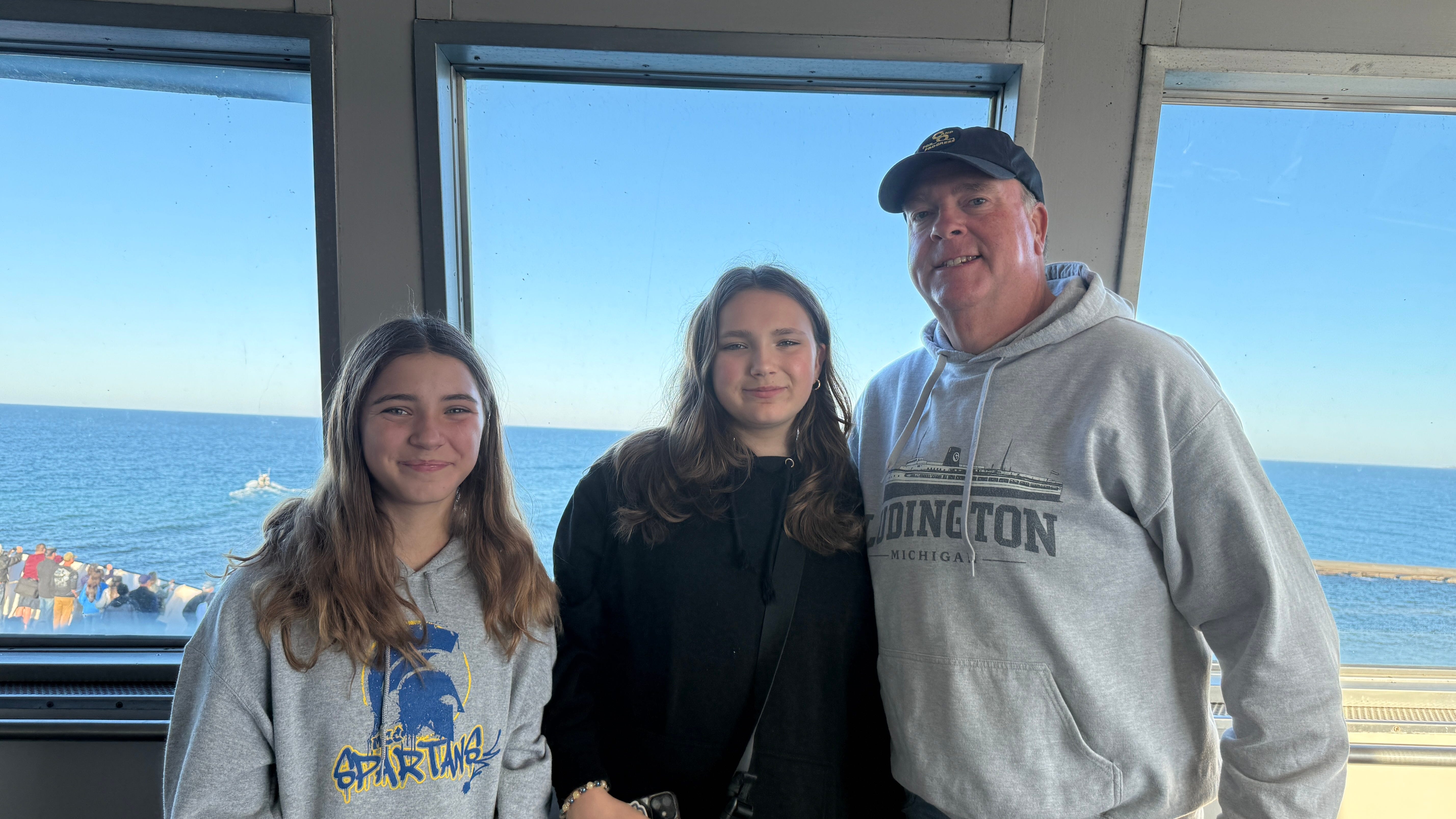
Sunday’s trip on the Badger, was my third this season. I typically try to ride a few times a season. My two previous trips earlier in the summer were for transportation to take me to Wisconsin for historical research onshore. This time, I brought along my daughters, Avoca, 13, and Sloane, 11, and their friend Ebbie, 13, and we rode over and back.
We departed Ludington at 9 a.m., beginning what would be the final round trip of the season.
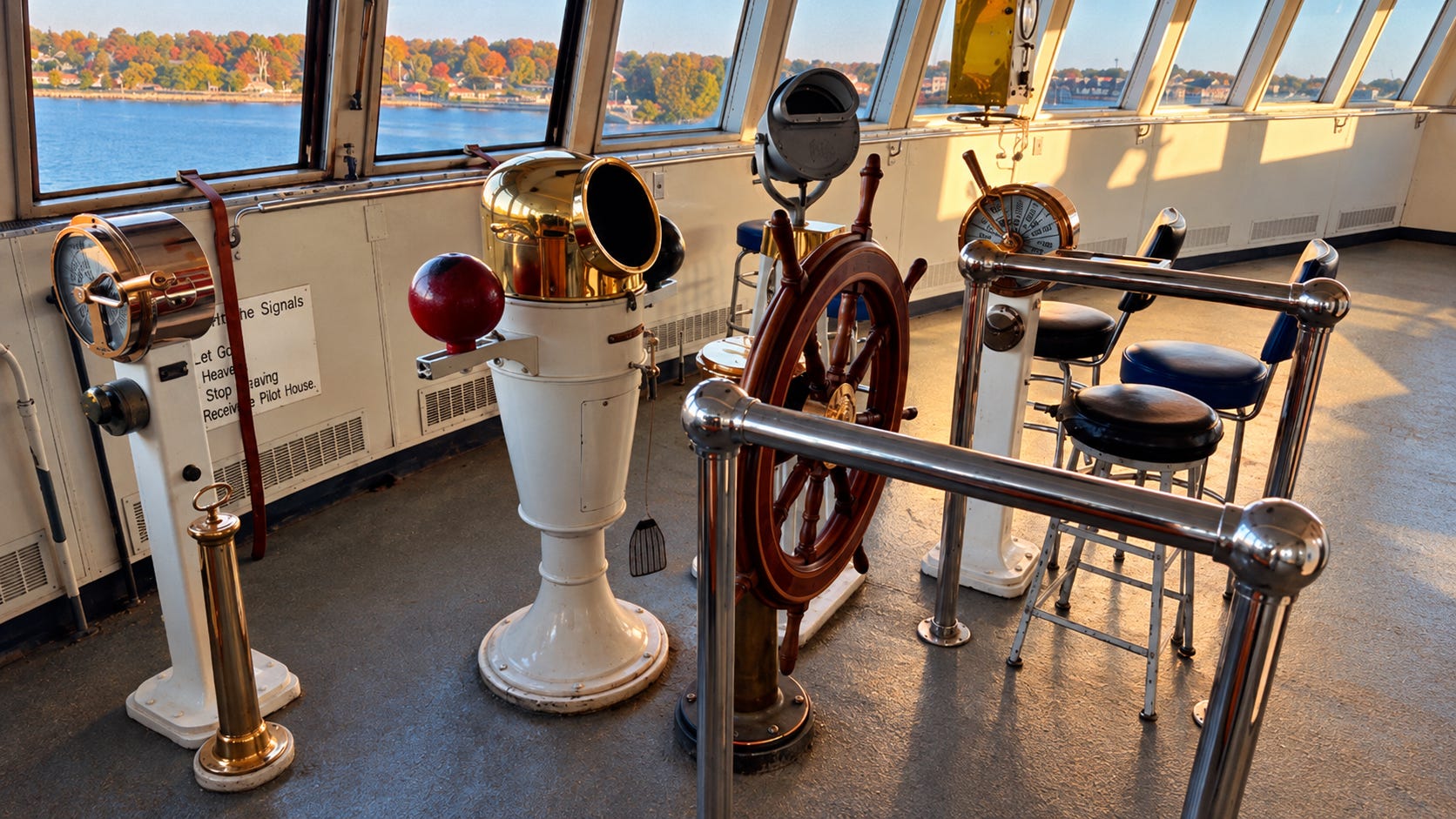
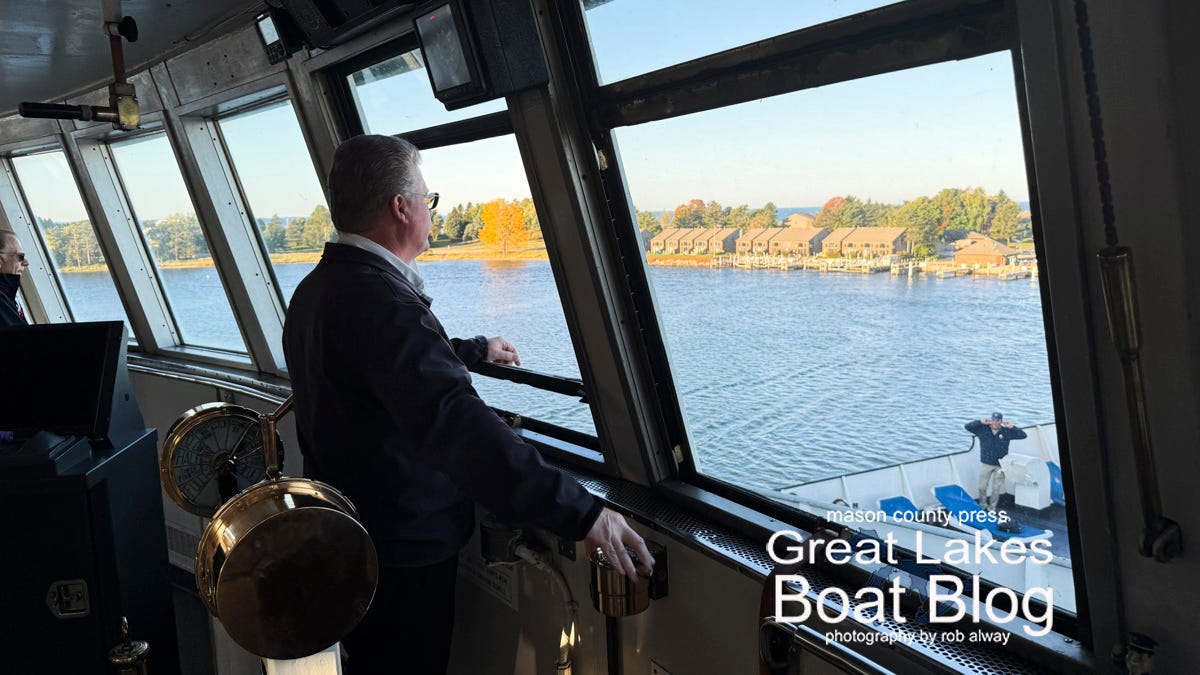
Before departure, we were treated to a special visit to the Badger‘s pilothouse, compliments of Capt. Ed Wiltse. Being in the pilothouse never gets old. It was particularly enjoyable to share that experience with the girls.
The weather couldn’t have been much better for an October crossing. Sunshine greeted us as we departed Ludington, with temperatures around 60 degrees. Light southerly winds made for a pleasant crossing, with temperatures climbing into the 60s throughout the day.
The girls, naturally, had their own priorities.
The Badger‘s movie theater and traditional Badger Bingo were among their favorite activities. There was also plenty of food consumed and, of course, a visit to her gift shop for souvenirs.
Upon arriving in Manitowoc, we were picked up by Tim Hinds, originally of Ludington and now a Manitowoc resident. Tim is the son of Capt. James Hinds, who served as master of the SS Spartan and other Chesapeake & Ohio Railway car ferries.
Tim took us to lunch at the Four Seasons Restaurant in Manitowoc, where we enjoyed a great meal before returning to the Badger for the trip home.
Although I enjoy the maritime history associated with the Badger, the girls were more interested in the activities and spending the day together. For many passengers, the crossing is as much a recreational experience as it is transportation between Michigan and Wisconsin.
The Badger began her 2026 season May 15. During the summer months, she operated additional nighttime crossings, returning to one round trip daily in the fall.
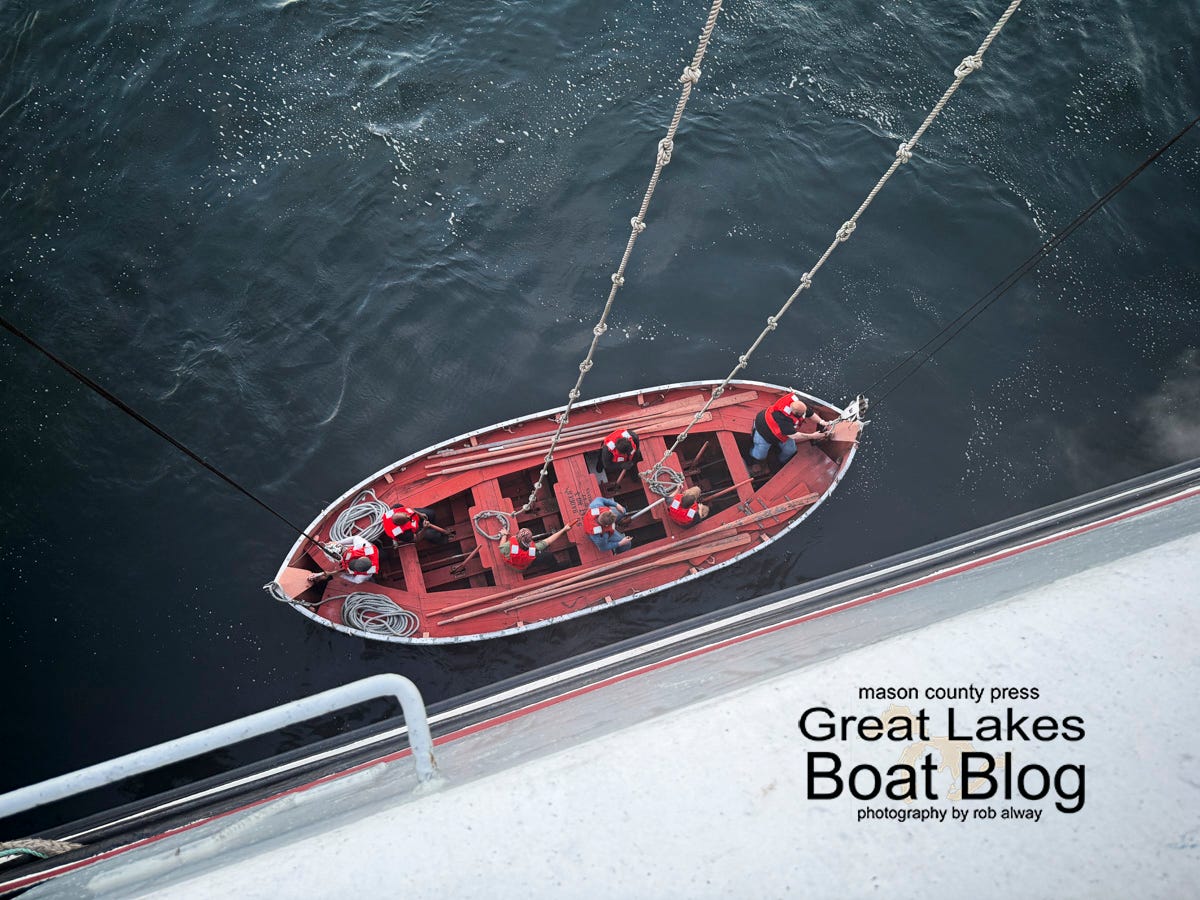
A Ludington tradition
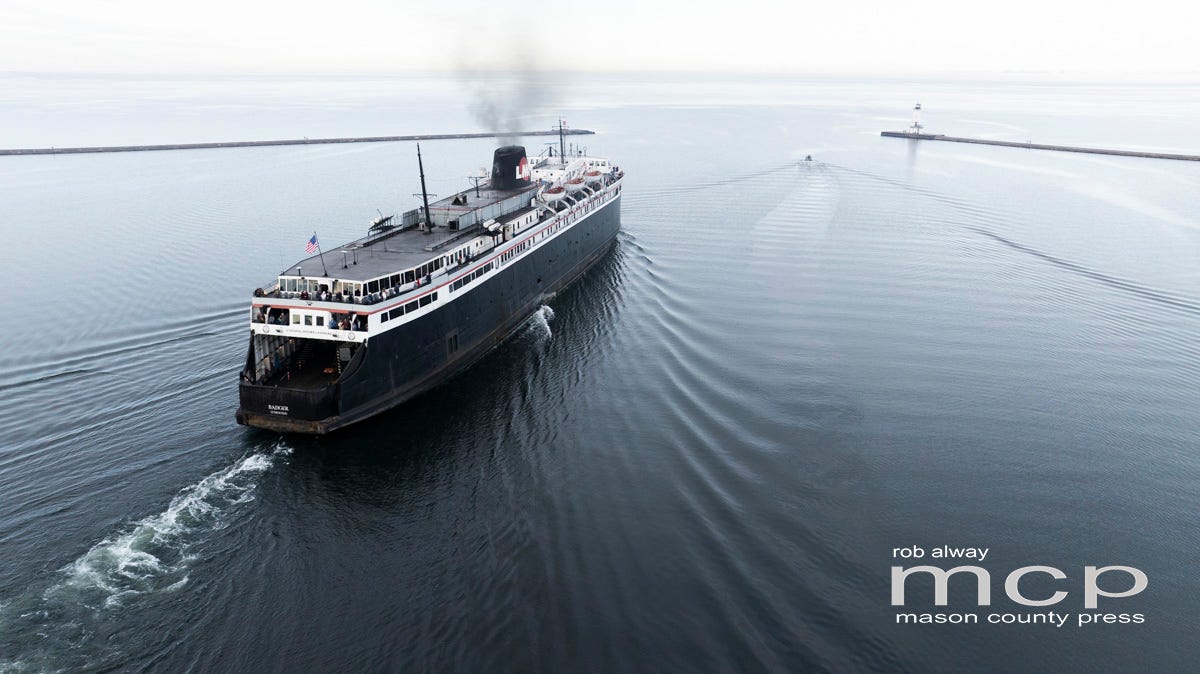
The Badger‘s final arrival in Ludington is a tradition of its own.
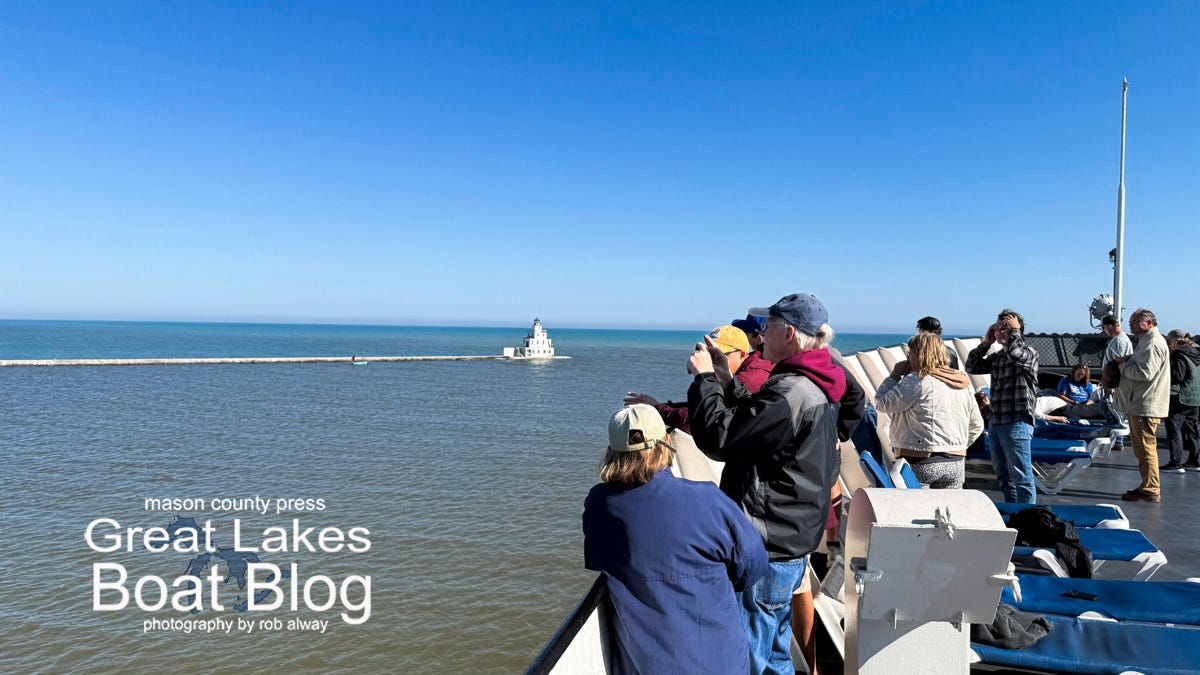
As is customary, people gather along the Ludington channel to welcome her home one last time before her winter layup. It was a contrast compared to our departure from Manitowoc where only a handful of people were on the two breakwaters.
This season, Capt. Wiltse also revived a historic car ferry tradition.
Following a recent visit to the Port of Ludington Maritime Museum, which includes a display explaining the steam whistle identification signals once used by the railroad car ferries, Wiltse began sounding the Badger‘s traditional identification signal of three long blasts.
During the era of railroad car ferry operations, each vessel had its own whistle identification signal, allowing those on shore and other vessels to identify an approaching ship.
The Badger‘s final arrival of the season is a reminder that, for nearly five months each year, her departures and arrivals are a regular part of life along the Ludington waterfront.
The ships behind the milestone
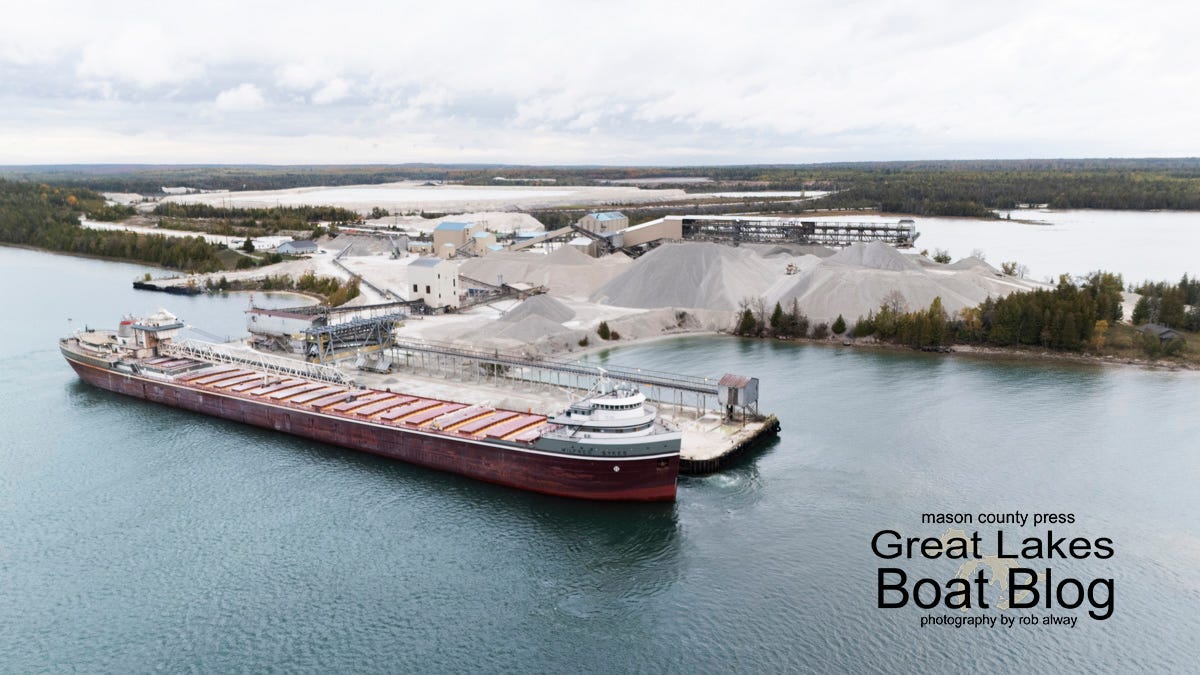
The Wilfred Sykes was built by American Ship Building Co. at Lorain, Ohio, for Inland Steel Co. Launched in 1949 and placed into service in 1950, the Sykes was the largest vessel on the Great Lakes when she was built.
She was also a technological pioneer.
At a time when coal remained the traditional fuel for Great Lakes steamships, the Sykes became the first Great Lakes steamship built to burn Bunker C heavy fuel oil instead of coal. Her two oil-fired boilers produce steam to power a 7,700-horsepower turbine propulsion system, which drives a single propeller.
The Sykes was also among the first of a new generation of larger, more powerful lake freighters built following World War II. Originally designed to carry iron ore, she was converted into a self-unloading vessel in 1975.
Today, she primarily carries limestone used in steelmaking.
The Badger, meanwhile, represents another branch of Great Lakes steamship development.
Built in 1952 by Christy Corp. at Sturgeon Bay, Wisconsin, the 410-foot vessel entered service March 21, 1953, for the Chesapeake & Ohio Railway.
The Badger and her sister ship, the SS Spartan, were the last and largest coal-fired railroad car ferries built in the United States. The Spartan entered service in October 1952 and has been laid up in Ludington since 1979.
Both ships were designed to transport railroad cars, automobiles and passengers, helping maintain important rail connections between Michigan and Wisconsin.
During her railroad years, the Badger carried railroad cars, passengers and automobiles on routes between Ludington and the Wisconsin ports of Manitowoc, Milwaukee and Kewaunee.
Railroad car ferry service ended in 1990, but the Badger returned to service in 1992 under the ownership of Ludington native Charles Conrad, who developed a new business model focused on transporting passengers and vehicles.
Since then, the Badger has operated exclusively as a passenger and vehicle ferry between Ludington and Manitowoc.
She was designated a National Historic Landmark in 2016 in recognition of her historical and engineering significance. In 2020, the Badger was acquired by Interlake Maritime Services, the parent company of Lake Michigan Carferry.
Two different ways of making steam
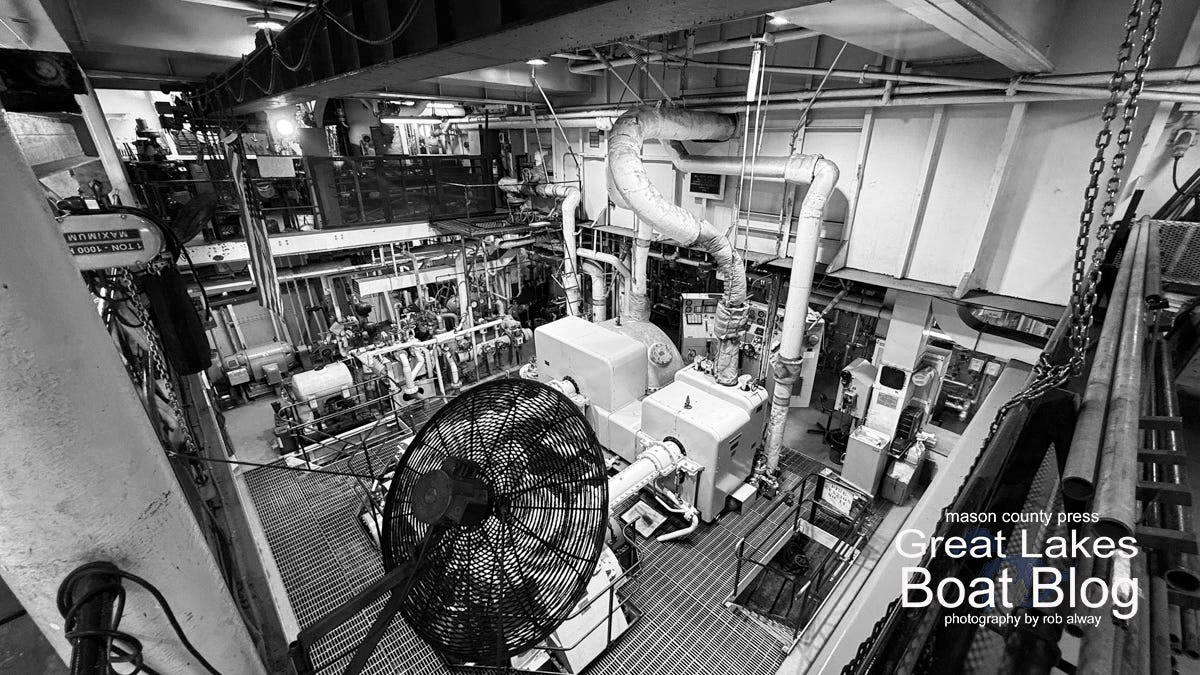
While both the Badger and Sykes use steam for propulsion, their machinery is considerably different.
The Badger remains the last coal-fired commercial steamship operating on the Great Lakes and the only coal-fired passenger steamship in North America.
Four coal-burning boilers supply steam to two Skinner Unaflow reciprocating engines, each rated at 3,500 horsepower. The engines drive two propellers.
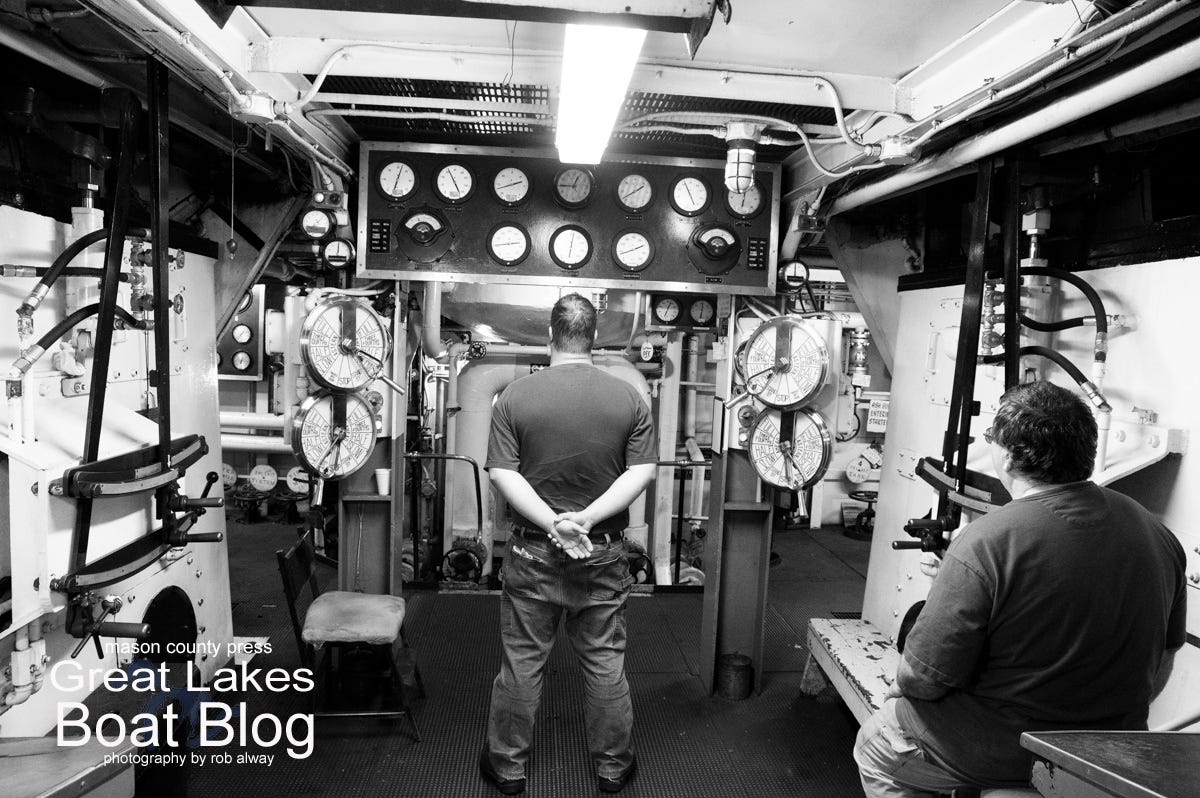
Unlike the Sykes‘ steam turbine, which uses steam flowing through rotating turbine blades, the Badger‘s engines use steam pressure to move pistons. The engines are among the last surviving examples of their design.
The Sykes, by comparison, uses her oil-fired boilers to produce steam that spins a turbine. The turbine transfers power through reduction gears to her propeller.
The difference in size is also substantial. At 678 feet, the Sykes is 268 feet longer than the Badger. The freighter can transport approximately 24,000 tons of bulk cargo, while the Badger accommodates up to 600 passengers and 180 vehicles.
Both vessels produce more than 7,000 horsepower, but their work could hardly be more different.
The Sykes operates around the demands of the steel industry. She carries cargo between ports throughout the Great Lakes, often operating around the clock. Her crew spends weeks aboard, working rotating watches.
The Badger follows a passenger schedule, providing four-hour crossings between Ludington and Manitowoc. Her crew includes licensed mariners, engineers, deckhands and hospitality employees.
A disappearing fleet
The two steamships are among an increasingly small number still working on the Great Lakes.
During the 2026 navigation season, only three large, commercially operated steam-powered vessels remained in regular service on the Great Lakes: the Badger, Wilfred Sykes and SS Alpena.
Of those three, the Alpena, built in 1942, is the oldest. The Sykes, launched in 1949, is the second oldest, followed by the Badger, launched in 1952.
The 520-foot Alpena, originally built as the Leon Fraser, carries cement for Inland Lakes Management. She underwent a major conversion in 1990 that included shortening her hull by 120 feet and converting her into a self-unloading cement carrier.
Several other steam-powered Great Lakes freighters still exist, including the Arthur M. Anderson, Philip R. Clarke and Cason J. Callaway, but those vessels have been in layup rather than regular service.
Over the past two decades, many former steam-powered freighters have been converted to diesel propulsion. Others have been retired or placed into long-term layup.
The Badger remains particularly unusual because her coal-fired reciprocating engines represent a technology that has almost entirely disappeared from commercial shipping.
While steamships are often associated with maritime history, these three vessels continue to serve practical purposes. The Sykes transports raw materials used by the steel industry, the Alpena delivers cement and the Badger provides a transportation connection across Lake Michigan.
A final voyage
My experiences aboard the Sykes and Badger offered two very different perspectives on life aboard a working steamship.
On the Sykes, I was able to observe the work of commercial mariners, from loading and unloading limestone to maintaining a vessel that has been operating for more than 75 years. She operates day and night, with a crew responsible for navigating, maintaining and operating the vessel during voyages that can last several weeks.
On the Badger, the experience was much more relaxed. I got to spend the day with my daughters and their friend, enjoying the same ship that has been part of the Ludington waterfront for most of my life. I have had the honor of observing and interviewing her crew in the past. Those stories have been published on my other online publication, Mason County Press, and will be reposted here on Great Lakes Boat Blog in the near future. I am sure there will be opportunities to tell more stories in the future.
For my daughters and their friend, the day was about movies, bingo, food, souvenirs and spending time together.
For me, it was also another opportunity to travel aboard one of the last working steamships on the Great Lakes.
And getting to share that experience with my daughters and some of the Badger friends made the trip even more special.

Help support this Substack page and check out our merchandise store.
This story is copyrighted 2026 by Sable Points Media.