


By Rob Alway
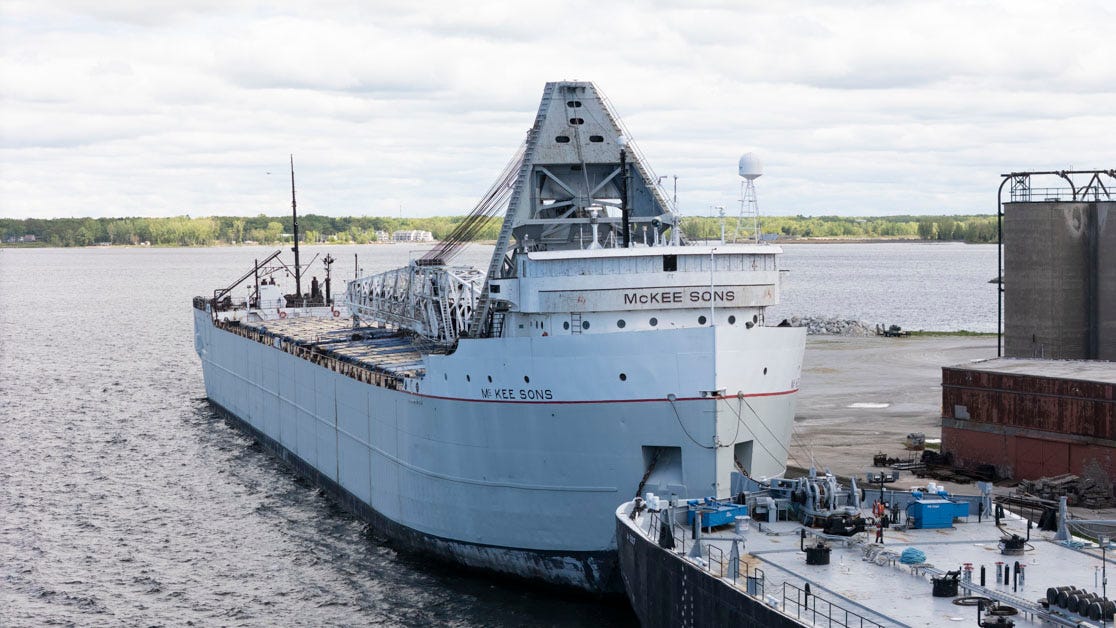
The McKee family’s involvement in maritime transportation extends well beyond the McKee Sons.
Sand Products Corp. traces its origins to 1924, when brothers Max and Mark McKee established Port Crescent Sand & Fuel Co. near Port Austin, Michigan.
The original business supplied industrial sand to foundries in the Detroit, Michigan, area.
As the company expanded, it acquired additional sand-mining operations and waterfront properties, including facilities in Muskegon, Michigan.
The company’s Mart Dock operations date to about 1930, with development of the facility continuing in 1931.
Over the decades, Sand Products became involved in sand mining, bulk shipping, passenger transportation, tugboat operations, warehousing and commercial real estate.
The company celebrated its 100th anniversary in 2024.
The Milwaukee Clipper
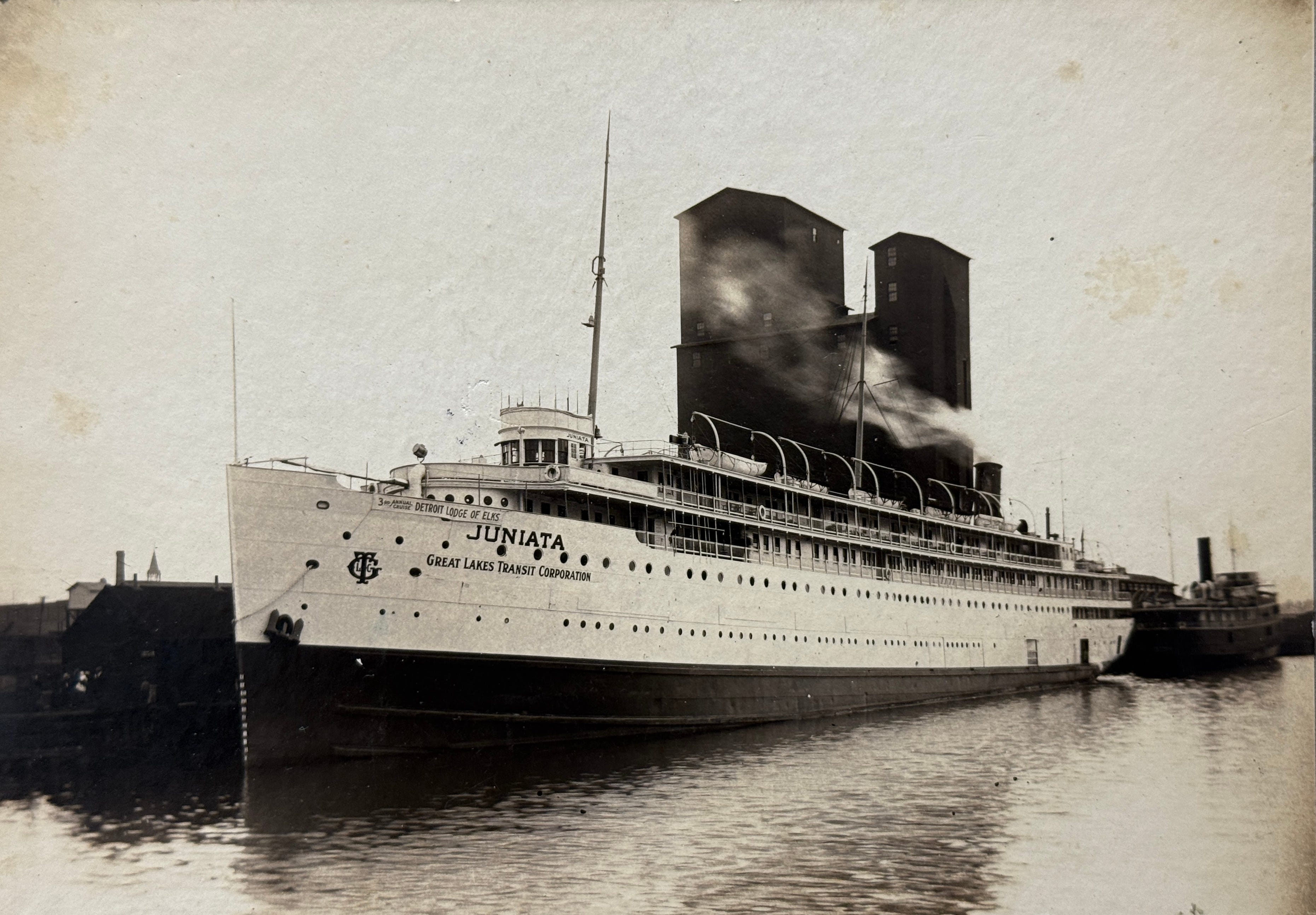
One of the McKee family’s most significant ventures into passenger transportation began in 1940, when Wisconsin & Michigan Steamship Co., a Sand Products subsidiary, purchased the former passenger steamer Juniata.
Built in 1904 by American Shipbuilding Co. in Cleveland, Ohio, the Juniata had originally operated for the Pennsylvania Railroad’s Anchor Line between Buffalo, New York, and Duluth, Minnesota. She was laid up in 1936 after changes in passenger vessel safety regulations made her wooden superstructure obsolete.
The McKees had the vessel taken to Manitowoc Shipbuilding Co. in Manitowoc, Wisconsin, where she underwent a major reconstruction. Her wooden superstructure was replaced with steel, and her accommodations were modernized with a streamlined Art Deco appearance.
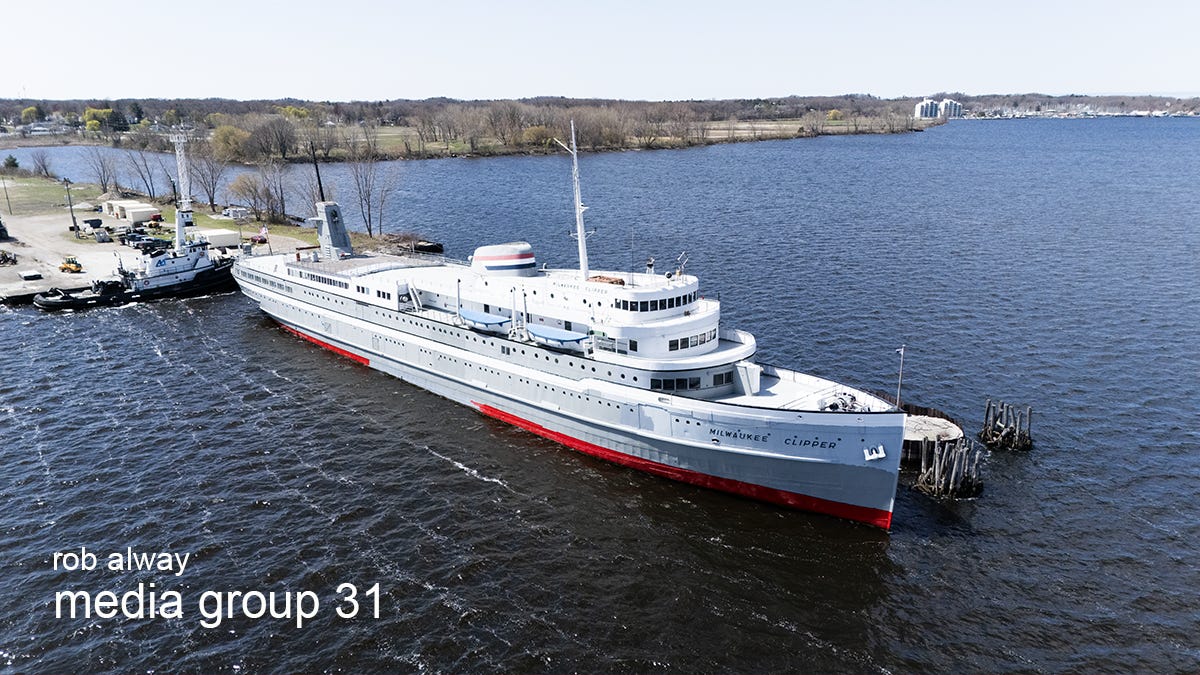
Renamed Milwaukee Clipper, she entered service between Muskegon and Milwaukee, Wisconsin, in June 1941.
The 361-foot vessel could accommodate approximately 900 passengers and 120 automobiles. Her amenities included a movie theater, dance floor, lounges, a cafeteria, bar, and children’s playroom.
The McKee family’s connection to the ship was particularly evident during her christening on June 2, 1941, when Patricia McKee, the 16-year-old daughter of Max McKee, christened the vessel in Milwaukee with a bottle of Wisconsin cream.
The Milwaukee Clipper became one of the best-known passenger vessels on the Great Lakes, carrying generations of travelers across Lake Michigan until 1970.
Its Muskegon terminal was at the Mart Dock. The historic office building where Patrick and I began our tour of the McKee Sons once served as the Milwaukee Clipper‘s ticket office.
The Clipper was sold in 1977 and eventually returned to Muskegon in 1998, where she is preserved as a museum ship by S.S. Milwaukee Clipper Preservation, Inc., a nonprofit organization not affiliated with Sand Products. The museum ship is located at the former Grand Trunk Railroad dock in Muskegon’s Lakeside neighborhood.
Highway 16 and the automobile trade
The McKee family’s transportation interests also extended into carrying new automobiles across Lake Michigan.
In 1948, Sand Products purchased the former U.S. Navy landing ship USS LST 393, a veteran of World War II that had participated in the invasions of Sicily, Salerno and Normandy.
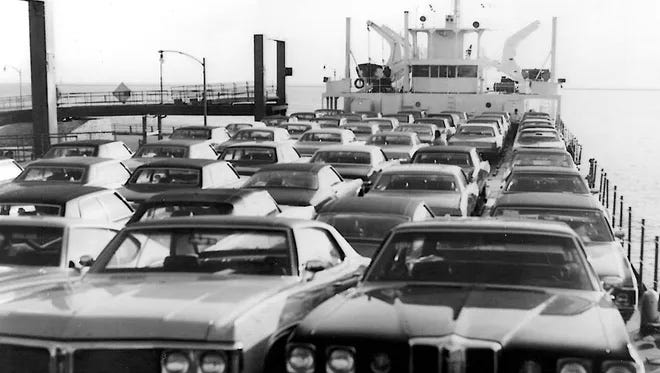
The 328-foot vessel was converted into an automobile carrier and renamed Highway 16, after the U.S. highway that connected Detroit and Muskegon and continued westward from Milwaukee.
Company co-founder Max McKee recognized an opportunity to transport newly manufactured automobiles from Michigan factories across Lake Michigan to Wisconsin, avoiding the congestion of transporting vehicles through Chicago, Illinois.
The Highway 16 was operated by Wisconsin & Michigan Steamship Co. between Muskegon and Milwaukee, beginning in 1948. She initially could carry approximately 210 automobiles.
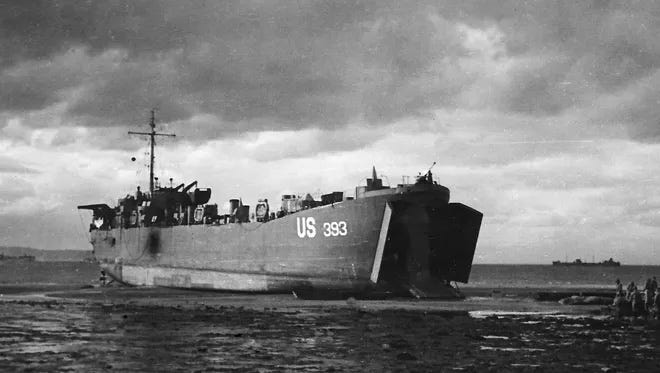
The ship also transported automobiles manufactured in Wisconsin, including Nash Ramblers, eastward across Lake Michigan.
The Highway 16 continued operating until 1973, when General Motors discontinued its shipments across Lake Michigan. She was subsequently laid up at the Mart Dock.
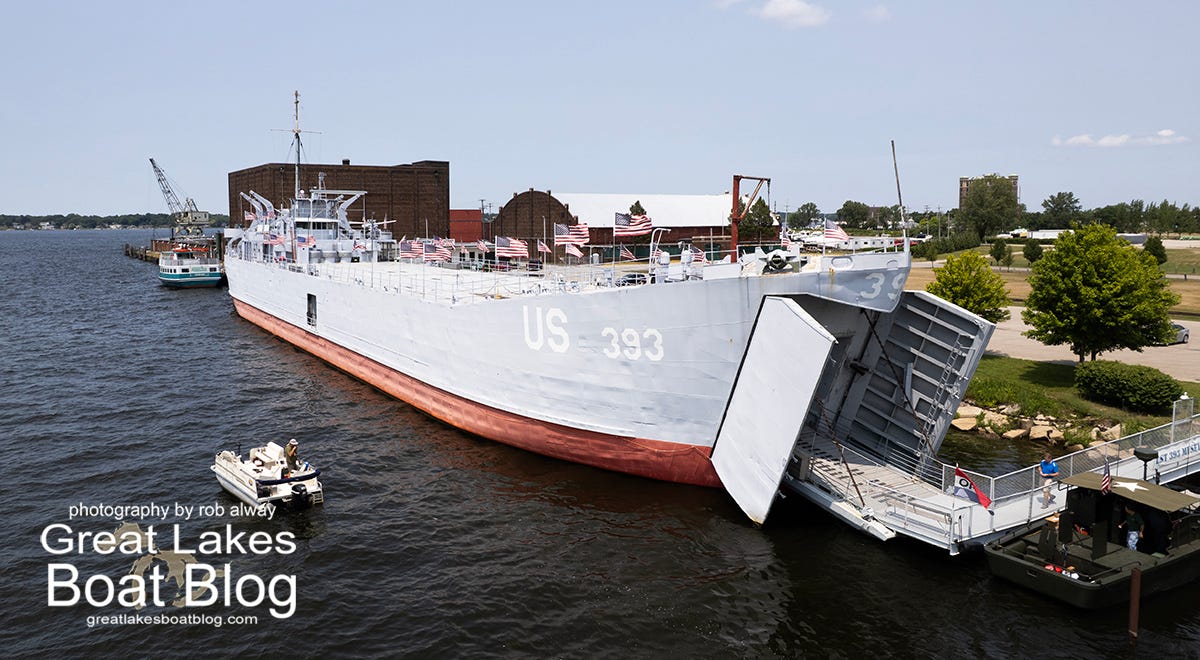
In 2000, efforts began to preserve the ship as a museum. Today, the vessel is known by her original designation, USS LST 393, and is operated as a veterans museum by the USS LST 393 Preservation Association, a nonprofit organization dedicated to restoring and preserving the historic World War II landing ship. Sand Products Corp. continues to own the vessel.
Its preservation is particularly significant because LST 393 is one of the few surviving examples of the landing ships that played such an important role in the Allied amphibious invasions of World War II.
The family business today
Today, Sand Products remains family-owned, with Max McKee serving as CEO and Patrick McKee as vice president. The two are grandsons of the first Max McKee, who co-founded the company.
The maritime transportation operations are conducted through several affiliated companies under the leadership of Chuck Canestraight, president of Sand Products, Ed Hogan, vice president of Port City Marine and John Hayes, director of engineering. Patrick McKee credited Canestraight for Sand Products’ shipping resurgence in the 21st century.
In addition to Lake Service Shipping, which owns the McKee Sons, Sand Products owns Port City Marine Services, based in Muskegon.
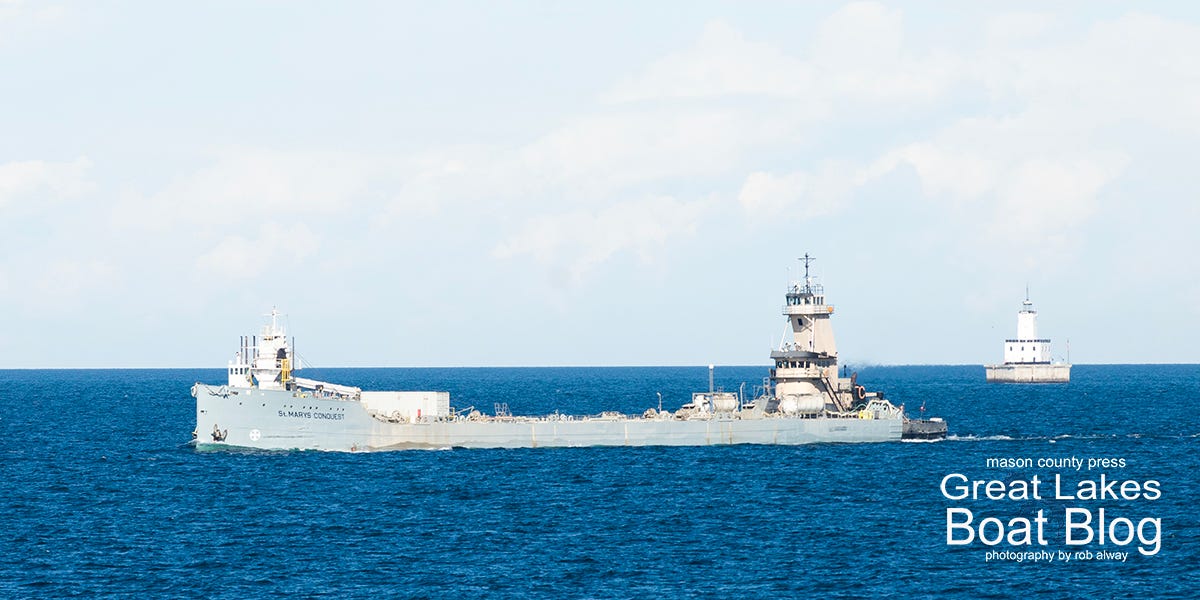
That company operates several tug/barge combinations on the Great Lakes, including Bradshaw McKee/St. Marys Conquest, Caroline McKee/Commander, and Prentiss Brown/St. Marys Challenger.
Two additional tugs, Colleen McAllister and Katie G. McAllister, have been in long-term layup at Muskegon.
The company also owns Port City Marine Services Canada Inc., based in Port Colborne, Ontario, which is involved in Canadian Great Lakes cement transportation.
Its operations include the tug Petite Forte and barge St. Marys Cement, along with the tug Sea Eagle II and barge St. Marys Cement II. The cement barges and some of the associated equipment are owned by St. Marys Cement, with marine transportation services provided through the Port City Marine organization.
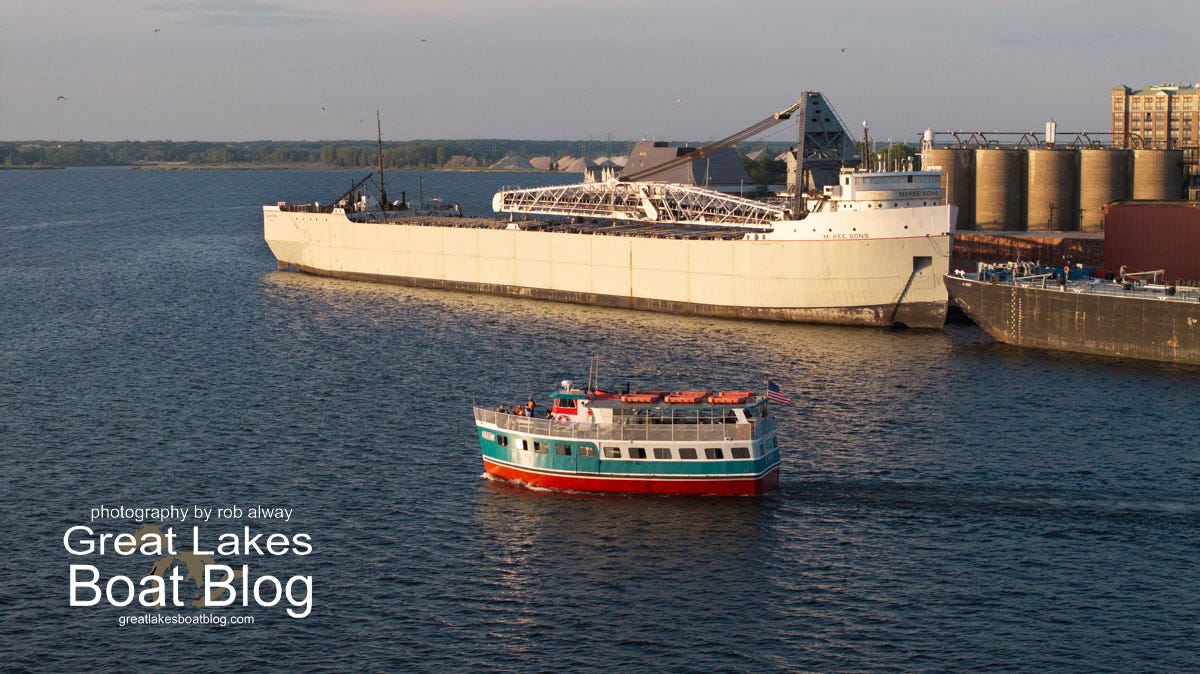
The McKee family’s passenger vessel operations continue through Aquastar Lake Cruises.
The 61-foot Aquastar was built in 1966 and originally operated as the Island Queen in the Straits of Mackinac.
She later operated out of Muskegon as the Port City Princess.
In 2018, Sand Products purchased the vessel, preventing her departure from Muskegon, and renamed her the Aquastar.
The name pays tribute to the company’s earlier passenger vessel heritage, particularly the Aquarama and its original identity as the Marine Star.
Few commercial dock facilities on the Great Lakes can claim such a concentration of maritime history.
The McKee Sons and LST 393 remain at the Mart Dock, alongside the historic buildings and infrastructure that once supported the Milwaukee Clipper and the Highway 16.
Together, they represent nearly a century of the McKee family’s involvement in Great Lakes transportation, from passenger steamships and automobile carriers to bulk freighters and modern tug/barge combinations.
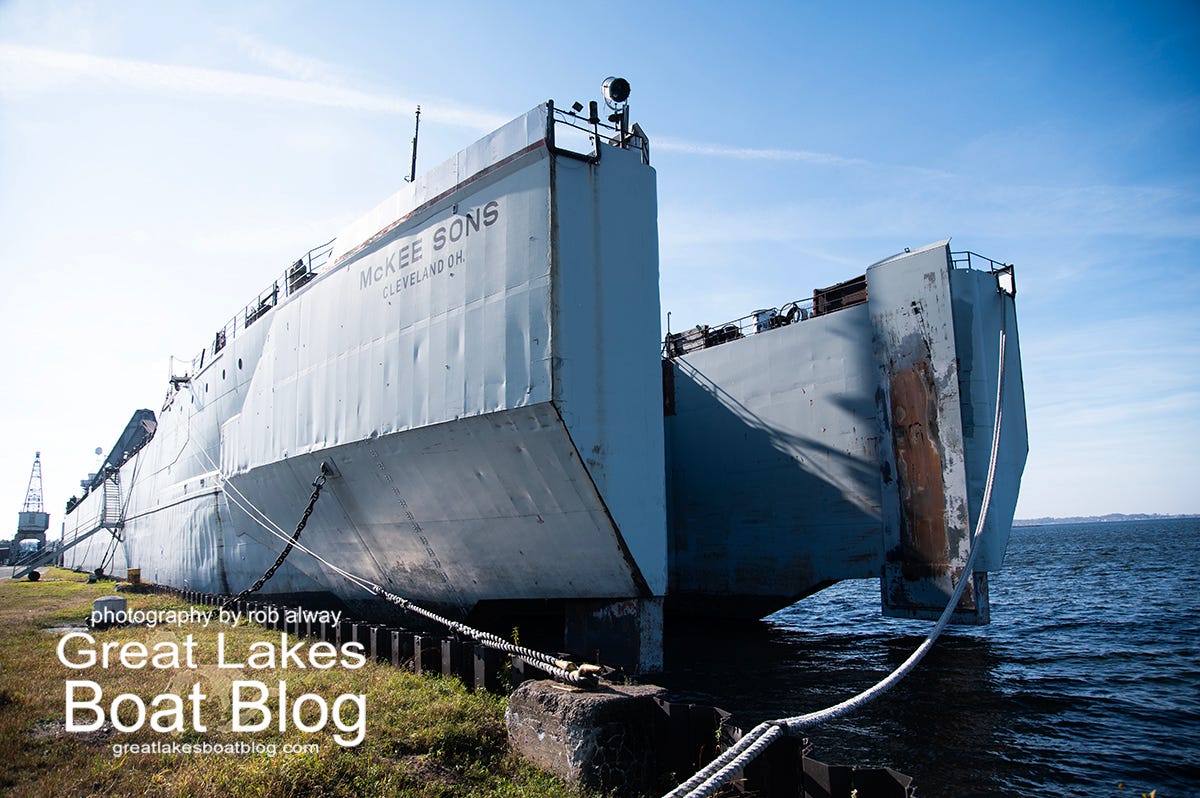
What does the future hold?
Naturally, one of the questions I asked Patrick was about the future of the McKee Sons.
After nearly 12 years at the Mart Dock, is there a possibility she could return to service?
Patrick said the company is frequently asked about the ship and its status.
He said Sand Products has not ruled out the possibility of using the vessel again in the future, although no decision has been made.
For now, the McKee Sons remains at Muskegon, her enormous hull and forward pilothouse serving as reminders of another era of Great Lakes shipping.
As we walked through the ship, I was struck by the number of different lives it has experienced.
She was built during the greatest maritime construction effort in American history. She transported military personnel during the final months of World War II and afterward. She was rebuilt into a Great Lakes freighter during the postwar industrial boom. She served the iron ore and bulk cargo trades for decades before being transformed again into a self-unloading barge.
And through much of that history, it has carried the McKee family name.
Perhaps what impressed me most was how naturally the vessel fits into its present surroundings.
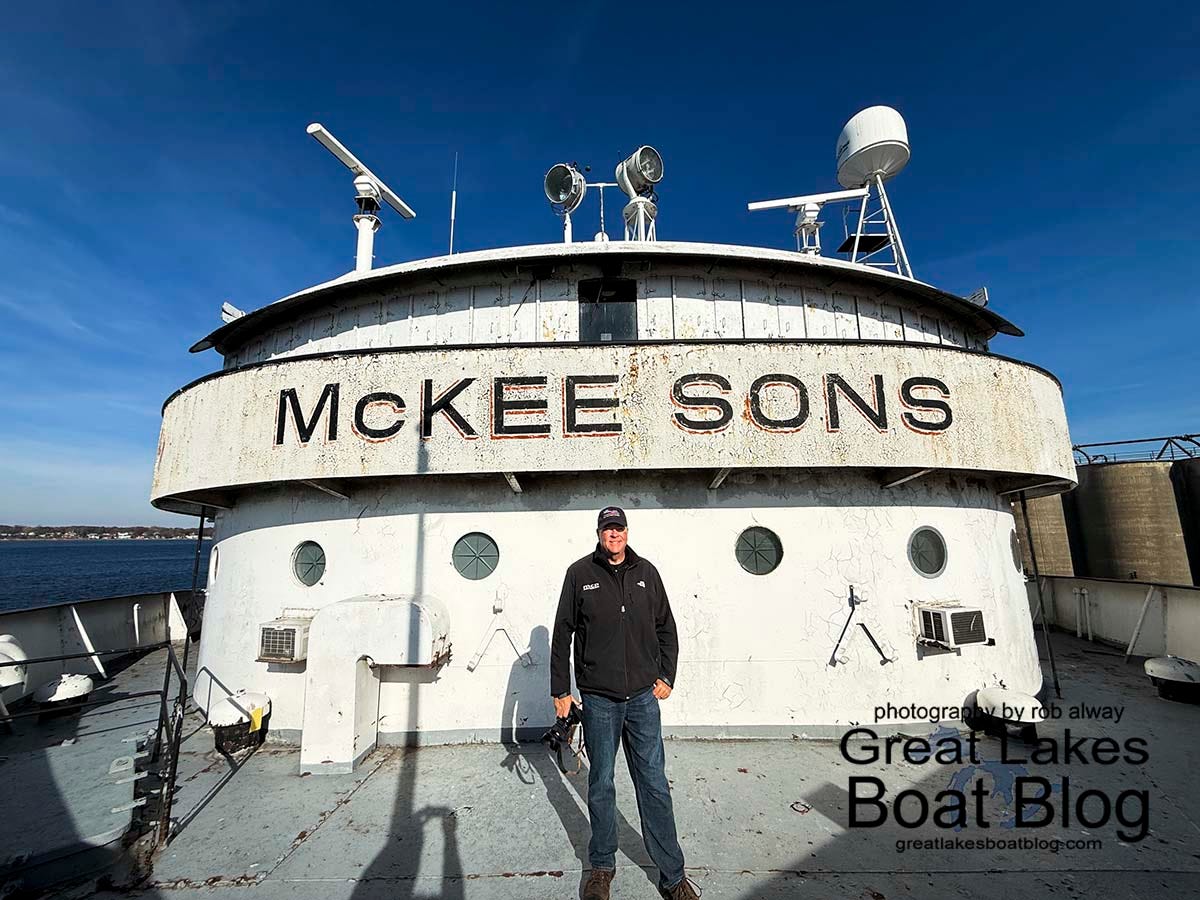
The old warehouses, railroad tracks, cargo equipment and passenger ticket office all tell the story of a waterfront that has adapted to changing times while retaining much of its original character.
The McKee Sons has done much the same.
I certainly hope she has another chapter in her long career. Whether that involves a return to commercial service or some other future, she represents an increasingly rare piece of maritime history.
For now, the 81-year-old McKee Sons seems right at home at the Mart Dock, a fitting tribute to the McKee family and its nearly century-long presence on the Muskegon waterfront.